As the Devi Bhagavata tells it
Devi Bhagavata Purana, Book 9 · Badari, the battlefield, and the bank of the Gandaki · 3 min read
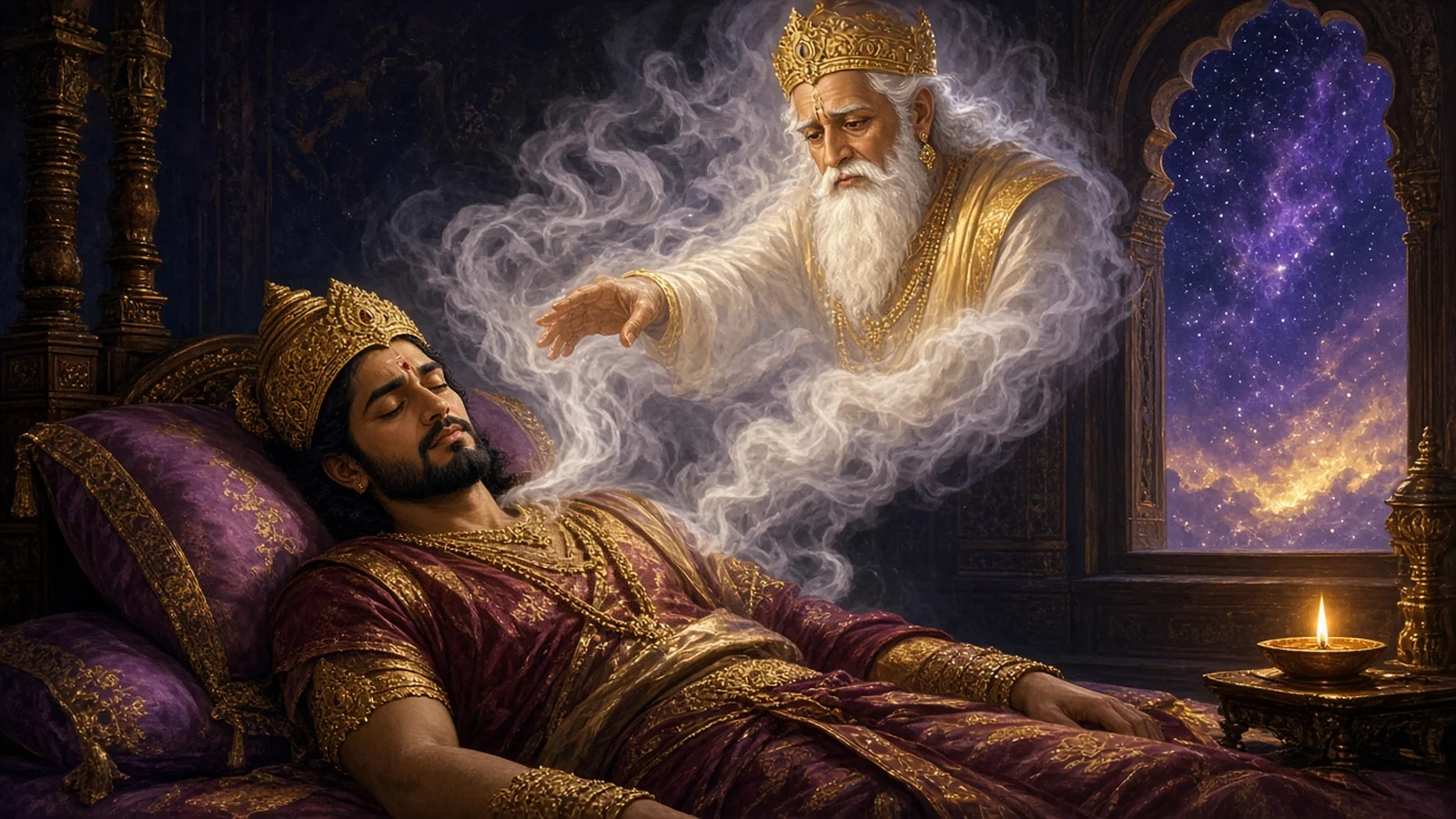
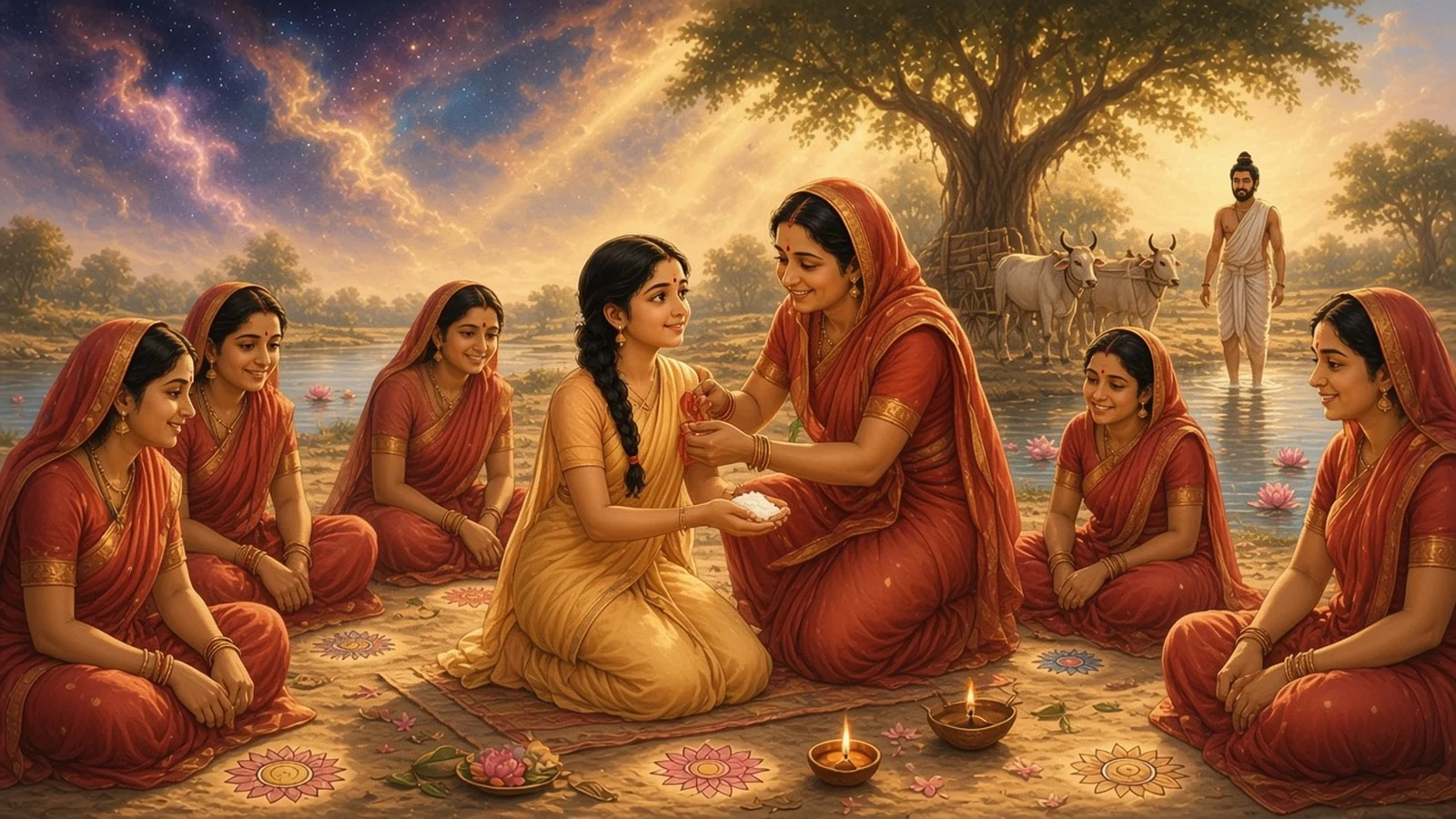
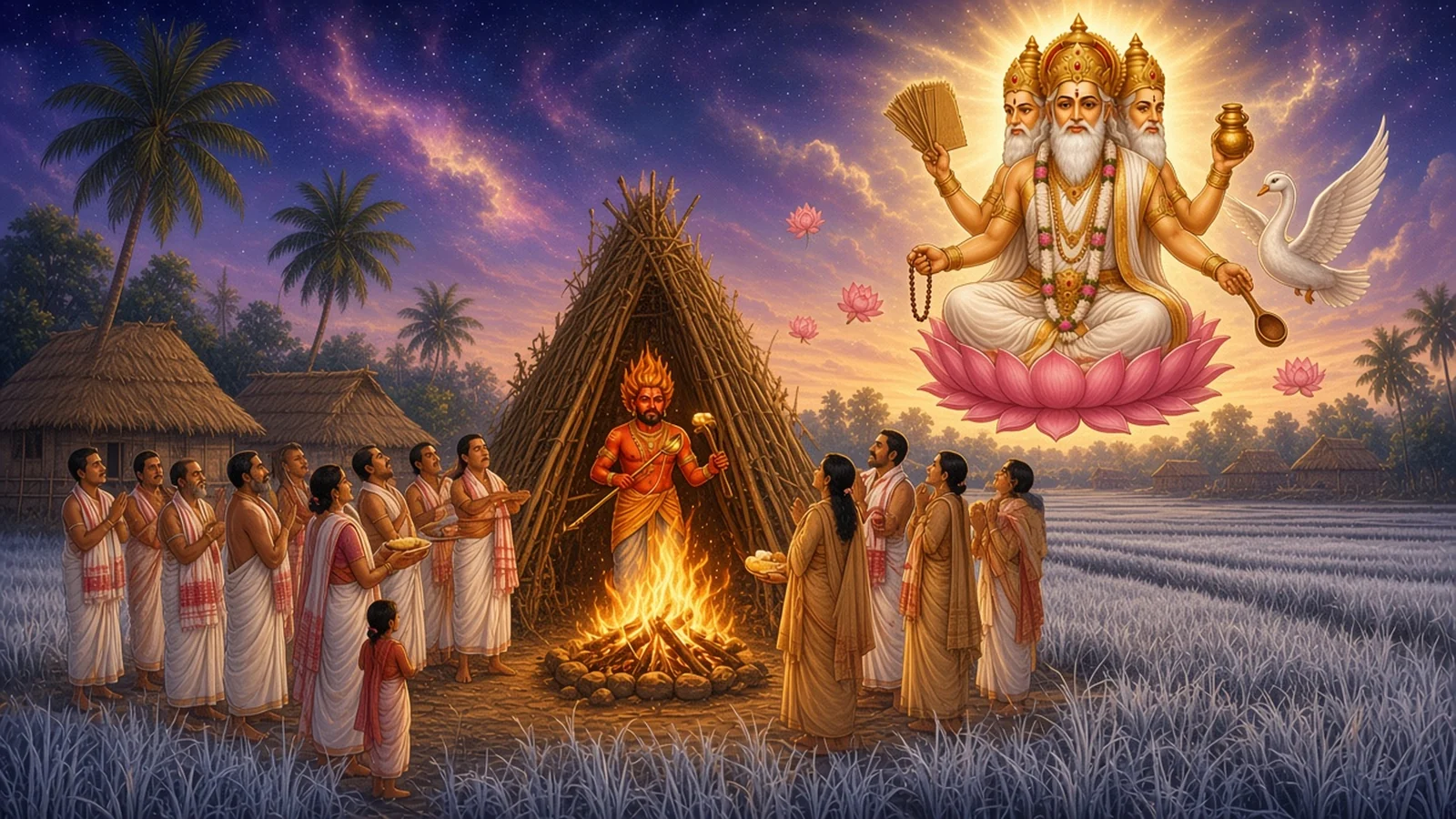
King Dharmadhvaja and Queen Madhavi had a daughter on the full moon of Kartik, and a portion of Lakshmi was in her. The sages could find nothing to compare her with, so they named her Tulasi, the one without equal.
She did not stay at home. She went up to Badari and began a penance, eating less each season until she lived on almost nothing and stood on one foot. After a very long time Brahma came.
"Ask," he said.
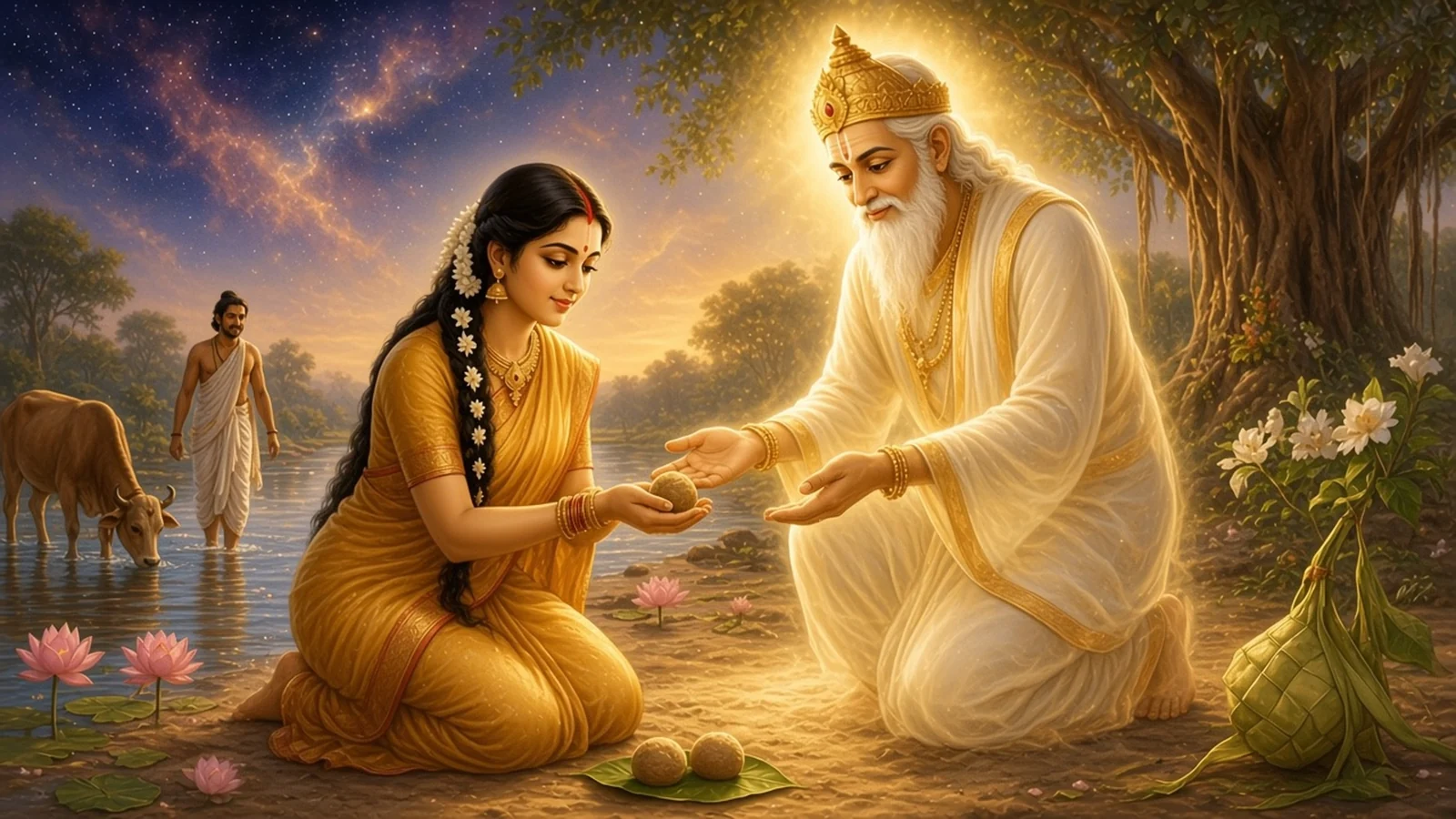
"I was a cowherd girl in Goloka once," said Tulasi, "and my name was Tulasi there too. Radha found me in the dance with Govinda and cursed me to be born on earth. Govinda told me penance would bring me Narayana. I want Narayana for my husband."
"You will have him," said Brahma. "But first you will be the wife of Shankhachuda. He was Sudama, a cowherd of Krishna's own body, and the same Radha's anger has made him a Danava. When his life is done you will be a plant dear to Narayana, and the world will call you Vrindavani."
So when a young man came down to Badari in a flying chariot, with an amulet at his neck that Brahma had given him, Tulasi already knew his name. She told him all the same that a man of good family does not talk alone with a woman in a forest, and he argued the point at length, and she argued back, until Brahma appeared again, out of patience.
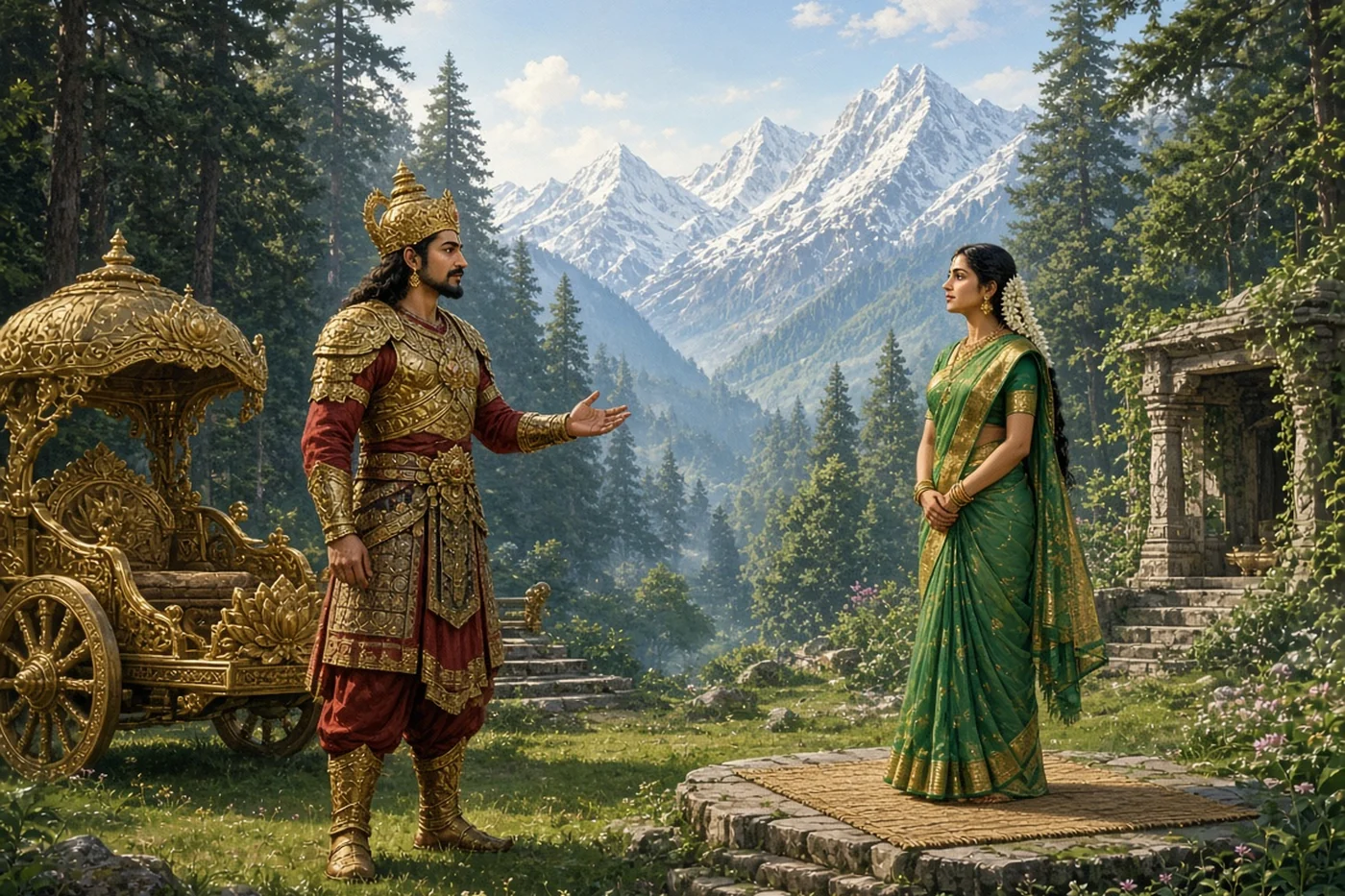
"Enough talk. Marry her by the Gandharva rite and go."
They married, and Shankhachuda went on to take the gods' kingdoms one by one. The gods went to Shiva, and Shiva fought him for a hundred years without either winning. Then an old Brahmin walked onto the field and asked the Danava king for a gift. Shankhachuda swore to give it before he heard what it was.
"Your amulet," said the Brahmin.
He gave it. The Brahmin was Hari, and Hari put on the amulet, put on Shankhachuda's face, and went to Tulasi's house to the sound of drums. She washed his feet and asked about the war.
"Brahma made peace," he said. "Shiva has gone home."
On the field Shiva's trident flew. Shankhachuda laid down his bow, thought of Krishna's feet and burned to ash, and rose to Goloka a cowherd again. His bones, the text says, became the conches whose water is poured for every god but Shiva.
In the house Tulasi knew that something was wrong. "You are not him," she said. "Who are you, magician, to have taken this from me?"
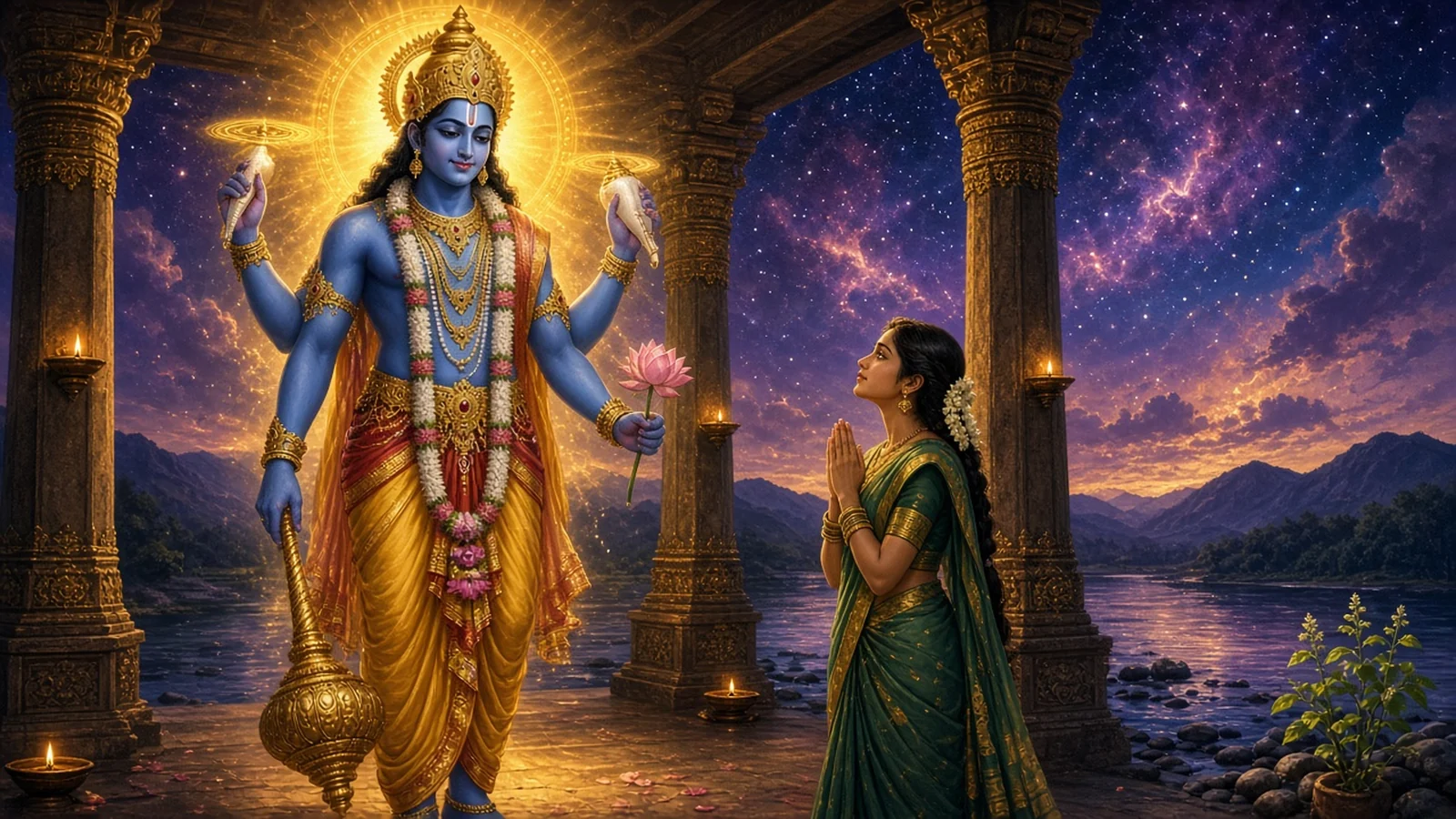
Hari showed himself, dark as a rain cloud, eyes like lotuses. She fainted, and when she came to she cursed him.
"Your heart is a stone. Then be a stone. You killed your own devotee for nothing, and they call you good."
"You did penance for me at Badari," said Hari, "and he did penance for you. I am giving you what you asked for. Leave this body. It will be a river, the Gandaki, and your hair will be the tulsi, first of all the leaves and flowers in my worship. And I will keep your curse. I will be a stone on the Gandaki's bank, and worms with teeth of adamant will cut my wheel into it."
So it was. Tulasi left her body and went with him to Vaikuntha, beside Lakshmi, Saraswati and Ganga. Her body ran down as the river. He became a mountain on its bank, and the stones that break from it and fall into the water are his, and are worshipped; those that fall on dry land turn yellow and are not.
As the pilgrims tell it: Mustang and Muktinath
Nepal · the Kali Gandaki from Kagbeni to Muktinath · 2 min read
The river rises at a glacier in Mustang near the Tibetan border, cuts the deep gorge between Dhaulagiri and Annapurna, becomes the Narayani in the Nepal plains and the Gandak in Bihar, and meets the Ganga at Sonepur. The stones are in its upper reaches. Geologists call them ammonites, the coiled shells of sea creatures from the old Tethys sea that once lay where the Himalaya stands; the pilgrims call them Vishnu, and say the coils were cut by the vajra-kita, the worm with the diamond tooth, which the Skanda Purana credits with the carving.
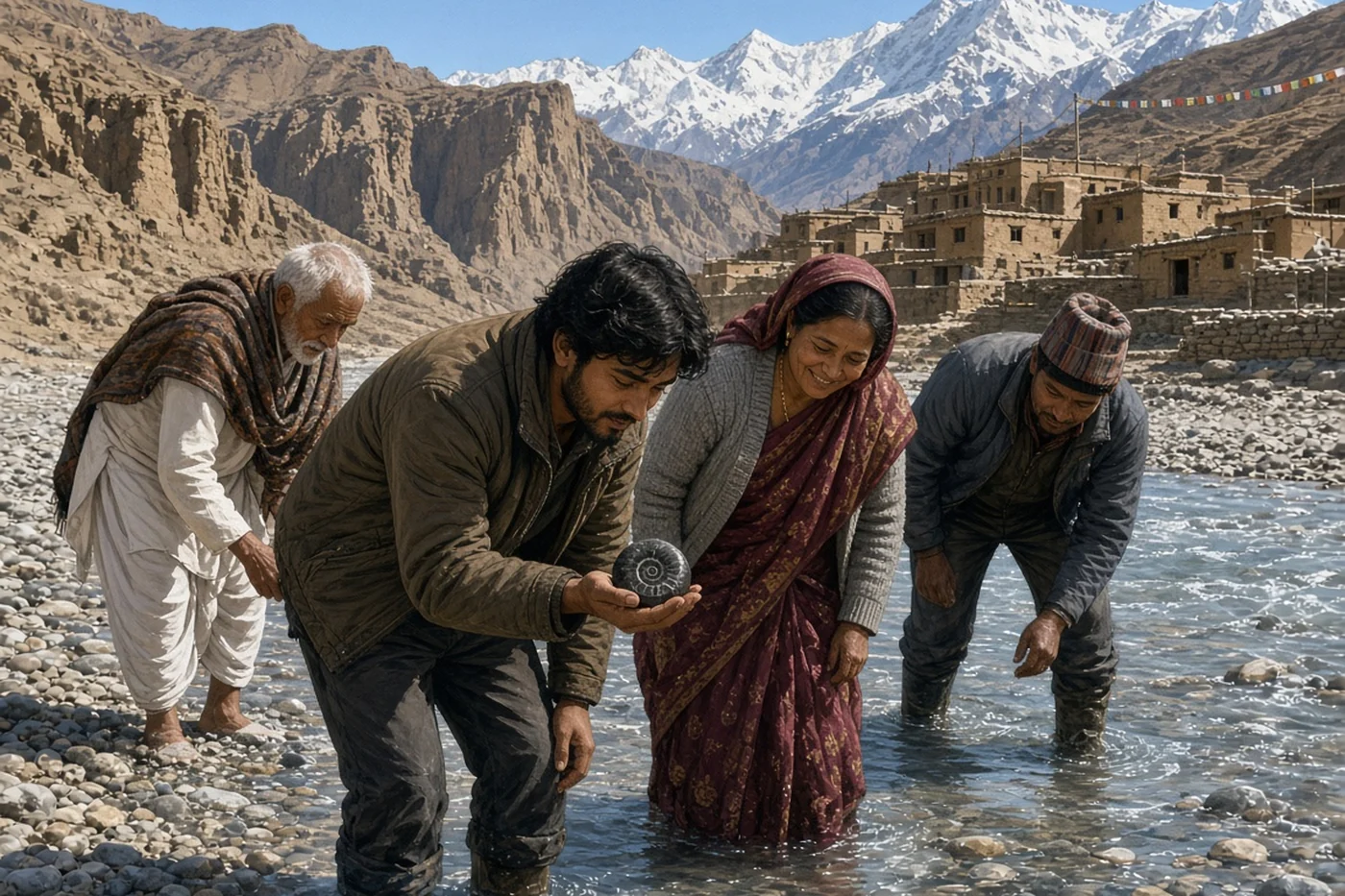
The source the stones are said to come from, the glacial lake of Damodar Kund, is in Upper Mustang, which pilgrims may not enter. So they wade the river lower down, at Kagbeni above all, bent double, watching the gravel for a black spiral. A stone is found, or given, or inherited. It is never bought. The Padma Purana condemns anyone who sells a shaligram or sets its price, and it says the stone needs no rite and no hymn to be worshipped, because, the devotees say, the god is already in it. A tulsi leaf and water are enough.
The Devi Bhagavata sorts the stones by their marks. One opening and four wheels with a garland line is Lakshmi-Narayana; a large round stone with two wheels is Damodara; two openings, four wheels and a cow's hoof are Raghunatha; fourteen wheels make Ananta. Families keep them in the shrine room, bathe and dress them, and marry them to the tulsi every Kartik. The reclining Padmanabhaswamy at Thiruvananthapuram is said to hold twelve thousand of them, brought from the Gandaki.
The last stop is Muktinath, at about 3,760 metres below the Thorong La. In the courtyard of the Vishnu temple a hundred and eight spouts shaped like bulls' heads pour snow water, and the pilgrims bathe under every one of them, then bring their new stones in to be welcomed. Buddhists call the place Chumig Gyatsa, the Hundred Waters, sacred to Padmasambhava, and honour the image as Avalokiteshvara; beside it a natural flame burns in the Jwala Mai shrine. The anthropologist Holly Walters, who has studied the pilgrimage since 2015, reports that fewer stones appear each year, as the melting glaciers and gravel mining move the river away from the beds that hold them.