As the Telangana tellings give it: Dharmangada's daughter
Telangana · told of a Chola king and his queen · 3 min read
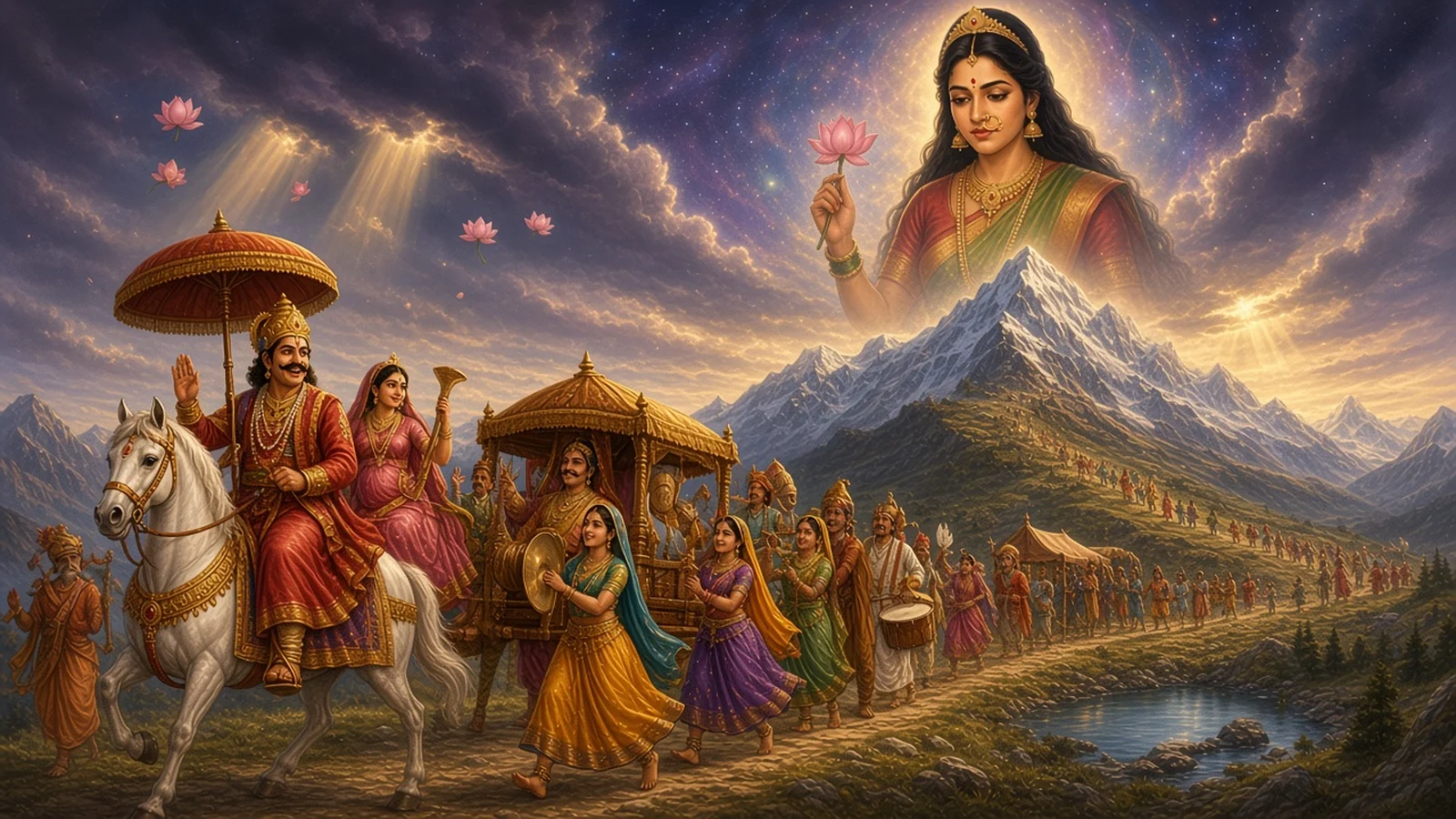
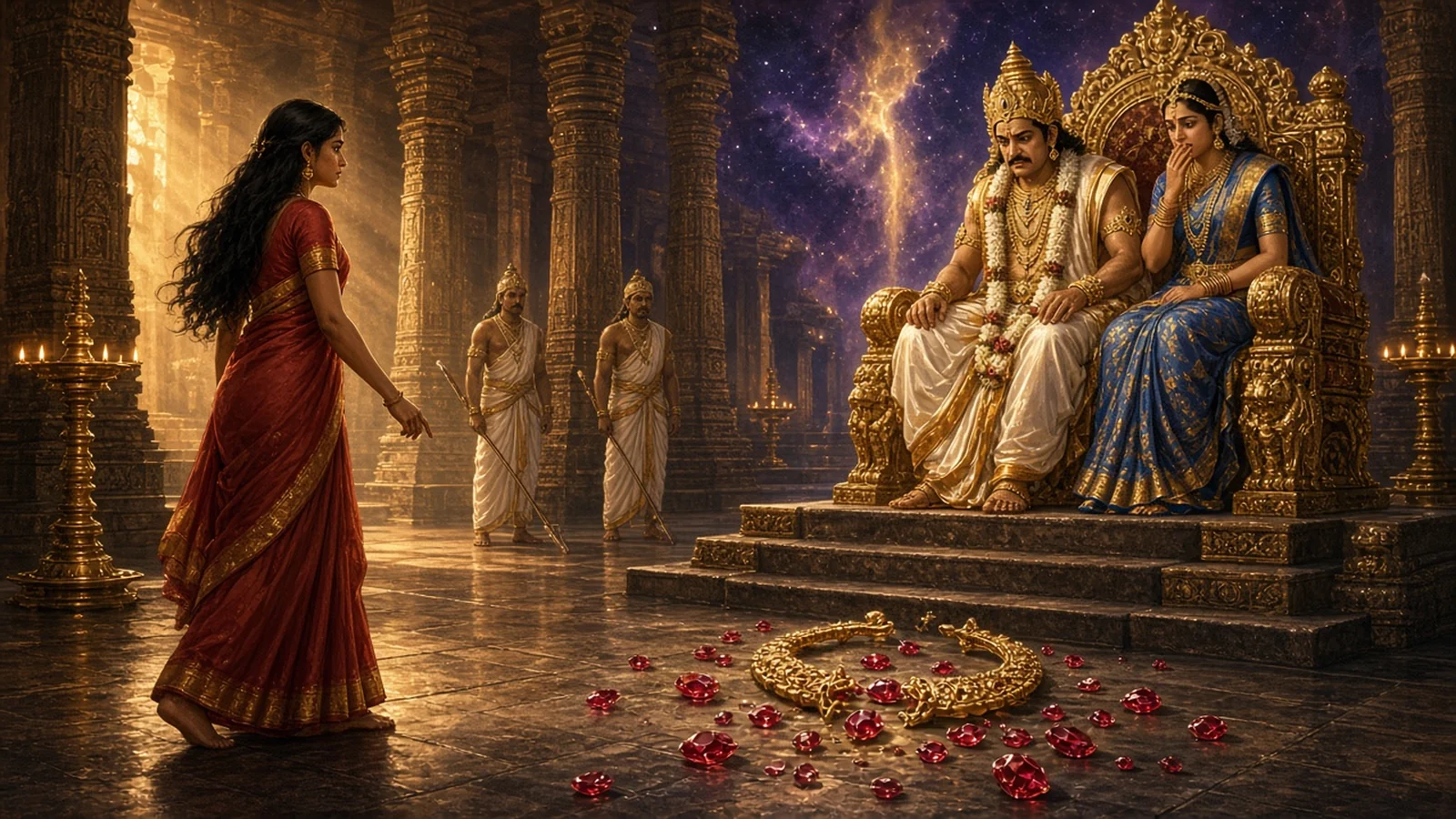
Dharmangada was a king of the Cholas, and he had a hundred sons. They grew tall and strong together, and when war came they rode out to it together, and not one of them came home.
For a long time the queen, Satyavati, sat in the empty rooms and would not eat. When at last she spoke, it was to her husband.
"We had a hundred children, and the war has taken every one," she said. "I will not ask the gods for sons again. I will ask for a daughter, and I will ask the goddess who gives."
The king did not argue. They put away their comforts, kept the rites of Lakshmi and called on her morning and evening, and the tellings say that she heard them and was pleased.
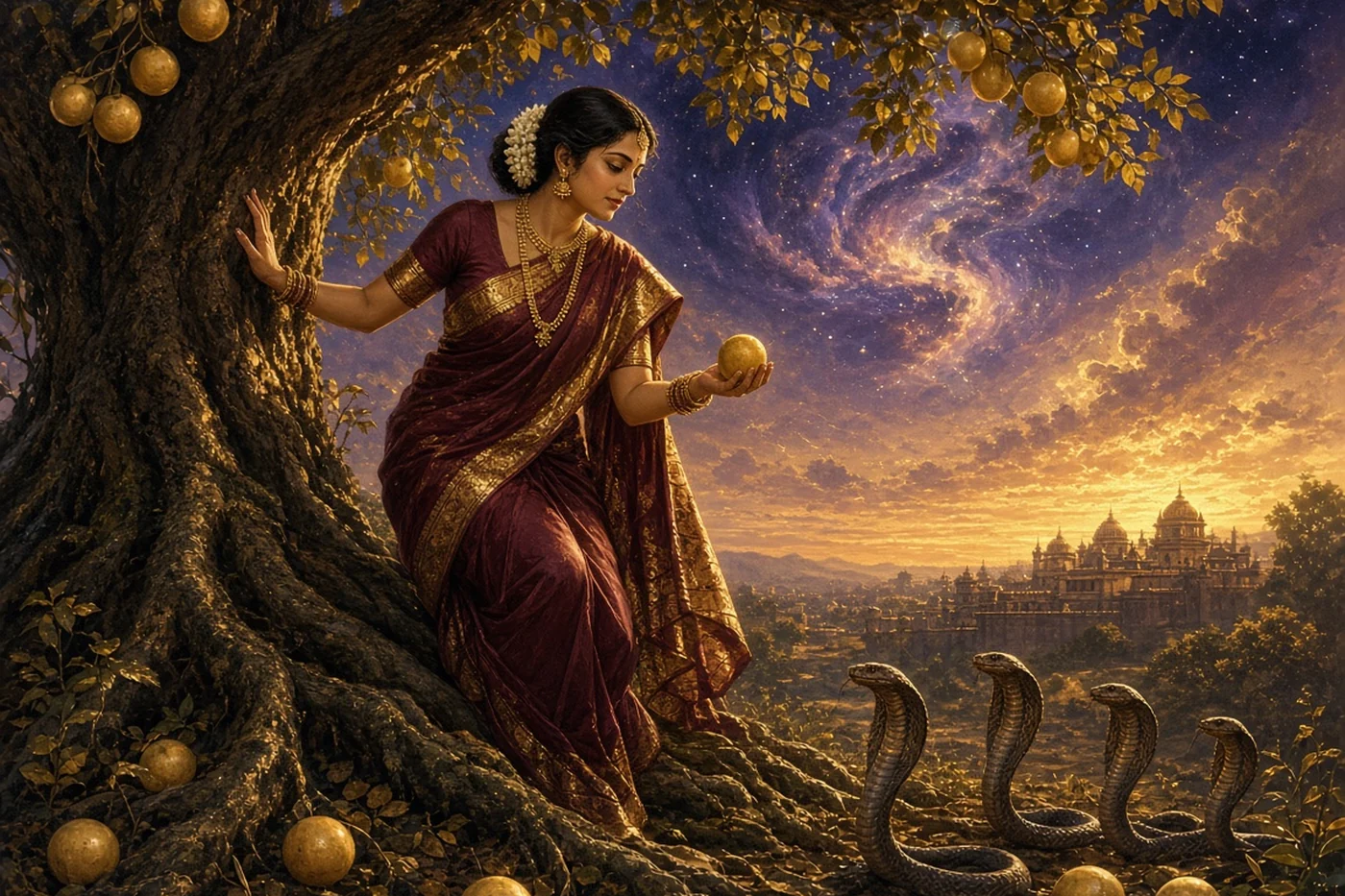
In one telling she told the queen what to do. Outside the city stood a tree heavy with fruit, and round its roots lay snakes.
"Climb it," said the goddess, "and bring down what it gives you."
Satyavati went out alone. The snakes lifted their heads as she passed between them and did not strike. She climbed, and filled her arms, and as she came down the fruit slipped from her one by one and fell among the snakes, until she reached the ground with a single fruit in her hands. She carried that one home.
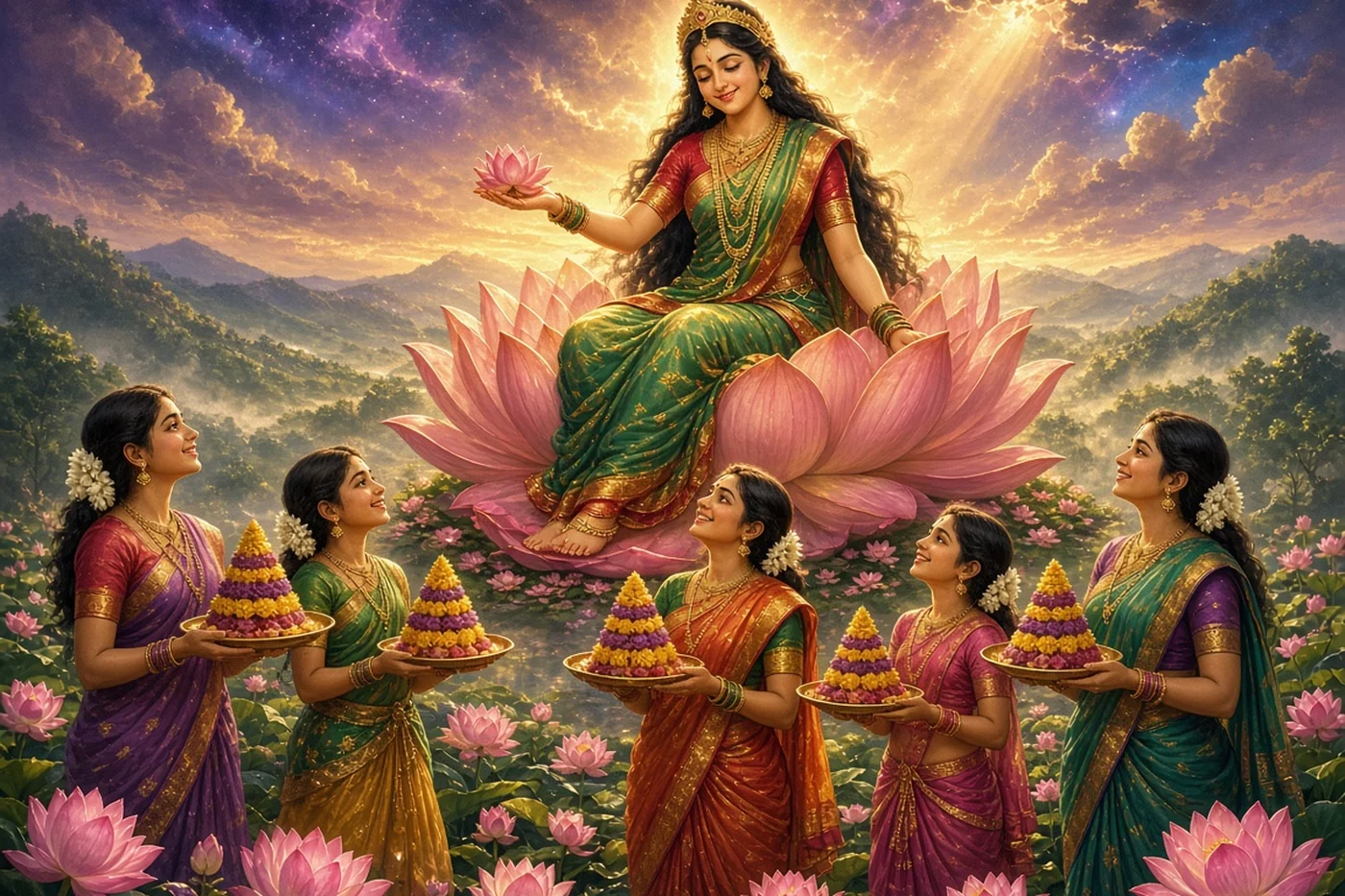
In time a daughter was born in the palace, and on this the tellings agree. Lakshmi had not only granted the prayer. She had come herself, as the child of the king and queen who had lost everything.
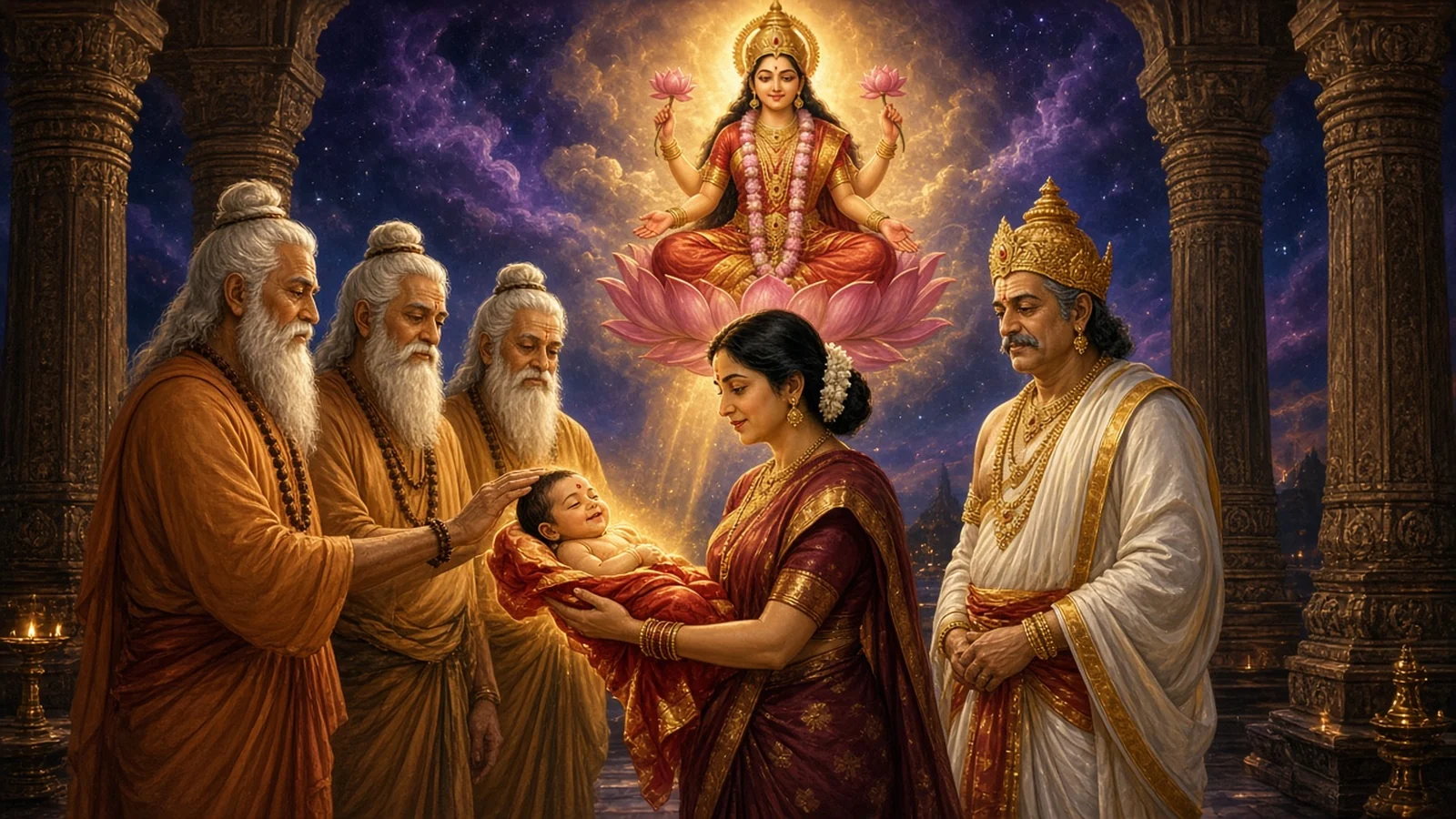
The sages came to bless her, Kapila and Kashyapa and Vasishtha and others with them, and stood round the queen as she held the baby out.
"What shall we call her?" the king asked them.
"She is the mother herself, and she has come to you as a daughter," said the eldest. "Call her Bathukamma. Bathuku, live. Amma, mother. Live long, mother."
"Live long," said the others, and laid their hands on her head, and some say that what they gave her with the name was a life that would not end.
She needed it. As the girl grew, one danger after another came close to her, and each time she lived. The women of the palace stopped being afraid for her. When something went wrong near her they only laughed and said her name, as if the name itself were the reason.
"Bathukamma," they said. "She will live. She always does."
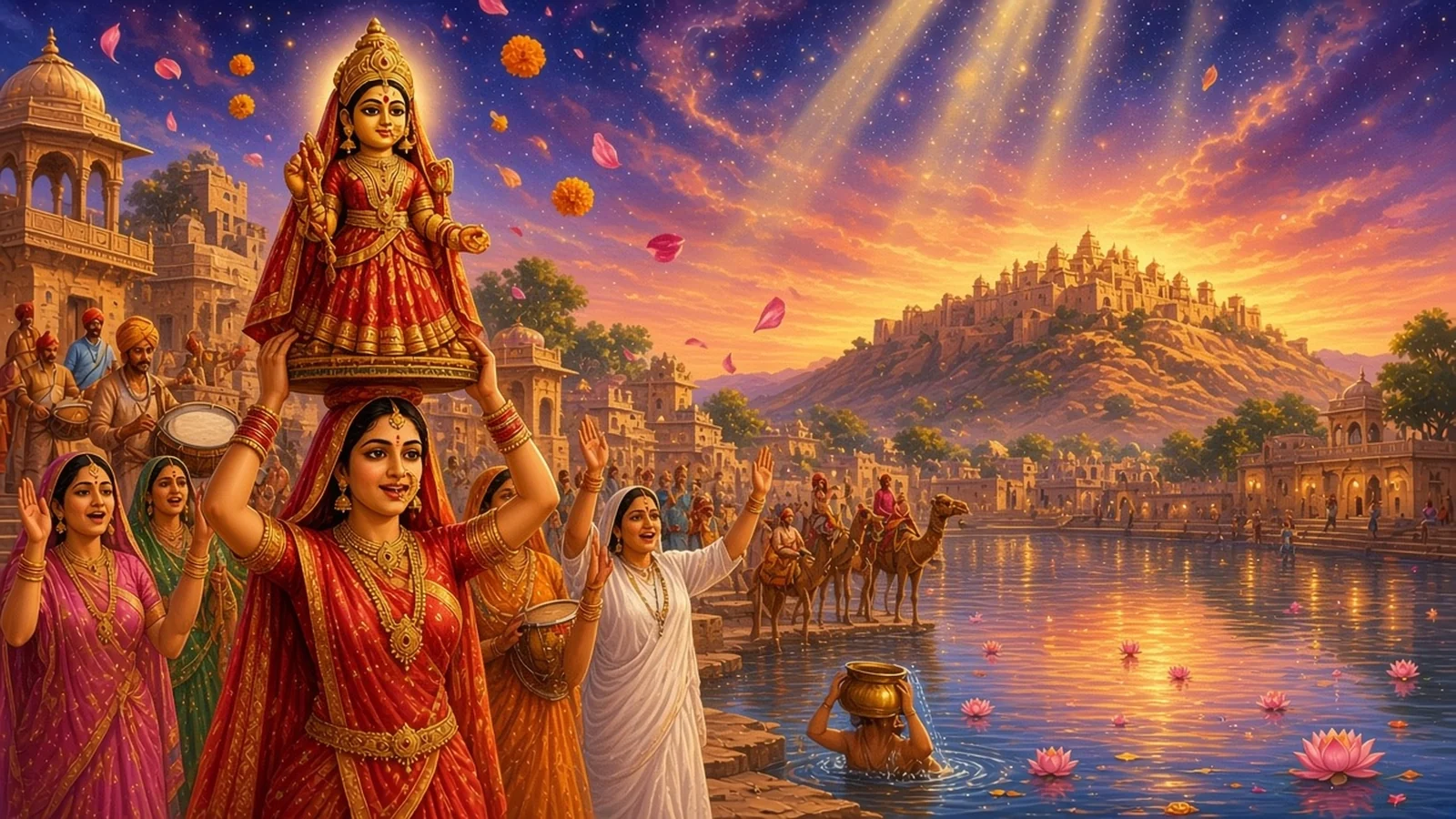
The young girls of the kingdom took the name up and made a song of it, and the tellings say that the festival began with them, singing to the princess who was a goddess and asking her for what girls ask: a good husband, a kind house to marry into, a mind that honours its elders and cares for others. Their mothers, already married, asked her for the health of their husbands and children and the plenty of their houses.
The king and queen had lost a hundred sons. They had one daughter, and she outlived every fear they had for her. Those who tell the story in Telangana say that this is why, at the end of every monsoon, the girls and women of their villages build her again out of flowers, and stand round her clapping, and sing her name.
As the other tellings and the readers give it
Telangana · Vemulawada, Warangal, and the writers on the festival · 2 min read
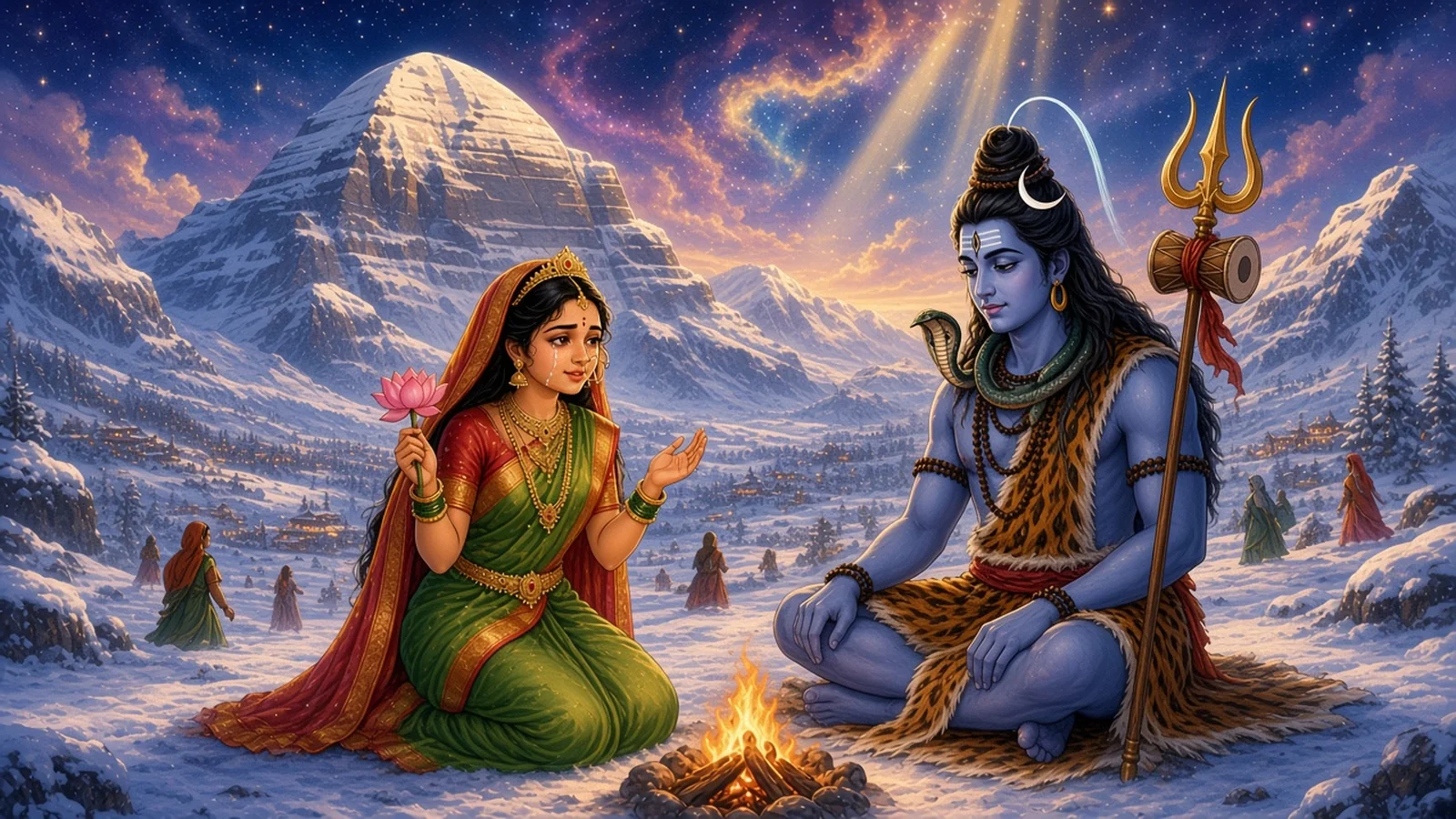
Not everyone in Telangana tells the beginning as a Chola princess. Many tell it of Sati. Her father Daksha held his great sacrifice and shamed her husband Shiva before the gods, and Sati, rather than live as Daksha's daughter, gave up her body in the fire of her own meditation; that story is told in Sati and the Sacrifice.
In this telling the women of Telangana are calling her back. Bathuku, amma: come back to life, mother. She did come back, as Parvati, the mountain's daughter, and so the cone of flowers is crowned with Gauri shaped in turmeric. The Hindu Blog calls the whole festival a rite for Gauri, and The News Minute's writer on it says the women believe she returns every year as the flowers that cover the land after the rains.
A second Gauri telling sets the festival after her battle with the buffalo demon Mahishasura. She fought so long, it says, that she fell into a deep sleep on the first day of the bright half of Ashvin, and her devotees prayed and called her by this name until she woke on the tenth day.
Vemulawada, the temple town of Rajarajeshwara in the north of Telangana, has its own telling, dated by local tradition to about the year 1010. The god left Vemulawada, to Kanchi in one account and to the Chola capital at Thanjavur in another, and Parvati, who is called Bruhadamma there, was left alone and grieving. The women of the town made cones of flowers in the shape of his linga to console her. Some say the festival's very name grew out of hers. Vemulawada still ends its Bathukamma on the seventh day, not the ninth, for the seven mothers, the Sapta Matrikas.
Some of the songs say the festival began under the Kakatiya kings of Warangal. The historian Satyanarayana Dyavanapalli, whose book of the songs came out in October 2026, calls them the oral history and shared memory of Telangana's women, and the songs change from village to village and from one generation to the next.
The environmental educators of the C.P.R. Environmental Education Centre read the festival as thanks for water in a dry upland: the wildflowers of the monsoon's end, many of them medicinal, are said to cleanse the ponds they are floated in. A writer in Swarajya ties that water to the tanks the Kakatiya rulers dug across the region in the twelfth century. Those are their readings. The women who build the flowers say only that it is Gauramma.