Festival · The day the tools rest and the kites go up
Vishvakarma Puja
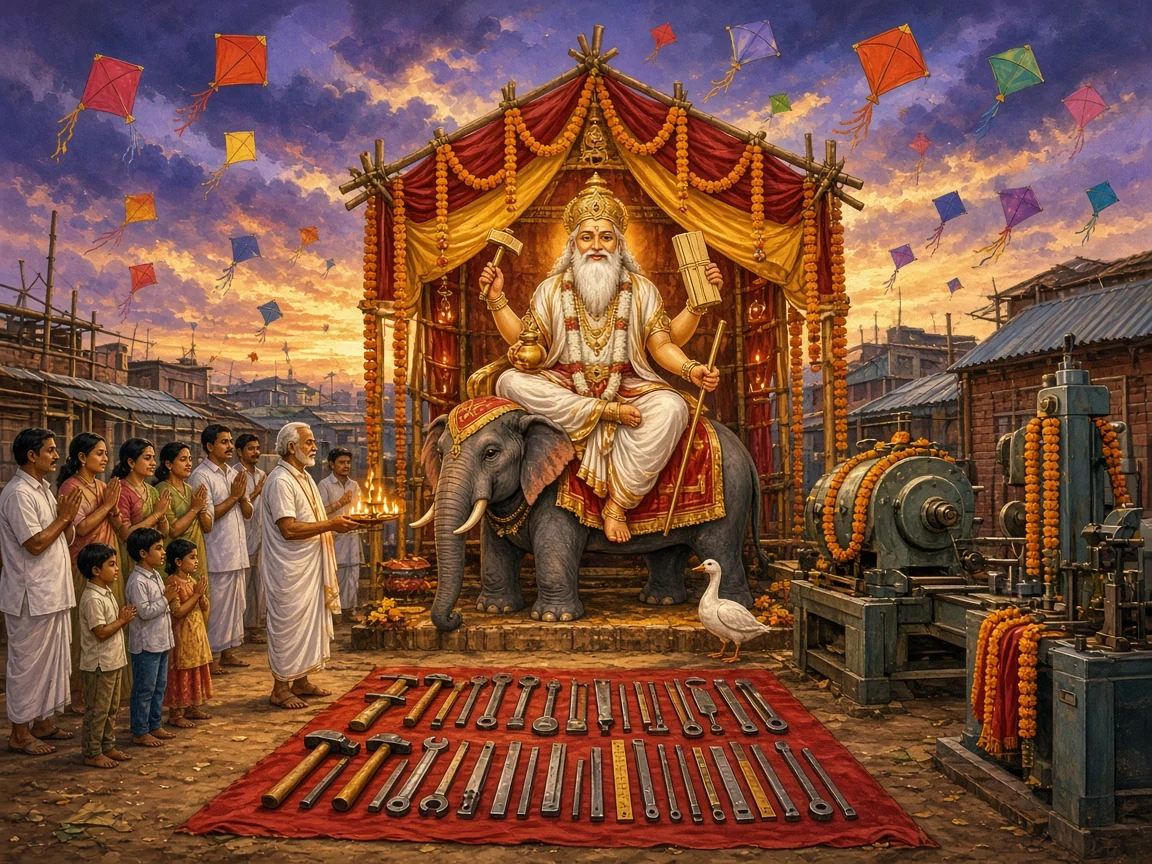
Vishvakarma Puja is the one great Hindu festival fixed by the sun, kept on Kanya Sankranti, the last day of the Bengali month of Bhadra, which is 17 September in almost every year. In Bengal, Odisha, Bihar, Jharkhand, Assam and Tripura every factory, workshop, garage, mill, taxi stand and engineering college stops work, washes and garlands its machines and tools, sets up the image of the craftsman of the gods on his elephant and feeds everyone, and over Kolkata the kites go up. The north and west keep his day the morning after Diwali, with an older, white-bearded image and a goose, and the craft communities who bear his name count themselves his children.
When is Vishvakarma Puja in 2027? Vishvakarma Puja, on Kanya Sankranti, is Friday 17 September 2027. In 2028: Saturday 16 September 2028. Kanya Sankranti, the day the sun enters Virgo, the last day of Bhadra by the Bengali almanac; 17 September in most years, 16 September in 2028 by the Bengali reckoning; the north and west keep Vishvakarma Day the day after Diwali.
Also calledVishwakarma PujaBiswakarma PujaVishvakarma JayantiVishwakarma DayBhadra SankrantiKanya Sankranti
In short
What is Vishvakarma Puja?
The yearly worship of Vishvakarma, the craftsman and architect of the gods, by everyone who works with tools and machines. Factories, workshops, garages and transport stands stop work, garland their machines and set up his image for the day.
When is Vishvakarma Puja?
On Kanya Sankranti, the day the sun enters Virgo and the last day of the Bengali month of Bhadra, which is 17 September in almost every year; in 2028 the Bengali almanac gives 16 September. The north and west keep Vishvakarma Day the day after Diwali instead.
Why are the tools and machines not used that day?
For one day the tools belong to the god and not to the worker. They are washed, oiled, garlanded and marked with vermilion, the puja is done before them, and work begins again the next day.
Why does Kolkata fly kites on Vishvakarma Puja?
No text explains it. Kolkata traces the custom to the Lucknow kite makers who followed the exiled Nawab Wajid Ali Shah to Metiabruz in the nineteenth century, and the day is the city's great kite-fighting day.
Why is Vishvakarma shown on an elephant in Bengal and with a swan elsewhere?
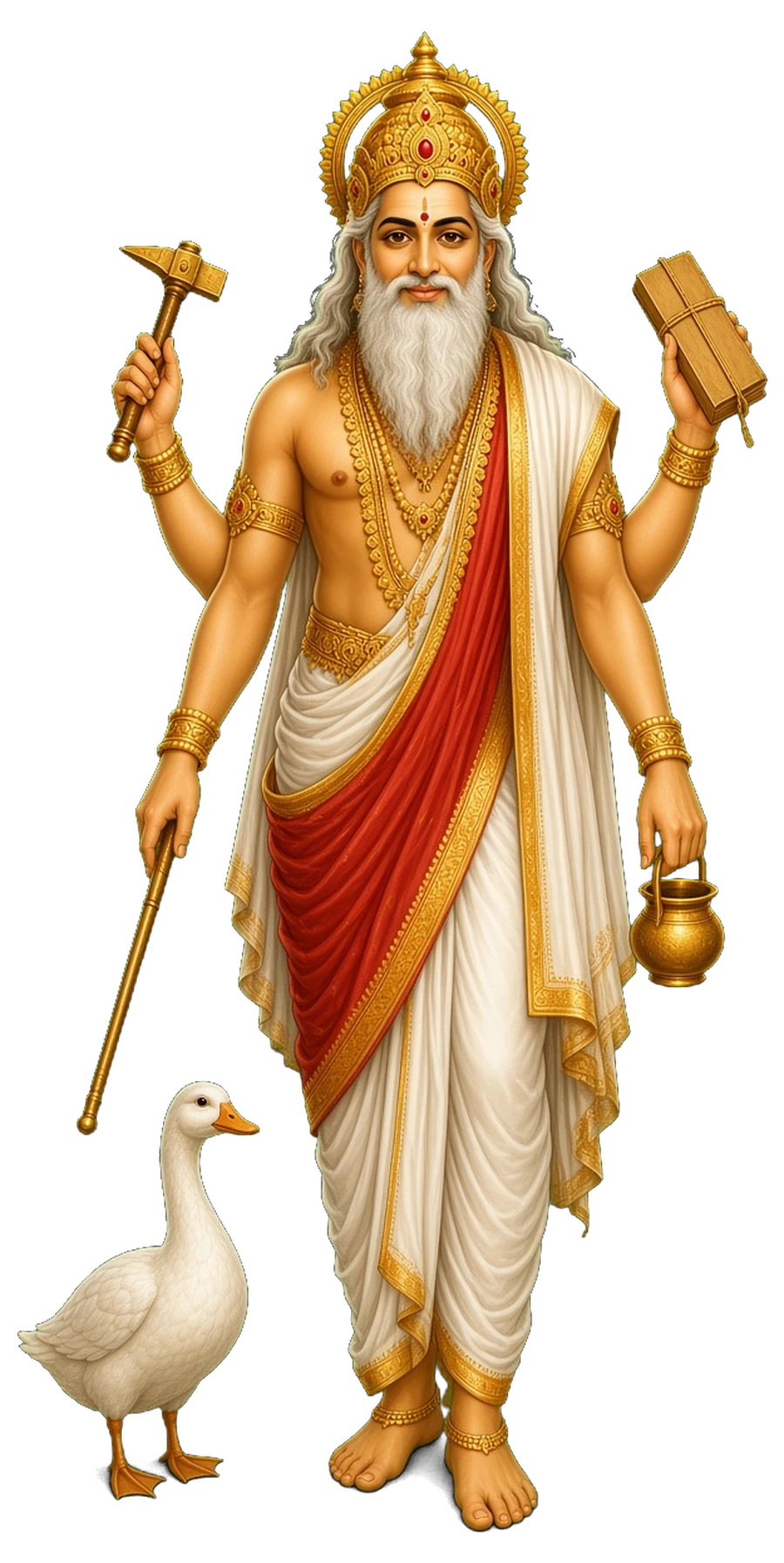
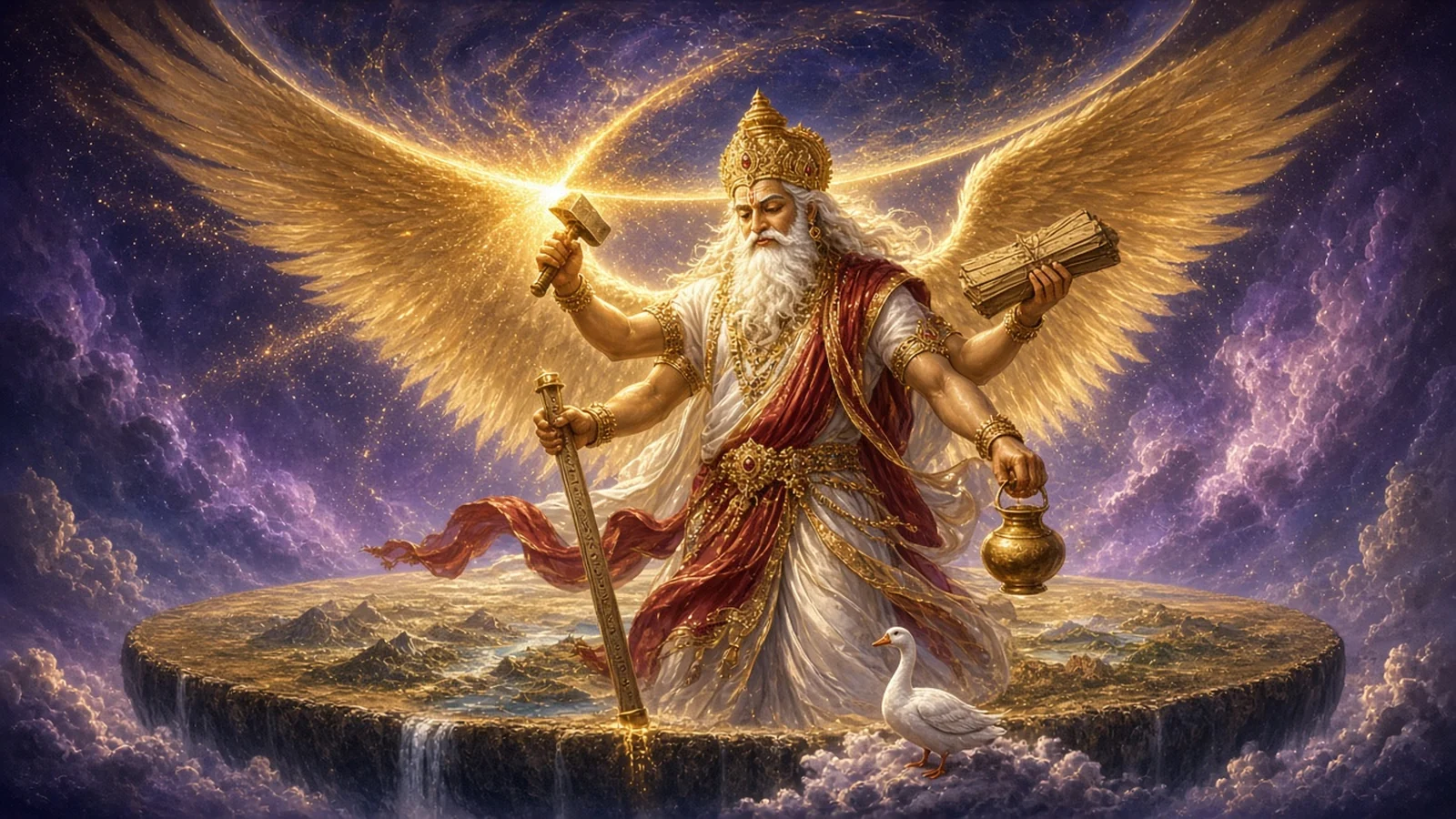
The east draws him young, with a black moustache, riding an elephant like Indra. The north and west draw him as an old man with a white beard, four arms, a goose beside him and his five sons around him, after the image of Brahma.
Next, in 2027Friday 17 September 2027
Prime godVishvakarma
with 3 more
WhereEastern India above all, Bengal, Odisha, Bihar, Jharkhand, Assam and Tripura, and Nepal; factories and workshops everywhere; the Punjab and the Hindi belt the day after Diwali
How longOne day, with the image installed the evening before and immersed the day after
Kanya Sankranti, the day the sun enters Virgo, the last day of Bhadra by the Bengali almanac; 17 September in most years, 16 September in 2028 by the Bengali reckoning; the north and west keep Vishvakarma Day the day after Diwali
Why it is kept
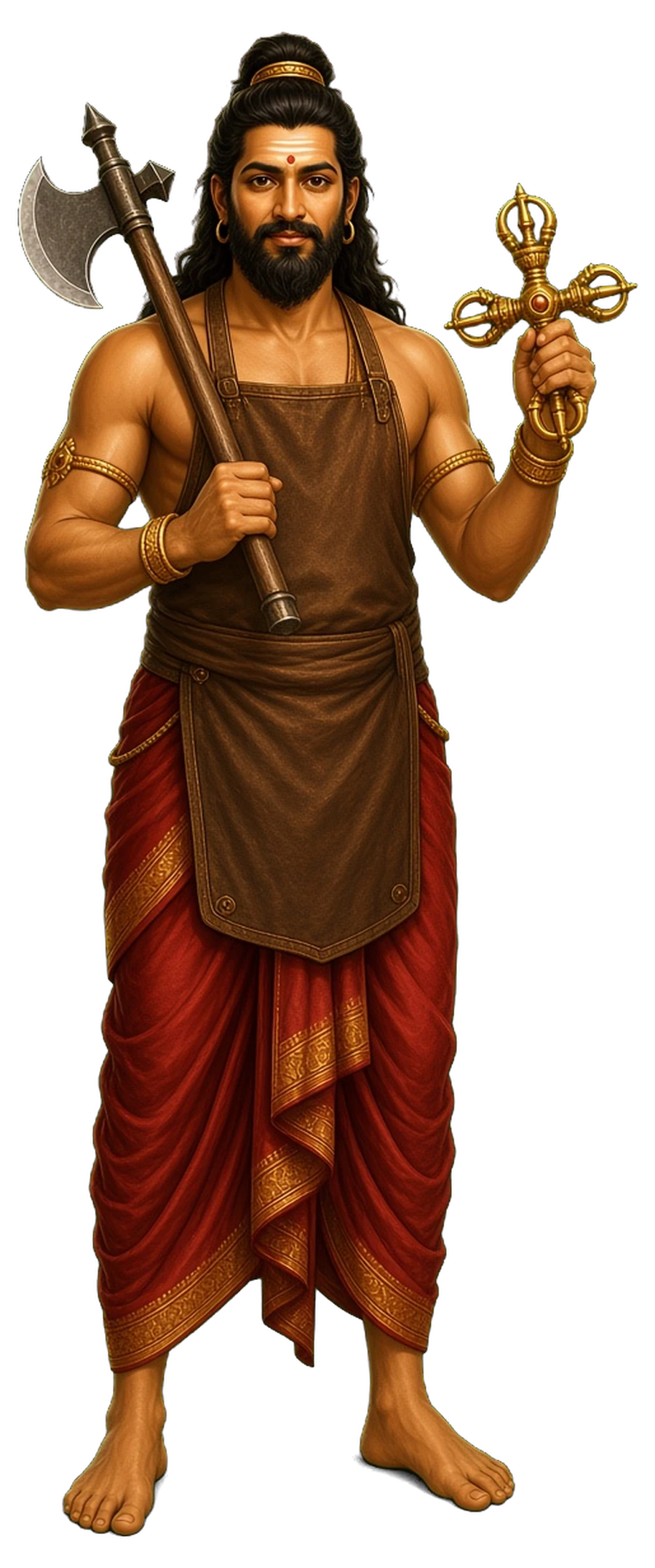
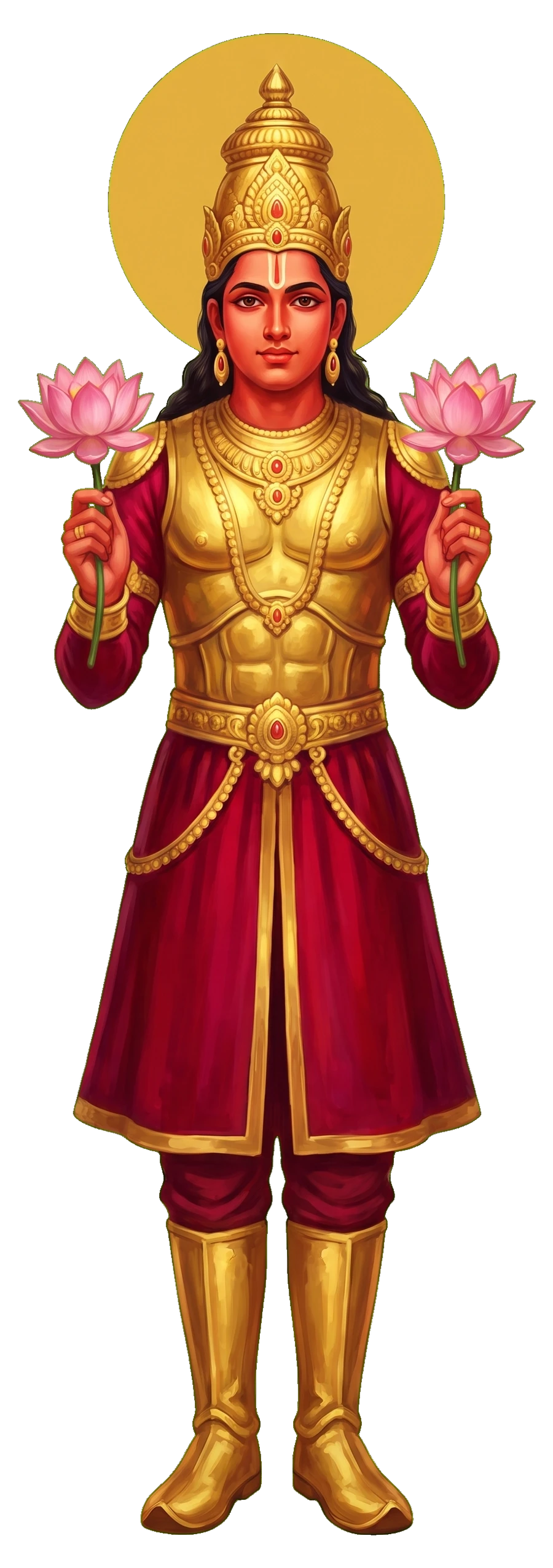
Vishvakarma Puja is the festival of the people who make things. On 17 September, when the sun enters Virgo, the machines of eastern India stop. Every factory, mill, foundry, garage, bus depot and taxi stand from Howrah to Guwahati washes its tools and vehicles, garlands them, marks them with vermilion and lays them before the image of the craftsman of the gods, a young man on an elephant with hammer and measuring cord. The owner and the workers eat together, and over Kolkata the kites go up. It is the one great festival that follows the sun and not the moon, so its date barely moves; and it has almost no temples, because for one day the shop floor is the temple.
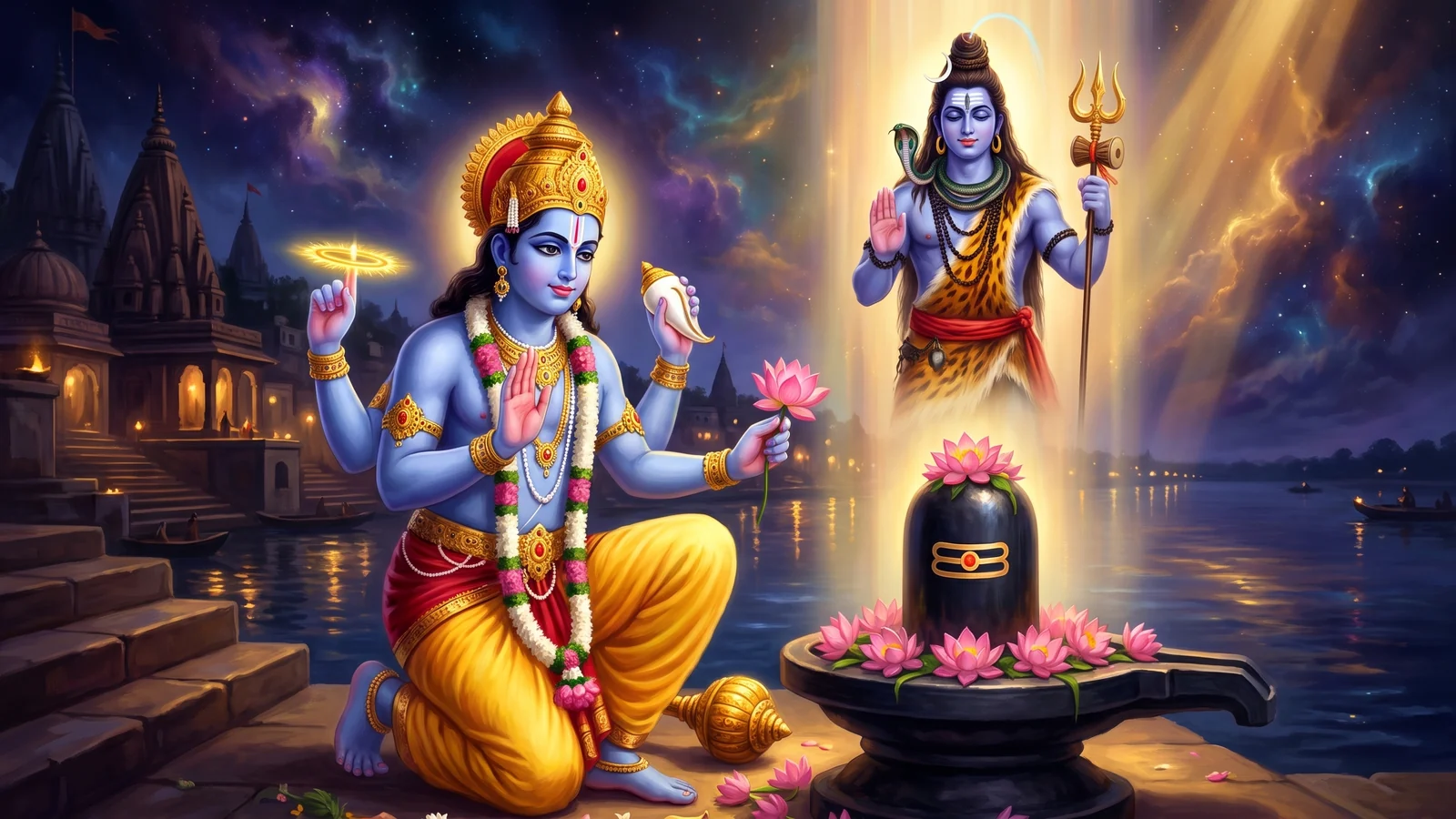
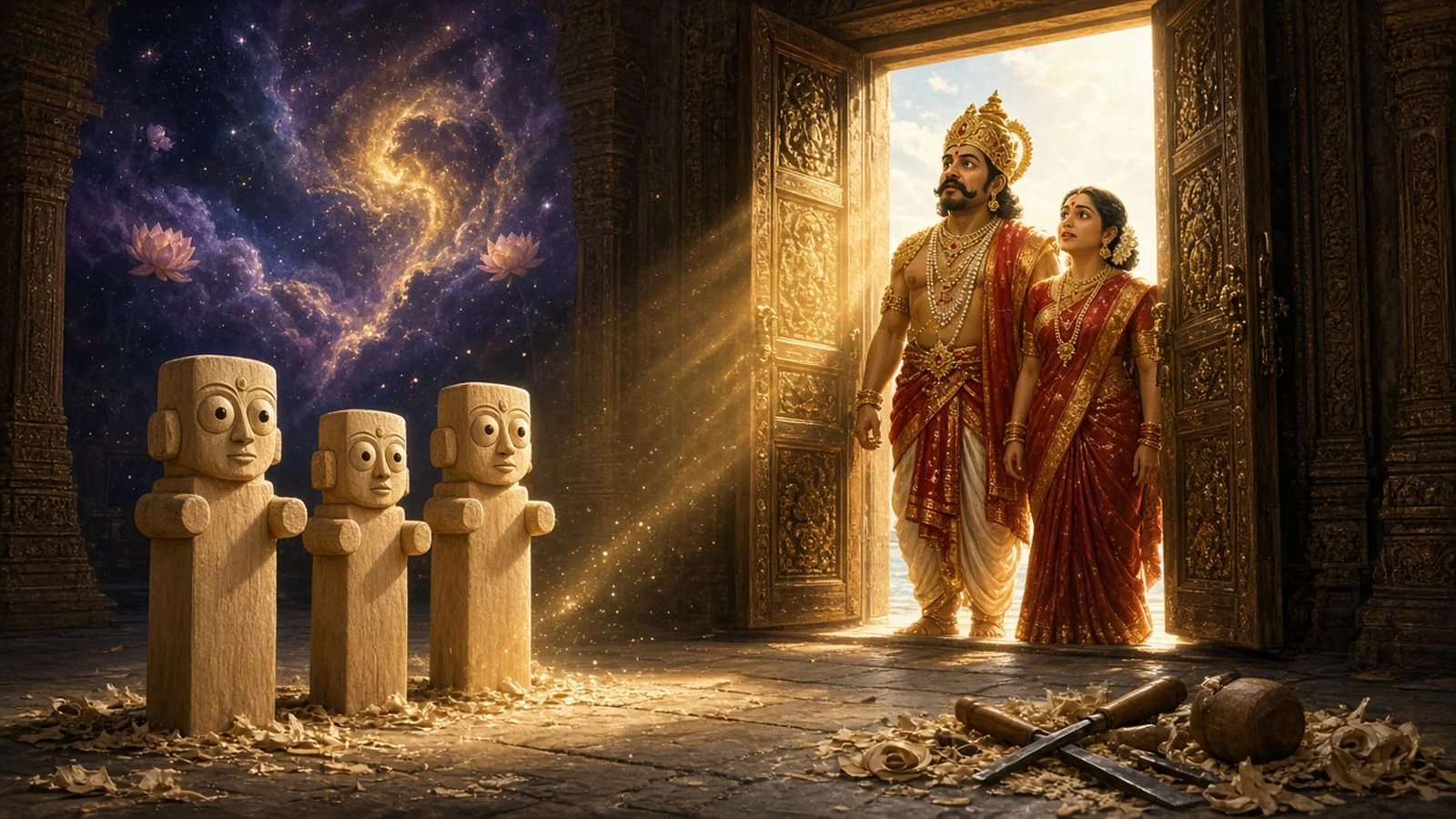
The god of the day is the maker of everything. Two hymns in the last book of the Rigveda call him Vishvakarman and ask what he stood on while he made heaven and earth, and what wood he cut them from; the Lore tells them in The Maker of Everything. The later texts gave that maker a bench. He is the architect of the gods who built Indra's hall and Yama's, Lanka of gold for the rakshasas, Dwaraka for Krishna and Indraprastha for the Pandavas, and who put the Sun on his lathe and ground the shavings into Vishnu's discus. The work that the Rigveda gives to Tvashtri, who has his own page, passed to him.
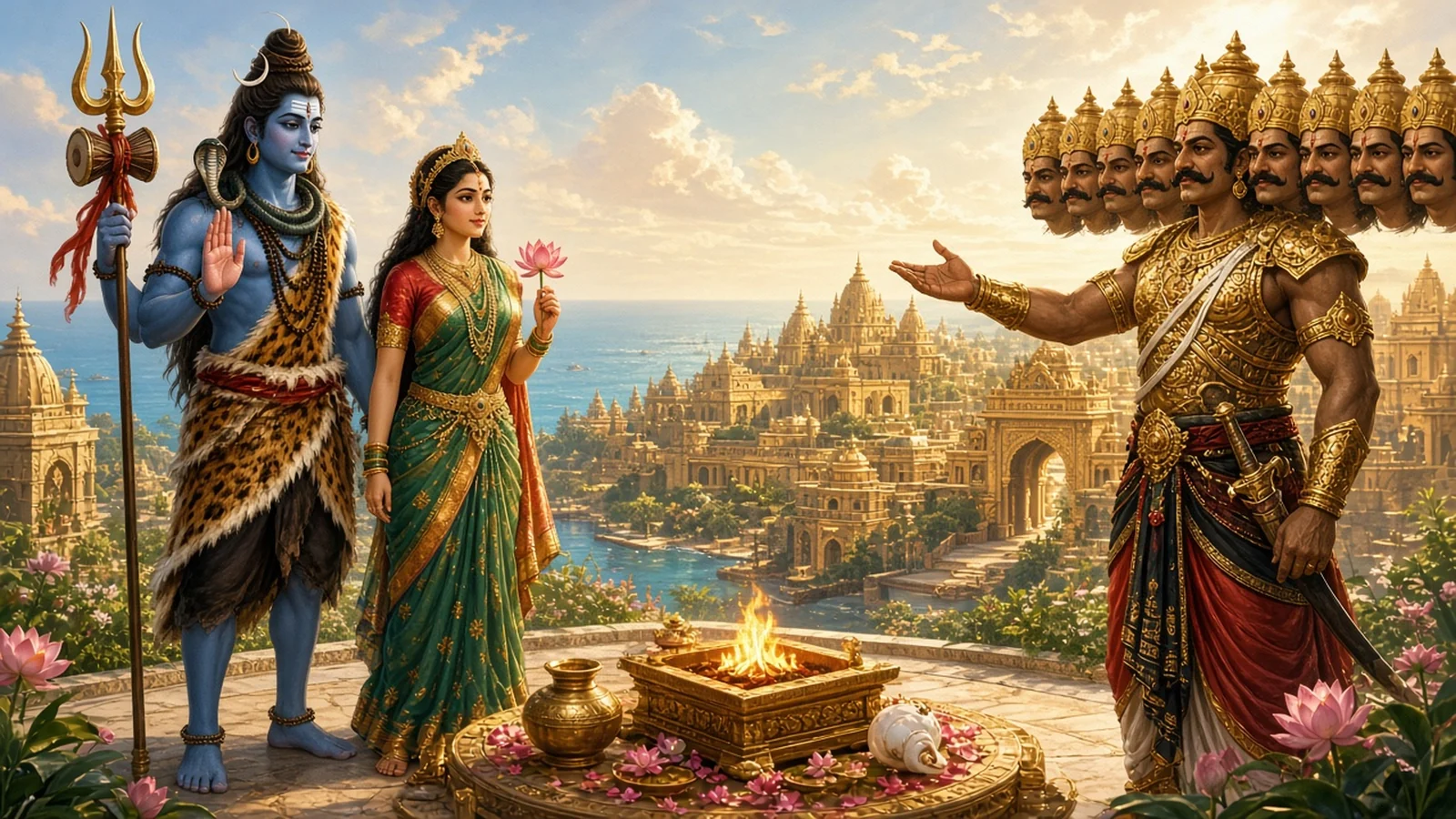
Vishvakarma, architect of the gods, raises the golden city of Dwaraka from the western sea
Everyone whose living depends on a tool counts as his. The Vishvakarma craft communities say so most plainly: carpenters, blacksmiths, bell-metal workers, stonemasons and goldsmiths trace their five groups to his five sons, Manu, Maya, Tvashta, Shilpi and Vishvajna. The jute mill hands of Howrah said so a century ago when they laid their tools before a pitcher, and the engineer, the welder, the mechanic and the taxi driver say so now. The puja asks him for a safe year, for machines that run and for work that lasts.
Vishvakarma with his five sons: carpenter, smith, bell-metal worker, mason and goldsmith
The maker of everything in the Rigveda, who became the craftsman and architect of the gods and the patron of everyone who works with tools. His image, on an elephant in the east and with a goose in the west, is set up on the shop floor and the tools are laid before him.
The Vedic maker whose work Vishvakarma inherited. In the Rigveda it is Tvashtri who forges Indra's thunderbolt and shapes every form; the later texts hand the lathe and the hammer to Vishvakarma, and the craft communities name a Tvashta among his five sons.
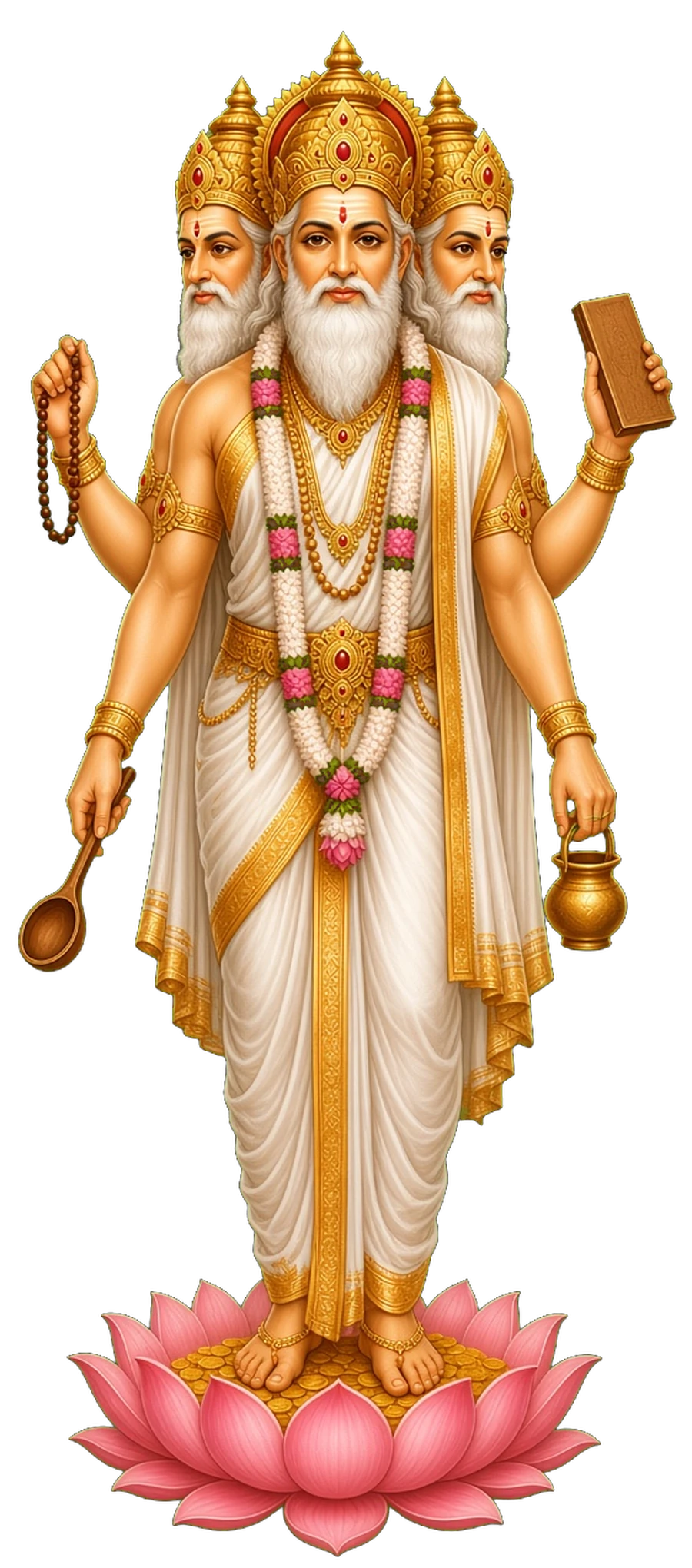
In the Puranas Vishvakarma is Brahma's son or his grandson through the Vasu Prabhasa, and the white-bearded four-armed image of the north, with a goose beside it, is drawn after Brahma's own.
The sun fixes the day. The puja falls at the moment he enters Virgo, and in the Puranas Vishvakarma is his father-in-law, who put him on the lathe and ground away an eighth of his light to forge the discus, the trident and the lance.
The day the tools rest
1
The eve, the image arrives
The evening before Kanya Sankranti · Friday 17 September 2027
Bhadra 31the last evening of Bhadra
A bamboo pandal goes up on the shop floor, in the garage yard, at the taxi stand or in the college workshop, and the image comes from the image makers' lanes, in Kolkata from Kumartuli and Patuapara, by truck, hand-cart or rickshaw. In the east it is a young man with a black moustache riding an elephant, a hammer and a measuring cord in his hands; in the north an old man with a white beard, four arms and a goose, his five sons standing round him. The machines are switched off, wiped down and oiled, and the tools are laid out in rows on a clean cloth.
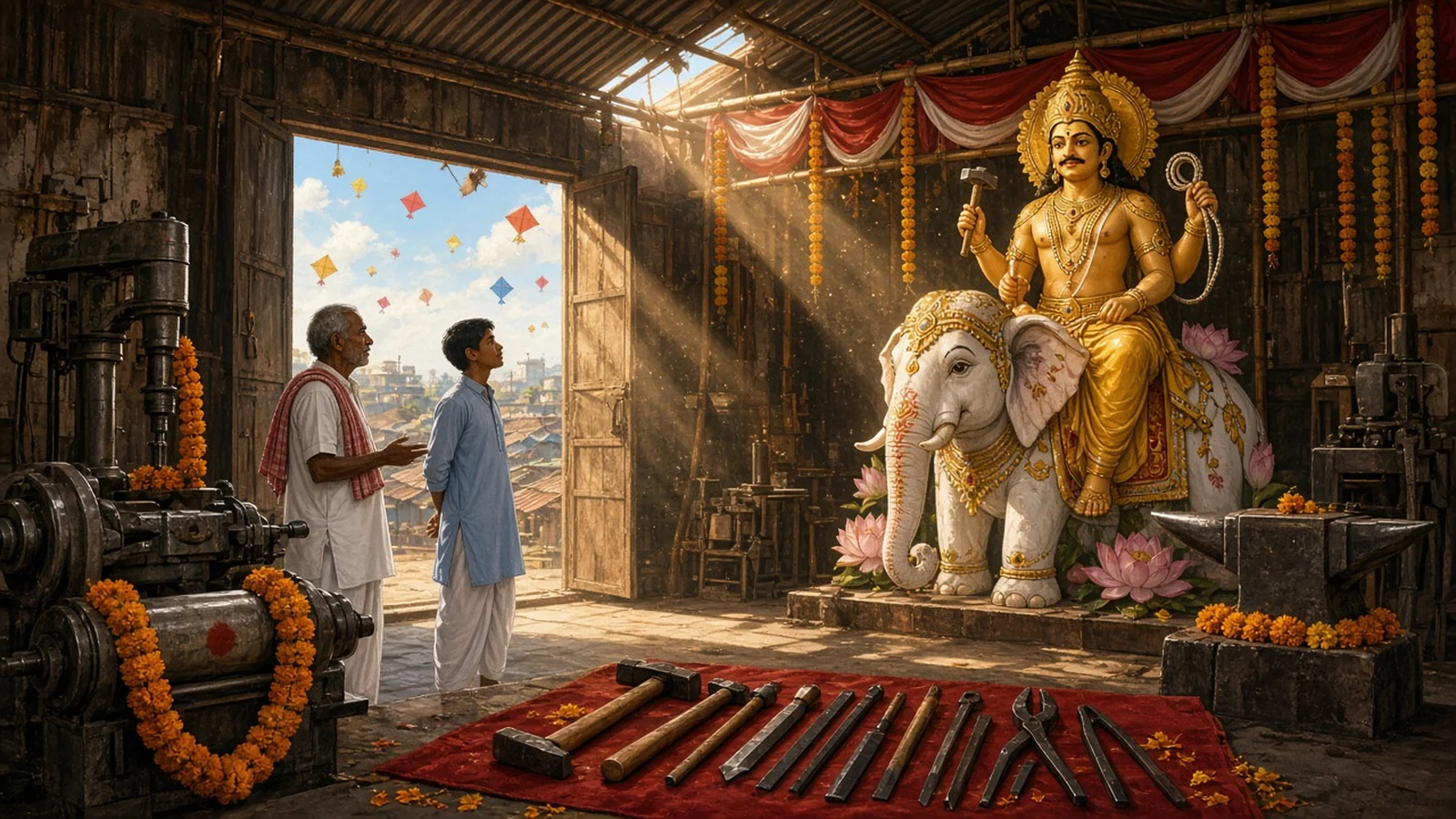
The eve: the image of Vishvakarma on his elephant arrives by hand-cart at the garage
The moment the sun enters Virgo; 14:14 IST in 2027 · Friday 17 September 2027
Kanya SankrantiBhadra SankrantiBiswakarma Puja
Not one machine runs. Lathes, looms, presses, furnaces, buses, taxis, autos and cycle rickshaws are washed and garlanded with marigold and marked with turmeric and vermilion, and the priest performs the puja before the image with the tools laid out in front of it; the workers pray for a safe year and smooth machines. Then the owner and the workers, their families and the lane sit down together for khichuri and labra, or for pitha and sweet rice in Odisha, served by the owner's own hand. Over Kolkata the kites go up from every rooftop from early morning and the cry of "Bho-katta!" follows every string cut. In Assam and Tripura it is a public holiday and the start of the festive season; in Nepal the government closes.
The day the tools rest: garlanded lathes and tools laid before the image while the priest does puja
The first day of Ashvin by the Bengali almanac · Friday 17 September 2027
Bisarjan
The image is carried to the river or the tank and immersed, in Kolkata and Howrah in the Hooghly, in Guwahati in the Brahmaputra and the city's ponds, and the machines are switched on again. A few weeks later the same pandal makers and image makers are at work for Durga Puja, and in Bengal the craftsman's day has always been the sign that the goddess is near.
The day after: the image of Vishvakarma is carried down the ghat into the Hooghly
Kolkata and HowrahThe factory floor and the rooftop
Bengal is where the puja took its present shape. It began in the nineteenth century as tool worship among the jute mill hands of Howrah and Hooghly, who laid their implements before a pitcher, and spread to the engineering works, cotton mills, foundries and chemical factories; between 1900 and 1910 the workers settled on a sculpted image, and the swadeshi firms and the European mill owners alike kept the day. Today it belongs to the garages, the cycle repair shops, the bus depots and the taxi, auto and rickshaw stands as much as to the mills, with an image at every corner, though the idol makers of Patuapara and Kumartuli say the orders shrink as the factories close. The kites are Kolkata's own. From early on the day the rooftops of the north of the city are full of flyers cutting one another's strings, a custom the city traces to the Lucknow kite makers who followed the exiled Nawab Wajid Ali Shah to Metiabruz, and which rural Bengal, where the fields are under paddy in September, does not share.
Jharkhand and BiharThe mines and the workshops
Jharkhand, the state of the steel towns and the coalfields, keeps the day as a government holiday, and the garages, workshops and plants set up the image and rest their machines as Bengal does. Bihar keeps it in its factories and workshops too, and the jute mill hands who first worshipped their tools in Howrah were Bihari as well as Bengali.
OdishaBiswakarma Puja
Workshops, factories and mechanical shops in the industrial estates of Bhubaneswar and across the state clean their tools and premises days ahead, lay rangoli and flowers, install the image and worship the machines; construction sites keep it for the safety of the work, and schools and colleges for their students. Employers feed their workers, and the prasad is pitha, sweet rice and fritters. Odisha's own image makers, the Maharanas, count themselves among the craftsman's descendants.
Assam and TripuraBiswakarma arrives on his elephant
In Guwahati every workshop, industry, hired-vehicle stand, construction office and tool shop sets up a pandal; the machines are cleaned, every vehicle is washed and decorated, the pujaris chant, and khichdi, labra and tomato tok are served to queues. The image always rides its elephant, comes by truck, rickshaw or pushcart, and goes to the water the next day. The day is a state holiday, the puja has grown past Saraswati Puja in size, and a small Vishvakarma temple stands at the foot of Nilachal hill below Kamakhya. Tripura keeps the same day, down to the State Rifles' battalion puja at Agartala.
Punjab, Haryana and the Hindi beltVishvakarma Day, the morning after Diwali
In the north the craftsman's day is lunar and falls with Govardhan Puja, the day after Diwali. In Ludhiana the hand-tool factories stay shut from Diwali through Vishvakarma Day, and the owners call in the workers who have not gone home for Chhath to clean the machines and do the puja; in Bathinda the industrial units and even the plumbers' union set up the picture and feed whoever stops. The image here is the old man with the white beard, four arms and a goose, his five sons around him. In Lucknow the same morning is the Jamghat, the kite day of the Nawabs.
Gujarat and RajasthanThe Suthars and the Gajjars
The carpenter Suthars and the stone-carving Gajjars of Gujarat and Rajasthan keep Vishvakarma as their own patron, and their day falls in the Diwali week beside the new account books and the Gujarati new year; the Bhai Dooj page notes that in some houses the tools are blessed one day and the brother the next.
The southThe Vishvakarma communities
In Andhra, Telangana, Karnataka, Tamil Nadu and Kerala the five crafts, carpenters, blacksmiths, bell-metal workers, stonemasons and goldsmiths, call themselves Vishvakarmas or Vishvabrahmins, in Tamil Nadu Kammalar, and trace their five groups to his five sons. Their own day for him is Rishi Panchami, which they keep as the day the five sons met to honour their father, and many workshops keep the September date as well. Their claim to Brahmin standing is their own and is not generally accepted outside the community.
Hindu workers of every tradeThe floor is the temple
Vishvakarma has almost no temples, and the puja needs none. For one day the shop floor, the garage, the depot and the site are the shrine, and the owner, the engineer, the fitter and the sweeper stand before the same image and eat together. Everyone whose living depends on a tool is his, and the Rigveda's maker belongs to the welder as much as to the architect, and a report from Assam says the puja brings people of different faiths together on the floor.
Engineering colleges and officesThe workshop puja
Engineering colleges across the north and east hold the puja in their mechanical workshops on 17 September, with the heads of departments, the lab assistants and the students praying for the smooth running of the machines, and offices that work with machinery or vehicles keep it as the workers' own festival; the IT parks of Kolkata, the sociologists note, mostly do not.
The Vishvakarma communitiesThe children of the five sons
The craft communities who bear his name keep the day as a family festival and not only a workplace one, with their own text, the Vishvakarma Puranam, their own day, Rishi Panchami, and the tradition that the five crafts descend from his five sons Manu, Maya, Tvashta, Shilpi and Vishvajna.
How it is kept
The image comes the evening before and the pandal goes up where the work is done. In the morning nothing runs. The lathes and looms, the presses and furnaces, the buses, taxis, autos and rickshaws are washed, oiled, garlanded with marigold and marked with turmeric and vermilion; the tools are laid out in rows before the image; a priest, or the owner himself, performs the puja, and prasad goes round. Then everybody eats together, in Bengal and Assam khichuri and labra off leaf plates, in Odisha pitha and sweet rice, the owner serving. In Kolkata the rooftops fill with kite flyers cutting each other's strings with the cry of "Bho-katta!". The next day the image goes to the river and the machines are switched on; The Day the Tools Rest follows one Howrah foundry through it.
After the puja the owner serves khichuri and labra to the workers and their families
The north keeps a different day. In the Punjab, Haryana and the Hindi belt Vishvakarma Day falls the morning after Diwali, with Govardhan Puja. The factories of Ludhiana shut from Diwali through that morning, the workers who have not gone home clean the machines and do the puja, and the image is the old, white-bearded four-armed craftsman with a goose at his feet and his five sons around him. The southern Vishvakarma communities keep Rishi Panchami for him as well, as the day his five sons gathered to honour their father.
Vishvakarma Day in a Punjab tool factory, the morning after Diwali
The date is the almanac makers' pride. Kanya Sankranti is the last day of Bhadra, and because the five Bengali months before it almost always total the same number of days, the puja falls on 17 September year after year, slipping to the 16th or 18th only when the count changes; the Bisuddha Siddhanta reckoning gives Saturday 16 September in 2028. No scripture prescribes the day.
In the old texts
The Rigveda knows Vishvakarman in two hymns, 10.81 and 10.82: a maker with eyes, faces, arms and feet on every side, who offered up all that exists, gave the gods their names, and cannot be found by the singers who look for him. The Brahmanas treat the name as Prajapati's and remember a king Vishvakarman Bhauvana who tried to give away the earth. The Mahabharata's Sabha Parva has Narada describe the assembly hall of Yama as Vishvakarma's work, and the epic makes him the architect of the guardians' halls and of Dwaraka. Valmiki's Uttara Kanda gives him Lanka, built at Indra's command on Trikuta by the southern sea, and the Lore tells how that city changed hands in The City Paid as a Fee. The Vishnu Purana makes him the son of the Vasu Prabhasa and Brihaspati's sister, the master of a thousand crafts by whose skill people live, and the father-in-law of the Sun.
The builders' own books claim him as well. The Manasara, a south Indian treatise in circulation by the fifth to seventh century, makes the four classes of builder the sons of Vishvakarman, Maya, Tvashtri and Manu; the Mayamata is named for the rival architect Maya, and the north's Vastu tradition is credited to Vishvakarma under titles like the Vishvakarma Prakasha. The Vishvakarma Puranam of the craft communities, dated to the seventeenth or eighteenth century, tells of his five sons and of a lodestone fort whose fall scattered the craftsmen among men. None of these texts names the September day; the almanacs and the mills fixed that.
Where this page comes from. Written by Devalok from the Rigveda's hymns to Vishvakarman (10.81 and 10.82), Valmiki's Uttara Kanda, the Mahabharata's Sabha Parva, the Vishnu Purana, the Manasara's genealogy of the builders, the Vishvakarma communities' tradition of the five sons, the Bengali almanac makers' explanation of the date, and accounts of the puja from Howrah, Kolkata, Guwahati, Odisha, Tripura and the Punjab, as recorded in the Devalok Lore. Our own words throughout.