As Maharashtra tells it: the lamp at Subhadra's door
Maharashtra, Goa and the Konkan · Bhau Beej · 3 min read
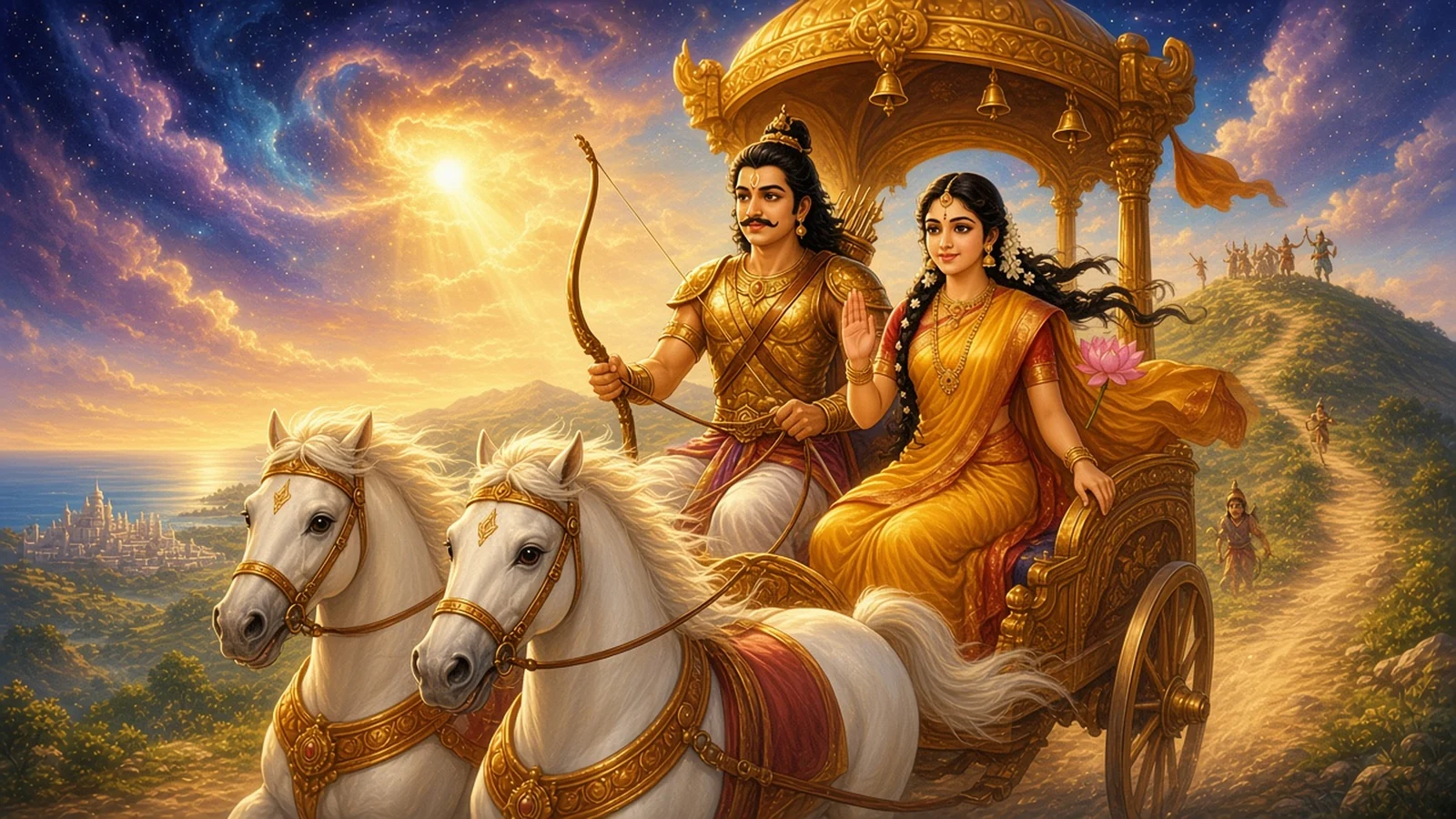
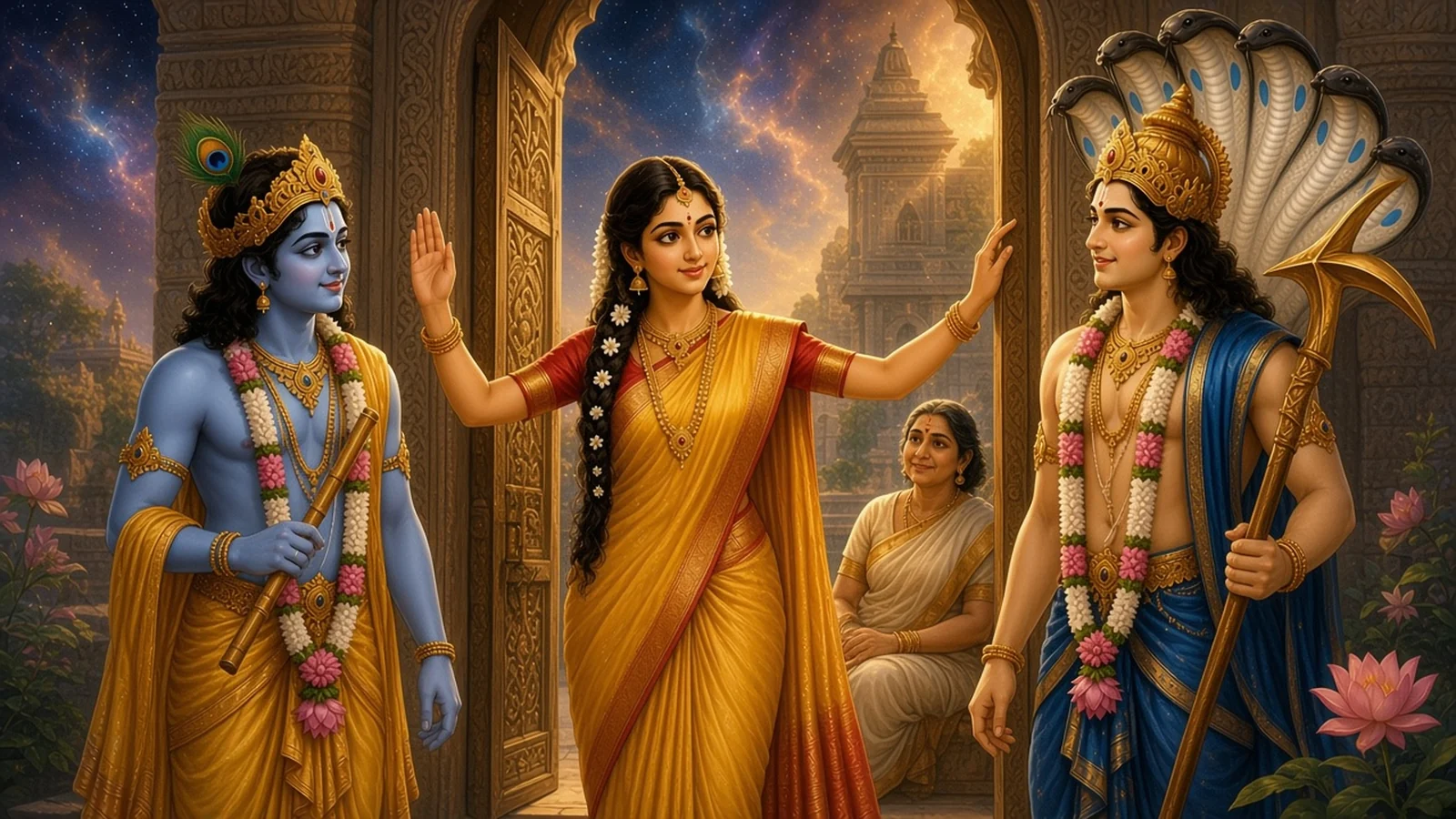
The news reached Dwaraka before Krishna did. Naraka of Pragjyotisha was dead, the sixteen thousand women he had kept in his palace were free, and Aditi had her earrings back. The city hung garlands over its gates and went out to the road to wait.
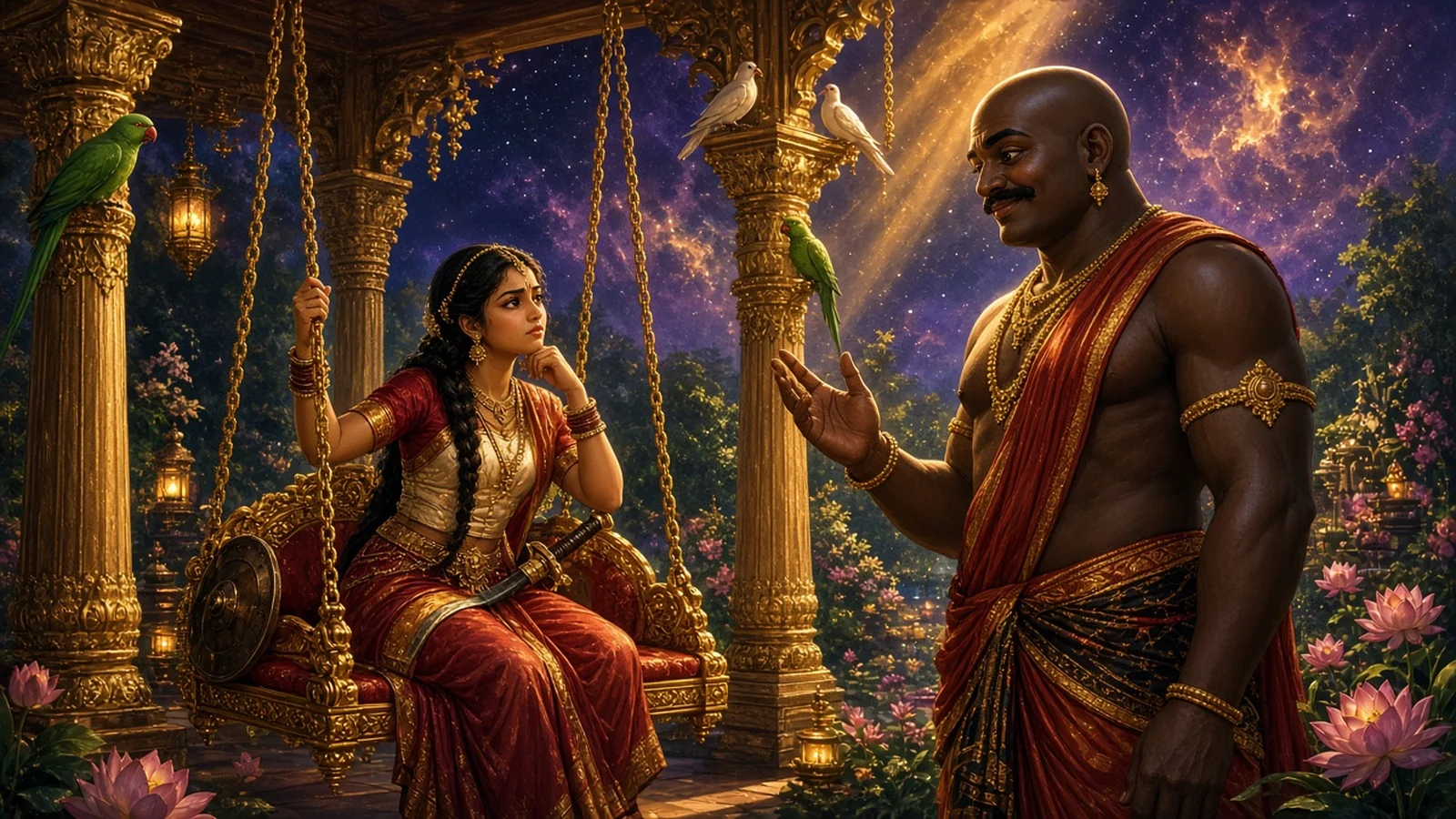
Subhadra did not go to the gates. She went home and lit a lamp.
"He will come here first," she told the women of her house. "Before the council, before the queens, before anyone. He always does."
"The whole city is standing at the gate," one of them said.
"Let the city stand at the gate. I will sit at the door."
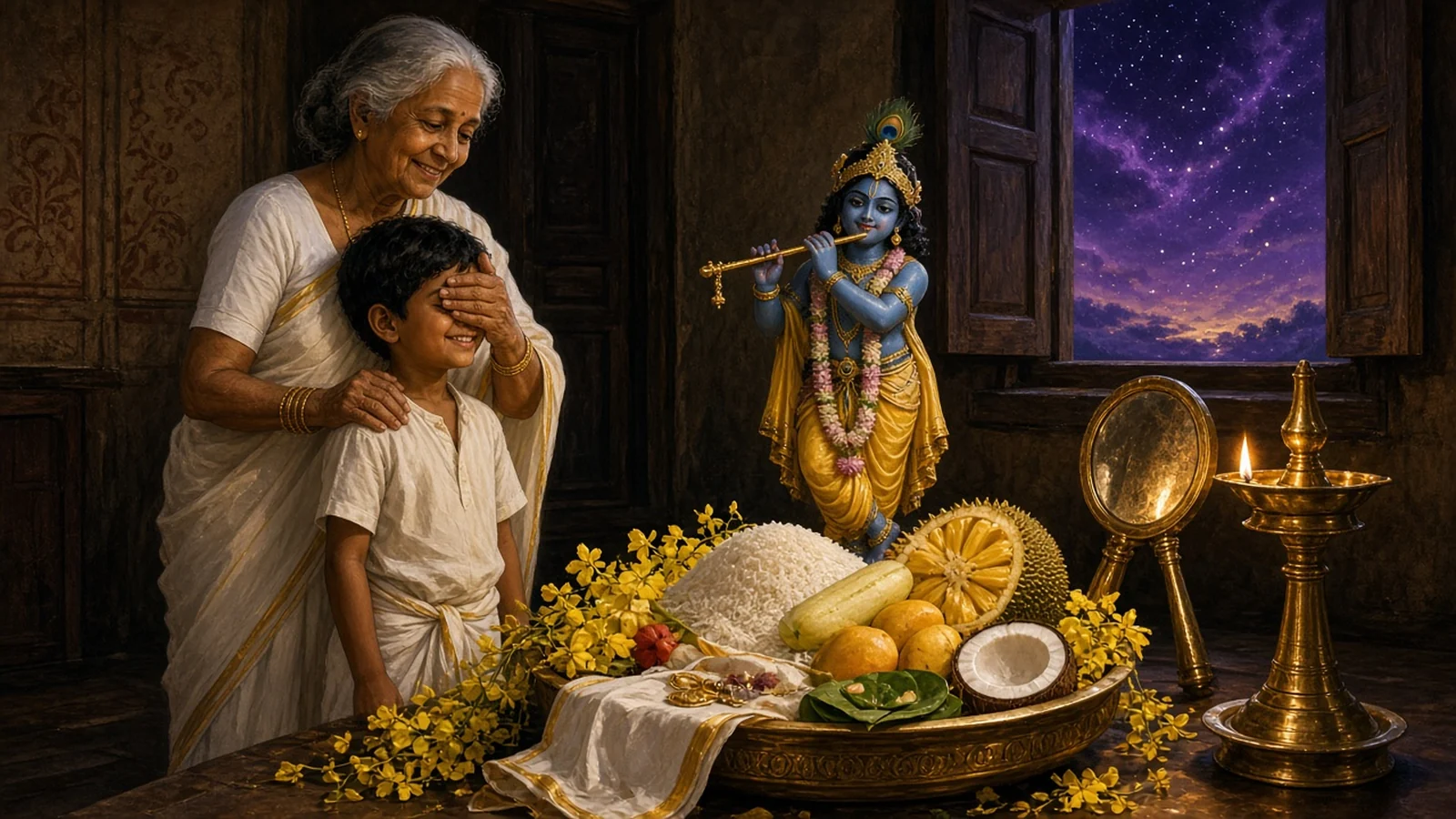
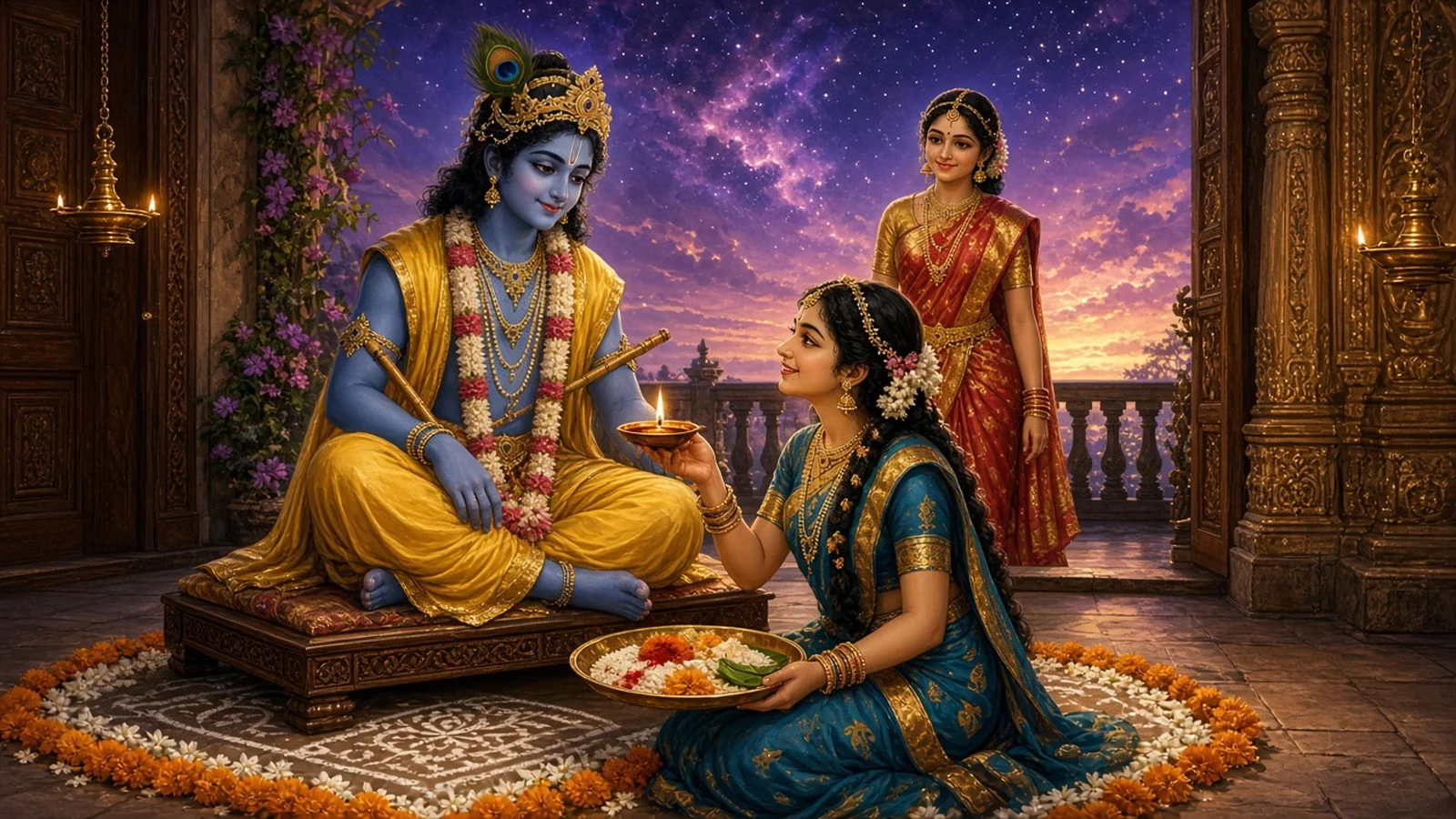
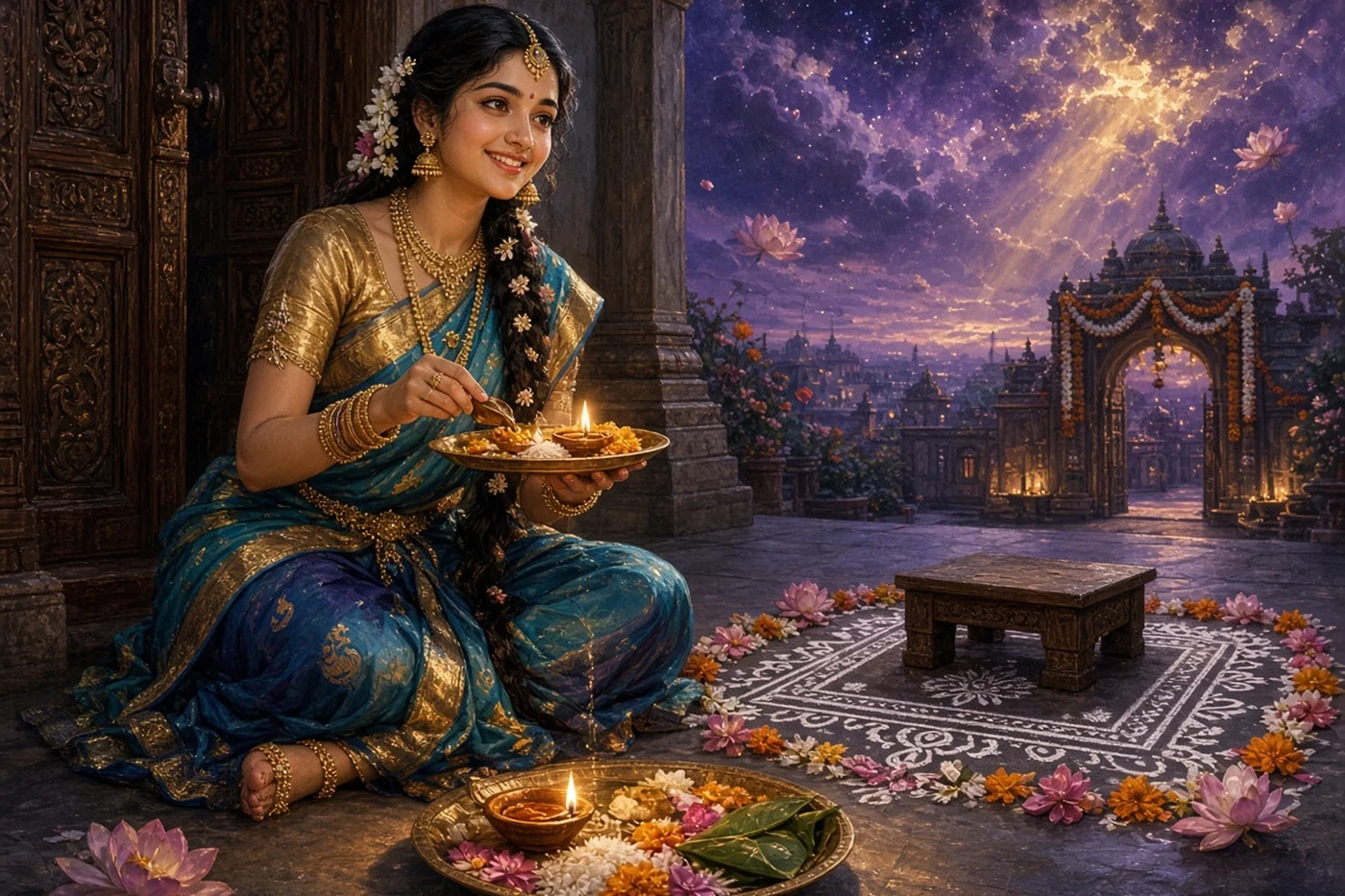
She swept the threshold and drew a square on the floor in white powder, with a border of flowers, and set a low wooden seat inside it. On a platter she put rice, flowers, sweets, betel leaves and the lamp. Then she sat down beside it, and the lamp burned low, and she filled it again.
He came on foot, with Satyabhama a step behind him and the dust of the road still on him. He stopped at the square on the floor and looked at it, and then at her.
"You knew I would come here."
"I knew," said Subhadra. "Sit."
He sat on the seat inside the square. Before anything else she asked him what he had eaten before he went out to fight, and he laughed.
"A bitter fruit off a tree by the road. There was no time for more."
So she had a bitter fruit brought, the small wild karith, and put it into his hand. "Then taste it once more," she said, "and let it be the last bitter thing you taste this year."
She waved the lamp before his face three times, slowly, the way a sister does for a brother who has come back from somewhere she could not follow. She touched kunku to his forehead and pressed grains of rice into it. She hung the flowers round his neck. She held the sweets to his mouth with her own hand.
"What is all this for?" he asked, with his mouth full. "I am home."
"It is for the next time you go," she said. "Live long. Come back from every road you take, and come to my door first when you do."
Then she stood with her hands folded and waited, and he understood what was expected of him. He slipped the gold bangles from his own wrists and laid them on the platter beside the lamp.
"That is your ovalni," he said. "Now feed me properly. I have had nothing but bitter fruit."
She fed him basundi, thick and sweet, with puris hot from the pan, and Satyabhama with him, and the household ate after them, and nobody went down to the gate that evening at all.
That, say the people of Maharashtra, Goa and the Konkan coast, was the first Bhau Beej. On the second day of the bright half of Karttika, when the lamps of Diwali have burned for four nights, a sister draws a square on her floor and seats her brother in it, facing north. She gives him the bitter karith to taste, because Krishna tasted it. She waves the lamp and the kunku before him, the ovalne, and prays that he live long, and he lays his gift, the ovalni, on her platter. Then she feeds him basundi, puran poli and shrikhand, and a woman who has no brother waves the lamp to the moon instead.
As Bengal keeps it: the mark and the thorn
Bengal · Bhai Phonta, the second day after Kali Puja · 2 min read
In a flat in Kolkata, two mornings after Kali Puja, a girl of twelve had eaten nothing since she woke.
"You can have one biscuit," her mother said. "Nobody will know."
"Yama will know," said the girl, and went on grinding the sandalwood.
She ground it on a wet stone until it was a paste, mixed in a spoon of curd, and set it on a brass plate with a dab of kajal, a few grains of paddy, a sprig of durba grass and a dish of sandesh with the word Bhaiphonta piped across each one in pink. Her brother, who was nine, was made to bathe, put on a new kurta, and sit on a mat facing east.
"Close your eyes," she said. "No. Open them. I want you to see this."
She dipped the little finger of her left hand in the paste and touched it to his forehead three times, and as she did it she said what every sister in Bengal says that day:
"I put the phonta on my brother's forehead, and a thorn falls at Yama's door. Yamuna gives the phonta to Yama; I give the phonta to my brother."
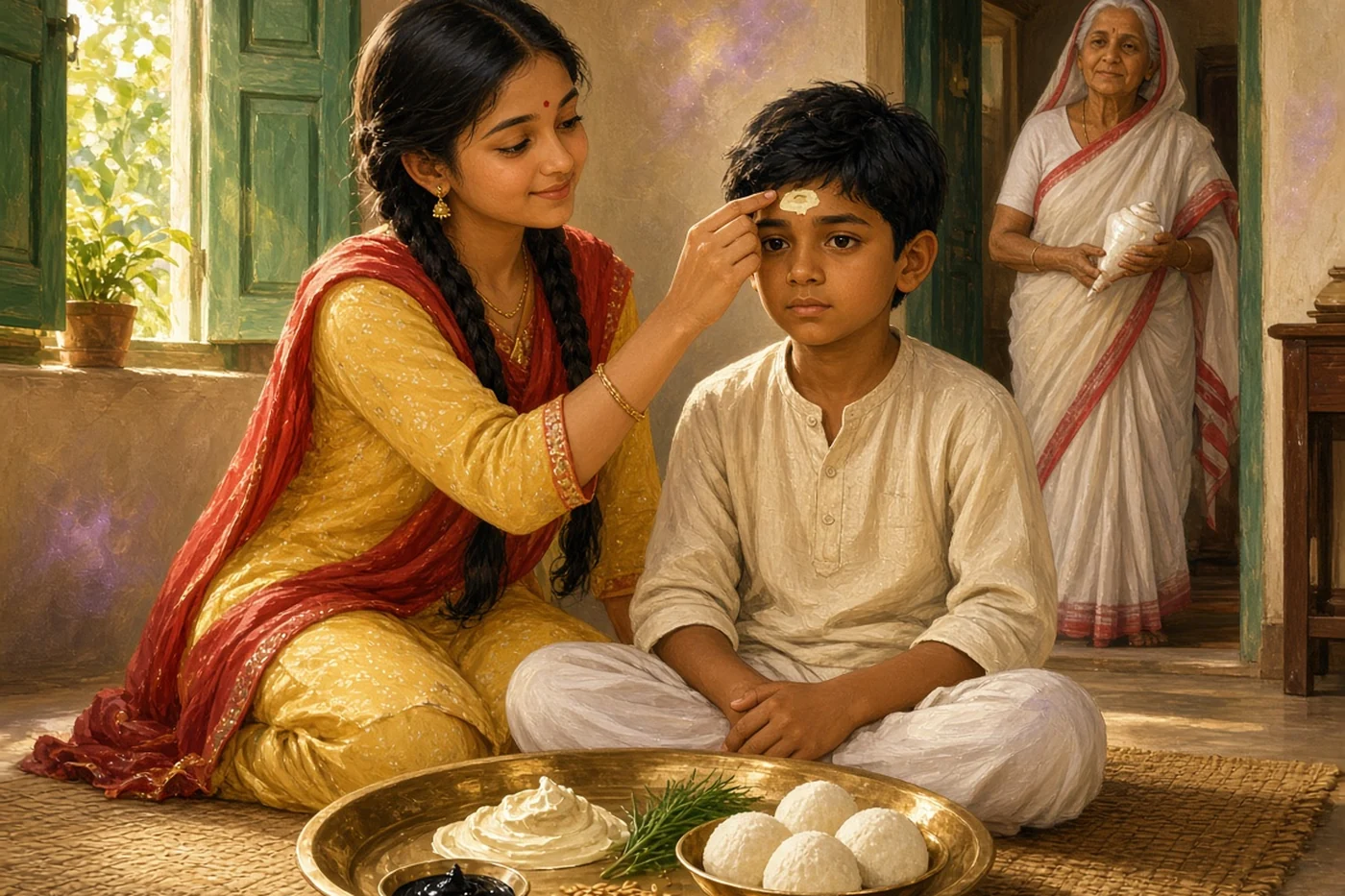
Their grandmother blew the conch in the next room and their mother gave the long ulu call, and the brother jumped.
"Who is Yama?" he asked. "And why a thorn?"
"Yama is the one who comes for people," his sister said, sprinkling the paddy and the grass on his head. "The thorn is so that he trips at your door and cannot come in. Yamuna was his sister. She put the mark on him once and fed him, and he promised that any brother who got the mark from his sister that day would not be called before his time. That is one story."
"Is there another one?"
"Grandmother's story is Krishna's. He had killed a demon called Naraka, and when he came home his sister Subhadra put the mark on his forehead and fed him sweets, and that was the first phonta. Grandmother says that one is the real one. The priest at the Kalibari says Yama's is. You can pick."
"I pick the sweets," said her brother.
She put a sandesh into his mouth, and with that the fast was over and she ate the next one herself. He gave her a pen he had chosen with his own money and had been hiding for a week. At lunch there was fish, because in Bengal there is always fish, and he ate until he could not move, which is the point of the day.