Festival · The thirteenth of wealth, the first evening of Diwali
Dhanteras
Dhanteras is the thirteenth day of the dark fortnight before Diwali, and the day the festival begins. Families clean the house and buy something of gold, silver or metal, worship Lakshmi and Kubera at dusk, and set a single lamp outside the door facing south for Yama. It is kept as the birthday of Dhanvantari, the physician of the gods who rose from the churned ocean with the pot of nectar, and the Government of India observed it as National Ayurveda Day from 2016 to 2024.
When is Dhanteras in 2026? Dhanteras evening is Friday 6 November 2026. In 2027: Wednesday 27 October 2027. The thirteenth day of the dark fortnight of Kartika, which the amanta calendar of the south and west counts as Ashvin, two days before the new moon of Diwali, in October or November.
Also calledDhanatrayodashiDhantrayodashiDhanvantari TrayodashiDhanvantari JayantiYama DeepamDhanya TerasKaag Tihar (Nepal)
Next, in 2026Friday 6 November 2026
Prime godsLakshmi and Dhanvantari
with 2 more
WhereAll India and Nepal, above all the north and the west; Kerala for Dhanvantari's temples
How longOne day, from the morning's buying to the lamp at night
The thirteenth day of the dark fortnight of Kartika, which the amanta calendar of the south and west counts as Ashvin, two days before the new moon of Diwali, in October or November
Why it is kept
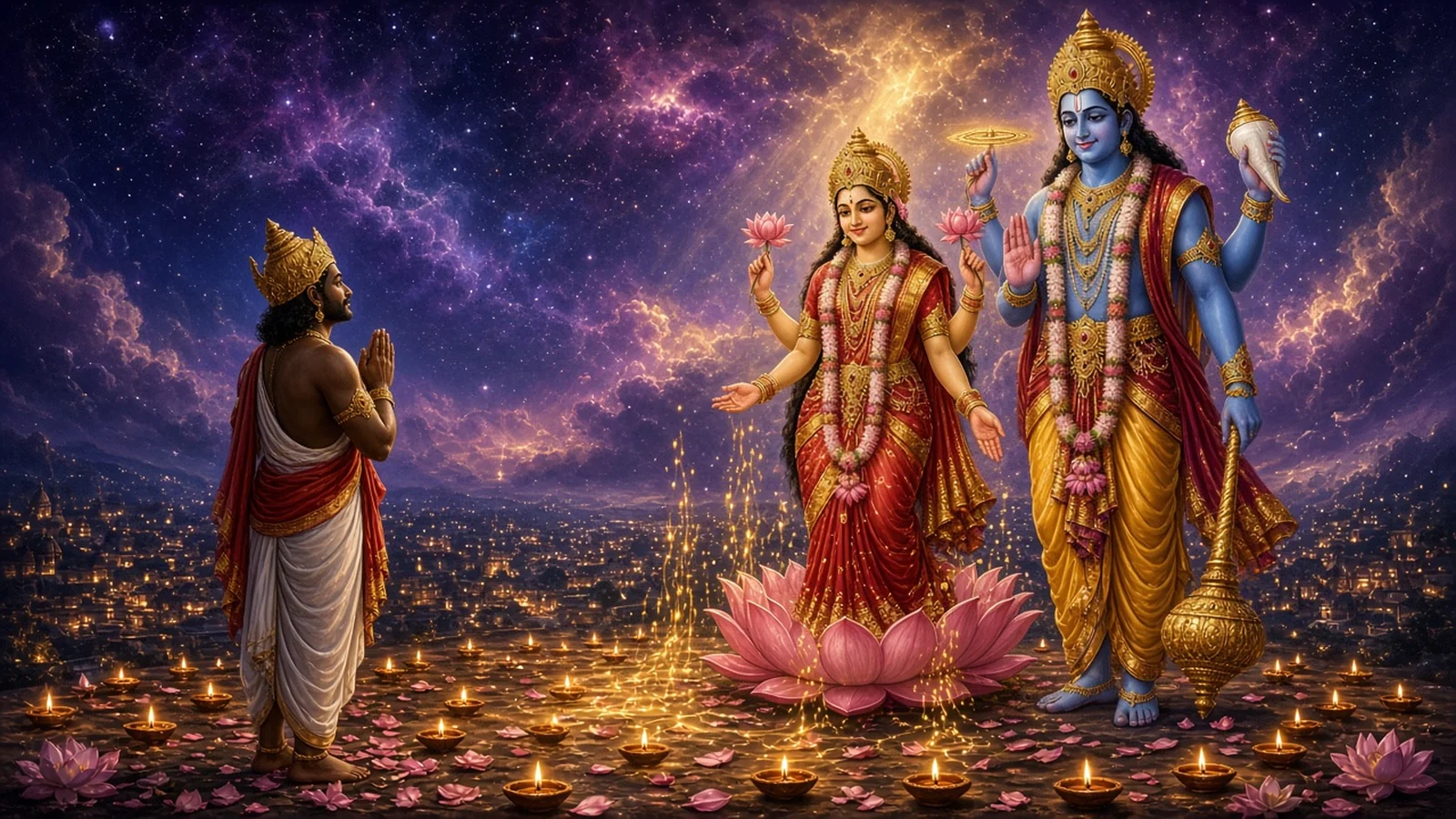
Dhanteras is the day Diwali begins, and the day it goes shopping. The name is dhan, wealth, and teras, the thirteenth, and on the thirteenth of the dark fortnight before the new moon of Kartika the jewellers and utensil shops of India have the day they wait for all year. Behind the shopping stand three gods: Lakshmi, who comes at dusk to a clean house; Dhanvantari, the physician who rose from the sea with a pot in his hands; and Yama, who is given one lamp at the door and asked to pass by.
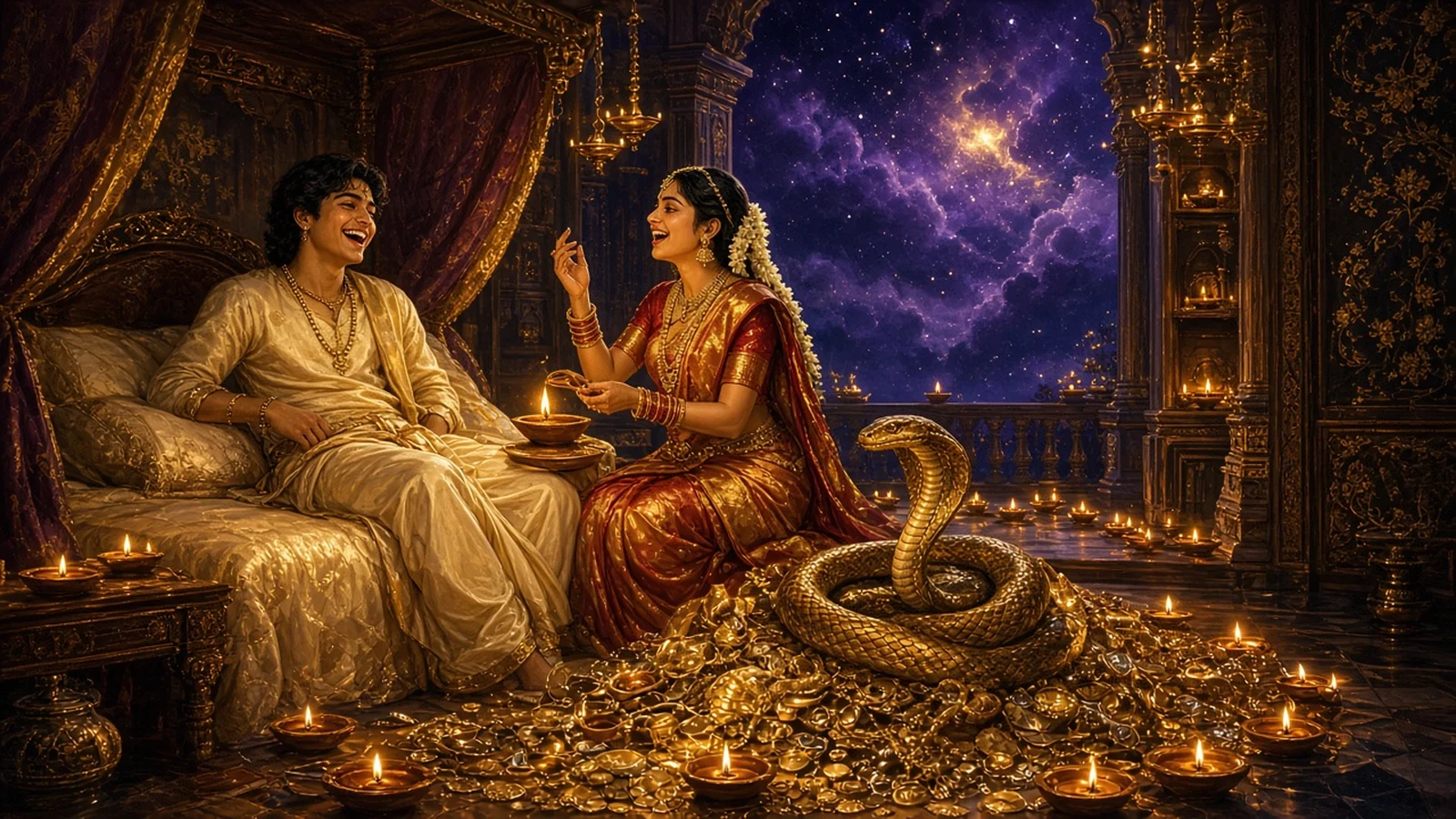
The oldest reason is the lamp. The Skanda Purana says that on the thirteenth of the dark half of Ashvin, in the early part of the night, a lamp is to be set at the entrance of the house facing south, and that whoever does so will not be fetched to Yama's city during the festival of lights, even if an untimely death is written for them. The Purana tells of a king's infant son saved that night; the people tell of King Hima's son, whose bride kept Death out with a heap of gold and a night of songs.
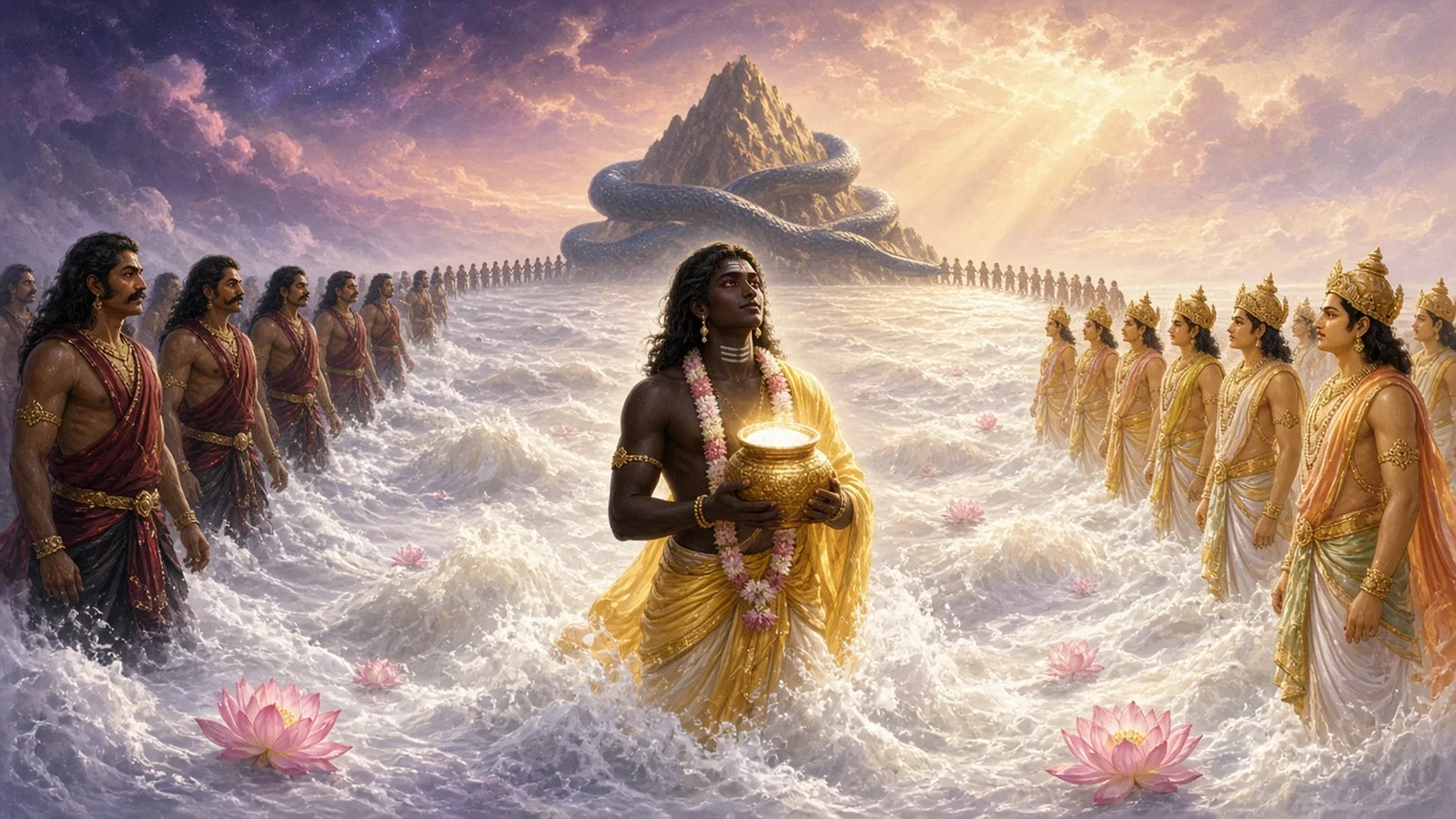
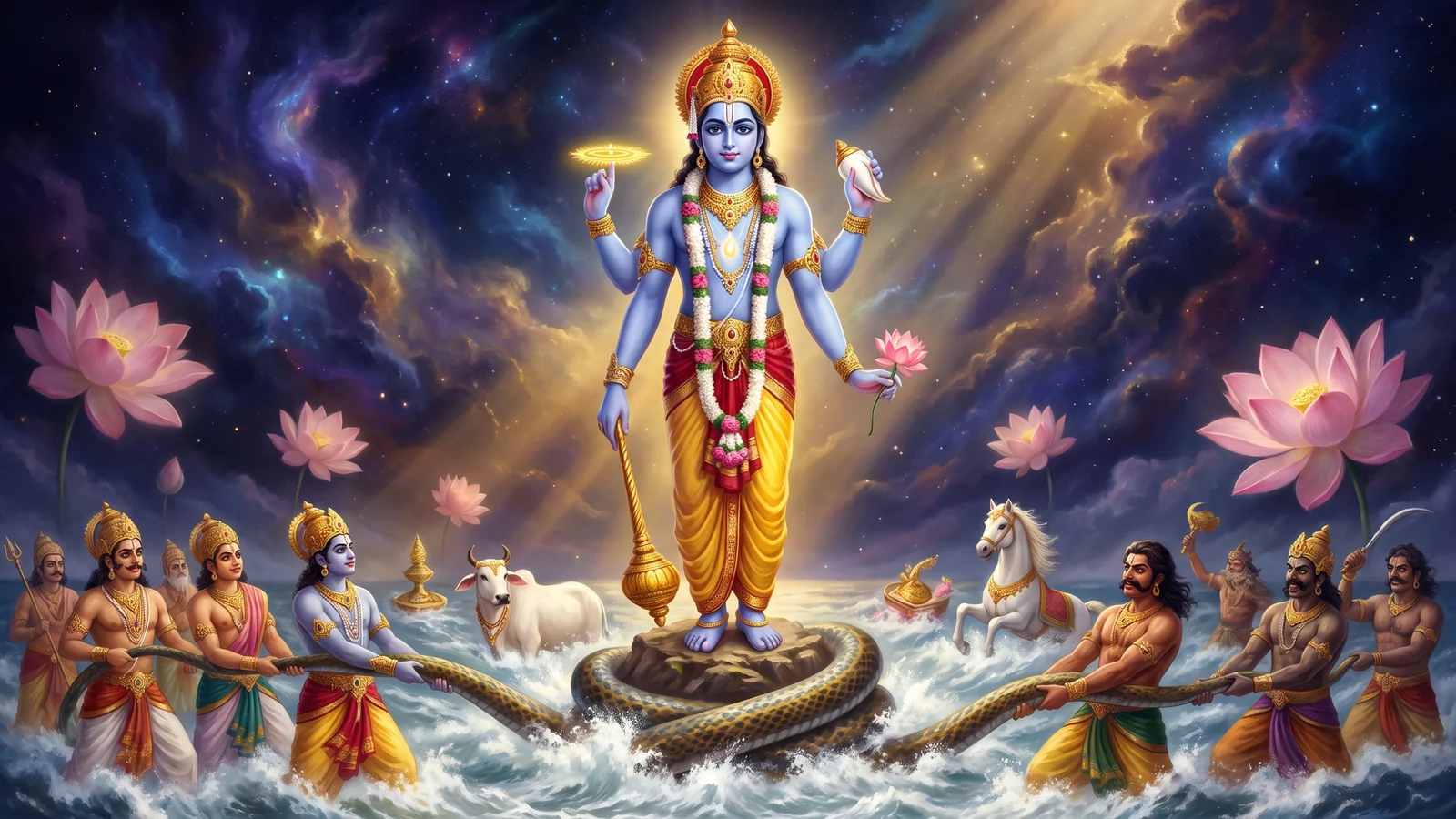
The second reason is the physician. When the gods and asuras churned the ocean of milk, the Bhagavata says, the last thing to rise after Lakshmi was a dark young man in yellow silk carrying a pot full of amrita. He was Dhanvantari, a portion of Vishnu, and he knew the cure for every disease. The festival keeps the thirteenth as his birthday, and the new pot bought for the kitchen is his pot.
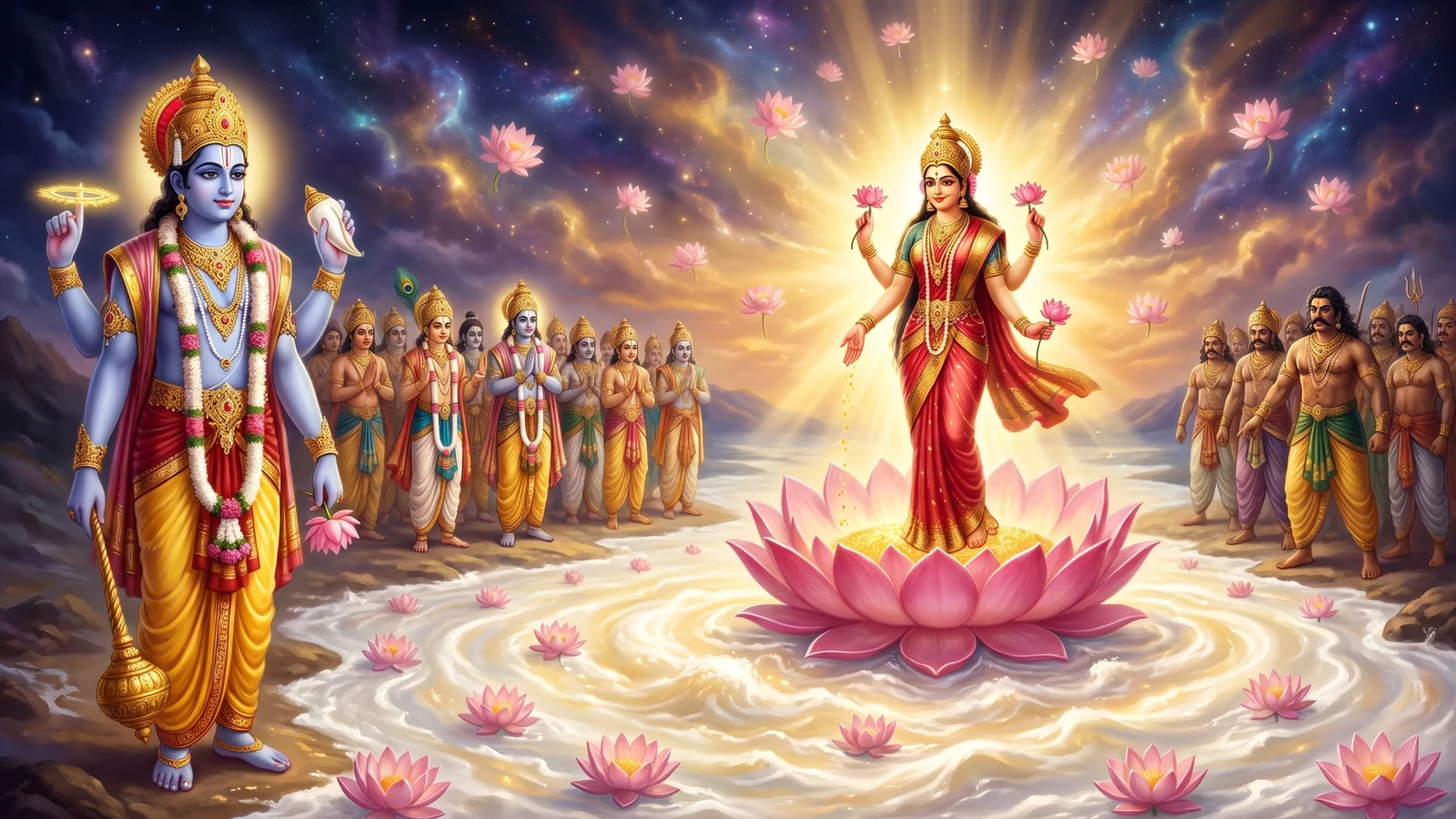
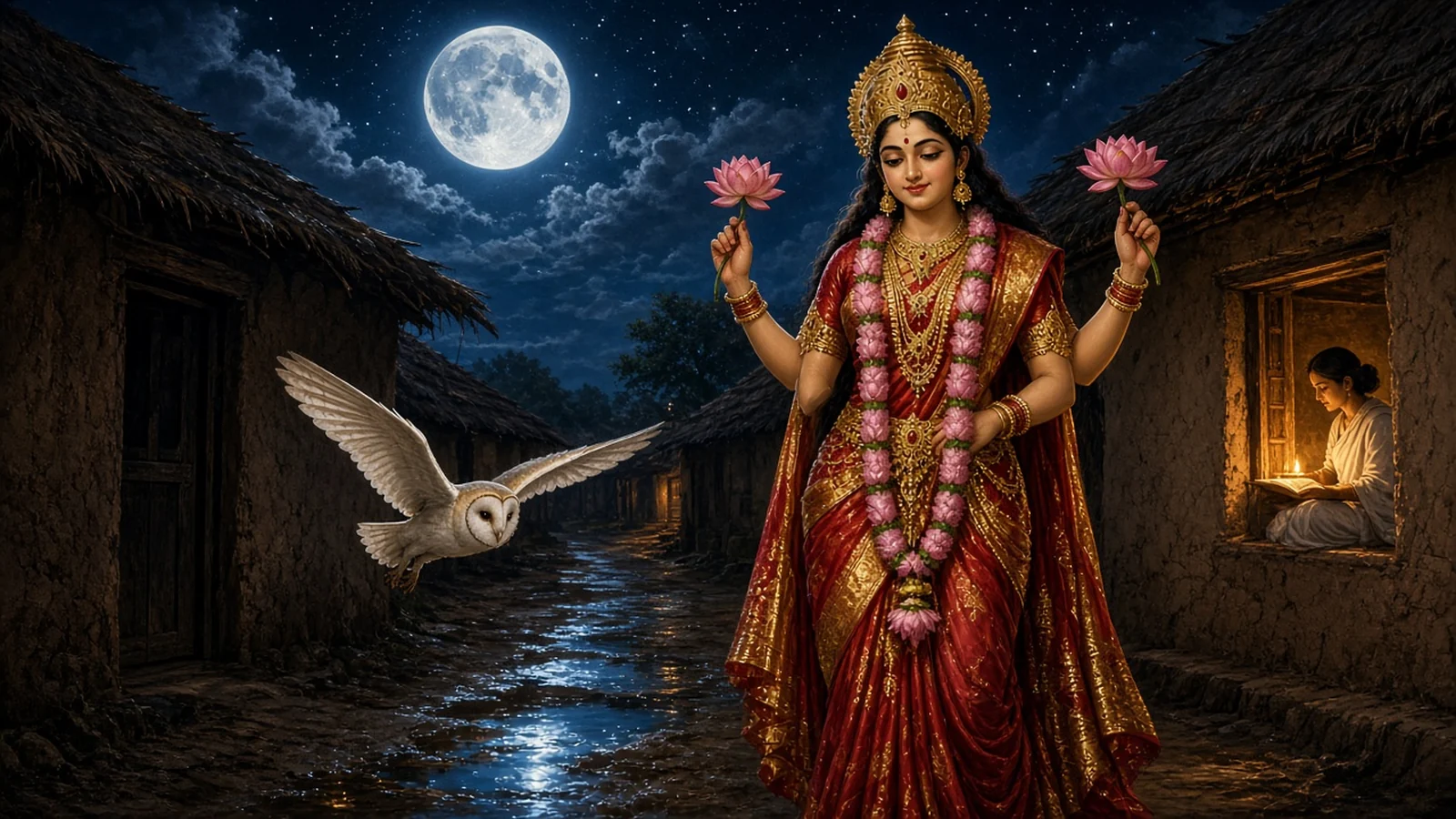
The third reason is Lakshmi's own promise, and it comes from no Purana. The katha read at home says she once broke a promise to Vishnu for a field of mustard and sugarcane, served the farmer who owned it for twelve years, and when she left swore to return every year on this night to any house that was clean and had a lamp burning. That is why the house is scrubbed, why the lamp is lit at dusk, and why she is worshipped with Kubera, the treasurer of the gods, beside her.
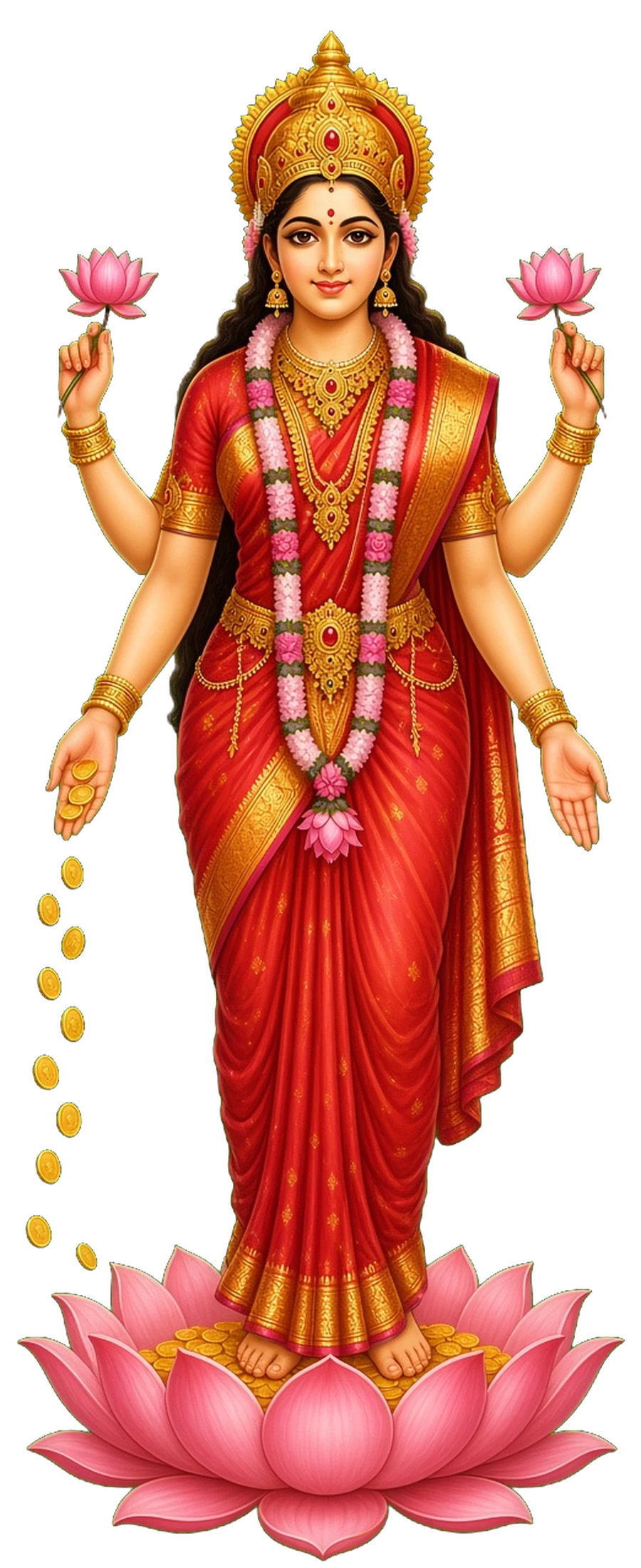
The goddess of the evening puja. The katha says she promised a farmer to come back every year on this night to a house that is clean and lit, and the lamps and the new metal are set out to receive her.
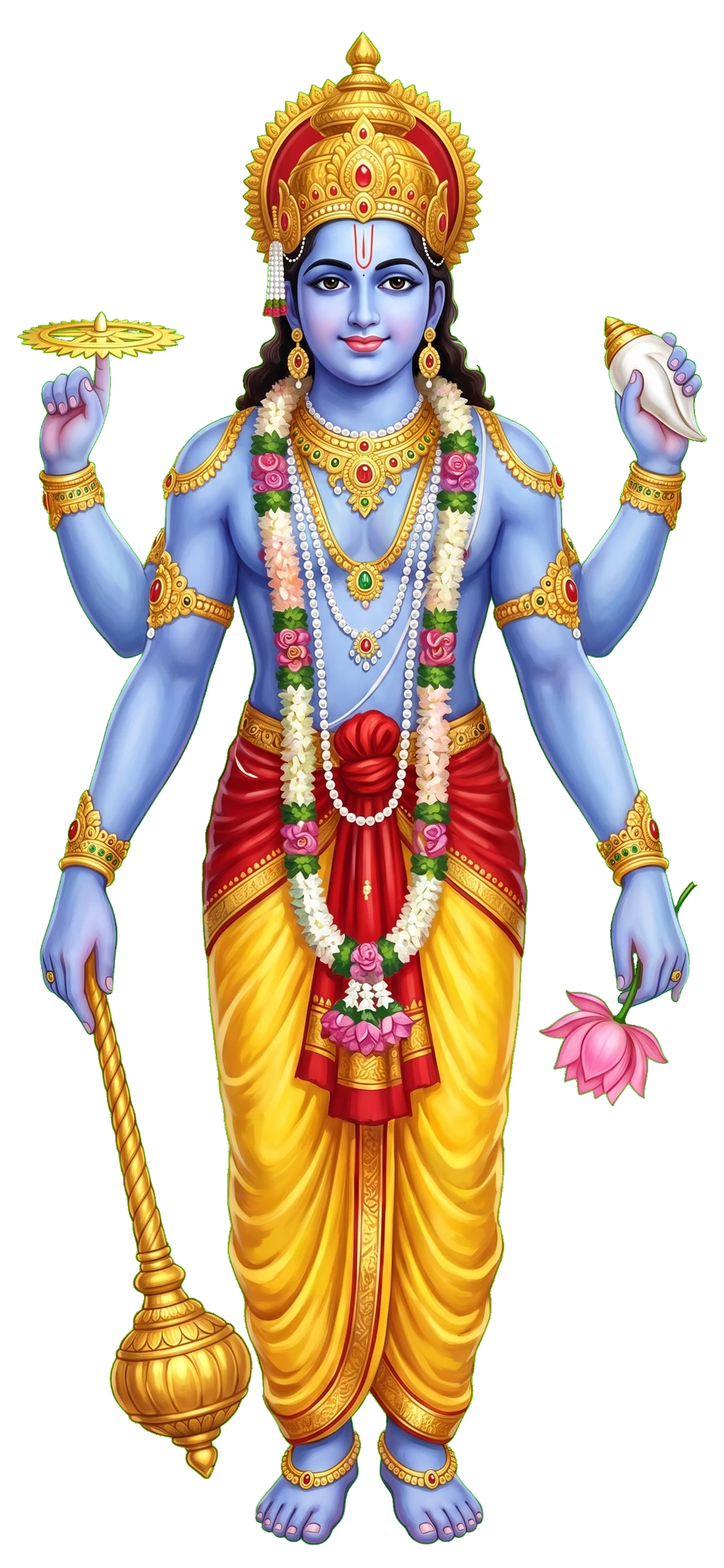
The physician of the gods, a portion of Vishnu, who rose from the ocean of milk carrying the pot of amrita. The day is his birthday, Dhanvantari Jayanti, and the pots bought on it recall the pot in his hands.
K
Kubera
The treasurer of the gods and lord of the Yakshas, worshipped beside Lakshmi at dusk, and by shopkeepers at the safe.
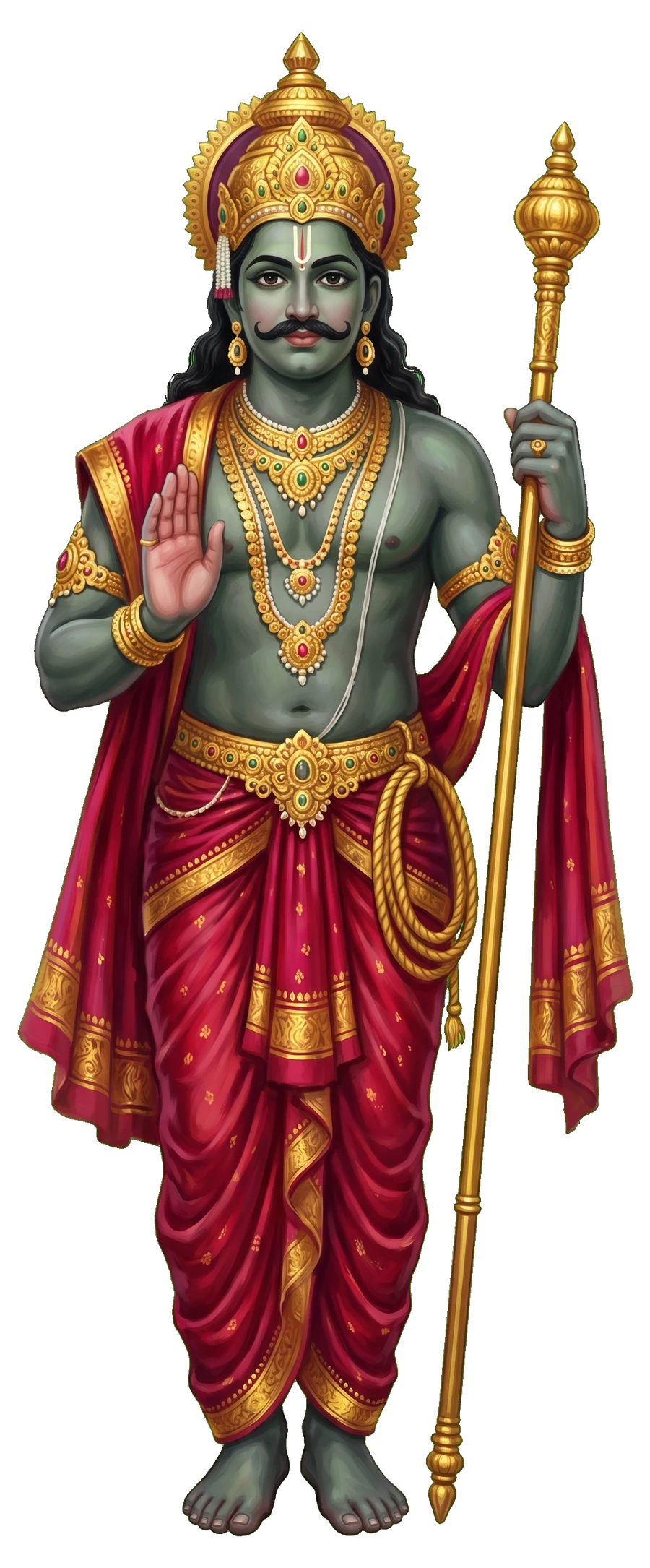
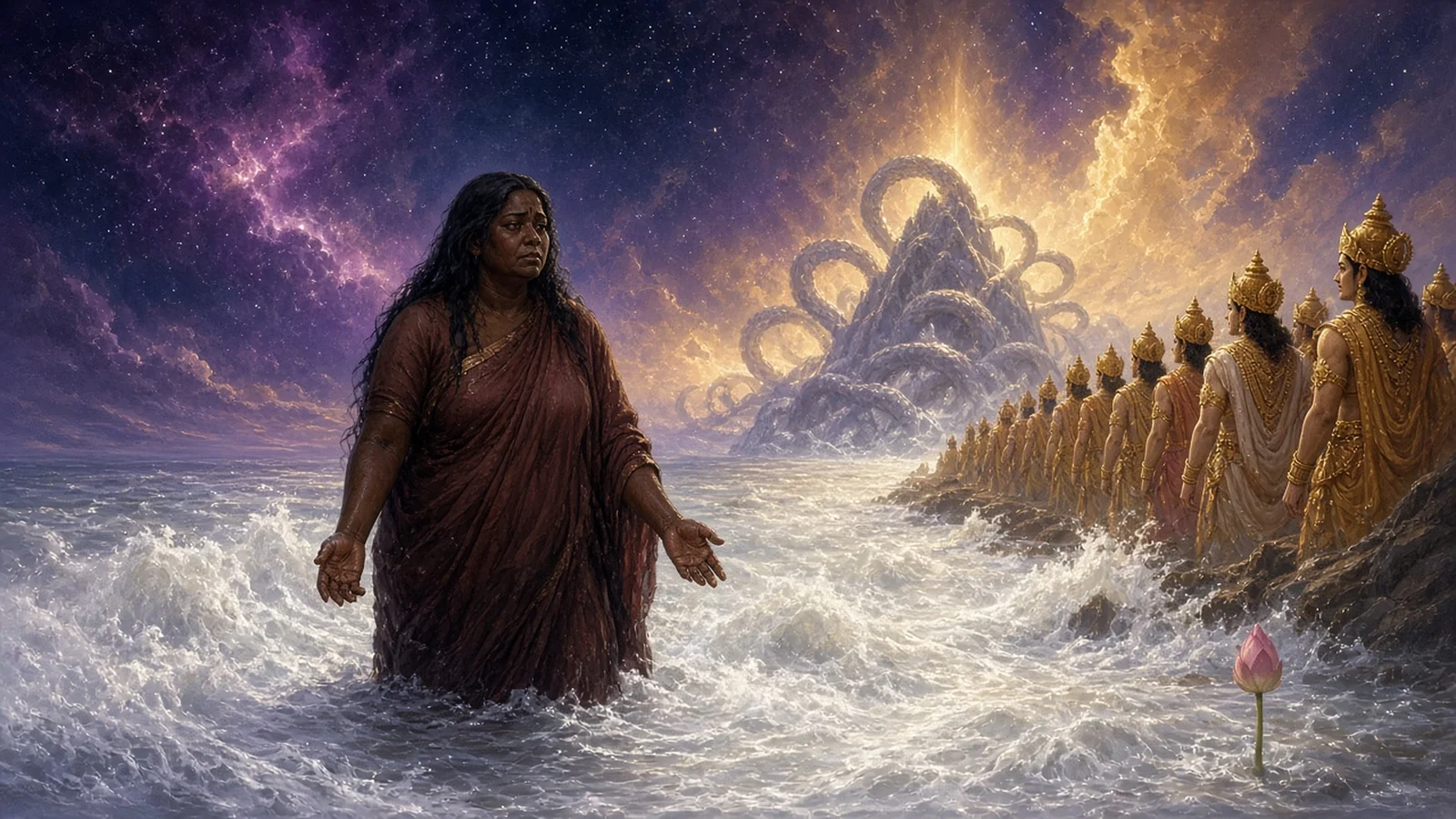
The lord of death, whose quarter is the south. One lamp is set outside the door facing his way in the early night so that no one in the house dies before their time.
The evening of Dhanteras
1
The day
The thirteenth of the dark fortnight of Kartika · Friday 6 November 2026
Dhanatrayodashi
The house is swept, washed and set in order for Lakshmi, and the bazaars are at their busiest of the year. Families buy gold or silver, a coin, a bangle, or a new pot of brass, copper or steel for the kitchen, and in many towns a new broom. Shopkeepers clean the shop and the safe, and traders' families bring their ledgers home for the evening puja.
Pradosh, the hour after sunset · Friday 6 November 2026
Lakshmi Kubera PujaDhanvantari Puja
In the hour after sunset the first lamps of Diwali are lit along the doorstep, and Lakshmi is worshipped with Kubera and, in many homes, Dhanvantari and Ganesha beside her. Rangoli is drawn at the door with small footprints leading in. The new metal is placed before the goddess. In Kerala people go to the Dhanvantari temples and ask him for health.
The early part of the night · Friday 6 November 2026
Yama DeepamYamadipadana
One lamp is carried outside and set at the entrance facing south, Yama's quarter, with a prayer that nobody in the house be taken before their time. Many light thirteen small lamps of wheat flour for him. Inside, the lamp for Lakshmi is kept burning till morning.
The day the Diwali shopping begins in earnest. The gold and utensil bazaars of the northern towns are crowded till late, the katha of Lakshmi and the farmer is read at home before the evening puja, and after dark the lamp for Yama is set out at the door facing south. Varanasi is the Kashi where the Harivamsha and the Vishnu Purana set Dhanvantari's second birth, in the line of its kings.
Gujarat, Rajasthan and MaharashtraDhantrayodashi
In Maharashtra dried coriander seed is pounded with jaggery and offered at the evening puja. Marwari and Gujarati trading families bring the ledgers, the keys of the safe and the inventory books home to be blessed on Dhanteras, and open the new year's books at the Chopda Pujan on Diwali night; for them Diwali begins the business year, and Gujarat's new year follows on the day after the new moon.
KeralaDhanvantari Jayanti
Kerala keeps the day for the physician. At Thottuva near Perumbavoor the six-foot east-facing Dhanvantari holds the pot of amrita and is offered butter and fresh milk; at Nelluvai in Thrissur a herbal prasada, mukkudi, is made every morning for the sick, and the idol is said to have been set up by the Ashvins themselves. Most of the temples India has built to him stand in Kerala, where Ayurveda is practised every day.
Tamil Nadu
Srirangam has a shrine to Dhanvantari in the courtyard of the Ranganatha temple, whose founding a stone of the twelfth century records, and a herbal decoction is handed to visitors there. In Brahmin homes a medicinal preparation, the marundu, is made for the dawn of Naraka Chaturdashi, the next morning, and eaten before sunrise.
NepalKaag Tihar
The same thirteenth is the first day of Tihar, and belongs to the crows, the messengers of Yama, who are fed grain and sweets on the rooftops so that death and grief keep away in the coming year. Jewellery and utensils are bought as in India, and the day is kept as Dhanwantari Jayanti.
Bengal
Bengal's own night of Diwali is Kali Puja, but the jewellers of Kolkata now count on Dhanteras. Queues form at Gariahat, Burrabazar and Bow Bazar for small coins and light pieces, and about a third of the city's small jewellers make their year on this one day.
JainsDhanya Teras
Jains call the day Dhanya Teras, the blessed thirteenth, and say Mahavira entered the meditation on this day from which he reached nirvana on the night of Diwali, two days later.
The Government of IndiaNational Ayurveda Day
In 2016 the Ministry of Ayush made Dhanvantari Jayanti the National Ayurveda Day, first kept on 28 October 2016 with a theme each year, diabetes the first. It fell on Dhanteras until 2024; from 2025 the day was fixed on 23 September so that it does not move with the moon.
Newars of the Kathmandu valleyYamapanchak
The Newars call the five days that begin on this thirteenth Yamapanchak, the five of Yama, and keep the crow, the dog, the cow and the ox on the first four, as the rest of Nepal does.
How it is kept
The day starts with cleaning. Floors are washed, cupboards turned out, the shop and the safe wiped down, because Lakshmi is believed to look at the house before she enters it. Then the family goes to the market. A coin of silver with her image, a gold bangle, a brass or copper pot, a steel thali, in many towns a new broom: something new made of metal comes home, and the belief in the north is that what is bought today multiplies.
In the hour after sunset the puja is laid out. Rangoli is drawn at the door with a line of small footprints walking in, the first diyas of Diwali are set along the step, and Lakshmi and Kubera are worshipped together, with Ganesha first and Dhanvantari in many homes, the new purchase set before them. Trading families in Rajasthan and Gujarat put the account books and the keys of the safe before the goddess. In Maharashtra coriander seed and jaggery are offered; in Kerala and Tamil Nadu the Dhanvantari shrines fill with people asking for health.
After the puja one lamp is carried outside and set facing south for Yama. Many families light thirteen small lamps of wheat flour for him. The lamp for Lakshmi inside is fed through the night, and the next evening the lamps double for Naraka Chaturdashi, and the night after that the whole street is alight.
In the old texts
The Skanda Purana's Karttikamasa Mahatmya, chapter 9, gives the rule of the lamp, in Yama's own words to his messengers, and counts the day in Ashvin by the calendar that ends a month at the new moon. The Padma Purana, in Shiva's instruction to Kartikeya, repeats the lamp. Neither mentions wealth, buying, or Dhanvantari.
Dhanvantari's rising is in the Bhagavata Purana, 8.8, where he is a portion of a portion of Vishnu, a master of medicine, with a share in the sacrifice, and the asuras snatch his pot. The Harivamsha, chapter 29, has Vishnu refuse him that share and promise him a second birth in the second Dvapara as the son of the childless king of Kashi, where he learns Ayurveda from Bharadvaja and divides it into eight; the Vishnu Purana, 4.8, and the Bhagavata, 9.17, give the same line of Kashi kings down to Divodasa. The Sushruta Samhita opens with Sushruta and six other pupils asking Divodasa Dhanvantari of Kashi to teach them, and he answers that he has come down to the earth to do it.
The katha of Lakshmi and the farmer is in none of these. It lives in the vrat katha booklets and newspaper columns of the north, and it is read aloud at home before the lamps are lit.
Where this page comes from. Written by Devalok from the Bhagavata Purana (8.8 and 9.17), the Harivamsha (29), the Vishnu Purana (4.8), the Sushruta Samhita (Sutrasthana 1), the Skanda Purana (Karttikamasa Mahatmya 9), the Dhanteras vrat katha of north India, and accounts of the day across India and Nepal, as recorded in the Devalok Lore. Our own words throughout.