As the katha tells it
North India, read before the evening puja on Dhanteras · 4 min read
Vishnu was going down to the earth, as he did now and then, to see how men were getting on. Lakshmi stopped him at the door.
"Take me with you."
"It is not a journey for you," he said. "The earth is full of things that catch the eye, and your eye is easily caught."
"I will walk beside you and look at nothing. I promise."
"Then come. But on one condition. Whatever you see, whatever you smell, do not look to the south. Not once."
She promised, and they went down together.
For a while she kept her word. She walked at his side with her eyes on the road, and the earth was dull enough, dust and stones and bullocks. Then a wind came from the south, and it smelt of something sweet.
She turned her head. Just a little. Just to see.
To the south the land was yellow to the horizon. A field of mustard was in flower, and beyond it stood sugarcane, tall and green. Before she knew she had moved she was off the road and in among the flowers.
She picked them and wound them into her hair. She broke a cane, sucked the juice from it, laughed, and picked more.
When she came back to the road with yellow in her hair and sugar on her mouth, Vishnu was waiting.
"I asked one thing of you."
"They were so beautiful," she said. "I only looked."
"You looked, and then you went, and then you took. That field belongs to a farmer. You have eaten what he planted, and you will pay for it the way anyone pays. Go to his house and serve him. Twelve years. Then I will come for you."
And he went on alone.
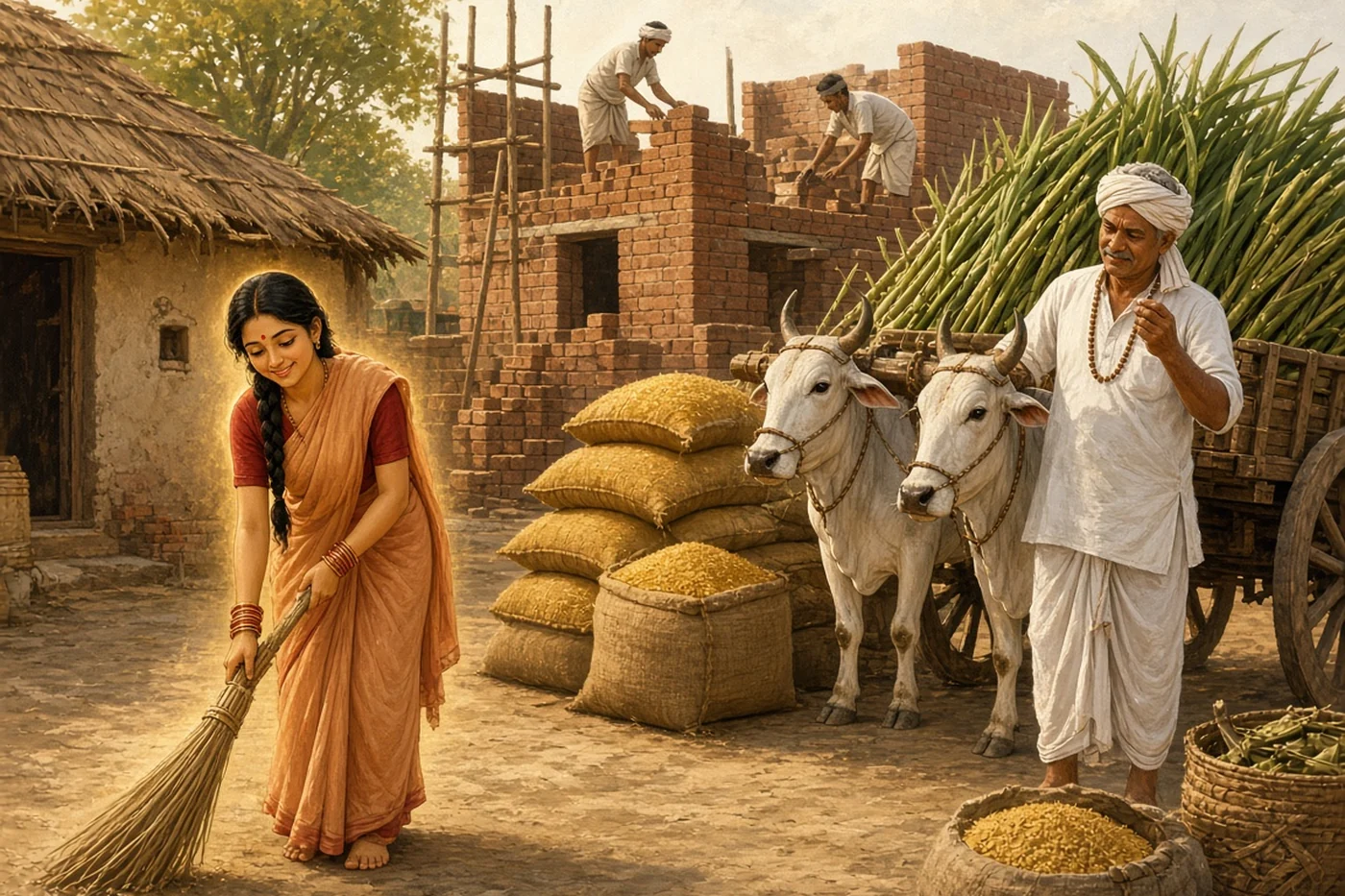
The farmer was poor. He had the one field of mustard and the strip of cane, a hut with a bad roof, and not much else. When a woman came to his door and asked for work he took her in, because she asked for nothing but food and a corner to sleep in.
He did not know who she was. Nobody knows Lakshmi while she is in the house. They only notice that things go well.
That year the mustard gave twice what it had ever given, and the cane had to be carted. The roof was mended. Then the hut came down and a house went up in its place. The farmer bought the field next to his, and the one beyond it. The village said he had a lucky hand. He said he had a good servant.
Twelve years went by like that. At the end of the twelfth a stranger came to the gate, a plain man in a traveller's clothes, and asked for the woman who worked there.
"Her time is done," he said. "I have come to take her home."
The farmer looked at the stranger, and at the woman, and at his fields.
"No."
"She is not yours to keep."
"She came to my door and I took her in. Everything I have came after her. You will not take her out of my house." He planted himself in the gateway.

The stranger argued and the farmer would not hear him. At last the woman spoke.
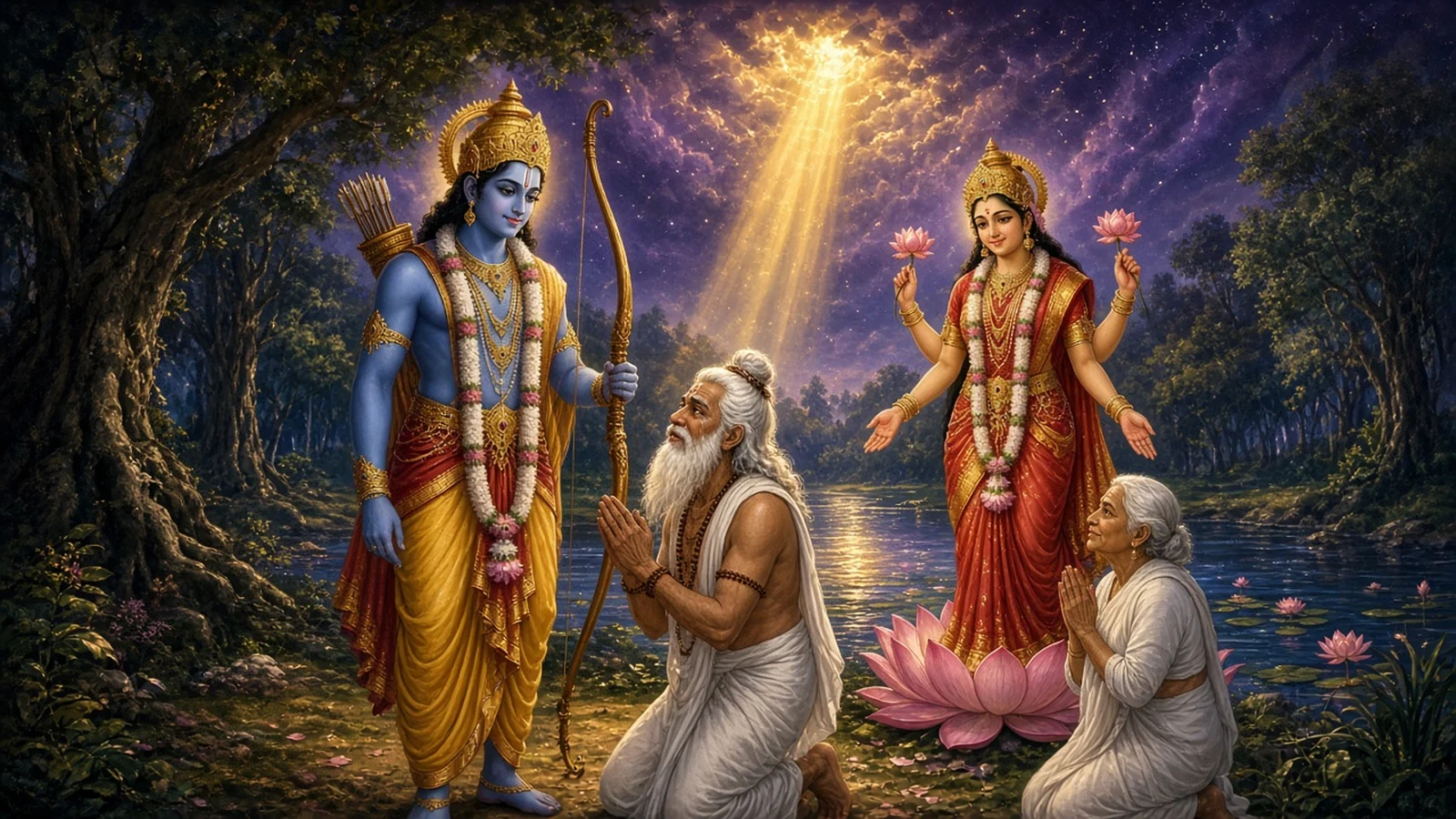
"Listen to me," she said. "I am Lakshmi. I went into your field because I could not keep my eyes off it, and I have paid for that with twelve years on your floor. This is my husband, and I cannot stay on the earth any longer. But I will not forget you.
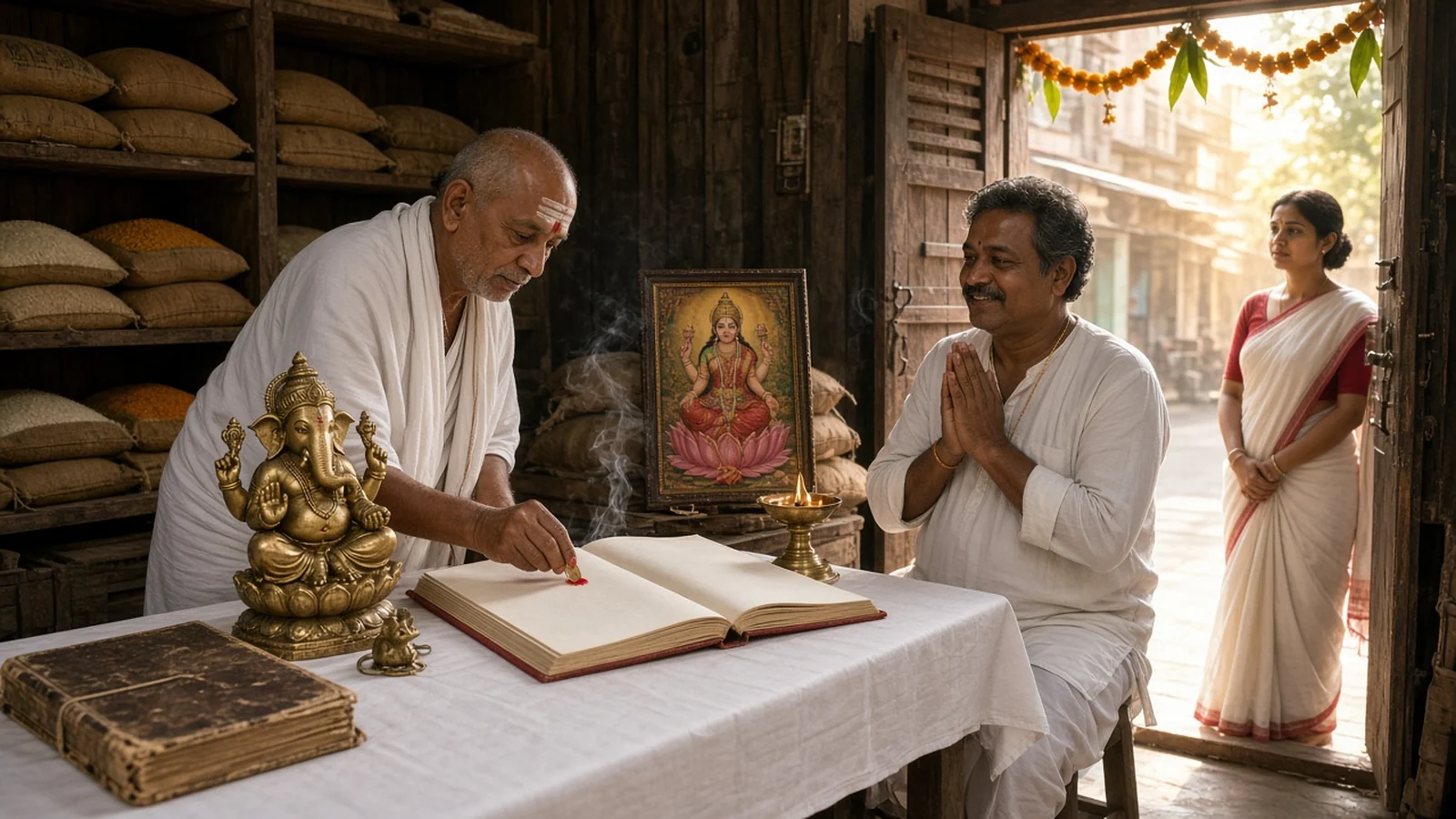
"Every year, on this night, the thirteenth of the dark fortnight, before the lamps of Diwali, I will come back. Clean your house for me. Light a lamp of ghee and let it burn till morning. If I find the house clean and the lamp burning, I will come in, and what you have will stay with you."
Then she was gone, and the stranger with her.
The farmer did as she had told him. Every year on that night he cleaned his house and lit the lamp, and every year he was richer than the year before. His neighbours saw it and did the same. That, the katha says, is why the house is cleaned and the lamp lit on Dhanteras, and why Lakshmi is worshipped that evening with Kubera beside her.