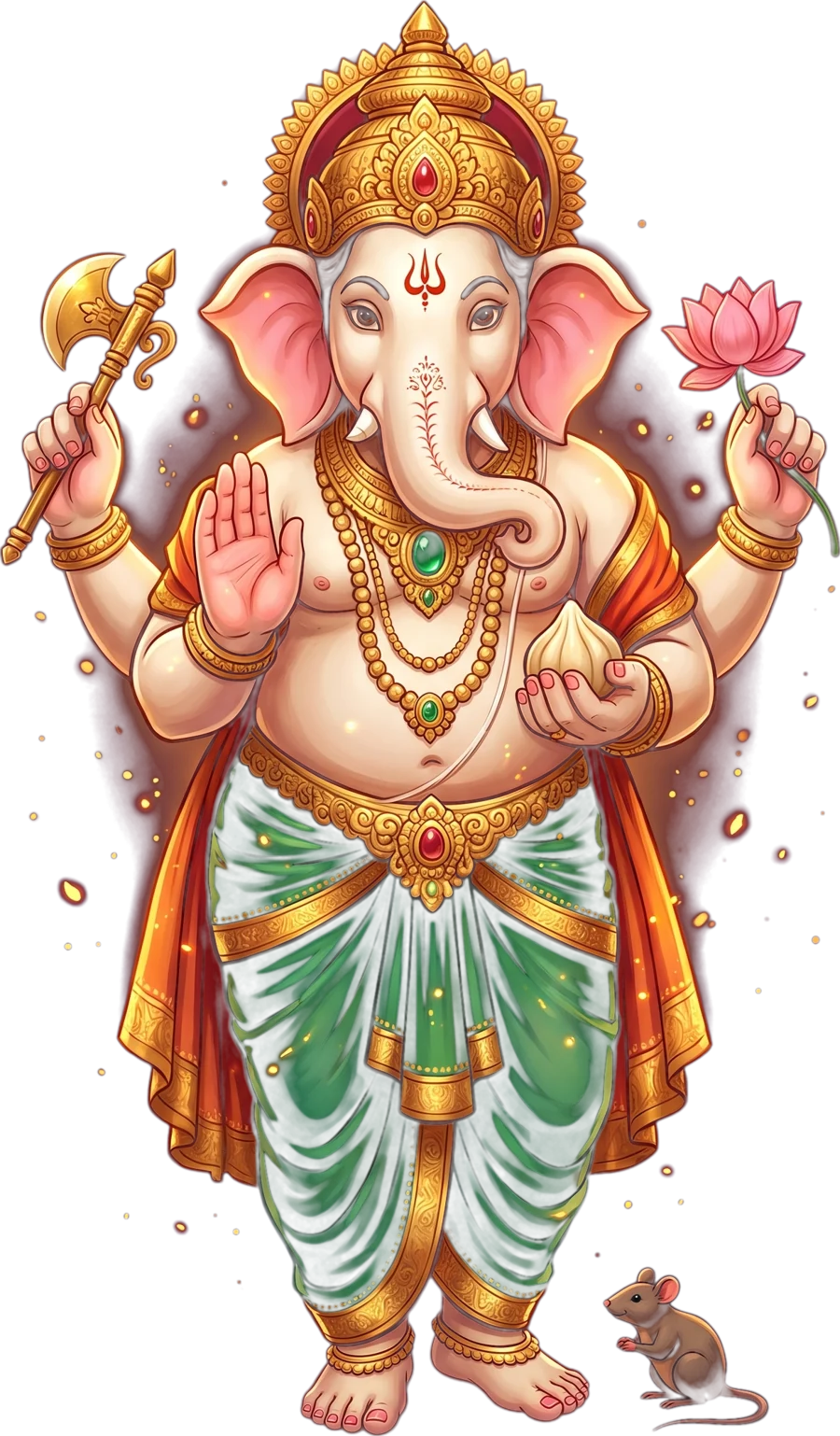
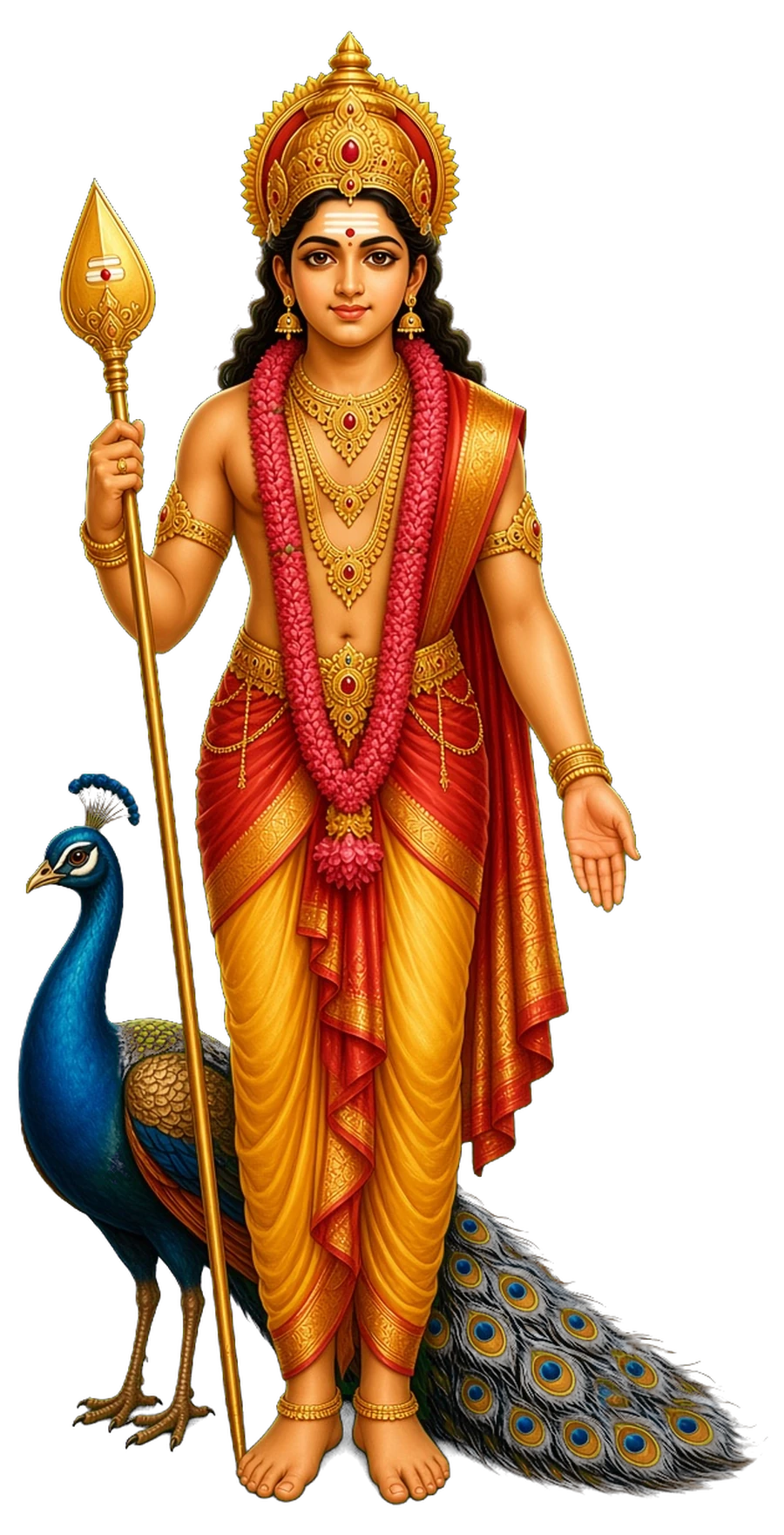
Durga Puja is the great festival of Bengal and the east, the last five days of the bright half of Ashvin, when the Goddess who killed the buffalo demon is worshipped in clay images with her four children beside her. Bengal reads her as Uma, the daughter of the mountain, home from Kailash for a few days with her mother, and the fifth day sends her back with vermilion and tears. Kolkata's pandals, on UNESCO's heritage list since 2021, make it the largest street festival of the subcontinent.
When is Durga Puja in 2026? Maha Ashtami is Monday 19 October 2026; it runs 16 to 21 October 2026. In 2027: Thursday 7 October 2027. From the sixth to the tenth day of the bright half of Ashvin, in late September or October, after Mahalaya on the new moon before.
Also calledPujoDurgotsavSharadiyaSharodotsavAkal BodhanBhagabati PujaMahalaya
Next, in 2026Monday 19 October 2026
16 to 21 October 2026
Prime godDurga
with 6 more
WhereWest Bengal, Assam, Odisha, Tripura, Bihar and Jharkhand, Bangladesh, and Bengalis everywhere
How longFive days, from Maha Shashthi to Bijoya Dashami, with Mahalaya a week before
From the sixth to the tenth day of the bright half of Ashvin, in late September or October, after Mahalaya on the new moon before
Why it is kept
Pujo, Bengal calls it, as if there were no other. For five days in autumn the Goddess who killed the buffalo demon stands in clay in every neighbourhood with her lion, her four children and the demon under her foot, and the whole of the east stops work to look at her. She is a conqueror, and she is also a daughter home for the holidays, and the festival holds both of her at once.
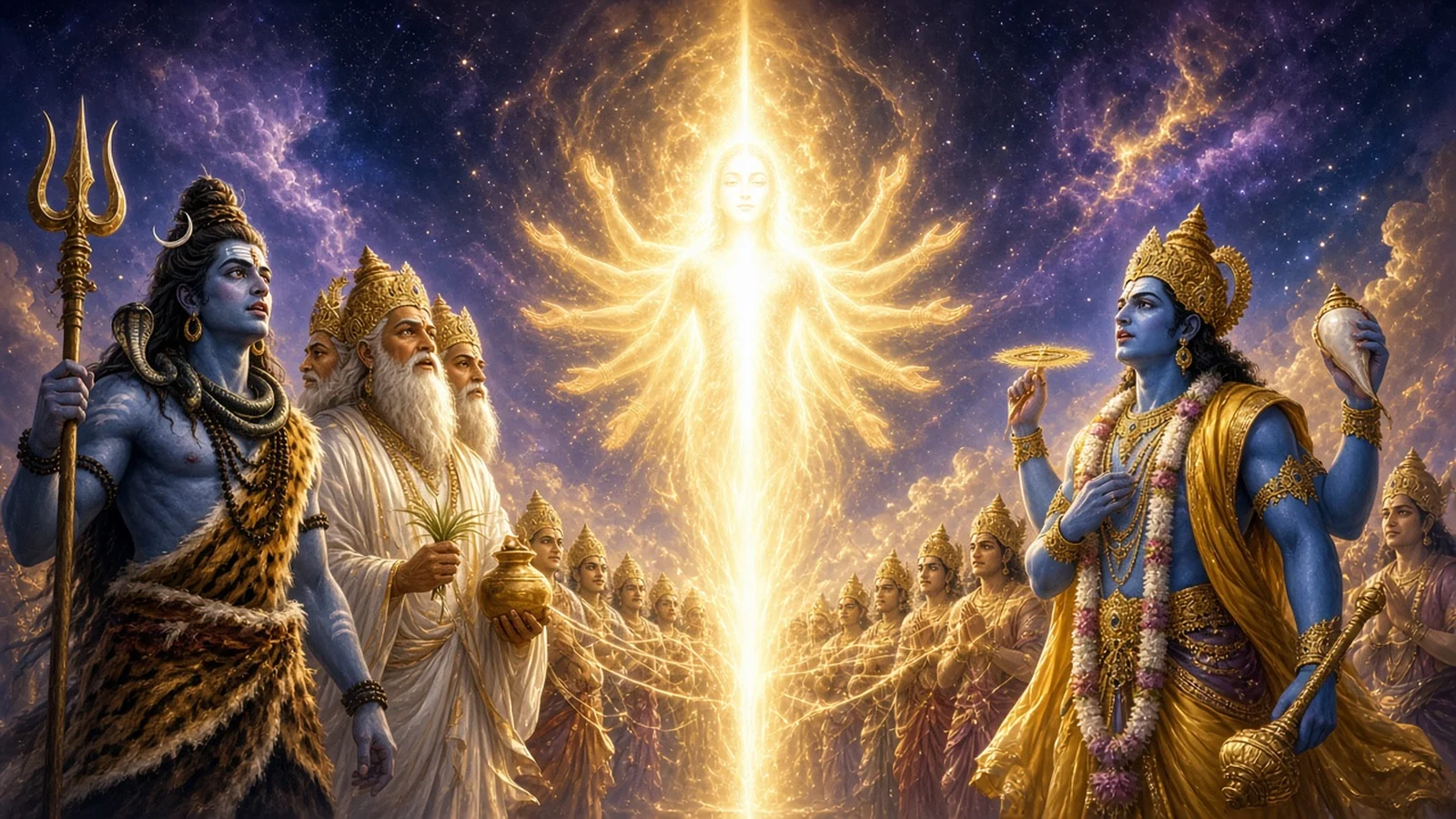
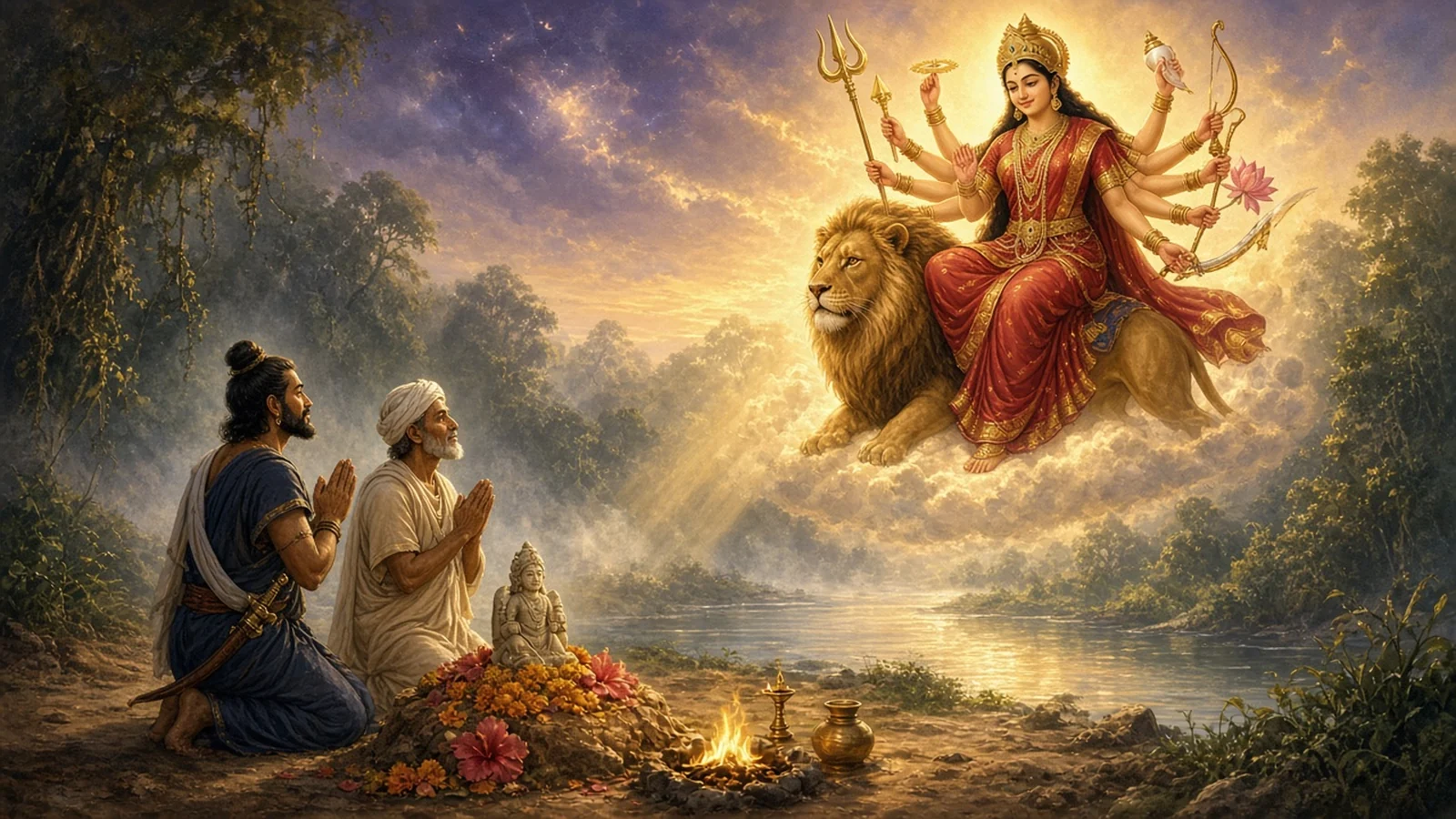
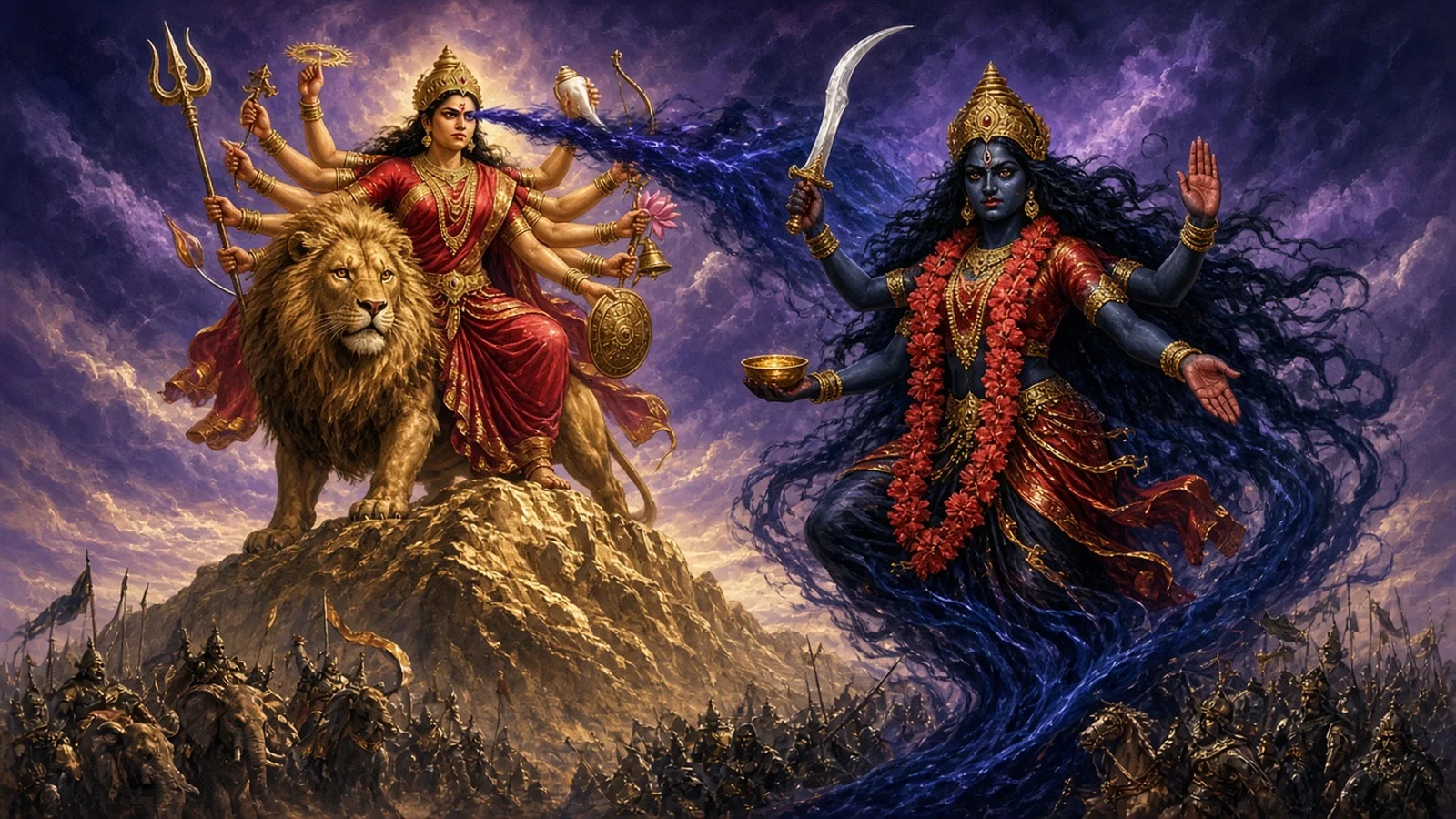
The Devi Mahatmya tells the first reason. Mahisha, the buffalo demon, had a boon that no god, demon or man could kill him, and he took heaven. The gods' anger came out of them as light, and the light became a woman carrying all their weapons, who fought him for nine days and took his head. Bengal's image is that moment: the trident in his chest, the lion at his thigh, the demon's green body climbing out of the buffalo's neck.
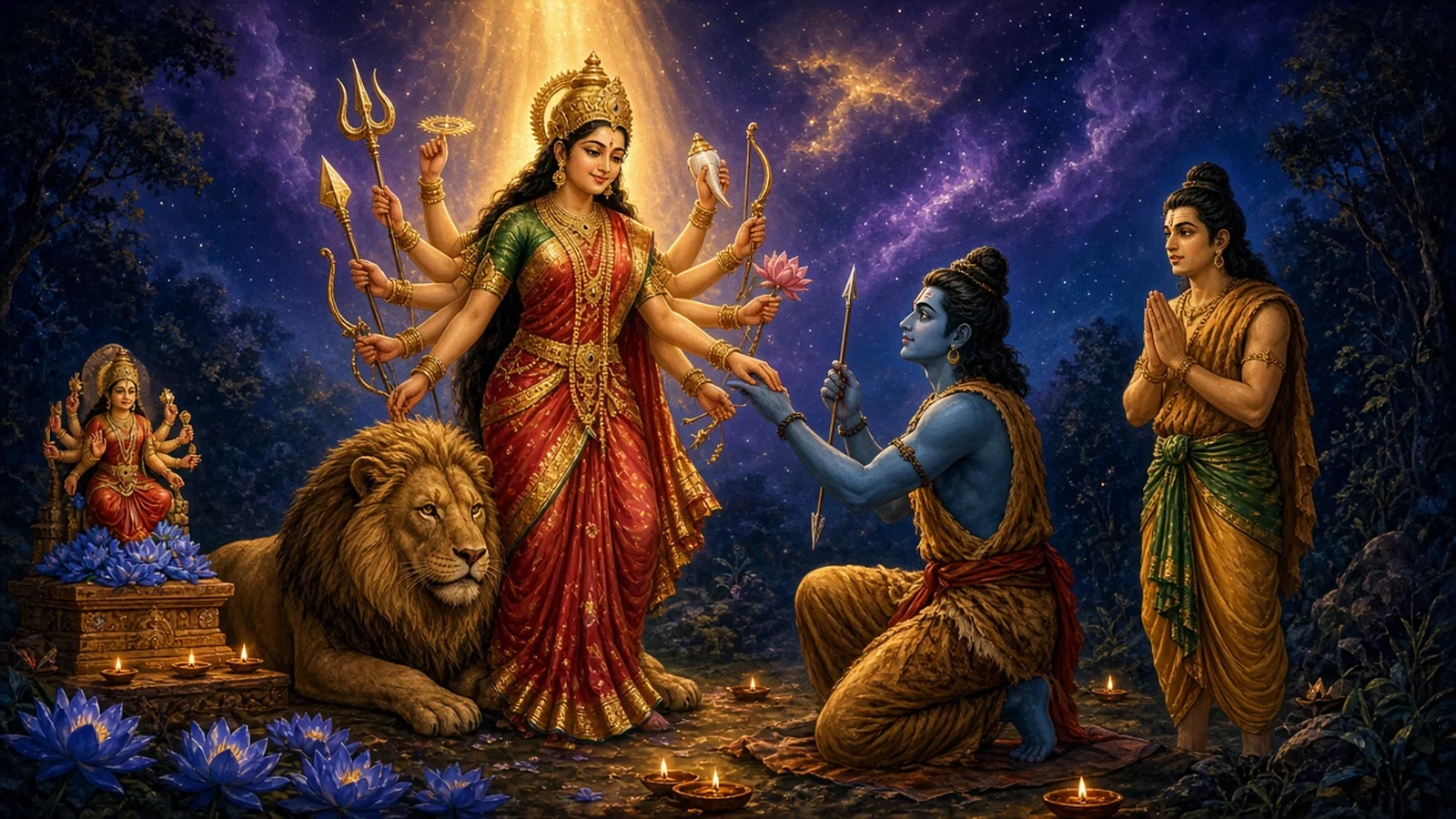
The second reason is Rama. In the Bengali Ramayana of Krittibas he woke the Goddess out of her season, in autumn, to win her away from Ravana. Her proper time is spring, when Suratha first worshipped her, and the spring puja, Basanti, is still kept in a few places. But Rama's untimely waking, the Akal Bodhan, is the one Bengal took to heart, and every priest repeats it under the bel tree on the sixth day.
The third reason is not in any Purana. In the Agomoni songs of Ramprasad and the village singers, the Goddess is Uma, the daughter of the mountain, married to a wandering ascetic in Kailash, and Menaka her mother cannot sleep for missing her. Giriraj is sent to fetch her. She comes for three days with her children, and on the tenth day a messenger arrives from Shiva, and she must go. The women of Bengal see their own married daughters in her, and the immersion is a farewell.
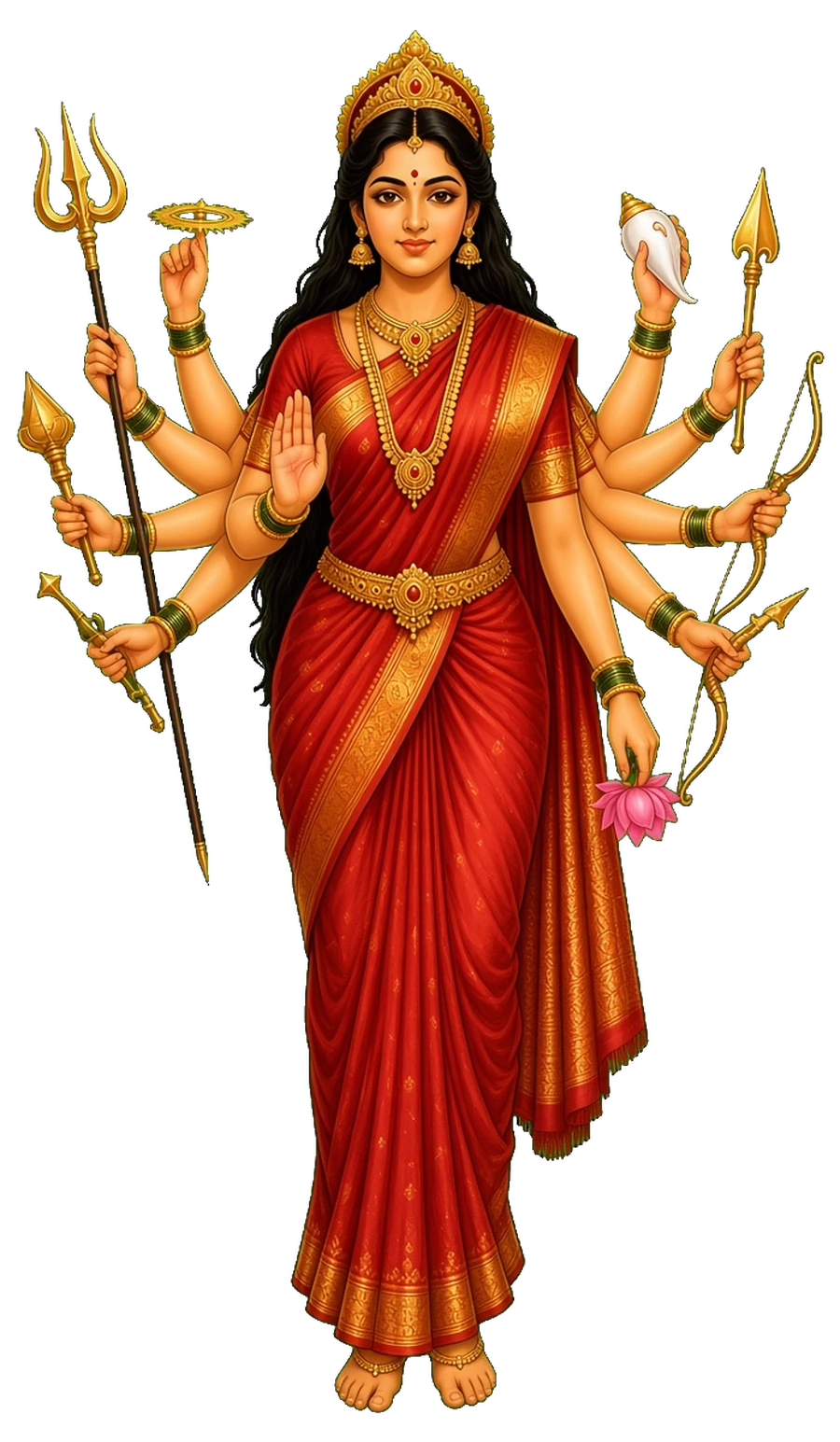
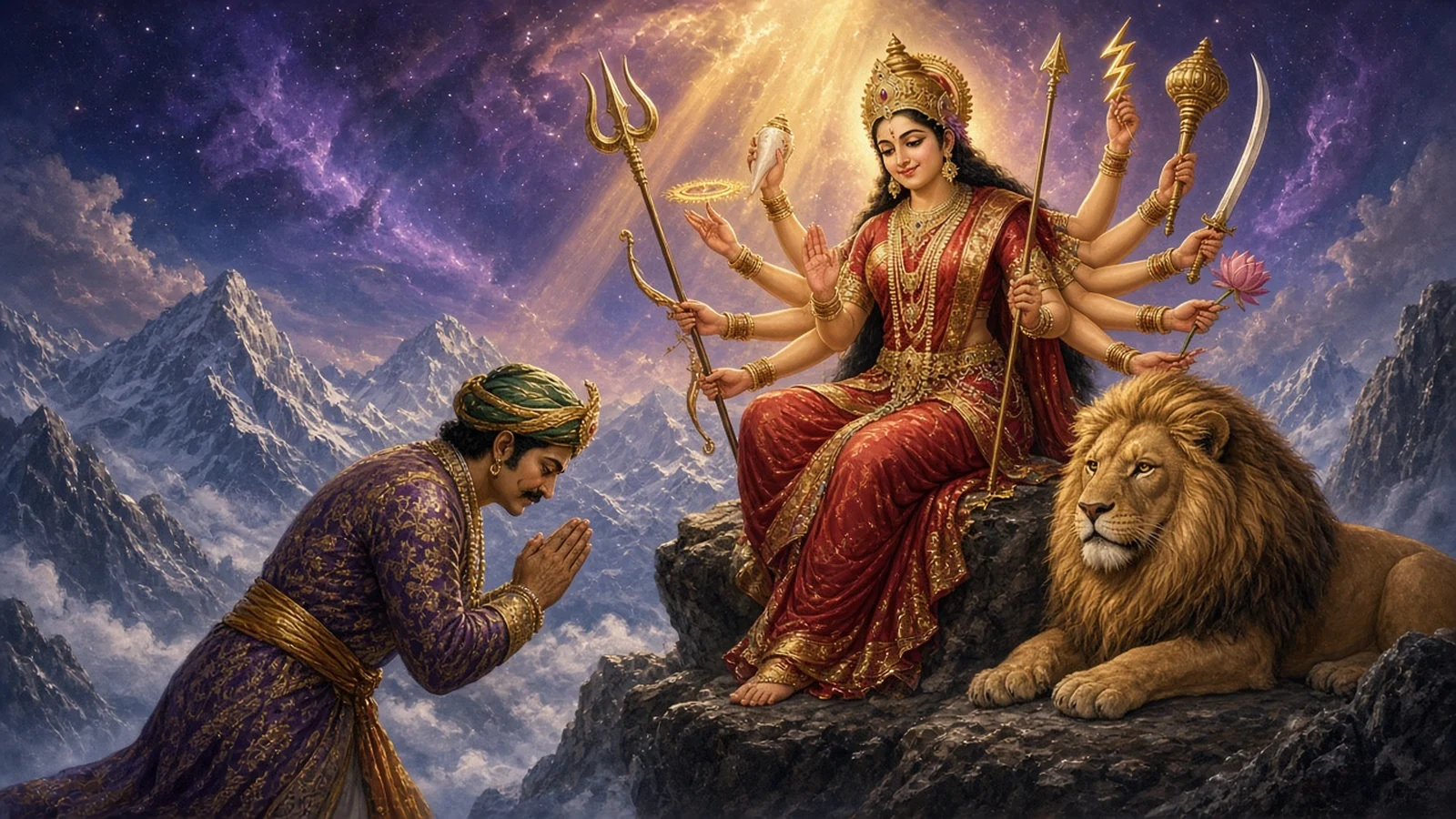
The Goddess herself, ten-armed on her lion with the buffalo demon under her foot, the power of all the gods in one form. Bengal sees her at the same time as Uma, Parvati, the Himalaya's daughter come home to her mother for three days, and the Agomoni songs are sung for her coming.
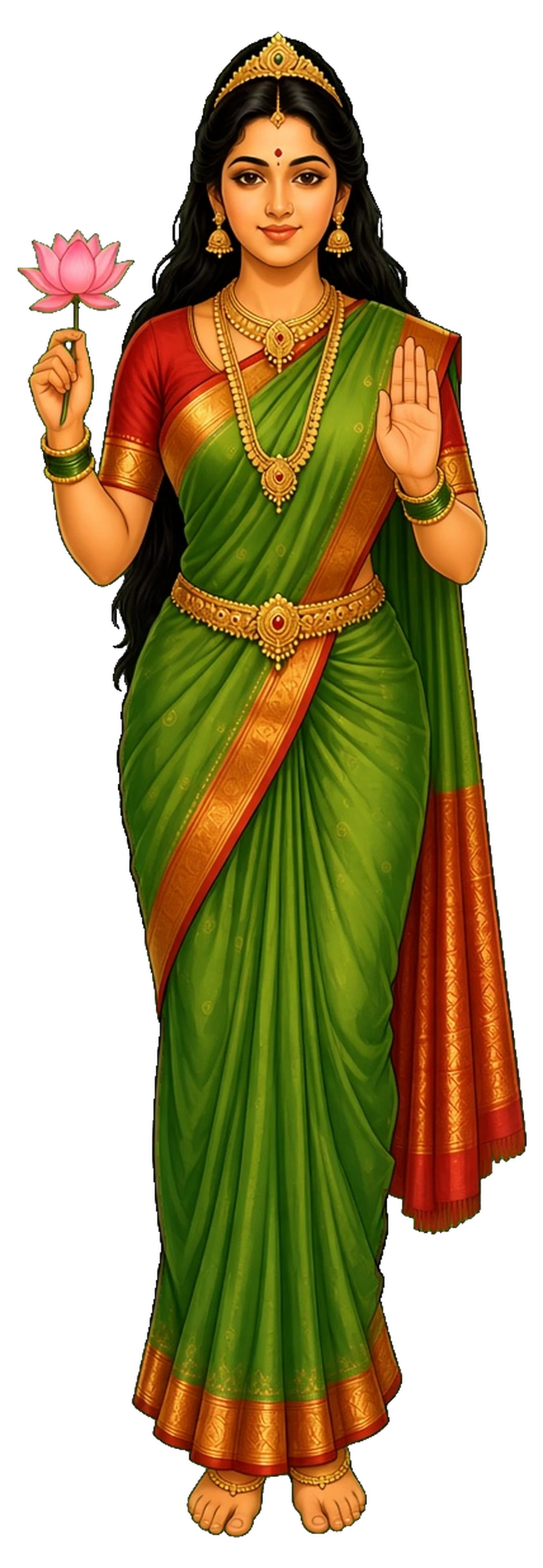
The daughter coming home. In the Agomoni songs Menaka cannot sleep for wanting her, Giriraj is sent to Kailash to fetch her, and she stays three days before Shiva's messenger comes for her on the tenth.
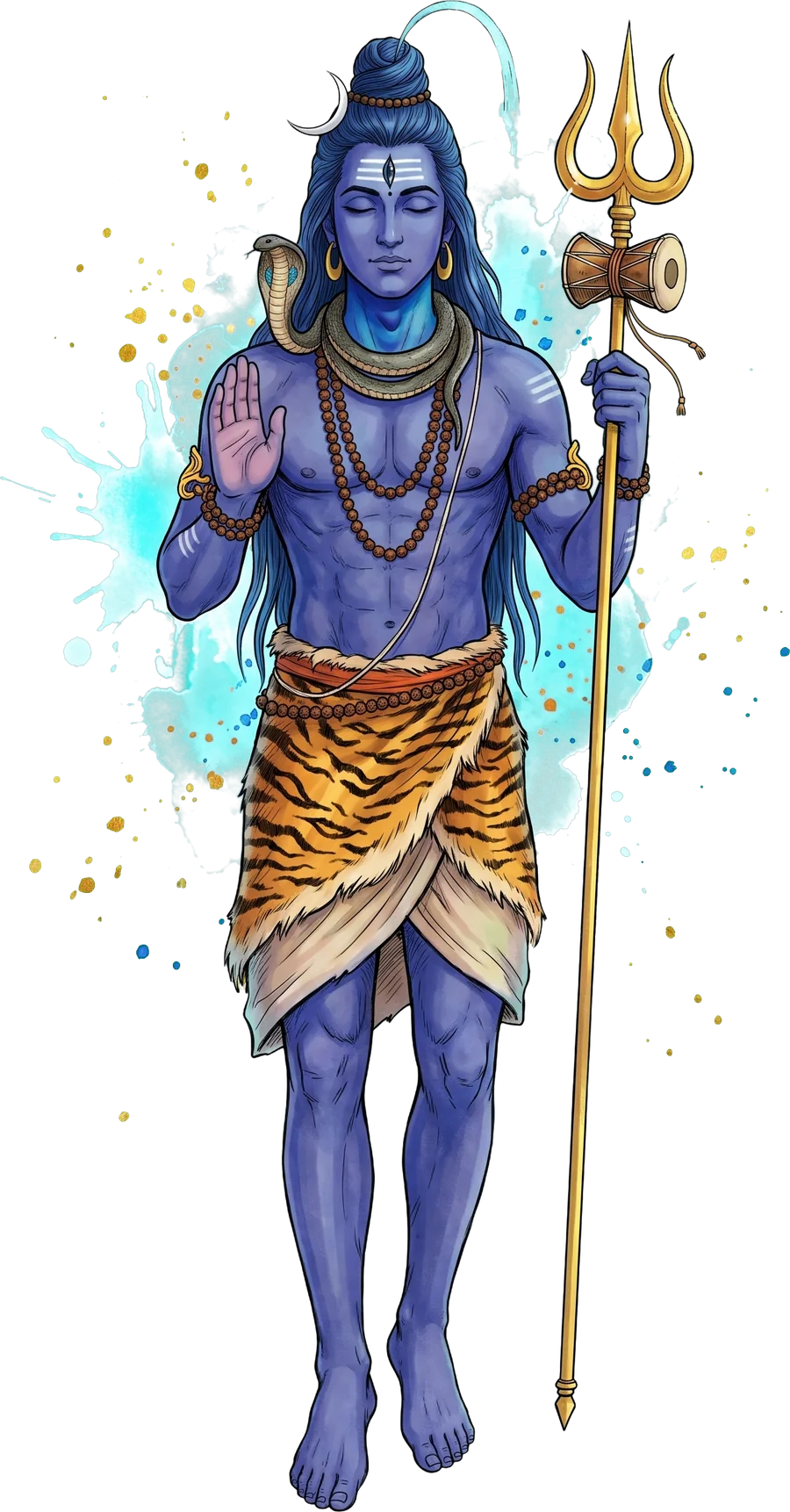
Her husband, painted on the arch above her head in the single-frame images, waiting at Kailash for her to come back.
From Mahalaya to Bijoya
1
Mahalaya
The new moon of Ashvin, a week before the puja · Saturday 10 October 2026
Mahalaya Amavasyathe end of Pitri PakshaDevi Paksha begins
The fortnight of the ancestors ends and the fortnight of the Goddess begins. At dawn Bengalis offer water to their dead on the riverbanks, the tarpan, and in Kumartuli the artisans paint the eyes onto the clay images. Since 1931 the day has begun at four in the morning with the radio: Birendra Krishna Bhadra's chanting of the Chandi in the programme Mahishasuramardini, which half of Bengal still wakes up for.
The sixth day of the bright half of Ashvin, which in 2026 runs from the evening of 16 October into the 17th · Saturday 17 October 2026
BodhonAmantranAdhivas
The Goddess is woken. Under a bel tree, or before a bel branch, the priest performs the bodhon, the waking out of season that Rama first did, then invites her (amantran) and seats her for the night (adhivas) with a tray of twenty-six things that stand for the world. The face of the image, veiled till now, is unveiled in the evening, and the pandals open.
Before sunrise nine plants, a banana stem with turmeric, colocasia, jayanti, bel, pomegranate, ashoka, arum and rice, are tied with a white aparajita vine and carried to the river to be bathed with the dhak beating. Dressed in a red-bordered white sari, with vermilion on her leaves, the Nabapatrika is set at Ganesha's right, and everyone calls her the Kola Bou, the banana bride. Life is then breathed into the clay image, and the three days of the great puja begin.
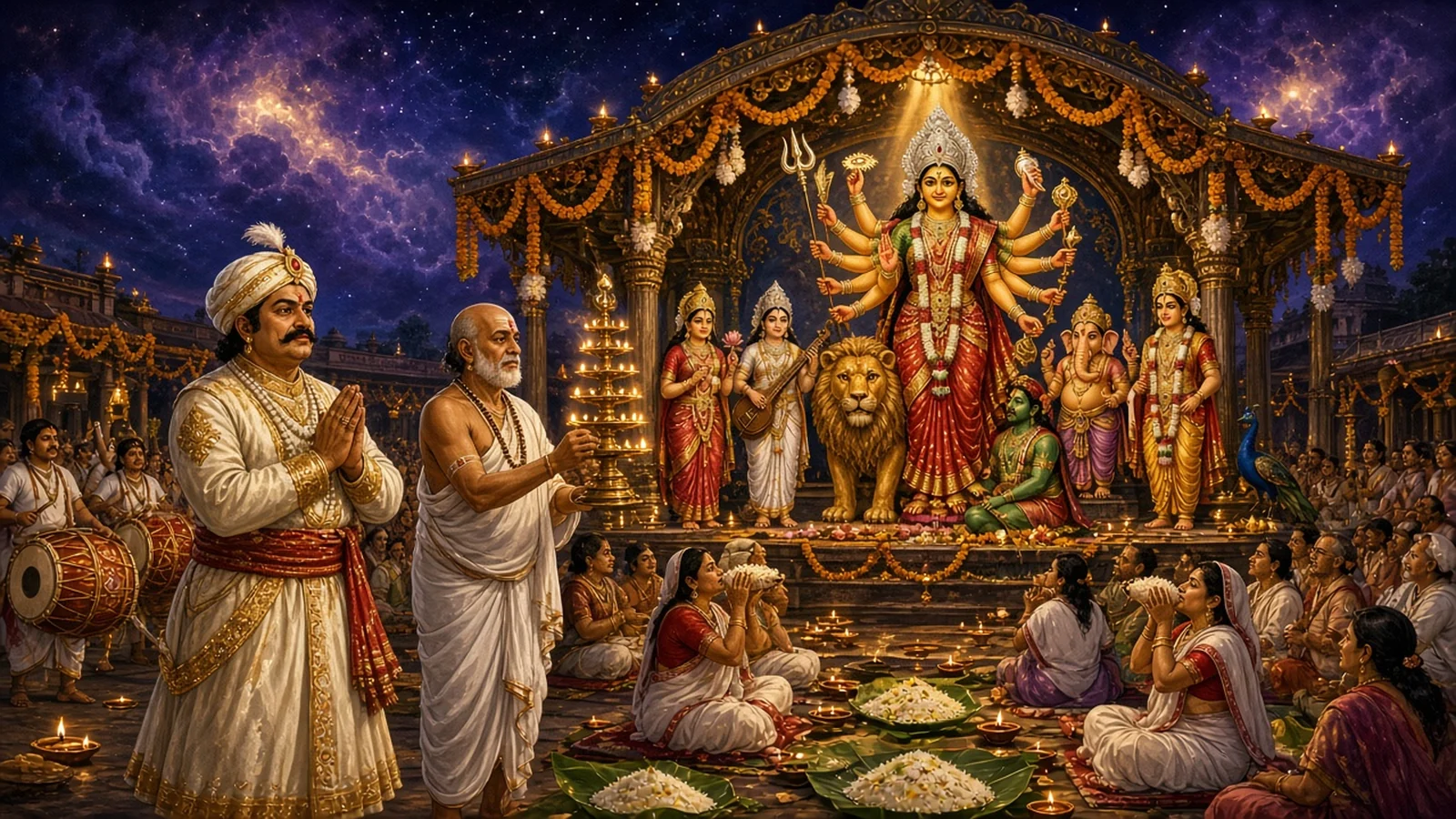
The day everyone comes. Families in new clothes offer flowers in their joined hands at the priest's chant, the pushpanjali, and fast until it is done. At Belur Math and in many houses a little girl is bathed, dressed as the Goddess and worshipped, the Kumari Puja. In the forty-eight minutes where the eighth day turns into the ninth comes the Sandhi Puja: a hundred and eight lamps and a hundred and eight lotuses, the dhak at full pitch, the hour she became Chamunda and killed Chanda and Munda.
The fire offering, the homa, closes the worship, and the great bhog is cooked and served: khichuri, fried vegetables, chutney and payesh on banana leaves to everyone who comes, thousands at the big pandals. In the evening the dhunuchi dancers hold pots of burning coconut husk and incense in their hands and teeth and dance before her. It is the last full day.
The Goddess is sent home. In the morning the priest holds a mirror to her feet and the worship ends, and the married women feed her sweets and paan, whisper in her ear to come again next year, put vermilion on her forehead and then on each other, the sindoor khela, until the hall is red. In the afternoon the images go to the river on lorries and shoulders with the dhak and the dhunuchi, and are given to the water. The evening is for Bijoya: the young touch the feet of the old, friends embrace three times, and plates of nimki and narkel naru go round.
Some three thousand community pujas fill the city, each in a pandal, a temporary hall of bamboo and cloth that may be a temple, a palace or an art installation, and the crowds walk between them all night. The images come from Kumartuli, the potters' quarter by the river, where the clay of the Ganga is shaped from the monsoon onwards. UNESCO put Kolkata's Durga Puja on its list of the intangible heritage of humanity in 2021.
Rural Bengal and the old housesBonedi bari pujas
The family pujas of the zamindars and the Kolkata merchants, some going back to 1610 at Barisha and 1757 at Shobhabazar, keep the single-frame image with the whole family under one painted arch, the daaker saaj of silver foil, their own sweets and their own oddities, a cannon fired at the Sandhi Puja in one house, a nilkantha bird sent to Kailash from another. In the villages the puja is held in the permanent thakur dalan of the big house, and the whole village eats.
Assam and Tripura
Assam holds more than four thousand pujas, over four hundred in Guwahati alone, and the Kalika Purana that gives the rites was written in Kamarupa. In Agartala the Durgabari of the Manikya kings worships a two-armed Durga, after a queen fainted at the ten-armed one and dreamed the Goddess asked for fewer, and the state pays for the puja under the terms of Tripura's accession.
OdishaCuttack's silver
Cuttack's puja is eight hundred years old by its own account, and since 1956, when Choudhury Bazar built the first, its pandals stand the Goddess before a chandi medha, a backdrop of silver filigree twenty feet high weighing up to six quintals. There are more than thirty now. The tenth day is Dussehra as much as Bijoya, with the immersion procession to the Kathajodi and, in the west of the state, Ravana burned.
Bihar and Jharkhand
Simpler and more inward than Bengal's, with the Durga Saptashati read through the nine nights, little girls fed as the Goddess on the eighth and ninth, pandals in Patna, Ranchi and Jamshedpur, and the immersion on the tenth. Mithila has worshipped Durga at court since the Karnata kings of the twelfth century, and Vidyapati wrote its manual in the fifteenth.
BangladeshDhakeshwari
Bijoya Dashami is a public holiday. Dhaka's great puja is at the Dhakeshwari National Temple, which tradition says Ballal Sen built in the twelfth century and whose original image was carried to Kumartuli in Kolkata at Partition. The President and Prime Minister come to greet the community, more than a hundred temples in the city hold their own, and the images go into the Buriganga.
The diasporaProbashi pujas
London's oldest puja began in 1963 at Russell Square with an image given by a newspaper editor and has been at Hampstead Town Hall since 1966. The first American pujas were held in 1970 at Columbia University in New York and in other university halls, and New Jersey's Kallol draws thousands over a weekend. Because the days cannot be taken off, the diaspora's puja is held on the nearest weekend, and its image is pith or fibreglass, not clay, since it cannot go into a river.
Everyone in the cityThe festival for all
Bengal's puja belongs to the street. The artisans of Kumartuli, the dhak drummers who come in from the villages, the pandal builders, the lighting men of Chandannagar and the crowd that walks all night are of every faith, and UNESCO's citation says the divides of class and religion collapse for the five days. Dancers from Muslim gharanas performed at the first Shobhabazar puja, and the biggest pandals are built by Muslim and Hindu craftsmen together.
ShaktasThe Goddess's own festival
For those who worship the Goddess as the highest power these are the days of her victory, and the Devi Mahatmya, the Chandi, is read through them. The Sandhi Puja, the Kumari Puja and the old animal offerings, now mostly a sugarcane or a gourd, belong to this reading, and the Kalika Purana of Kamarupa is their book.
How it is kept
It begins with the radio. On Mahalaya, at four in the morning, Bengal wakes to Birendra Krishna Bhadra chanting the Chandi, as it has since 1931. The eyes are painted on the images that day, and the pandals start to rise. On the sixth evening the Goddess is woken under the bel tree and her face is unveiled. Before dawn on the seventh the nine plants go to the river and come back as the Kola Bou in her red-bordered sari. The eighth is the day of new clothes and the pushpanjali, and at the junction of the eighth and ninth the Sandhi Puja lights its hundred and eight lamps. The ninth closes with the fire offering and the great bhog of khichuri for everyone who comes.
The tenth is Bijoya. The women feed the Goddess sweets and smear her with vermilion and then each other, the dhunuchi dancers go before her with their pots of smoke, and the images are carried to the river and given to it. Then the city visits: the young touch the feet of the old, friends embrace three times, and the sweets come out. Bijoya greetings go on for a month.
Between the rites there is the puja itself, which is the walking. Kolkata's three thousand pandals compete in theme and craft, the lights of Chandannagar move across the streets, the dhak plays all day, and the city does not sleep for four nights. Odisha puts its Goddess in front of a wall of silver; Dhaka brings its President to the temple; London and New Jersey hold theirs on a weekend.
In the old texts
The Devi Mahatmya of the Markandeya Purana, fourth to sixth century, is the text of the Goddess, read through the puja; the Devi Bhagavata Purana gives Mahisha's birth and his boon. The Kalika Purana, written in Kamarupa, and the Devi Purana lay down the autumn rites in detail: the waking under the bel tree, the nine plants of the Nabapatrika, the Sandhi Puja and the offerings. The Kalika Purana also says the Goddess killed Mahisha three times, and that he asked for a place at her feet.
Krittibas Ojha's Bengali Ramayana of the fifteenth century gives Rama's Akal Bodhan and the hundred and eighth lotus. The procedure the priests follow was set by the Smriti writers of Bengal, Jimutavahana's Durgotsavanirnaya and Shulapani's Durgotsavaviveka, and above all by Raghunandan of Nabadwip's Durgotsava-tattva in the sixteenth century. The Agomoni and Bijoya songs, shaped by Ramprasad Sen in the eighteenth century and sung still, are the festival's own poetry.
Where this page comes from. Written by Devalok from the Devi Mahatmya (Markandeya Purana), the Devi Bhagavata Purana, the Kalika Purana, the Krittivasi Ramayana, Raghunandan's Durgotsava-tattva, the Agomoni songs, and accounts of the festival across Bengal, the east, Bangladesh and the diaspora, as recorded in the Devalok Lore. Our own words throughout.