Festival · The last full moon of Kartik, when the gods come down to the Ganga and every river in India is a bathing ghat
Kartik Purnima
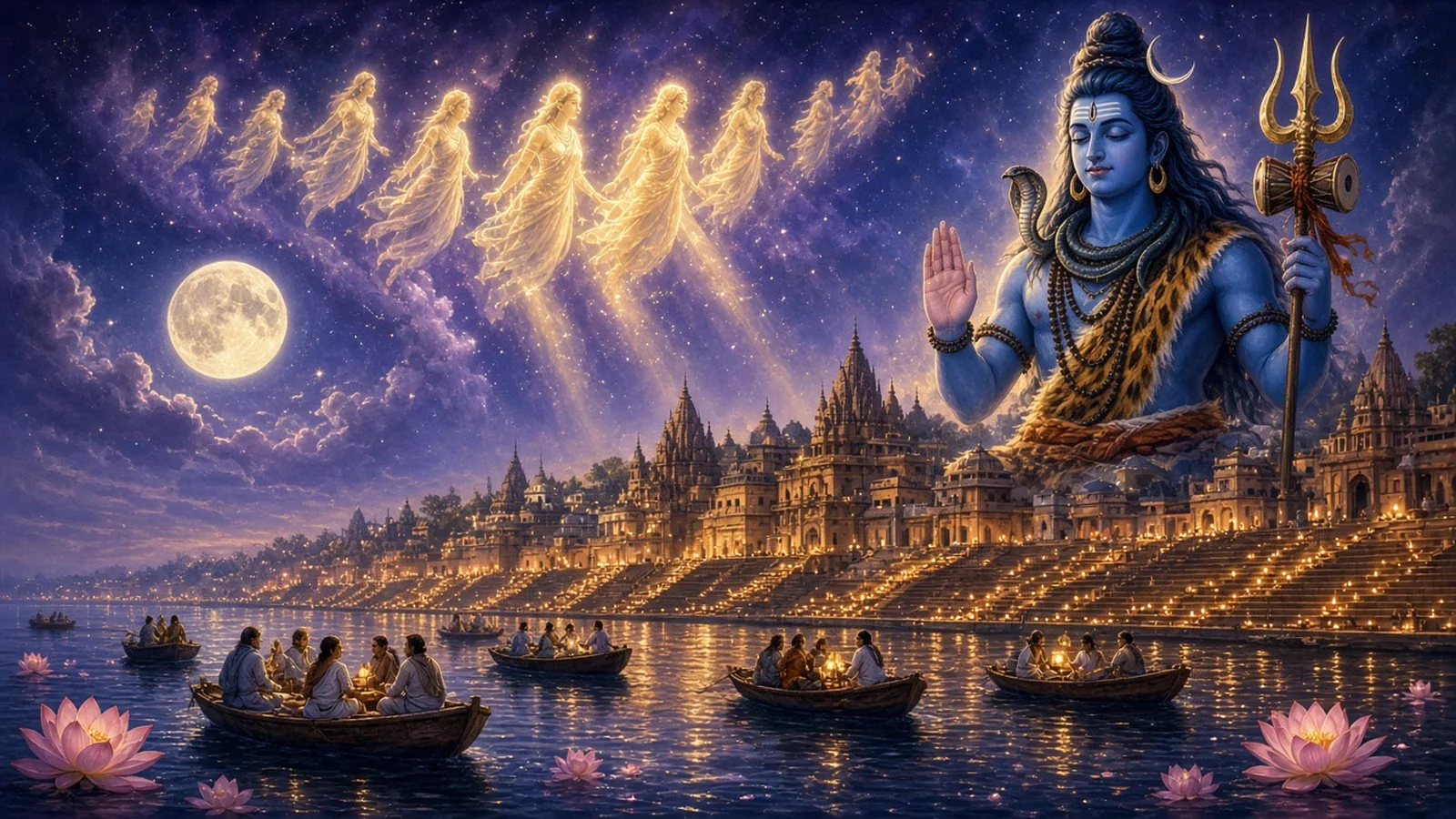
Kartik Purnima is the full moon that ends the holiest month of the Hindu year, fifteen days after Diwali, in November or early December. It is Tripuri Purnima, the night Shiva burned the three flying cities with one arrow, and at Varanasi it is Dev Deepawali, the Diwali of the gods, when the gods are said to come down to bathe in the Ganga and the city lights its eighty-four ghats with lakhs of clay lamps for them. The same dawn Brahma's town of Pushkar bathes in its lake as the camel fair ends, Odisha floats toy boats for the sailors who once left for Bali, Sikhs keep Guru Nanak's birthday and Jains climb to Palitana. In the Tamil country the same moon is Karthigai Deepam, which has its own page.
When is Kartik Purnima in 2026? Kartik Purnima, the night of Dev Deepawali, is Tuesday 24 November 2026. In 2027: Saturday 13 November 2027. The full moon of Kartika, fifteen days after Diwali, in November or early December; the last day of the Kartik month and its daily lamps and baths.
The full moon of the month of Kartika, fifteen days after Diwali, in November or early December. It ends the holiest month of the Hindu year with a dawn bath in the rivers and a night of lamps, and is kept as Tripuri Purnima for Shiva's burning of the three cities and as Dev Deepawali, the Diwali of the gods, at Varanasi.
When is Kartik Purnima in 2026?
Tuesday 24 November 2026. The Purnima tithi runs from 11:42 at night on 23 November to 8:23 in the evening on the 24th, so the bath is at dawn on the 24th and Dev Deepawali is that evening. In 2027 the tithi runs from the morning of Saturday 13 November to the morning of the 14th; Varanasi lights its lamps on the evening of the 13th and the sunrise Purnima and its bath fall on the 14th.
What is Dev Deepawali?
The Diwali of the gods at Varanasi, kept on Kartik Purnima. The city believes the gods come down to bathe in the Ganga on this full moon and to celebrate Shiva's victory over Tripura, and lights its ghats for them from Ravidas Ghat to Rajghat; in 2025 the state counted twenty-five lakh clay lamps, with the Ganga aarti at Dashashwamedh and boats full of watchers on the river.
Why is Kartik Purnima called Tripuri Purnima?
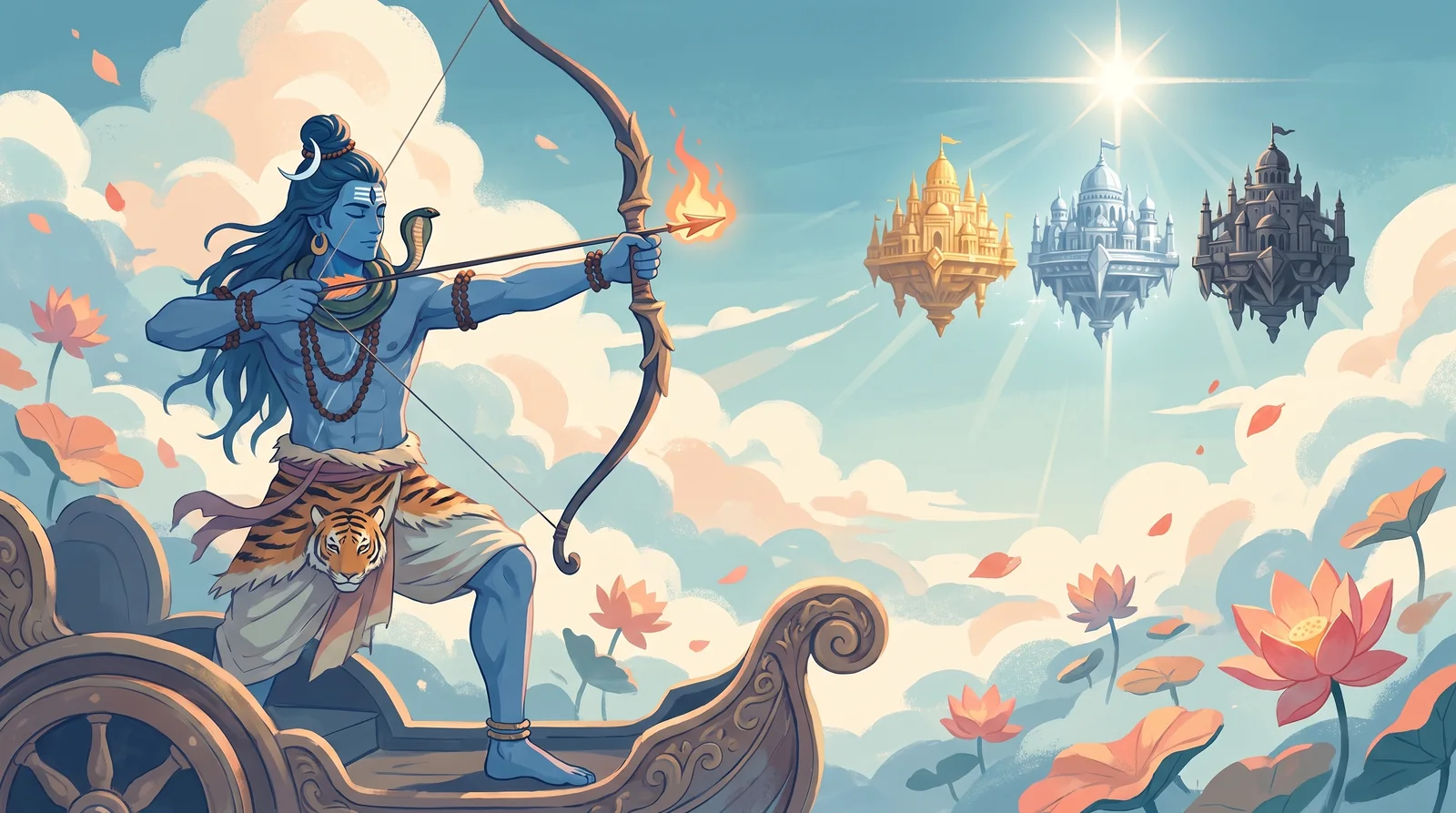
Because the Puranas say that on this full moon Shiva, as Tripurantaka, loosed the single arrow that destroyed the three flying cities of the demon brothers, and the gods marked the victory with lamps. Tripurari is one of Shiva's names, the enemy of the three cities.
What happens at Pushkar and in Odisha on Kartik Purnima?
At Pushkar the camel fair that began with the month ends with the full-moon dip at the fifty-two ghats of Brahma's lake and the Brahma temple's one great festival. In Odisha the dawn is Boita Bandana, when toy boats of banana stem with a lamp and betel inside are floated for the sadhaba sailors who once left for Bali on this day, and Cuttack's Bali Jatra fair opens on the Mahanadi.
Next, in 2026Tuesday 24 November 2026
Prime godTripurantaka, who ended the three cities
with 4 more
WhereAll India; Varanasi, Pushkar, Garhmukteshwar, Sonepur and Cuttack above all, with the Sikh and Odia diaspora
How longOne dawn and one night; Pushkar's fair ends on it after five days, Garhmukteshwar's after a week, and Sonepur's and Cuttack's begin on it
The full moon of Kartika, fifteen days after Diwali, in November or early December; the last day of the Kartik month and its daily lamps and baths
Why it is kept
Kartik Purnima is the full moon that ends the holiest month of the Hindu year, fifteen days after Diwali. The month's daily bath ends with a dip at dawn, its daily lamp with a night of more lamps than any other, and the one moon belongs to Shiva's three cities, Brahma's lake at Pushkar, Vishnu's fish and his wedding to Tulsi, the sailors of old Odisha and the birth of Guru Nanak. At Varanasi the gods themselves are said to come down to the Ganga to bathe, and the city lights its ghats for them: Dev Deepawali, the Diwali of the gods.
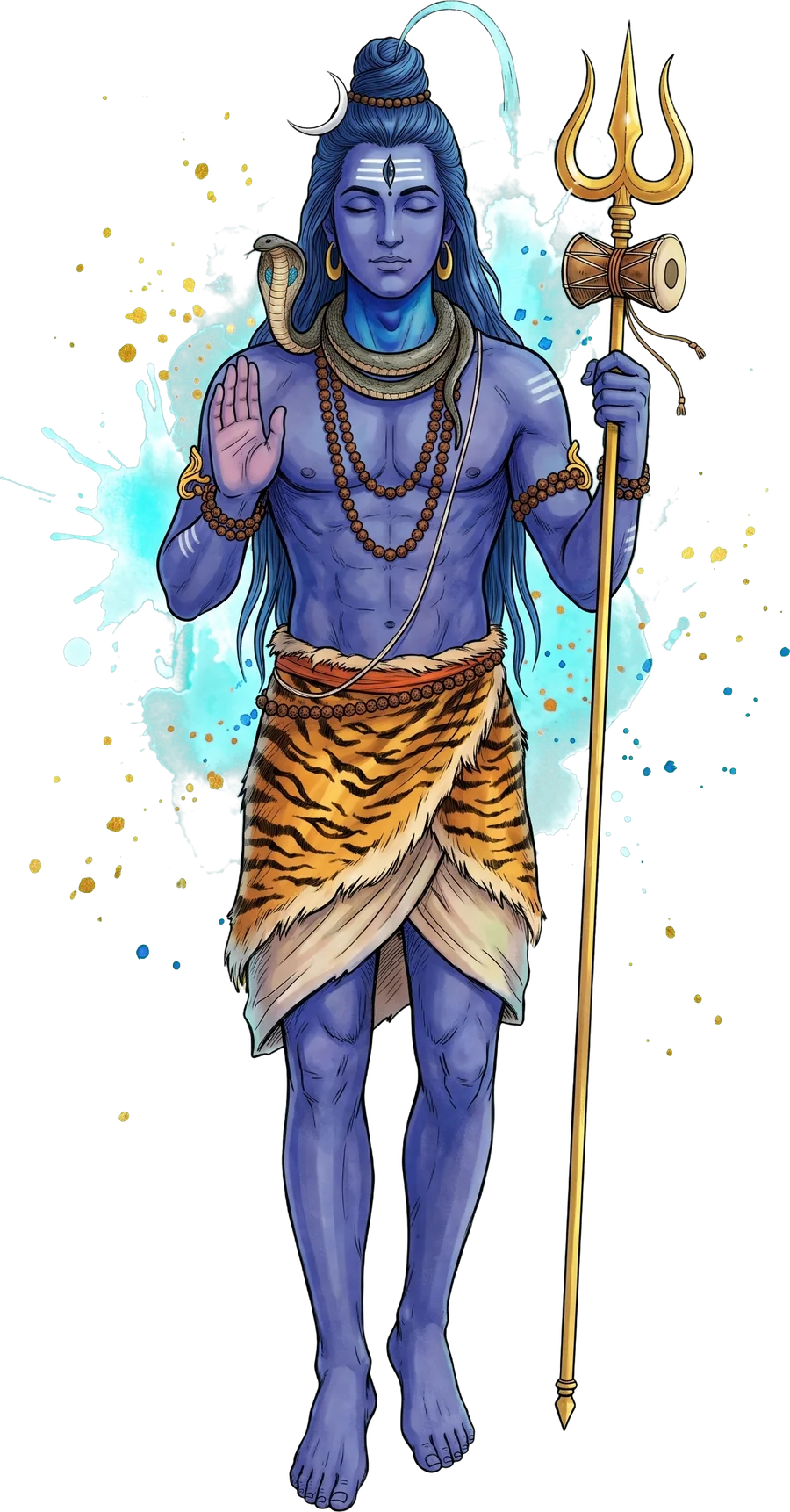
The first reason is Shiva's. The three sons of Taraka had three cities that flew, of gold, silver and iron, which could be destroyed only by one arrow at the one moment in a thousand years when they lined up, and Shiva waited in a chariot the gods built out of the universe. The Kartik Purnima tradition says the arrow flew on this full moon and that the gods declared the day a festival of lights; the night is Tripuri or Tripurari Purnima, and the Shaivas rank it second only to Shivaratri. The Lore tells it in The Three Cities and the Single Arrow. Varanasi adds that the gods come down to the Ganga on this night to bathe and to celebrate, and that is why the city lights the ghats: The Night the Gods Came Down to Bathe.
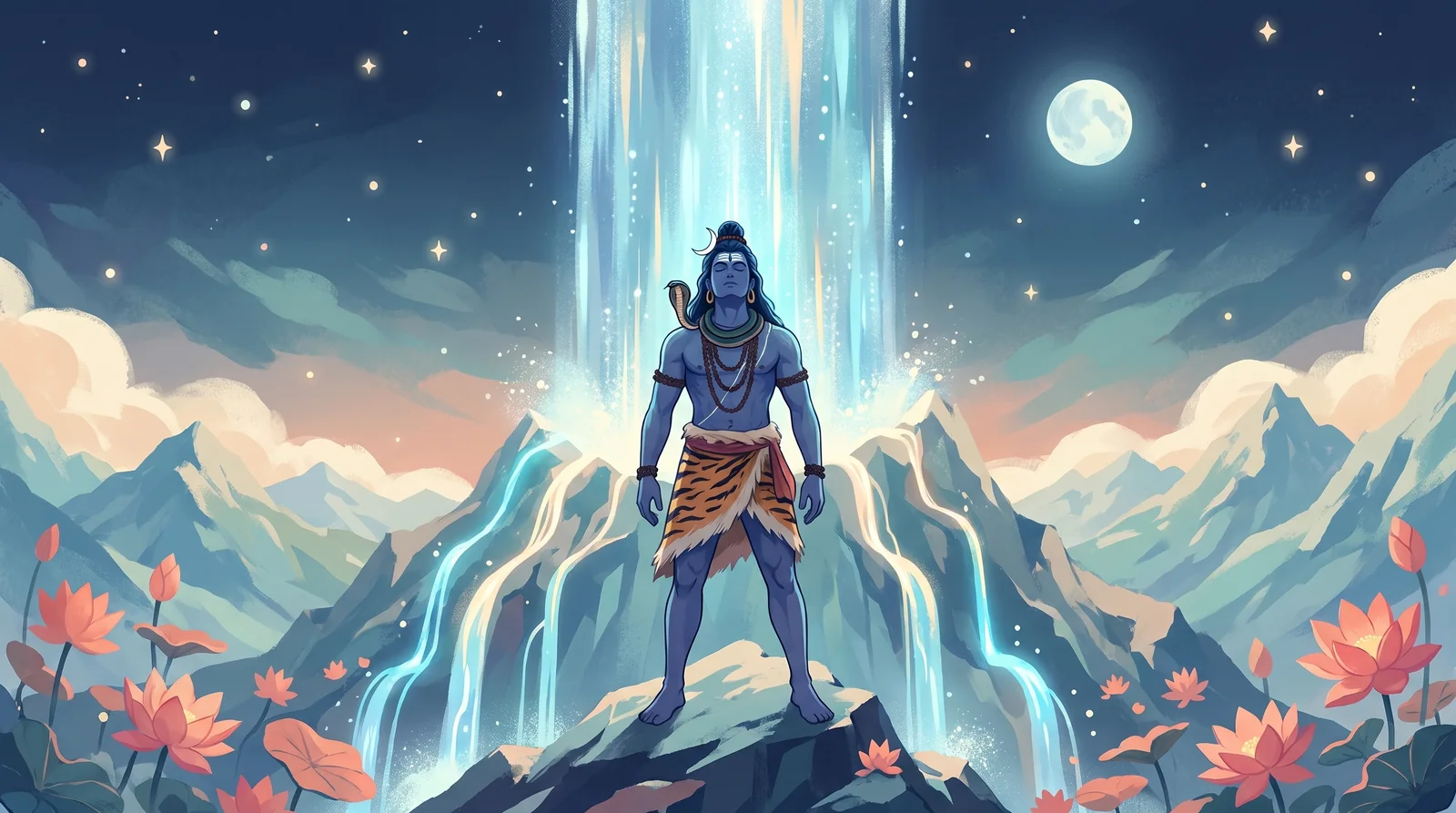
Shiva's single arrow of light strikes the three flying cities of gold, silver and iron
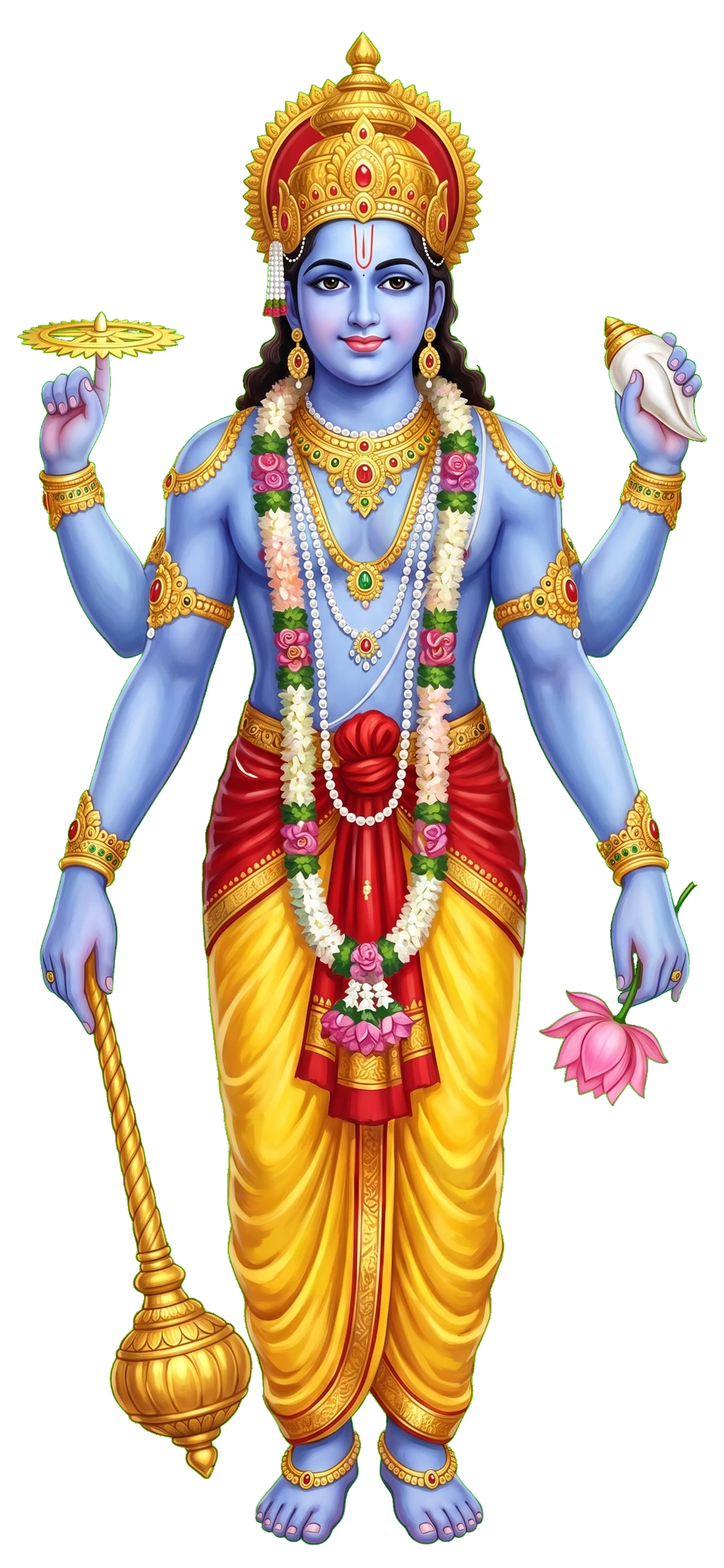
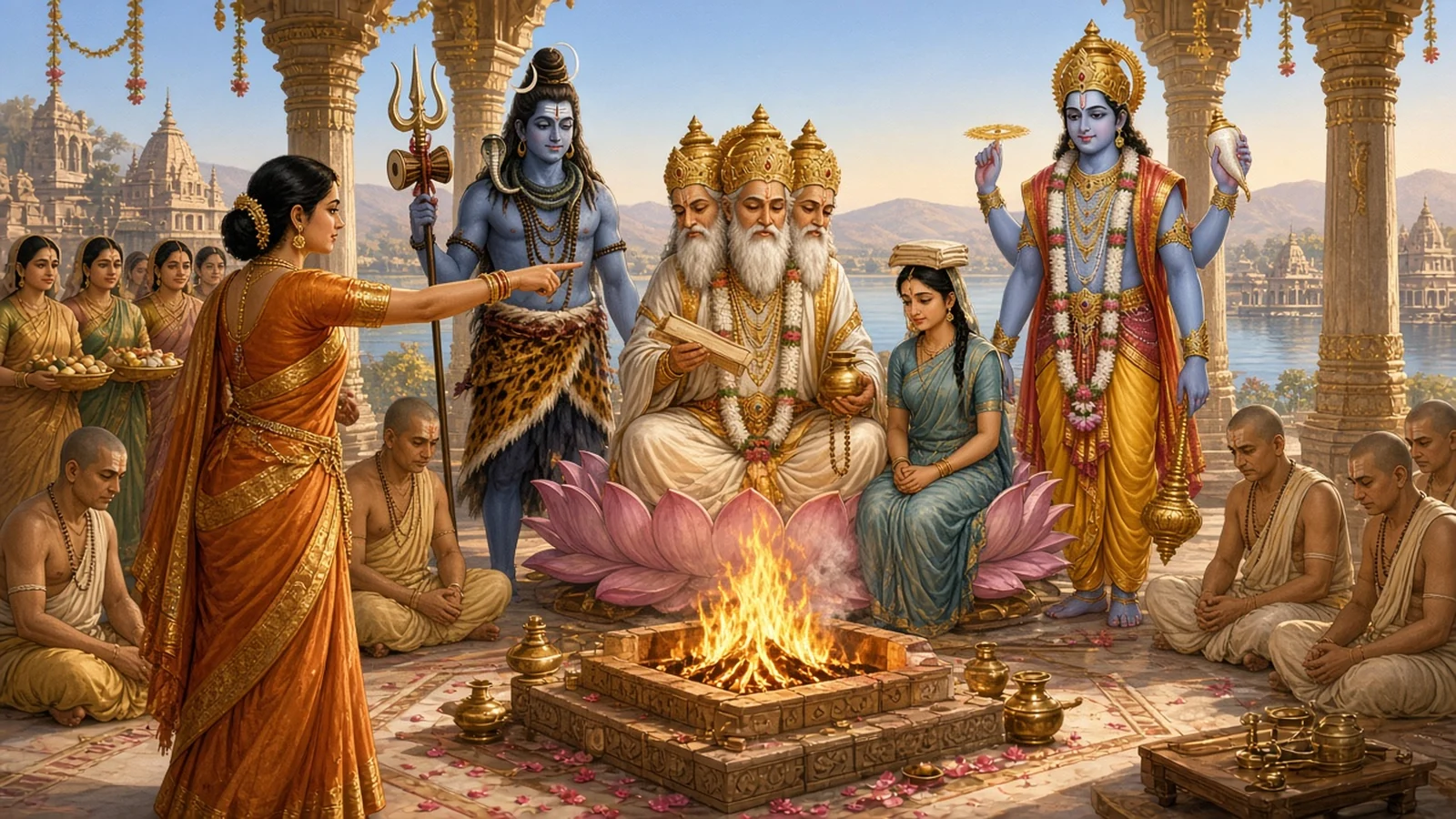
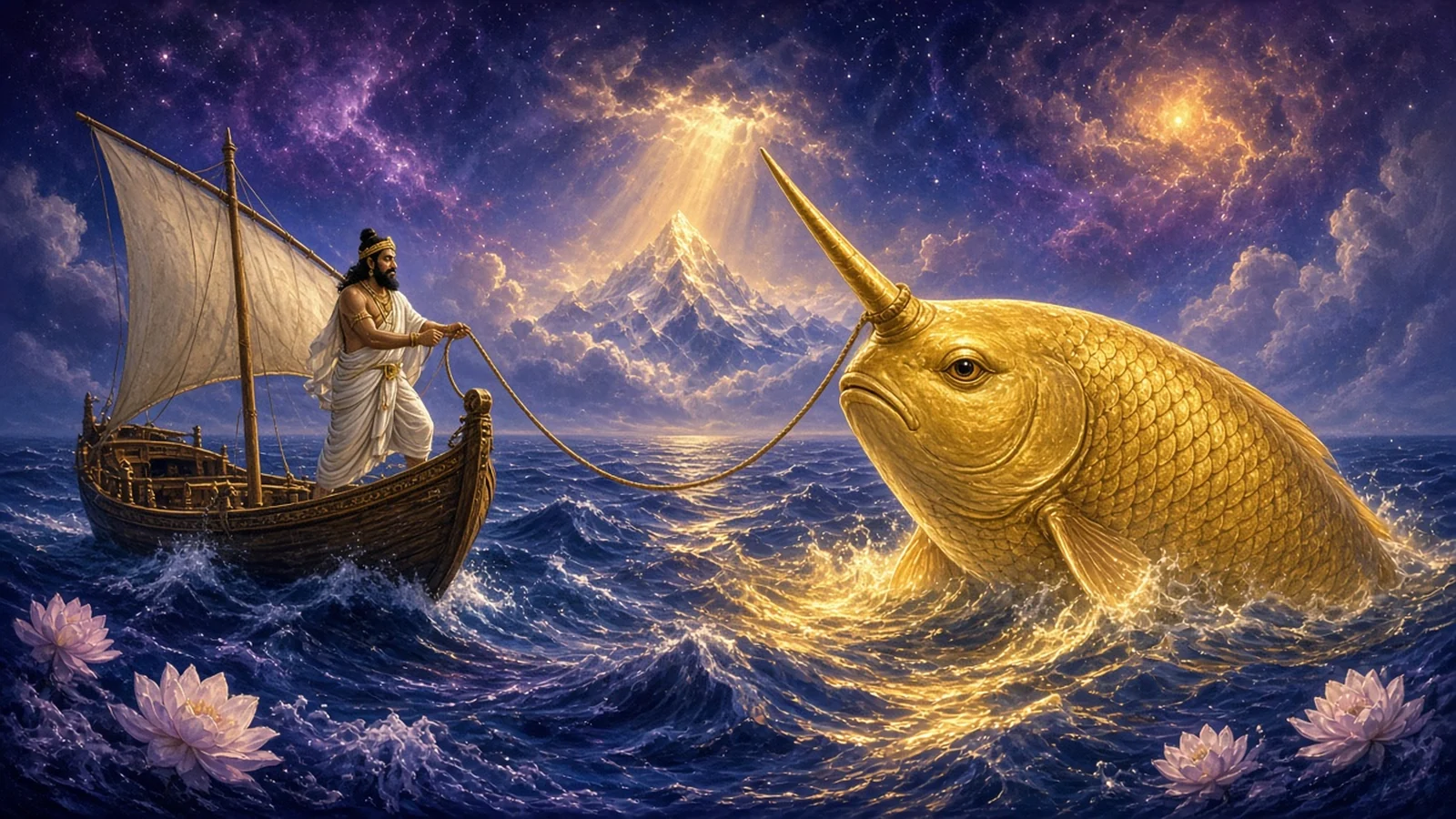
The second reason is Vishnu's. Kartik is his month, kept with a lamp and a dawn bath every day; he woke on Prabodhini Ekadashi, four days before, and the wedding of Tulsi, told in Vrinda's Curse, may be held on any day from then until the full moon. The Kartik Purnima tradition also counts this as the day his fish form appeared; Manu and the Fish is the oldest telling of the flood.
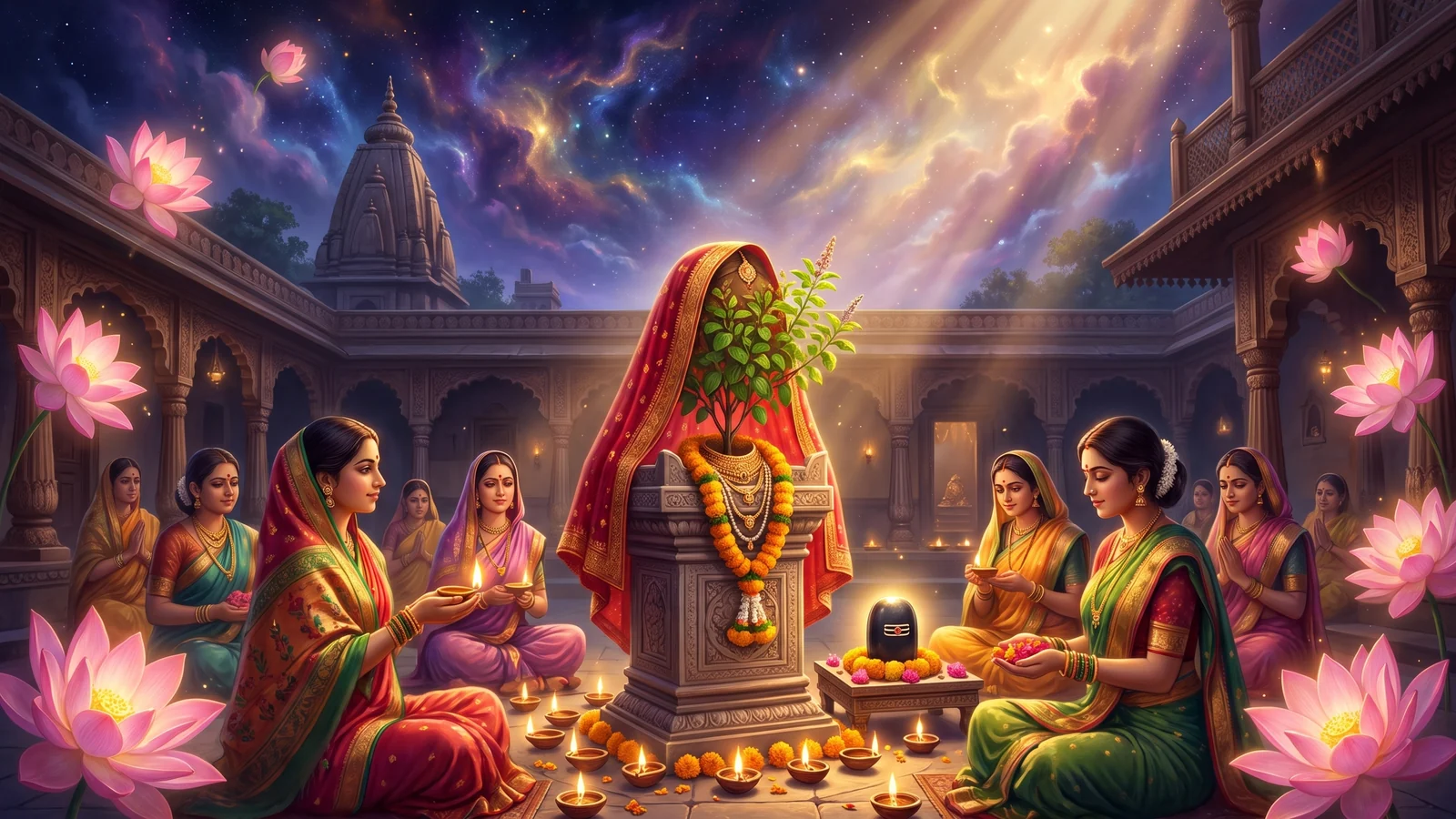
Tulsi Vivah in a courtyard: the tulsi plant dressed as a bride under a canopy of sugarcane
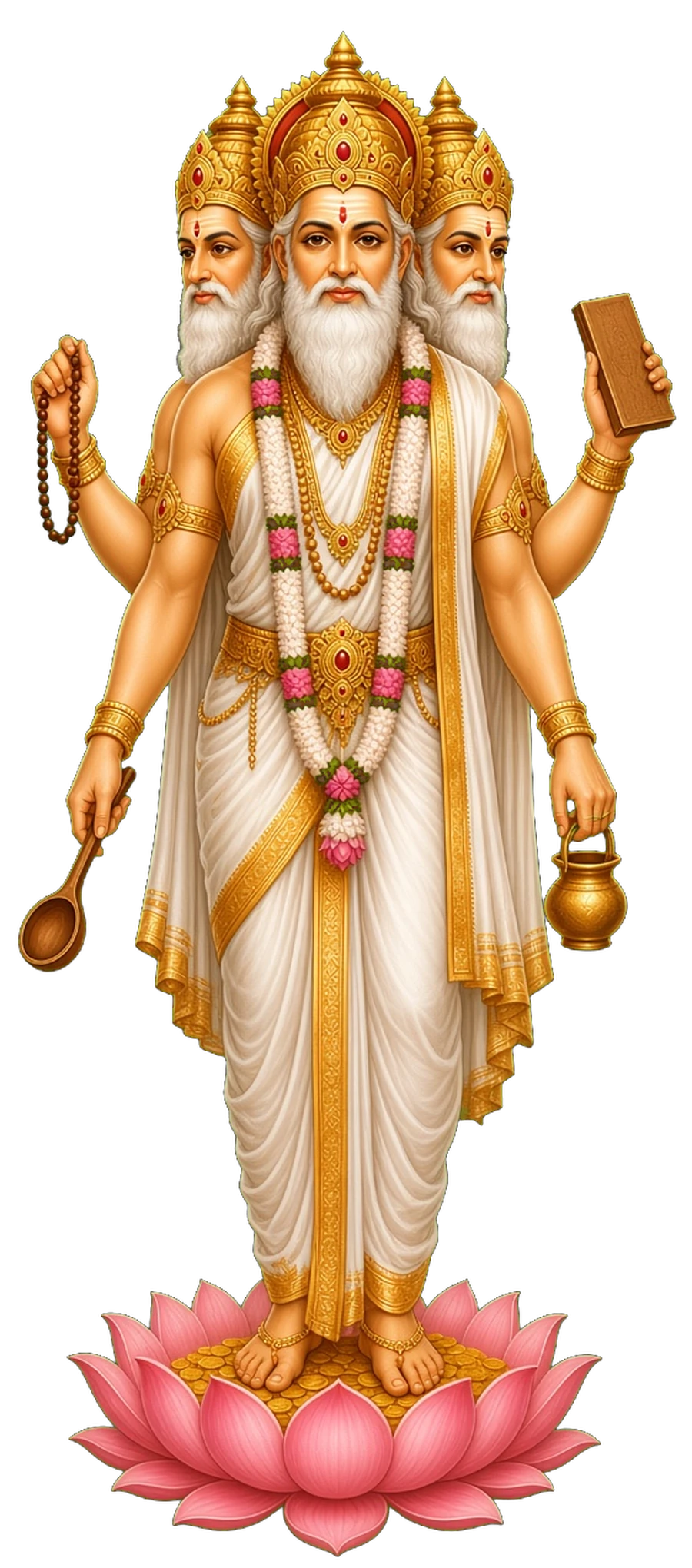
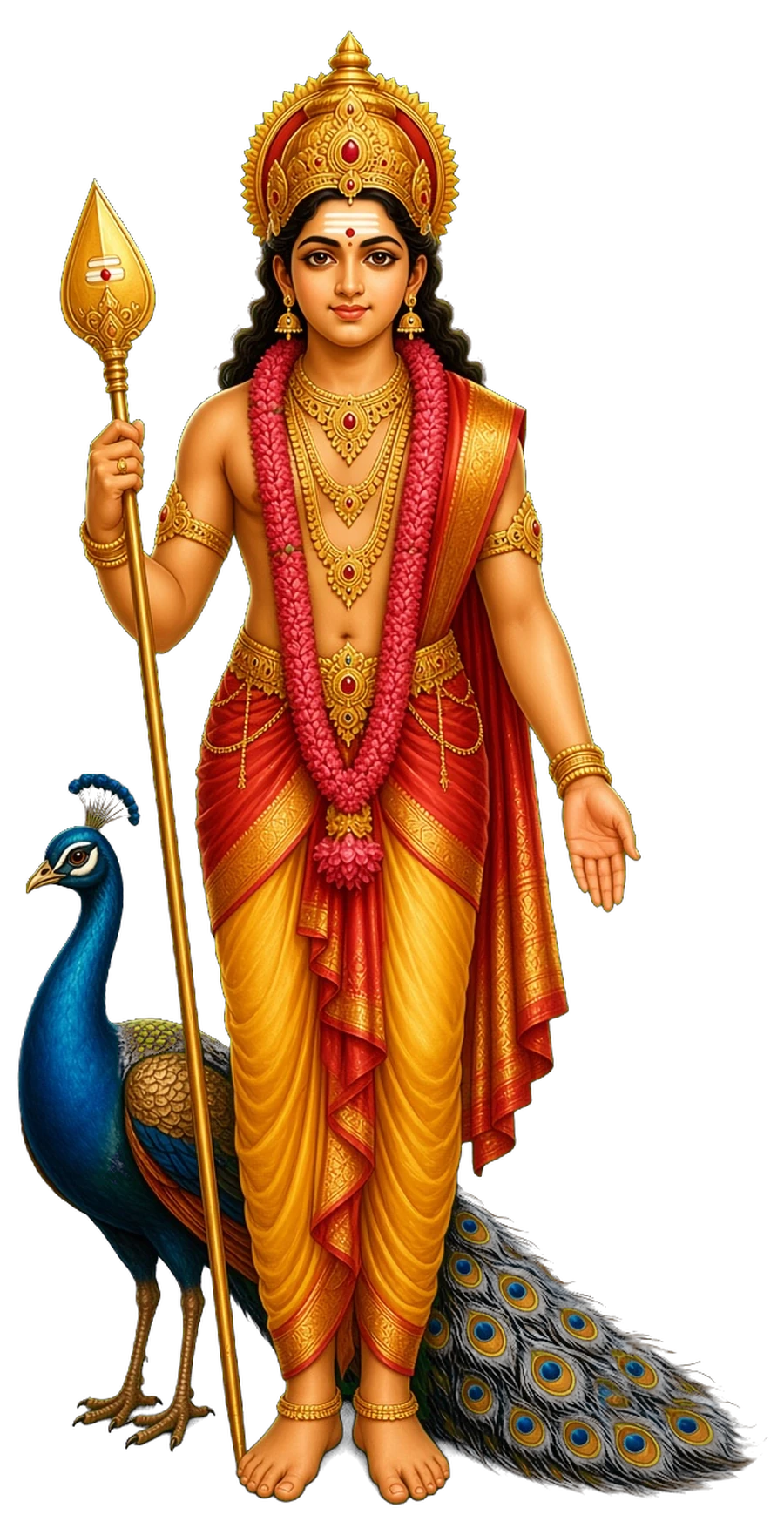
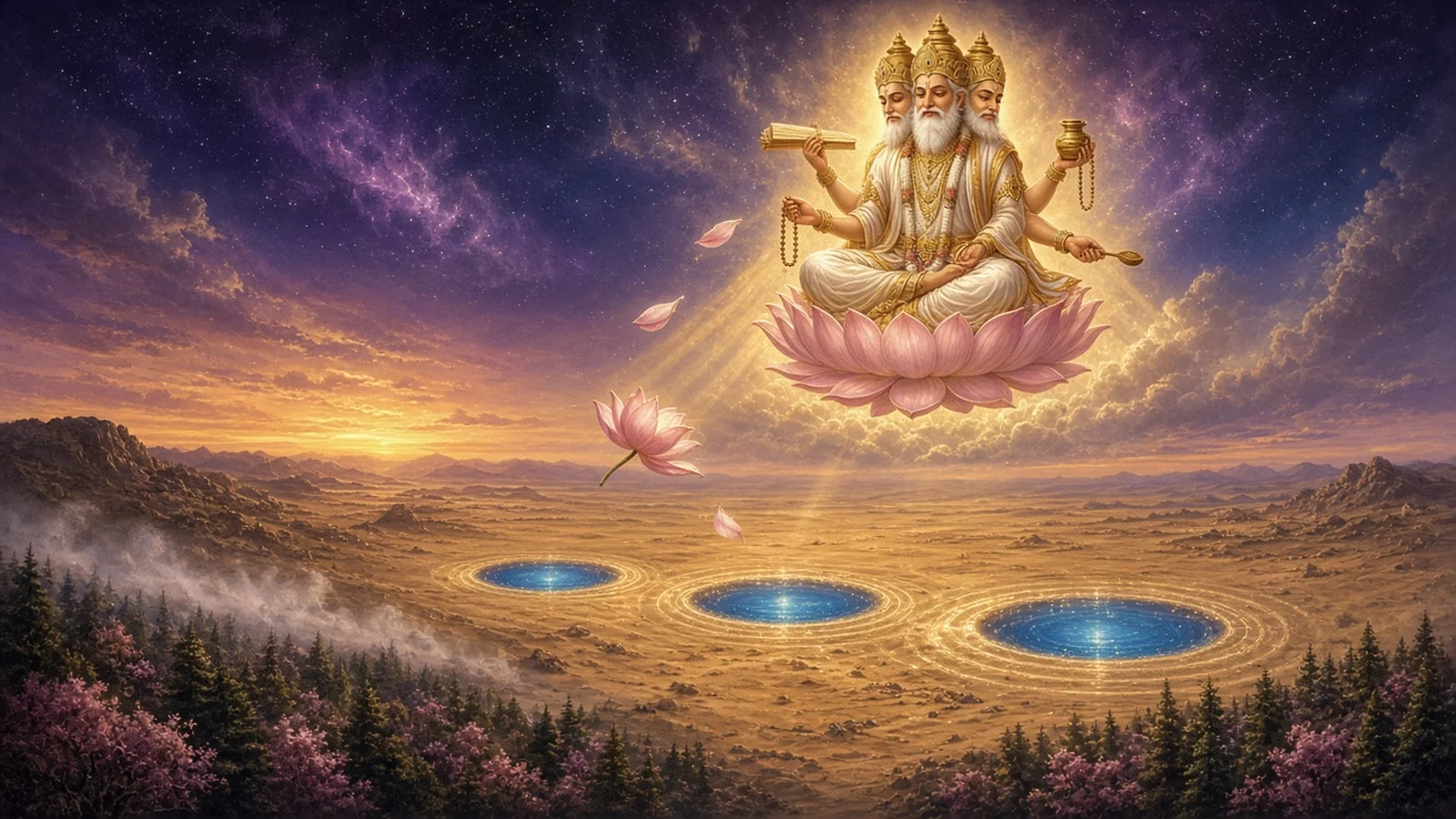
The third is Brahma's. Pushkar says his lotus fell here and made the lake, told in The Lotus That Fell at Pushkar, and that his wife's curse at the sacrifice beside it left him this one great temple, in The Wife Who Came Late. And the fourth is the star's: the Krittika, the six mothers of Kartikeya, gives the month its name, and when the full moon rides with that star the south keeps the night as the boy's birthday and lights its hill, on its own page, Karthigai Deepam.
The archer of the night. The Puranas say that on this full moon Shiva loosed the single arrow that went through the three flying cities of the sons of Taraka as they lined up for one moment in a thousand years, and that the gods declared the day a festival of lights for him. The lamps of Tripuri Purnima on the temple towers and the ghats of Kashi are his, and the Shaivas rank the night second only to Shivaratri.
Kartik is Vishnu's month, kept with a daily lamp and a dawn bath for his sake. He woke from his four months of sleep on Prabodhini Ekadashi, four days before this moon; the household wedding of Tulsi to him may be held on any day until the full moon, which closes it; and the Kartik Purnima tradition counts this as the day his fish form Matsya appeared, though the almanacs keep a Matsya Jayanti in Chaitra too.
The Creator's one great public festival. Pushkar says his lotus fell here and made the lake, that he held his sacrifice beside it and that his wife's curse left him this one great temple; on the Kartik full moon the town bathes at the fifty-two ghats in his honour as the camel fair closes.
The moon of Kartik takes its name from the Krittika star, the six mothers who nursed the six-faced boy, and when the full moon rides with that star the night is Maha Kartika and the south keeps it as his birthday with lamps on every doorstep. That southern night, Karthigai Deepam, has its own page.
G
Ganga
The river the gods come down to. Dev Deepawali's lamps are offered to her as much as to Shiva, the dawn dip is in her water wherever she flows, and at Panchganga, where five rivers are said to meet, the month's lamps for the dead burn until this night.
The last full moon of Kartik
1
Dawn, the Kartik Snan and Odisha's boats
Kartika Purnima, from before sunrise · Tuesday 24 November 2026
The month's bathing ends with its biggest dawn. At Varanasi it is the most crowded bathing day of the year, the gods themselves said to be in the water; at Garhmukteshwar on the Ganga below Hapur the week-long fair at Brijghat reaches its bath, with lamps given for the ancestors and crowds the state counted in the tens of lakhs in 2025; at Sonepur in Bihar pilgrims dip where the Gandak meets the Ganga and bow at Hariharnath before Asia's largest cattle fair opens; at Kolayat in the Bikaner desert the Sankhya pilgrims bathe in Kapil Muni's lake. Any tirtha serves, the texts say. In Odisha the dawn is Boita Bandana: toy boats of banana stem, paper and cork, each with a lamp, a betel leaf and nut, flowers and a coin, are set afloat on the rivers and tanks with the chant that remembers the months the sadhaba sailors were away, and in Cuttack the Bali Jatra fair opens on the Mahanadi bank the same morning.
Boita Bandana at dawn: toy boats of banana stem with lamps float out on an Odisha river
At Pushkar the camel fair that began with the month ends on the full moon with the dip at the fifty-two ghats, the round of the three lakes and the one day in the year when the Brahma temple is the centre of a festival. Across the north and west the last of the Tulsi weddings are held, since the full moon is the final day for them, and Odisha's five vegetarian days of Panchuka close. For the Sikhs the same moon is the birthday of Guru Nanak: the Akhand Path that began two days before ends, the Nagar Kirtan has gone through the streets the day before behind the Panj Pyare and the palki, hymns are sung from four in the morning, the langar feeds everyone and the Golden Temple and the Akal Takht are lit. Jains walk to the Adinath temple on Shatrunjay hill at Palitana, the first day the hill is open after the rains, and across Gujarat the Kartik fairs fill: the tribal fair at Shamlaji on the Meshvo, the seaside mela at Somnath.
Pushkar on the full moon: pilgrims on the lake ghats, the camel fair on the dunes beyond
Dusk, Dev Deepawali and the lamps of Tripuri Purnima
Kartika Purnima, from about a quarter past five in the evening · Tuesday 24 November 2026
Dev DeepawaliDev DiwaliTripurari PurnimaDeepdanKarthigai Deepam in the south
At Varanasi the ghats from Ravidas Ghat to Rajghat are set with rows of clay lamps through the afternoon, and when the first is lit a little after five the whole riverfront catches, eighty-four ghats and, in 2025, twenty-five lakh lamps by the government's count, with the Ganga aarti at Dashashwamedh by twenty-one priests and twenty-four young women, a tribute to the soldiers at a replica of the Amar Jawan Jyoti, a laser show on the fort wall at Chet Singh Ghat, fireworks, and hundreds of boats on the water. Across India the night is Tripuri Purnima: lamps are lit on the deepmalas, the stone lamp towers of the temples, and kept burning all night in homes and Shiva shrines, some houses lighting 360 or 720 wicks; Telugu temples light lamps of 365 wicks and read the Kartika Puranam; lamps are set under the tulsi, the amla and the sacred fig and floated in small boats on the rivers. The same evening the Tamil country lights its hill and its doorsteps as Karthigai Deepam.
The Ganga aarti at Dashashwamedh: priests raise great brass lamps as boats crowd the river
The gods' Diwali, fifteen days after the people's. The city believes the gods come down to the Ganga to bathe on this full moon and to keep Shiva's victory over Tripura, and lights the ghats for them. A dawn bath at the most crowded ghats of the year, lamps set out all afternoon from Ravidas Ghat to Rajghat, the first lit a little after five, twenty-five lakh of them in 2025 by the state's count, with fifty-one thousand lamps and twenty-one quintals of flowers at Dashashwamedh alone. The Ganga aarti there, the Amar Jawan Jyoti replica and the last post for the soldiers, the Bhagirath Shaurya Samman medals, the laser show at Chet Singh Ghat, fireworks and the boats full of watchers all belong to the modern festival, which the Ganga Mahotsav of the tourism department ends on. The city's accounts of its start differ, Babu Maharaj at Dashashwamedh in the early 1990s or Panchganga Ghat in 1985.
PushkarThe fair and the dip
Brahma's fair. It opens with the month of Kartik on the dunes west of the town, camels, horses, cattle, sheep and goats traded for days before the pilgrims arrive from Prabodhini Ekadashi, and ends on the full moon with the dip at the fifty-two ghats of the lake, said to be worth centuries of sacrifice, the sixteen-kilometre round of the three Pushkars and the Brahma temple's one great festival. The last five days carry the camel races, the camel beauty contest, the longest moustache and bridal competitions, the matka phod and turban tying, the tug of war that the locals always win, a football match against the tourists, hot-air balloons at dawn, the evening prayers and floated lamps at the Varah Ghat. Two lakh people and twenty-five thousand camels by one count, five or six lakh people by another; the Rajasthan tourism corporation, the municipal board and the animal husbandry department run it. The 2025 fair ran from 30 October to 5 November.
Garhmukteshwar, Sonepur and KolayatThe Kartik melas
The Ganga's biggest Kartik bath outside Kashi is at Brijghat, Garhmukteshwar, below Hapur, where the week-long fair ends on the full moon with the dip and lamps given for the ancestors; the tradition says Yudhishthira and Arjuna bathed here with Krishna for the dead of the war, and in 2025 the state ran it as a mini-Kumbh for an expected fifty lakh. At Sonepur in Bihar, where the Gandak meets the Ganga at Harihar Kshetra, the pilgrims bathe and pray at Hariharnath on Kartik Purnima and Asia's largest cattle fair opens for a month, once famous for its elephants, which may no longer be sold. At Kolayat in the Bikaner desert the Sankhya pilgrims bathe in Kapil Muni's lake at its fifty-two ghats, and a camel fair runs beside it.
OdishaBoita Bandana and Bali Jatra
Before sunrise the Odias float toy boats of banana stem, paper and cork, with a lamp, betel leaf and nut, flowers and a coin inside, on the rivers, tanks and seashore, chanting the words that remember the months the sadhaba merchants of old Kalinga were away on their voyages to Bali, Java, Sumatra, Borneo and Sri Lanka, which began on this moon with the north-east wind. The women give the hulahuli and blow conches. At Cuttack the Bali Jatra, the Voyage to Bali, opens on the Mahanadi bank at Gadagadia Ghat below Barabati fort and runs a week and more; the state counted sixty-five lakh visitors over eight days in 2025. Paradeep has kept its own Kalinga Bali Jatra since 1992, the year a naval yacht sailed the old route to Bali. The five vegetarian days of Panchuka end on the full moon.
GujaratShamlaji, Somnath and Palitana
Gujarat keeps the Kartik full moon with fairs. The tribal communities of the north come to the Shamlaji temple on the Meshvo for their Kaliyo Dev, bathe in the river and buy silver and metalware at the fair; Somnath holds its Kartiki Purnima mela on the seashore; and at Palitana the Jain hill of Shatrunjay reopens to pilgrims the day the rains retreat ends, so that thousands climb to the Adinath temple on this one day.
Tamil Nadu, Kerala and the Telugu landsKarthigai Deepam and Karthika Pournami
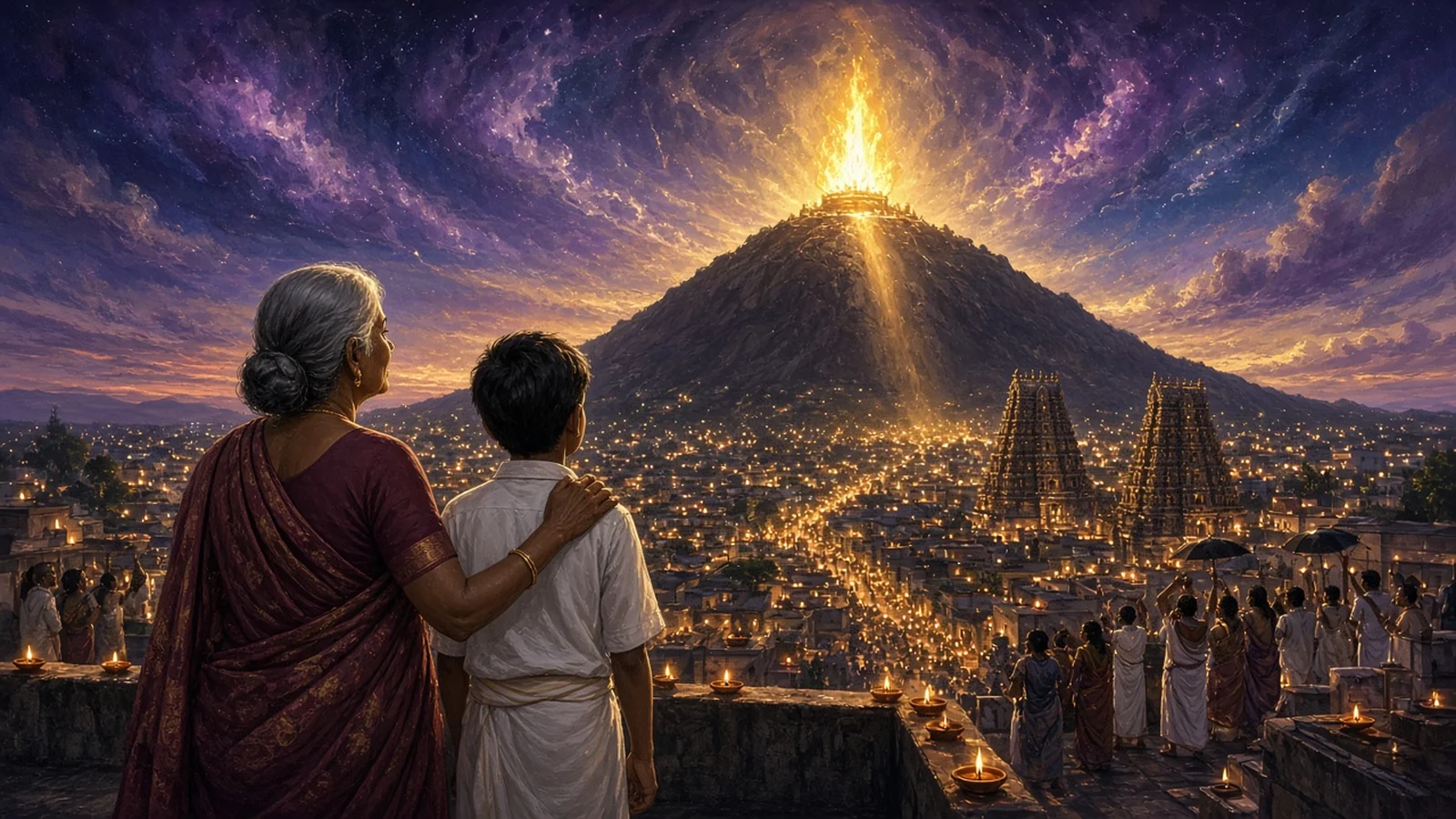
The south keeps the same moon as its festival of lamps, the Maha Deepam on the hill at Tiruvannamalai, rows of clay lamps on every Tamil doorstep, Kerala's Thrikarthika, the Telugu temples' lamps of 365 wicks and the fire arch at Srisailam. That night has its own page, Karthigai Deepam; the Telugu custom of reading the Kartika Puranam and fasting till sunset belongs to both.
HindusTripurari, the Kartik bath and Tulsi
Shaivas keep the night for the three cities and rank it next to Shivaratri, carrying Shiva's images in procession and lighting the deepmalas; Vaishnavas end Vishnu's month with the last Tulsi wedding, the dawn bath and the lamp, and count the day for Matsya; the Smarta almanacs forbid the day's violence, no cutting of hair or trees or fruit, and praise the gift of a cow, of gold and of a lamp, the charity of the day said to equal ten sacrifices. The Brahma devotees have Pushkar. The Radha-Krishna temples hold the rasa, and the Brahma Vaivarta Purana says Krishna worshipped Radha on this moon.
SikhsGuru Nanak's Prakash Purab
The birthday of the first Guru, born in 1469 at Rai Bhoi di Talwandi, now Nankana Sahib, is kept on the Kartik full moon by the Bikrami calendar, with the forty-eight-hour Akhand Path, the Prabhat Pheris, the Nagar Kirtan behind the Panj Pyare and the palki, hymns from four in the morning, the langar and the lit gurdwaras, the Akal Takht and the Golden Temple above all. The Janamsakhis and many scholars put the birth in Vaisakh, and the Nanakshahi reformers would keep it then; the Kartik date is said to go back to Maharaja Ranjit Singh's time, moved on the advice of Bhai Sant Singh so that the Sikhs would not go to the Kartik Purnima fair at Ram Tirath instead.
JainsThe end of the rains and the first day on the hill
The Jain monks' four months in one place end in Kartika, and Kartik Purnima is the day Palitana reopens, when thousands make the Shatrunjay yatra to the Adinath temple on the hill where, the Jains say, the first Tirthankara preached and countless monks found release. The day also closes the pilgrimage year's long pause and begins the monks' wandering again.
How it is kept
The day begins in the water. At Varanasi it is the most crowded bathing day of the year; at Garhmukteshwar the week-long fair on the Ganga below Hapur ends with the dip and the lamps for the ancestors; at Sonepur the pilgrims bathe where the Gandak meets the Ganga before Asia's largest cattle fair opens; at Pushkar the whole town goes down the fifty-two ghats before sunrise, walks the round of the three lakes and climbs to Brahma's temple and Savitri's hill as the camel traders pack up. In Odisha the dawn is Boita Bandana: toy boats of banana stem with a lamp and betel inside are set on the rivers and tanks with the chant for the sadhaba sailors, and Cuttack's Bali Jatra opens on the Mahanadi.
The dawn dip at Varanasi: pilgrims in the Ganga below the ghats as the sun comes up
The day belongs to the other faiths too. The Sikhs keep Guru Nanak's Prakash Purab with the Akhand Path, the Nagar Kirtan and the langar, and the Golden Temple is lit; the Jains climb to Palitana on the first day the hill is open after the rains; Gujarat fills its fairs at Shamlaji and Somnath; the last Tulsi weddings are held in the courtyards.
Then the lamps. At Varanasi the rows are set out all afternoon from Ravidas Ghat to Rajghat and lit from a little after five, with the Ganga aarti at Dashashwamedh, the tribute to the soldiers, the laser show and the boats. Across the country the deepmalas of the temples are lit and lamps burn all night in homes and Shiva shrines, some houses lighting 360 or 720 wicks; the Telugu temples light lamps of 365 wicks; lamps are set under the tulsi, the amla and the fig and floated on the rivers in small boats. The Tamil country lights its hill the same evening.
Tripuri Purnima: a temple's stone lamp tower lit with rows of flames, lamps under the tulsi
In the old texts
The three cities are in the Shiva Purana's Rudra Samhita (Yuddha Khanda) and in the tenth chapter of the Bhagavata's seventh book, where Shiva burns the cities at noon. Pushkar's lake is in the fifteenth chapter of the Padma Purana's Srishti Khanda, where Brahma drops the lotus that kills Vajranabha and names the place; the sacrifice and the curse follow in chapters sixteen and seventeen. The month has its own books: the Karttikamasa Mahatmya of the Skanda Purana and the Kartika chapters of the Padma Purana's Uttara Khanda, which the day's readers cite for the praise of Kartika and the rule of the lamp. The Matsya Purana opens with Manu and the fish.
The scholar Underhill traced the day to an old sacrifice for victory over enemies, the Shakamedha, and that is his reading, not the texts'. The Sikh date rests on the Bikrami calendar and a court decision: the Janamsakhis and most historians put Guru Nanak's birth in Vaisakh, and the Kartik observance is said to have been fixed under Maharaja Ranjit Singh on the advice of Bhai Sant Singh.
Where this page comes from. Written by Devalok from the Shiva Purana and the Bhagavata Purana on the three cities, the Padma Purana's Srishti Khanda on Pushkar, the Kartika Mahatmya tradition of the Skanda and Padma Puranas, the Dev Deepawali of Varanasi as the city, the Uttar Pradesh government and the PTI reports of 2025 keep it, the Pushkar Fair as Rajasthan Tourism and its visitors describe it, Odisha's Boita Bandana and Bali Jatra as the Odisha press and the state tell them, the Wikipedia articles on the day and its fairs, the Sikh and Jain observances as their encyclopaedias give them, and the Drik Panchang calendar for 2026 and 2027, as recorded in the Devalok Lore. Our own words throughout.