Festival · Three evenings when the setting sun comes in by the west gate to Mahalakshmi's feet
Kirnotsav at Kolhapur
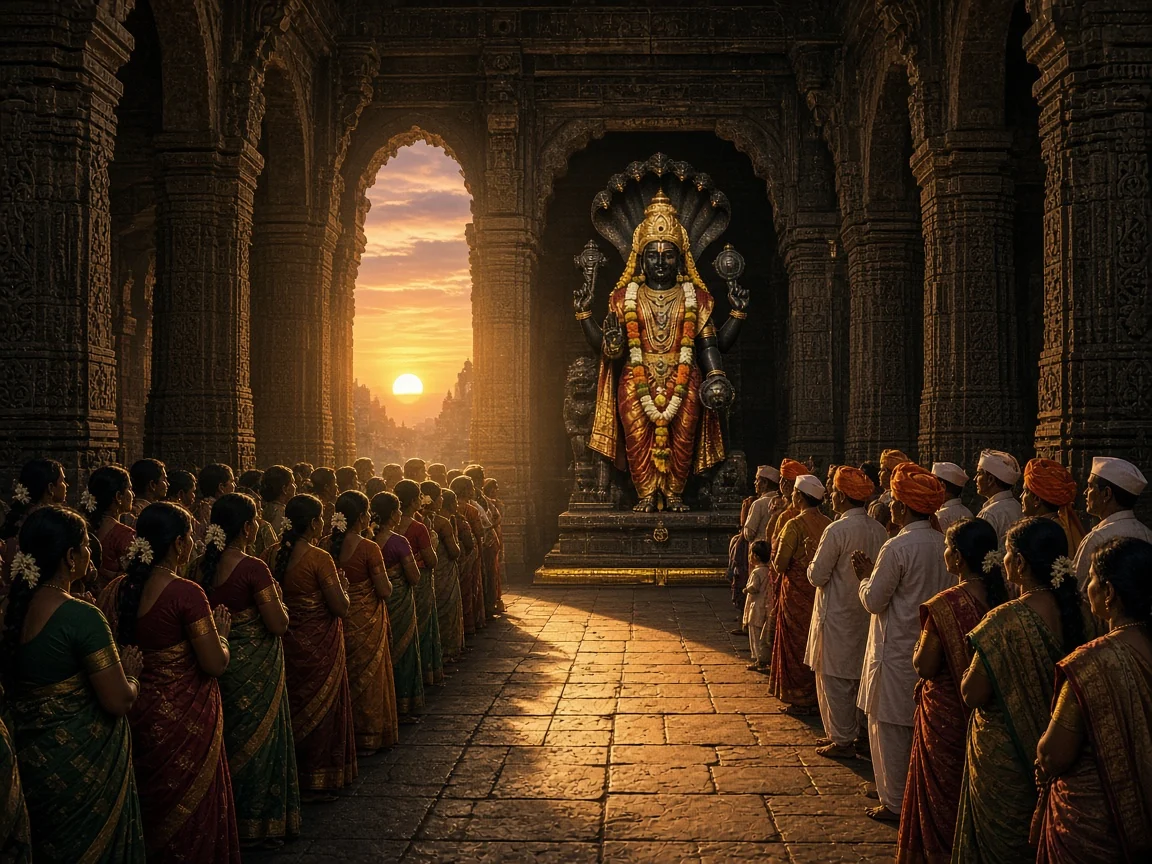
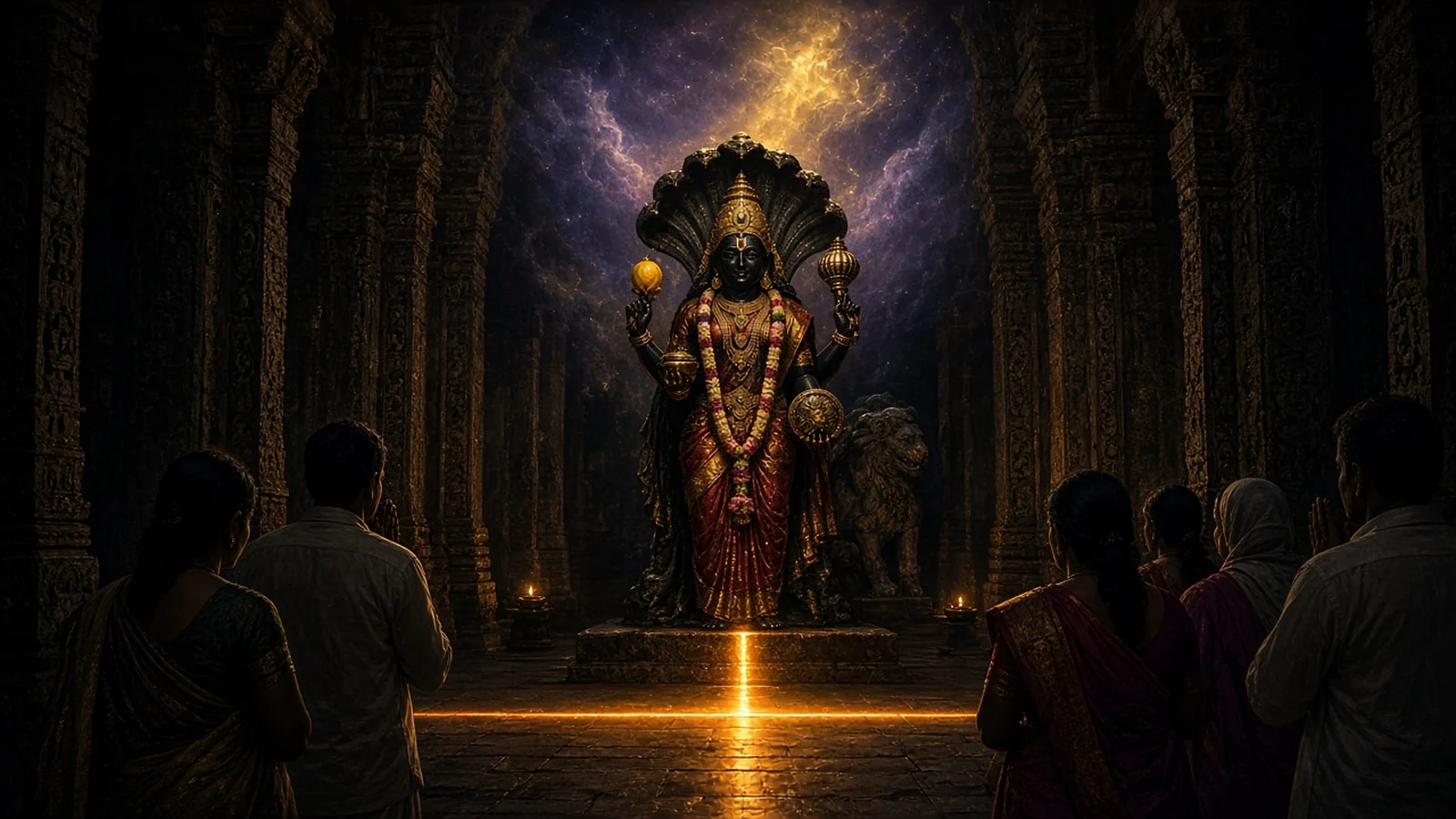
Kirnotsav is the festival of the sun's rays at the Mahalakshmi (Ambabai) temple of Kolhapur in Maharashtra. Twice a year, at the end of January and the start of November, the setting sun comes in through the great west gate, crosses the pillared hall and reaches the black stone goddess in her sanctum, lying on her feet the first evening, her waist the second and the whole image the third. The lights are off, a few thousand people stand along the sun's path, and the whole thing lasts a few minutes. The temple says the sun comes to bow to her at the turn of his journey.
When is Kirnotsav at Kolhapur in 2027? The third evening, when the rays cover the whole image, is Tuesday 2 February 2027; it runs 31 January to 2 February 2027. In 2027: Thursday 11 November 2027. 31 January to 2 February, as the sun goes north, and 9 to 11 November, as it goes south; fixed to the sun, not the moon, and the first evening can move a day with the trust's announcement or the clouds.
Also calledKiranotsavKiran UtsavKirnostavthe festival of raysUttarayan KirnotsavDakshinayan Kirnotsav
In short
What is Kirnotsav?
The festival of the sun's rays at the Mahalakshmi (Ambabai) temple of Kolhapur in Maharashtra. Twice a year the setting sun comes in through the west gate and falls on the black stone goddess, on her feet the first evening, her waist the second and the whole image the third.
When is Kirnotsav in 2026 and 2027?
The temple keeps 9 to 11 November and 31 January to 2 February every year, so 9 to 11 November 2026, 31 January to 2 February 2027 and 9 to 11 November 2027. The first evening can move a day with the clouds or the trust's announcement; in 2024 it was 8 November.
Why does the sun reach the goddess?
The image faces west, which almost no other Hindu image does, and the great west gate, the pillared hall and the sanctum stand on one line. When the sun sets on that line, about six weeks either side of the winter solstice, its last light runs down the hall into the sanctum. The temple says the sun comes to bow to her at the turn of his journey.
What happens on the three evenings?
The sanctum's lights are switched off, a lane is roped down the middle of the hall for the sun, and a few thousand people watch the patch of light cross the floor and go in at the sanctum door. When it touches her feet the shout goes up. It stays a minute or two and is gone.
Is Kolhapur a Shakti Pitha?
Yes. Maharashtra counts it among its three and a half seats of the Goddess, with Tuljapur, Mahur and Saptashrungi; the Devi Bhagavata lists Mahalakshmi at Karavira among the 108 seats, and the Peetha Nirnaya Tantra makes it the place where Sati's eyes fell.
Next, in 2027Tuesday 2 February 2027
31 January to 2 February 2027
Prime godMahalakshmi (Ambabai)
with 2 more
WhereKolhapur, Maharashtra, with pilgrims from the rest of the state, Karnataka, Telangana and Tirupati
How longThree evenings each time, a few minutes at sunset; the press counts five days with the three middle evenings the ones that matter
31 January to 2 February, as the sun goes north, and 9 to 11 November, as it goes south; fixed to the sun, not the moon, and the first evening can move a day with the trust's announcement or the clouds
Why it is kept
Kirnotsav is a festival with no procession, no fast and no feast. It is a few thousand people standing still in a stone hall at sunset, watching a patch of light cross a floor. Twice a year, at the end of January and the start of November, the setting sun lines up with the west gate of the Mahalakshmi temple at Kolhapur, comes in, crosses the pillared hall and reaches the black stone goddess in her sanctum, where every lamp has been put out for it. Her feet the first evening, her waist the second, all of her the third; a minute or two each time. The city calls it the festival of rays, and says the sun has come to bow.
Because she faces west. Almost every image in India looks east, to the morning; Ambabai of Kolhapur turned her face to the evening, and the city has a story for it. Her sister Tryamboli helped her in the war with the demons and was not thanked, and went up the hill on the east of the city and sat down with her back to her; so Mahalakshmi looks west and Tryamboli east, and on Lalita Panchami the elder goes up the hill in a palanquin to make it up. A west-facing goddess is one the setting sun can reach, and the builders set the great gate in the west wall in a line with her.
Ambabai faces west to the evening while her sister Tryamboli sits on the eastern hill
The temple's reading is that the sun does the rest on purpose. At the turn of his journey south, in early November, and again at the turn of his journey north, at the end of January, his setting point crosses the line of the gate, and he comes in through her own door and lies down at her feet, three evenings each time. The tourism pages say he pays her homage for three days a year. The sky-watchers say it in their own words: the dates lie about six weeks either side of the winter solstice, where the sun's setting point meets the axis of the gate, and an IIT Roorkee study of 2026 has measured the alignment. Nobody has found the inscription in which the builders say they meant it.
Surya comes in by the west gate at sunset and bows toward the goddess in her sanctum
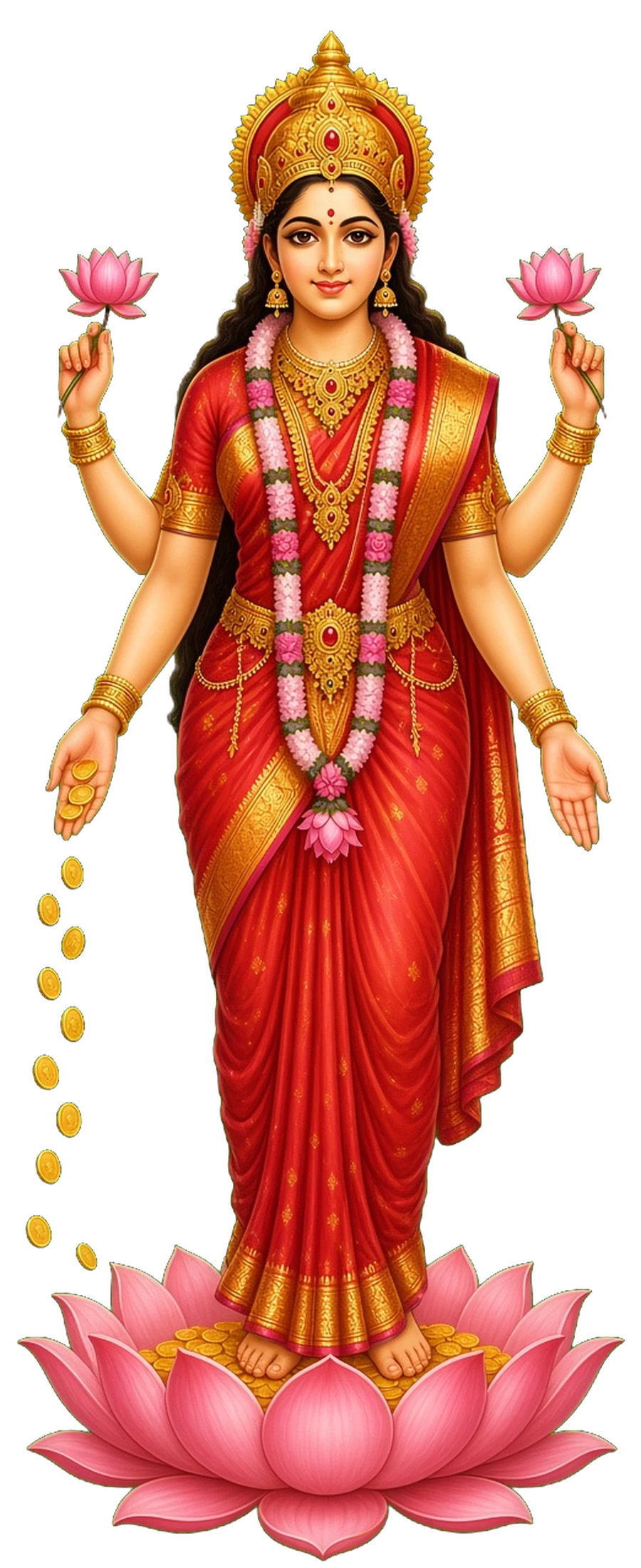
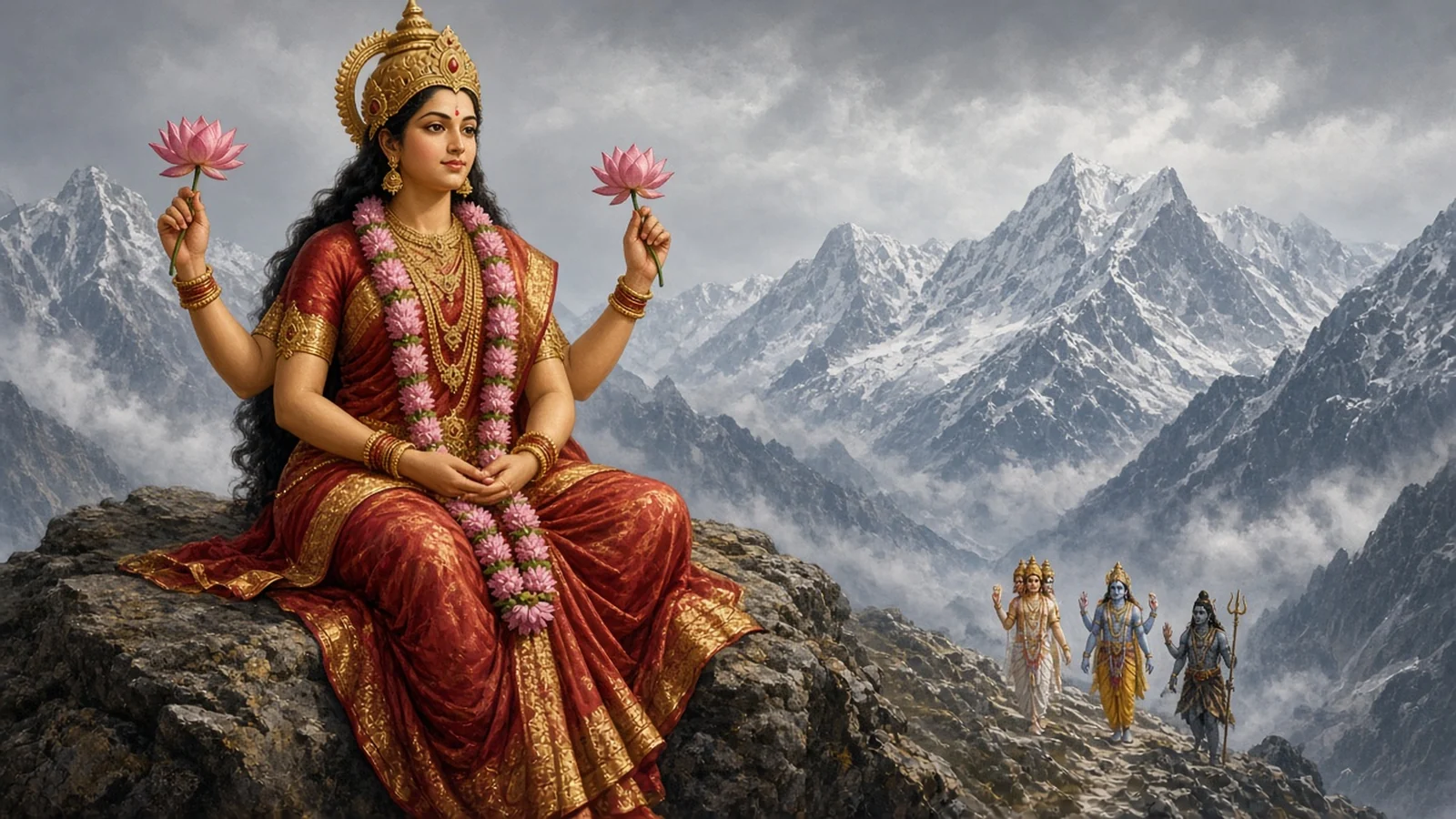
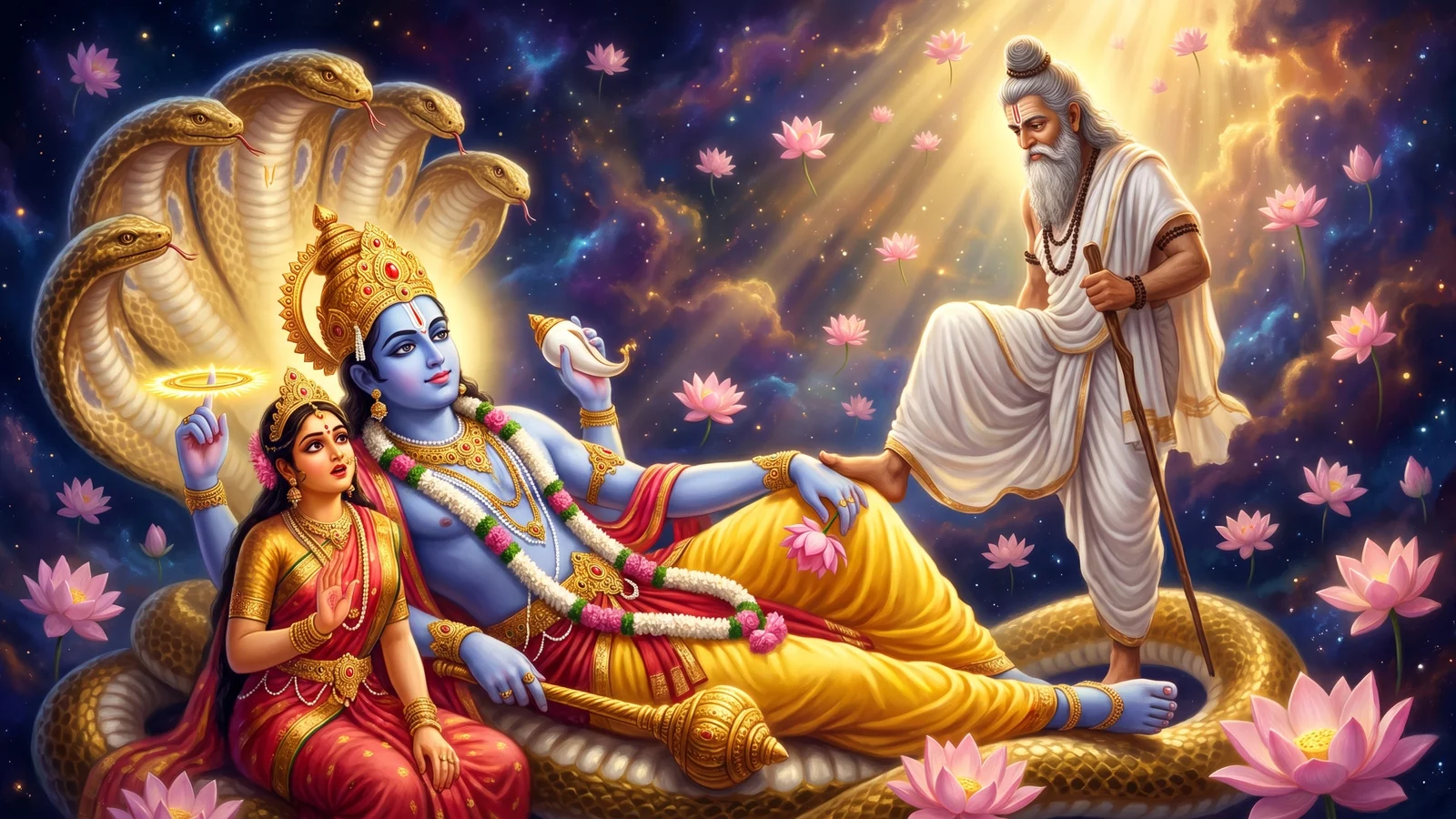
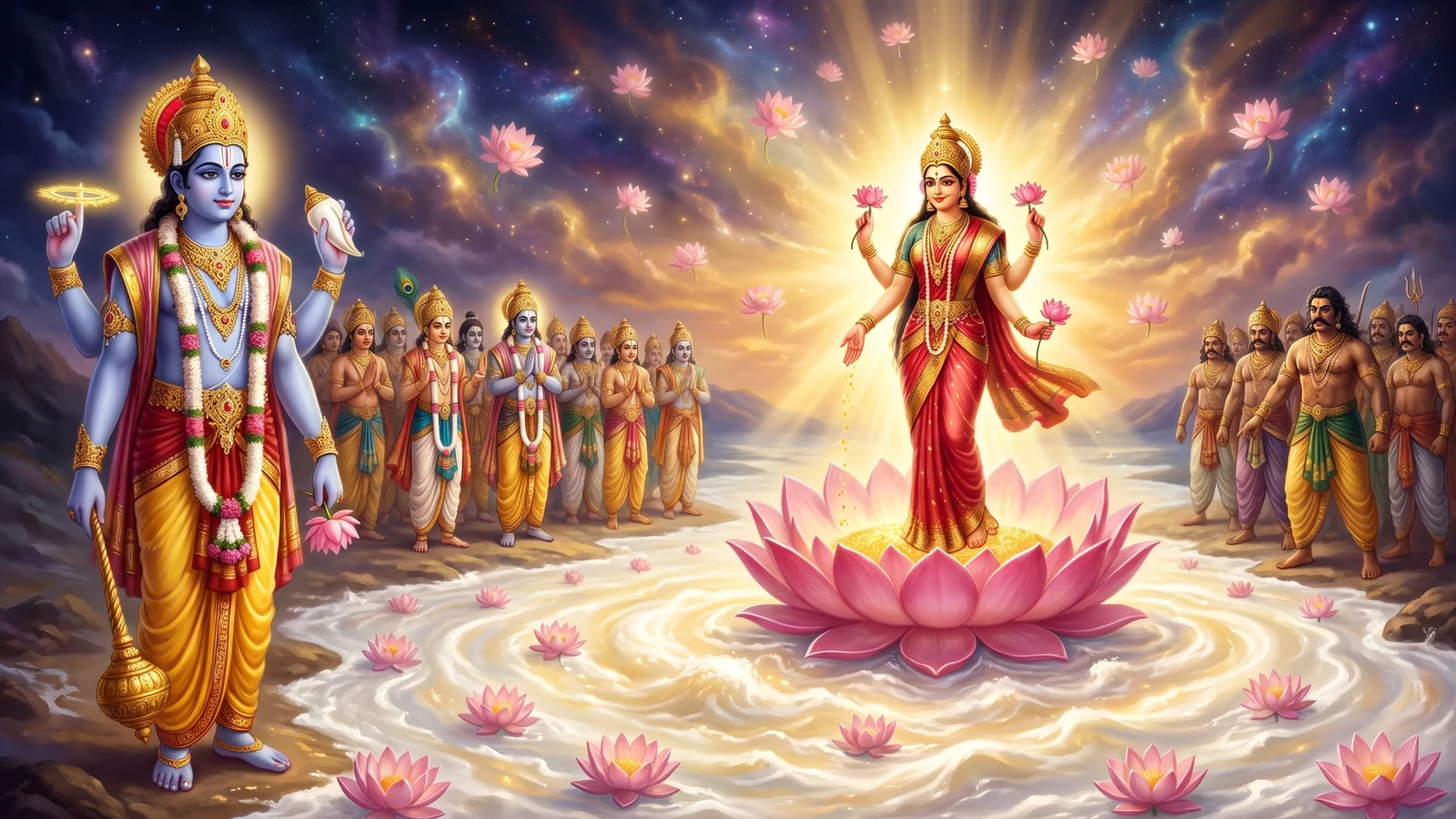
She is the Mahalakshmi of Karavira who kept her word to a demon for a hundred years and came back to kill him, the Lakshmi who left Vaikuntha when a sage kicked her husband's chest, the mother the city names at the head of its letters. The sun on her feet is a visit to all three.
The goddess of Karavira, Kolhapur's own, three feet of black stone with a citron, a mace, a shield and a drinking bowl in her four hands, a five-headed snake in her crown and a lion behind her. She faces west, which almost no other image in India does, and that is why the evening sun can reach her. The city calls her Ambabai, the mother.
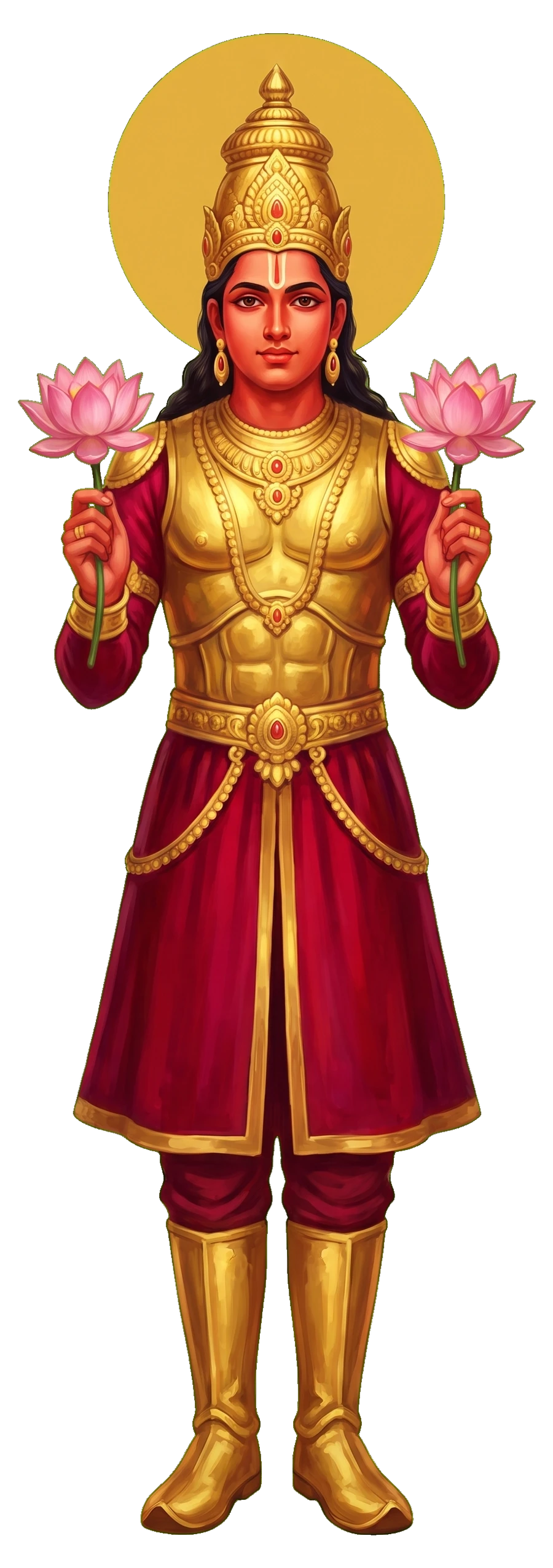
The sun, who comes to her feet. In the temple's telling he enters by her own door twice a year, at the turn of his journey south and north, and bows, to her feet on the first evening, her waist on the second, the whole of her on the third, and then goes on his way. The tourism pages say he pays her homage for three days.
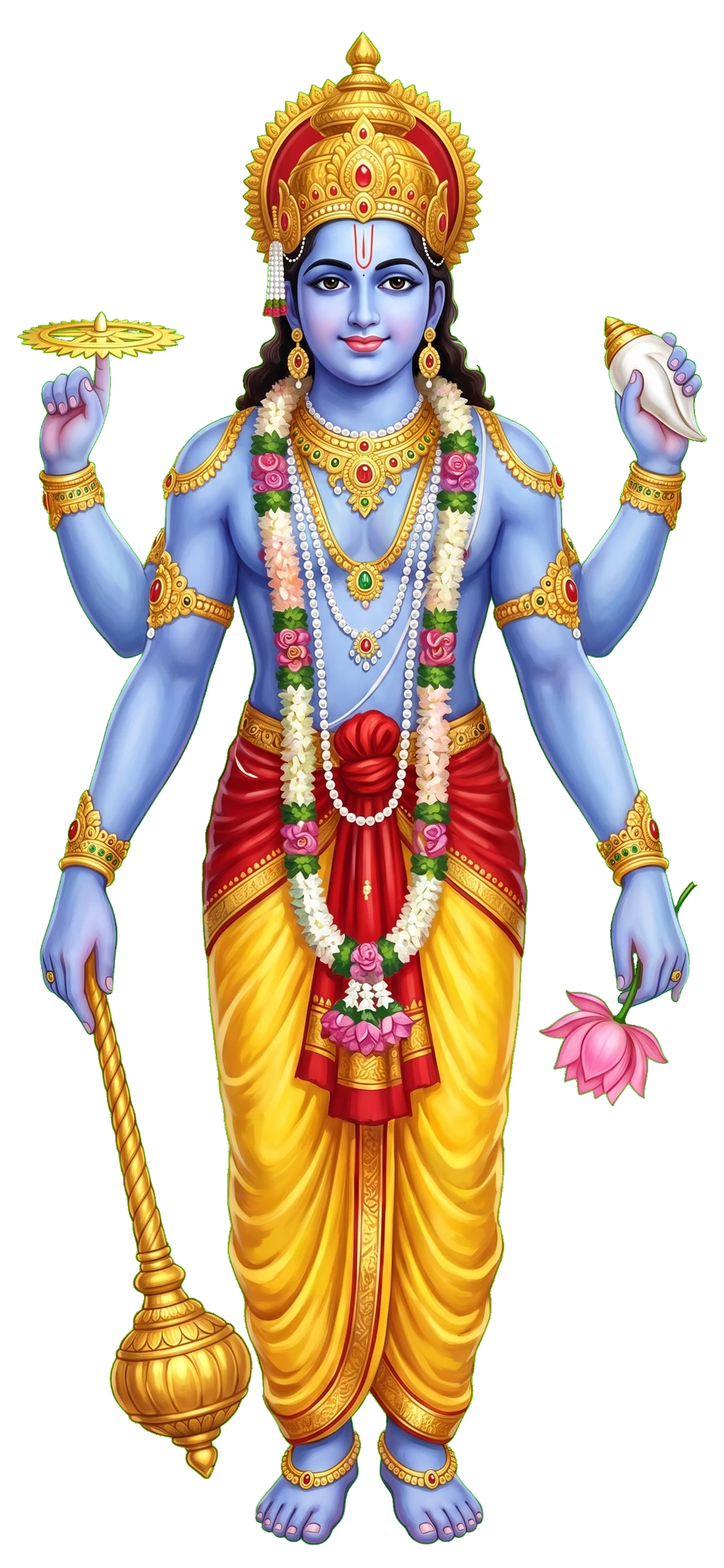
Her husband on the seven hills. Pilgrims who have been to Balaji come on to Kolhapur because, they say, he will not smile unless she does; a daily train runs the 860 kilometres between the two towns, and the Marathi record says Tirupati sends her a sari every Navratri.
Three evenings of the sun
1
The first evening, the feet
Fixed to the sun; no tithi · Monday 9 November 2026
Day one31 January9 November
By four in the afternoon the Garud Mandap inside the west gate is full and a lane has been roped off down its middle from the Mahadwar to the door of the inner hall, because that is the sun's road. The electric lights in the sanctum are switched off so that nothing but the sun will light her. A little after five the first light comes in through the gate and lies on the stone floor; it crosses the mandap, climbs into the Ganapati chowk, passes the brass threshold and goes in at the sanctum door, and when it touches the goddess's feet the shout goes up and runs back through the hall. In 2025 the press timed it: through the gate at about five past five, on the feet at 5.42, gone soon after. If the evening is cloudy nothing happens, and everyone comes back tomorrow.
The first evening: the last of the sun lies on the feet of the black stone goddess
Fixed to the sun; no tithi · Tuesday 10 November 2026
Day two1 February10 November
The sun sets a little further along the horizon, and the light that comes in the gate rides a little higher. On the second evening it climbs past the feet to the waist, the navel in the temple's own description, the chest or the stomach in the newspapers', and stays there its minute or two before the dark takes the sanctum back. The crowd is bigger than the first evening's, because the first evening told everyone it was working.
The second evening: the sunlight climbs to the waist of the black stone goddess
Fixed to the sun; no tithi · Wednesday 11 November 2026
Day three2 February11 November
On the third evening the light rises up the whole image, over the citron and the mace, the shield and the bowl, to the face and the snake in the crown, and for a moment the black stone goddess stands in gold from head to foot with no lamp lit anywhere near her. Then the evening takes it back, the lights come on, and the sun does not come to her door again for months: from the November evenings until the end of January, and from the February evenings until November. The trust's men stand in the gateway through all three evenings watching the western sky, and the day before the first they measure where the light will reach.
The third evening: the black stone goddess stands in gold sunlight from crown to foot
The temple stands at the heart of the old city on Mahadwar Road, black Hemadpanti stone, with the Garud Mandap of 1838 to 1842 inside the west gate and the sanctum beyond it on one line, a line the temple's own writers draw on westward to the old Sandhyamath tower in Rankala lake. On the three evenings the lane down the middle of the mandap is kept clear and the crowd, counted in thousands, stands on either side of it from four o'clock. Outside, the city that sells Kolhapuri chappals and the jaggery that carries its name waits for the shout from inside.
The rest of MaharashtraOne of the three and a half
Maharashtra counts three and a half seats of the Goddess, the sade teen Shakti Pithas, and Kolhapur is one of them, with Bhavani at Tuljapur, Renuka at Mahur, and Saptashrungi of Vani as the half. Devotees come to Kirnotsav from across the state and from Karnataka and Telangana, and Kolhapur's own Navratri, with Tarabai's cannon and the palanquin to Tryamboli on Lalita Panchami, draws twenty-five lakh.
TirupatiThe pilgrims' second stop
Pilgrims who have climbed the seven hills to Venkateswara come on to his wife at Kolhapur to finish the journey, and a train runs the 860 kilometres every day. A shrine to Balaji stands at the temple's entrance, and the Marathi record says Tirupati sends Ambabai a sari each Navratri. The road from Vaikuntha that brings her here is told in Bhrigu's Kick and The Hundred Years of Karavira.
The other sun-ray templesModhera, Bengaluru, Deo and Konark
Kolhapur is not the only temple built to catch the sun. At Modhera in Gujarat the rising sun lights the image of Surya at the equinoxes; at the Gavi Gangadhareshwara cave in Bengaluru the Makar Sankranti sun passes between the horns of Nandi onto the linga for about an hour of the evening; the Sun temple of Deo in Bihar faces west and has its own page, The Temple That Turned to the West; and Konark's story is Samba and the Sun. Kolhapur is the only one of these where the sun comes to a goddess.
Hindus of every communityAmbabai's own
The festival is kept by whoever can get into the mandap, Marathas, Brahmins, the Lingayat and Jain traders of the old city, farmers in from the sugar villages, Tirupati pilgrims off the train; there is nothing to buy and no rite to book, only a place to stand and a few minutes to watch. The Devi Bhagavata counts Karavira among the 108 seats of the Goddess and the Peetha Nirnaya Tantra makes it the place where Sati's eyes fell, so Shaktas come to a pitha; the Tirupati pilgrims come to Vishnu's wife; the city comes to its mother.
The Jains of KolhapurAn older claim
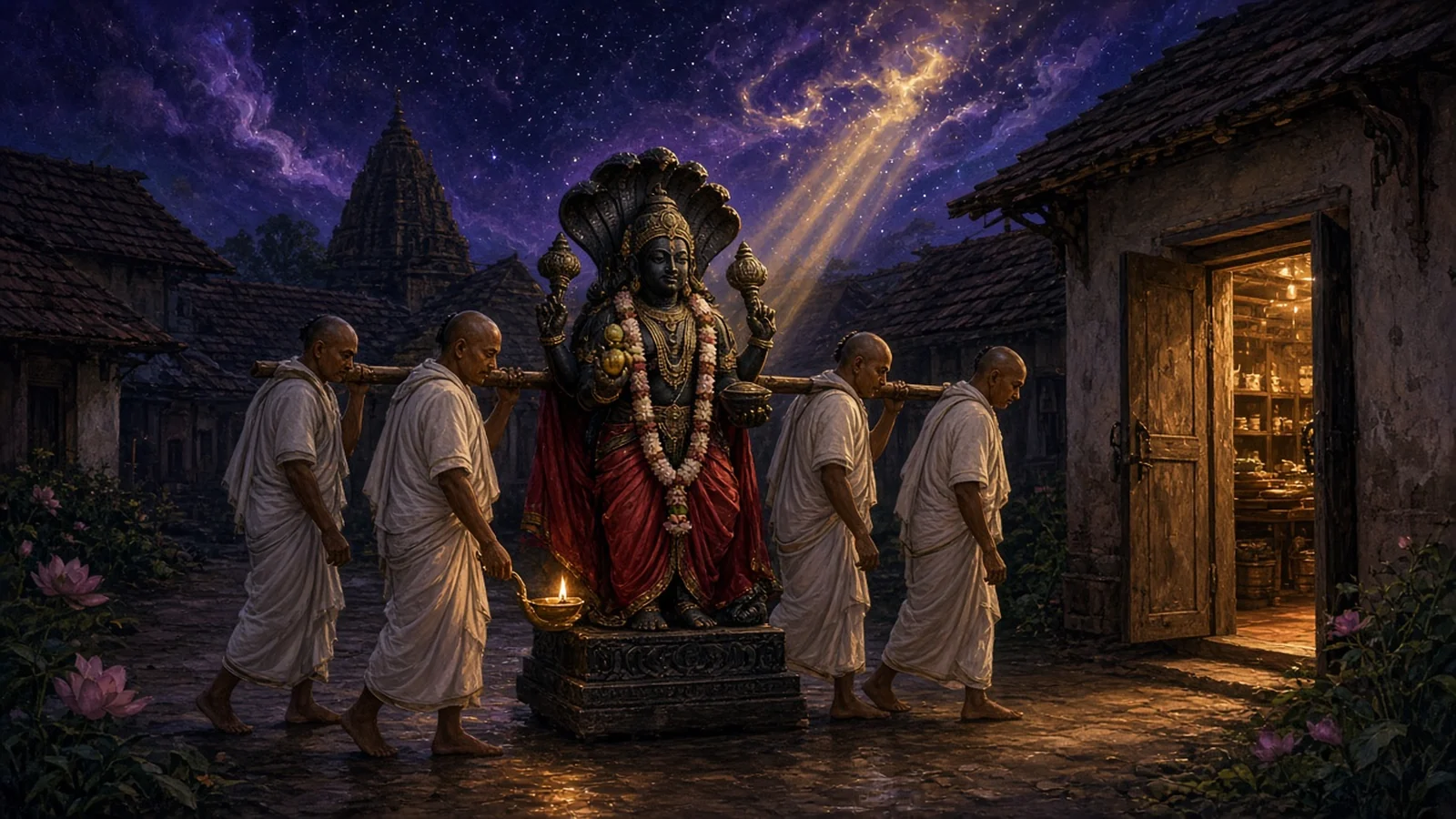
The historian Paul Dundas, citing the twelfth-century Kannada poet Brahmashiva, holds that the temple was first a Jain shrine of the Tirthankara Chandraprabha and became Mahalakshmi's in the medieval centuries; a panel of sixty Tirthankaras survives on the Sheshashayi Vishnu shrine by the east gate, and one account says the Jains of the Shilahara court worshipped the image as Padmavati. The temple does not tell it this way; we record it as the historian's.
The city of Shahu MaharajReform beside the goddess
Kolhapur tells its goddess and its reformer king together. Shahu, who ruled from 1894 to 1922, reserved half the state's posts for the backward classes in 1902, made schooling free and compulsory in 1917 and sat down to eat with Ambedkar at Mangaon in 1920. Since 2018 a state Act has run the temple through a management committee in place of the hereditary priests, and in 2016 women walked into the sanctum under a court order. The story of the hiding and the return tells the rest.
How it is kept
There is very little to do and a great deal to watch. From four in the afternoon the Garud Mandap inside the gate fills; a lane is roped off down the middle, from the Mahadwar to the door of the inner hall, and nobody stands in it. The electric lights in the sanctum go off so that only the sun will light her. The trust's men stand in the gateway watching the western sky.
By four the Garud Mandap is full, a lane kept clear down the middle for the sun
A little after five the light comes in. It crosses the mandap floor as a long gold bar, climbs into the Ganapati chowk, passes the brass threshold and goes in at the sanctum door, and when it touches her feet the shout starts at the door and runs back through the hall. In November 2025 the newspaper timed it: through the gate at about five past five, on the feet at 5.42, up to the shoulders at 5.47, gone. The second evening it reaches her waist; the third it covers all of her, to the face and the snake in her crown. Then the lamps come back on.
A long gold bar of sunlight crosses the dark hall floor toward the sanctum door
It does not always work. In November 2025 the first evening was lost to cloud and the sun came the next day; in 2024 the trust began on 8 November. The temple gives the days as 31 January to 2 February and 9 to 11 November, the press counts five with the three middle evenings the ones that matter, and the trust announces each year.
In the old texts
No scripture describes Kirnotsav; it is the building's own festival, and the building is dated by the historians to the Chalukya king Karnadeva in 634. The city's praise-book is the Karavira Mahatmya, which tells Agastya's journey to Karavira, the war of Amba with Kolhasura and the city's claim to outrank Kashi; its manuscripts place it in the Padma Purana, the historians call it a work of the last few centuries, and one manuscript catalogue says it carries a thousand names of Lakshmi. It does not, so far as we have found, give the sun a part.
The seat is older in the texts than the festival. The Devi Bhagavata, in the chapter on Sati's death and the fall of her limbs, lists the 108 places where the Goddess dwells and names her at Karavira as Mahalakshmi; the Peetha Nirnaya Tantra makes Karavira the place where her eyes fell; the Ashtadasha Shakti Peetha hymn ascribed to Shankara counts Kolhapur among its eighteen; and the thousand names in the Skanda Purana call her Karaveera Nivasini, the one who lives at Karavira. The sun who comes to her is the Surya of the Veda, who kept his time before there was a gate for him to enter.
Where this page comes from. Written by Devalok from the Kirnotsav tradition of the Mahalakshmi (Ambabai) temple of Kolhapur as its devotees, Maharashtra's tourism pages and the Kolhapur press record it (Pune Pulse 2023, All India Radio 2024, Lokmat Times 2025), the temple's own history and architecture pages, the Devi Bhagavata (7.30), the manuscript record of the Karavira Mahatmya, the encyclopaedias on the temple, Kolhapur State and Shahu of Kolhapur, and the Maharashtra Act of 2018, as recorded in the Devalok Lore. Our own words throughout.