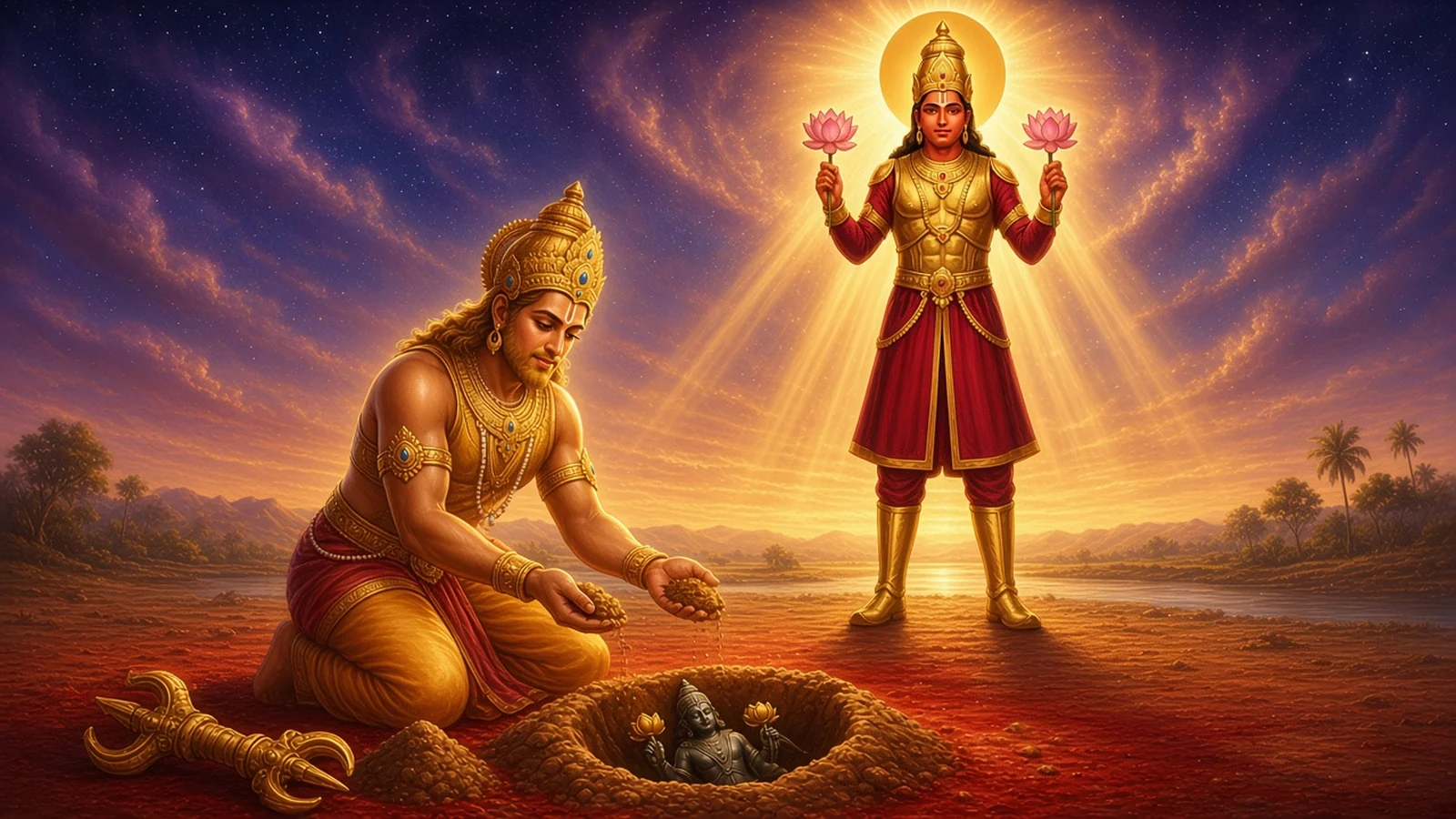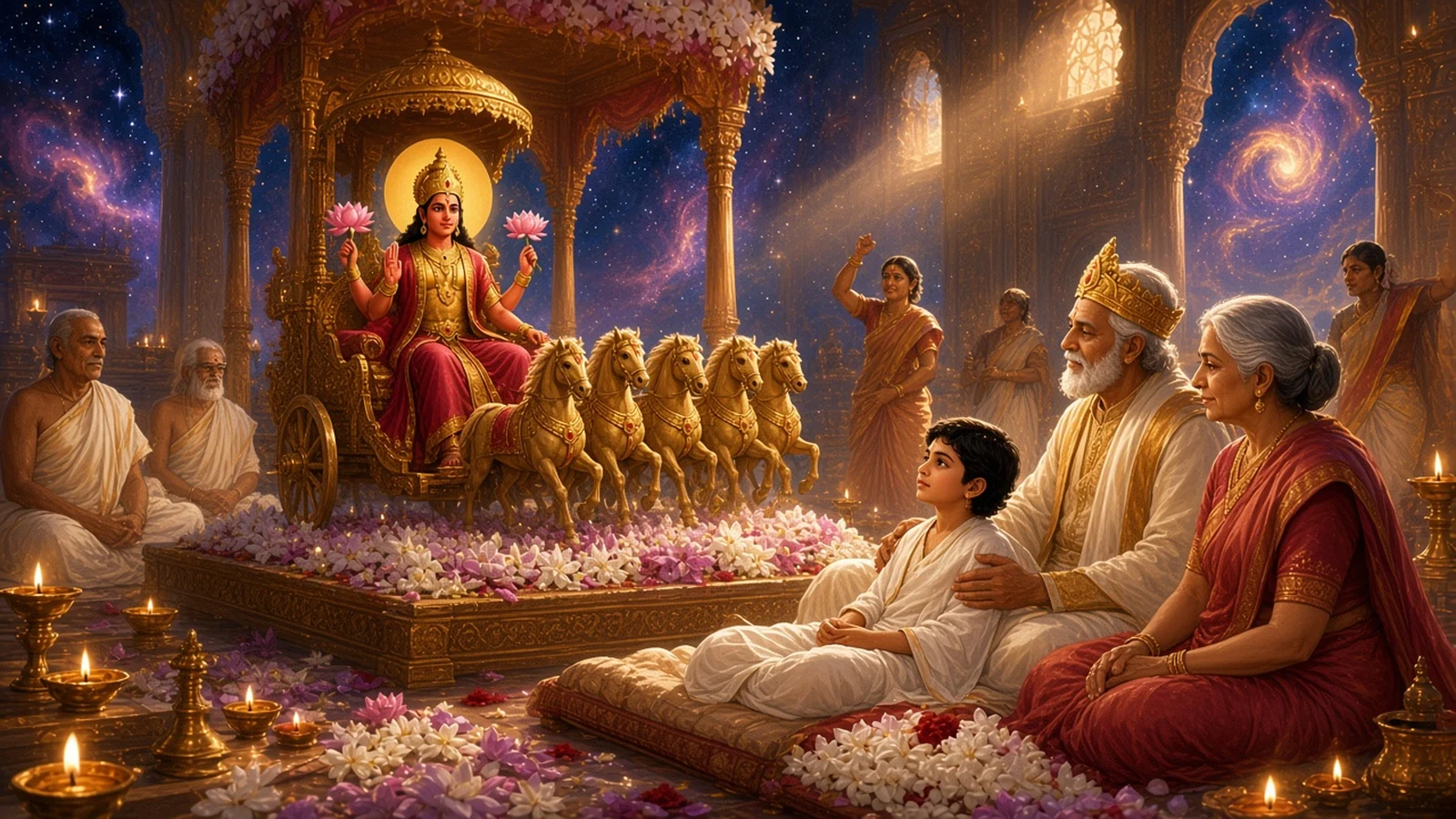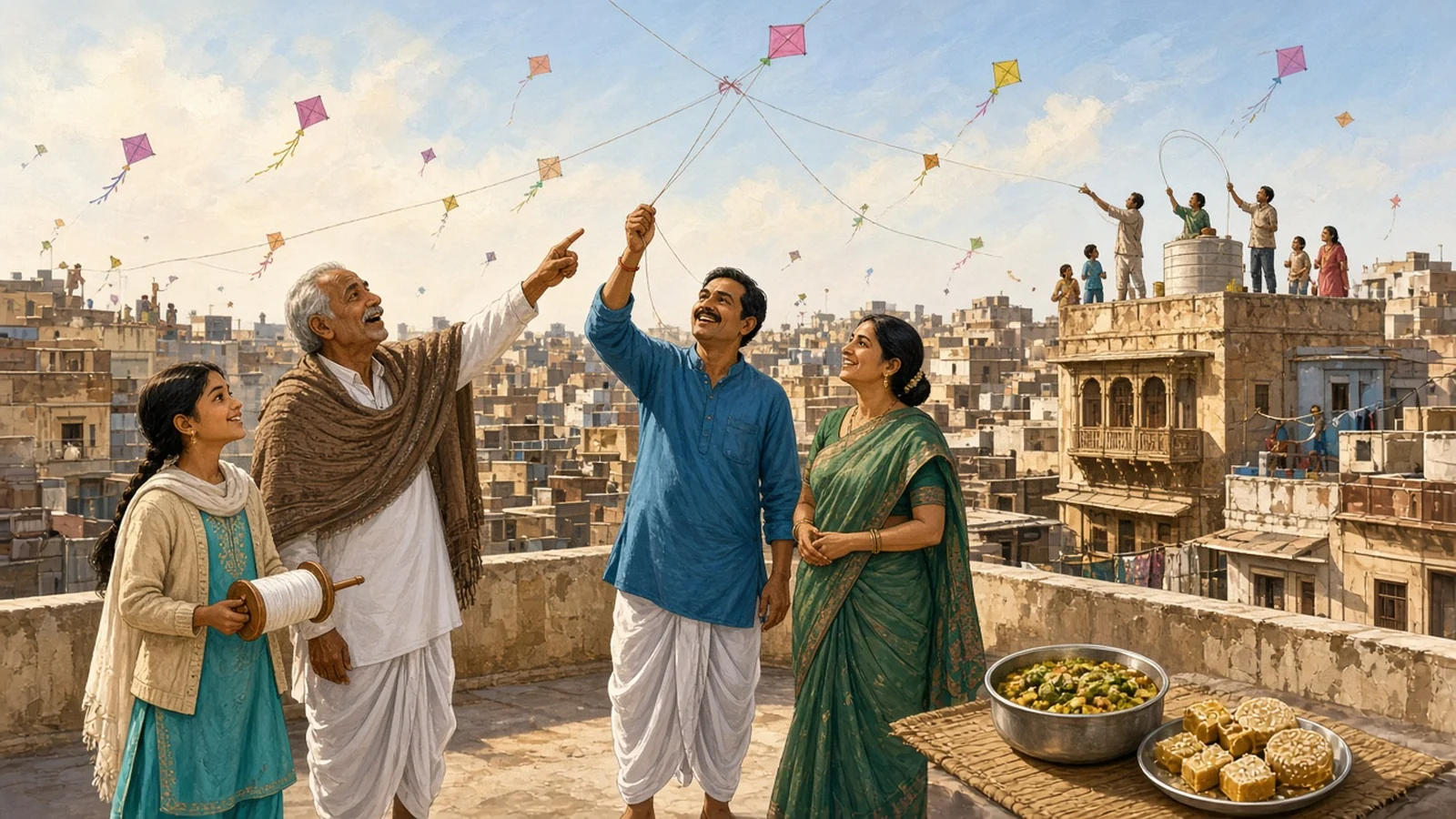
As the temple tells it: the sun comes to her feet
Kolhapur · the Mahadwar at sunset · 3 min read
Aaji had been coming for sixty years, and she still left the house too early.
"The sun will not come sooner because we are standing there," said her daughter-in-law, winding a shawl round the boy.
"The sun keeps his time," said Aaji. "It is the crowd that does not. Walk."
They went down Mahadwar Road in the last of the afternoon, past the flower-sellers folding their baskets, and in through the west gate with a few thousand others. The Garud Mandap was already full. Volunteers had roped off a lane down the middle of it, from the gate to the door of the inner hall, and nobody was allowed to stand in it. Omkar, who was nine, asked why.
"That is his road," said Aaji. "Tonight the sun walks down it."
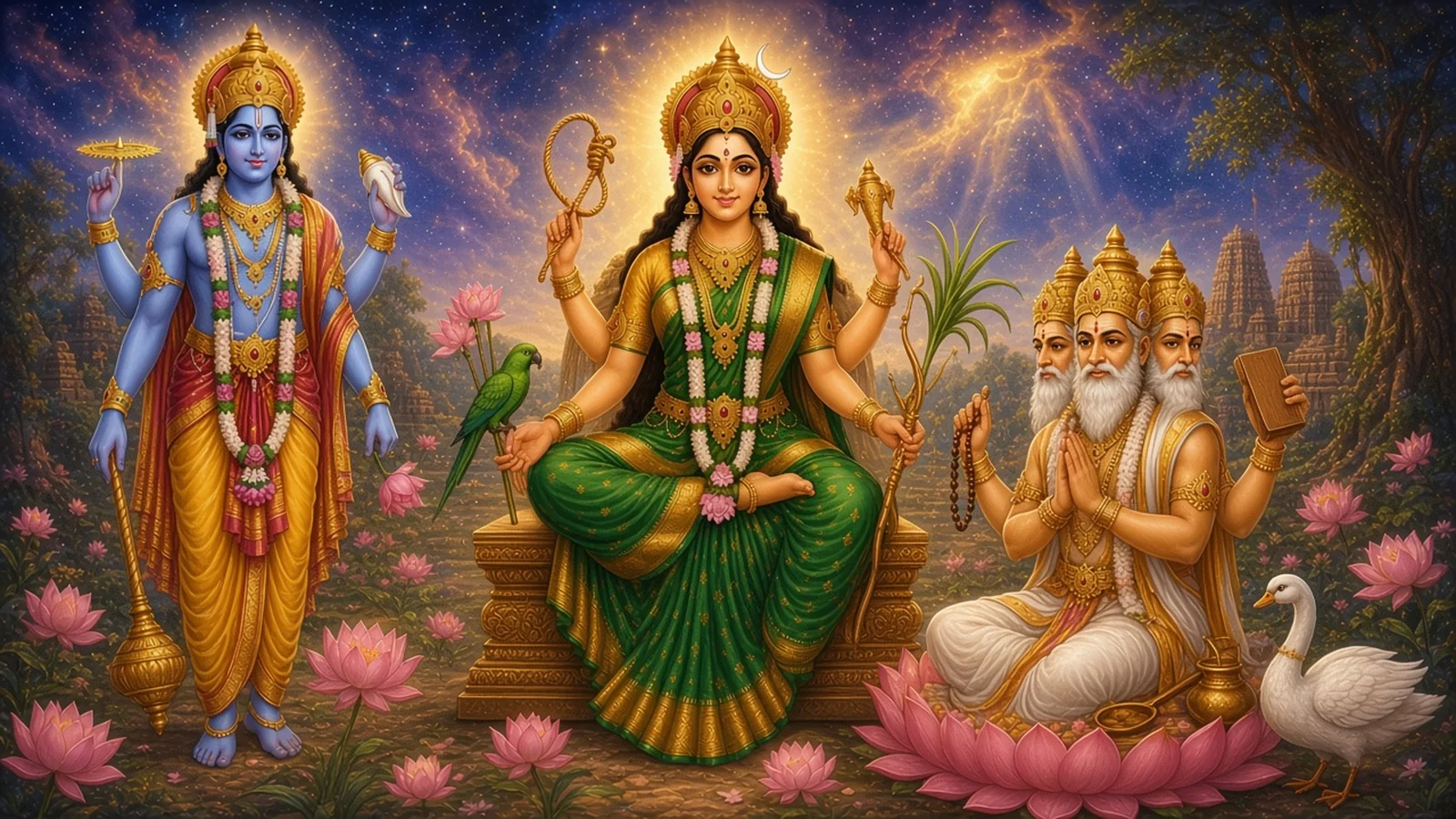
She told him while they waited, the way she had been told. The goddess faces west. Almost every other goddess in the country faces east, towards the morning, but Ambabai turned her face to the evening long ago, and the people who built her house knew it. They set the great gate in the west wall in a line with her, so that twice a year, when the sun turns at the end of his journey south and again at the end of his journey north, he has to come in through her own door and lie down at her feet.
"Why only twice?"
"Because he is the sun," said Aaji. "He is busy. Twice a year he comes to Kolhapur to touch her feet, three evenings each time, and that is more than he does for anyone else."
Omkar thought about this. "What if it is cloudy?"
"Then he does not come, and we go home, and we come back tomorrow."
Inside the sanctum the electric lights had been switched off, so that nothing but the sun would light her. The men of the temple committee stood in the gateway looking west over the roofs, where the sky was going from white to gold. A little after five the first light came in through the Mahadwar and lay on the stone floor of the mandap, a long bar of it, and the crowd went quiet.
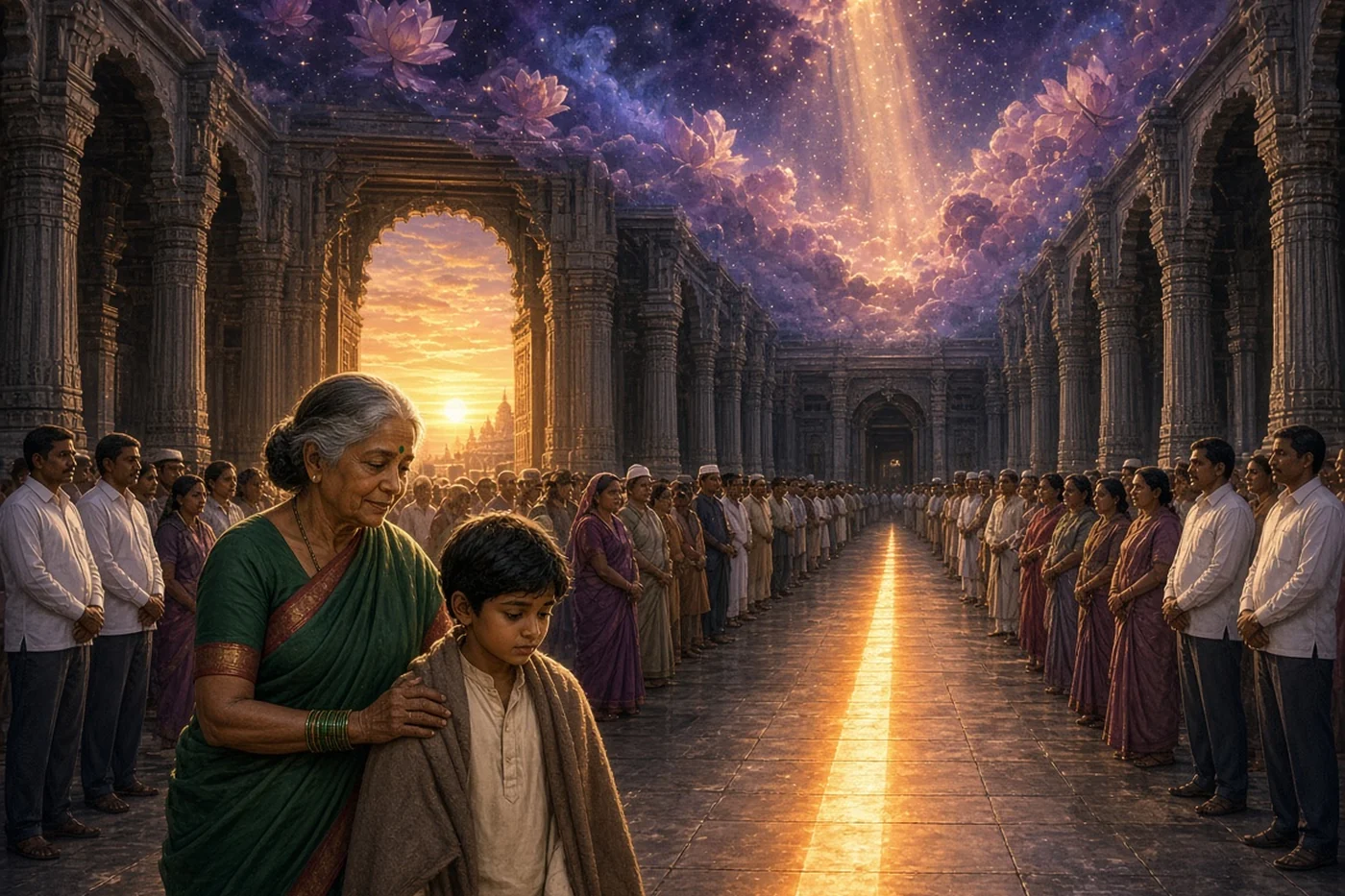
It moved, slowly, and then, with a few thousand people watching it, fast. It crossed the mandap, climbed into the Ganapati chowk, went over the brass threshold and into the dark of the inner hall, and the people along its lane leaned back from it as though it were hot.
"Now," said Aaji, who could not see the sanctum at all from where she stood, and did not need to.
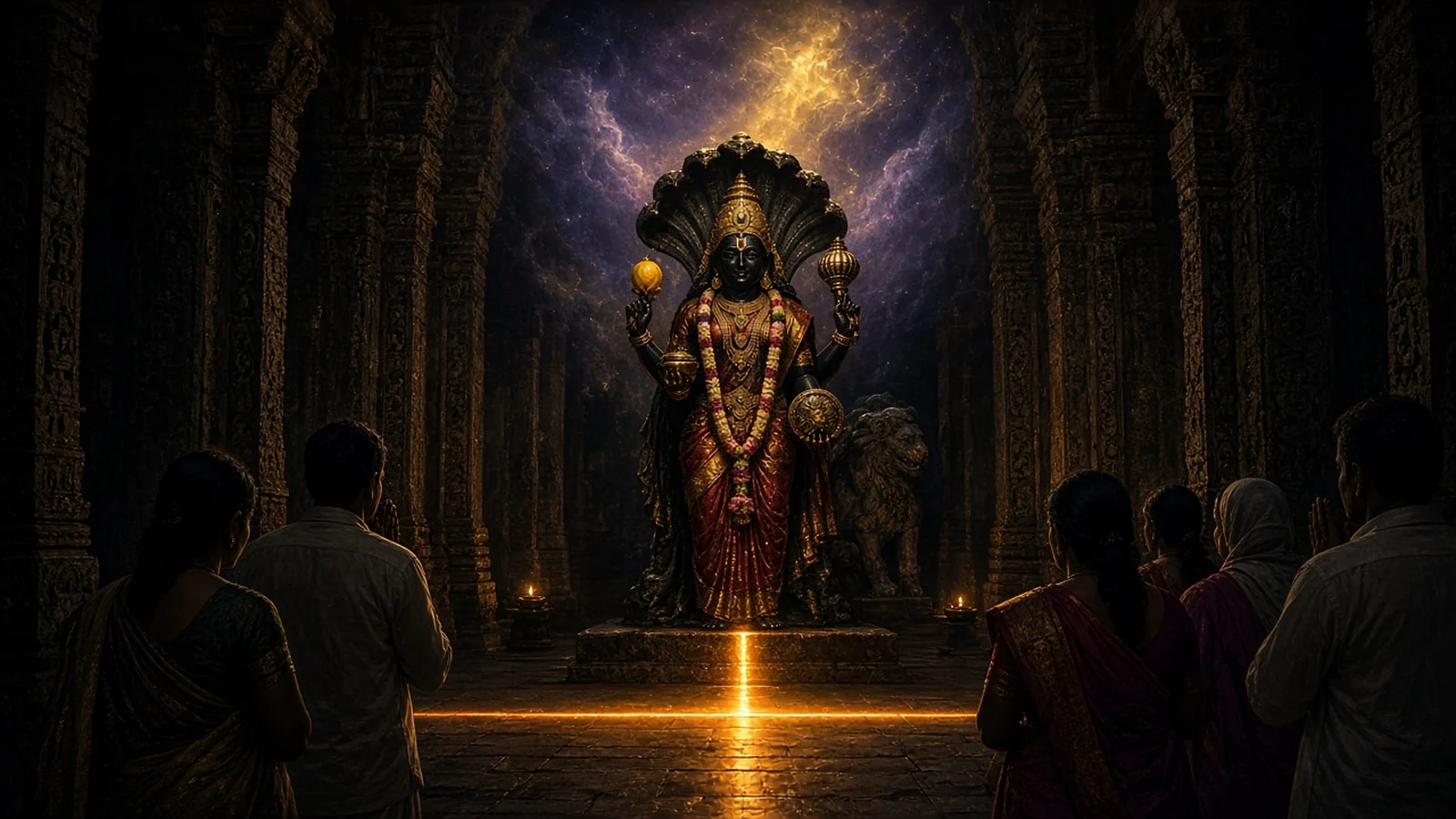
The ray reached the sanctum door and went in, and found the black stone of the goddess, and lay down on her feet.
The shout began at the door and ran back through the hall like a wave. "Udo! Udo Ambabai!" Omkar found he was shouting too. The light stayed where it was for a minute, perhaps two, bright gold on the dark stone, then climbed a little, to the knees, and then it was gone. The sanctum was dark again, the lamps came back on, and the crowd began to move.
"Her feet," said Aaji, satisfied. "Tomorrow her waist. The day after, all of her. Then he goes on his way and does not come back until the end of January."
They came the second evening and the third. On the third the light rose up the whole image, over the mace and the citron in her hands, over the shield and the drinking bowl, to the face and the five-headed snake in her crown, and for a moment the goddess stood in gold from head to foot, and then the evening took it back.
Three evenings, the temple says, because the sun does not do things by halves: the first evening he bows to her feet, the second he rises to her waist, and on the third he looks her in the face before he goes. The people of Kolhapur call it Kirnotsav, the festival of rays, and they do not call it a wonder of engineering. They call it a visit.
As the historians and the sky-watchers tell it
Kolhapur · the books, the gazetteers and the newspapers · 2 min read
The people who measure things tell the three evenings differently, and they begin with the building.
The temple, by the account most of the books follow, was built by a Chalukya king named Karnadeva in 634, and it is called Hemadpanti after the style of its black stone. The city's own historians add that it was not built in a day. The Shilaharas, who made Kolhapur their capital in the twelfth century and called themselves blessed by Mahalakshmi's grace, added to it, and an inscription credits a king named Tolum with the Mahadwar, the great west gate, in 1218.
The pillared Garud Mandap that the crowd stands in was put up between 1838 and 1842, under the British political agent of the day. The gate, the mandap and the sanctum stand on one line, and the temple's own writers point out that the line runs on, west, to the Sandhyamath, an old tower in Rankala lake a kilometre and a half away.
On that line the sun sets twice a year. Kirnotsav keeps no tithi; it is one of the few festivals in the Hindu calendar fixed to the sun alone. The temple gives the days as 31 January to 2 February and 9 to 11 November, and the press counts five, 30 January to 3 February and 9 to 13 November, with the three middle evenings the ones that matter. Travel pages that say March and September, or sunrise, have simply not been there: the image faces west, and the light is the evening's.
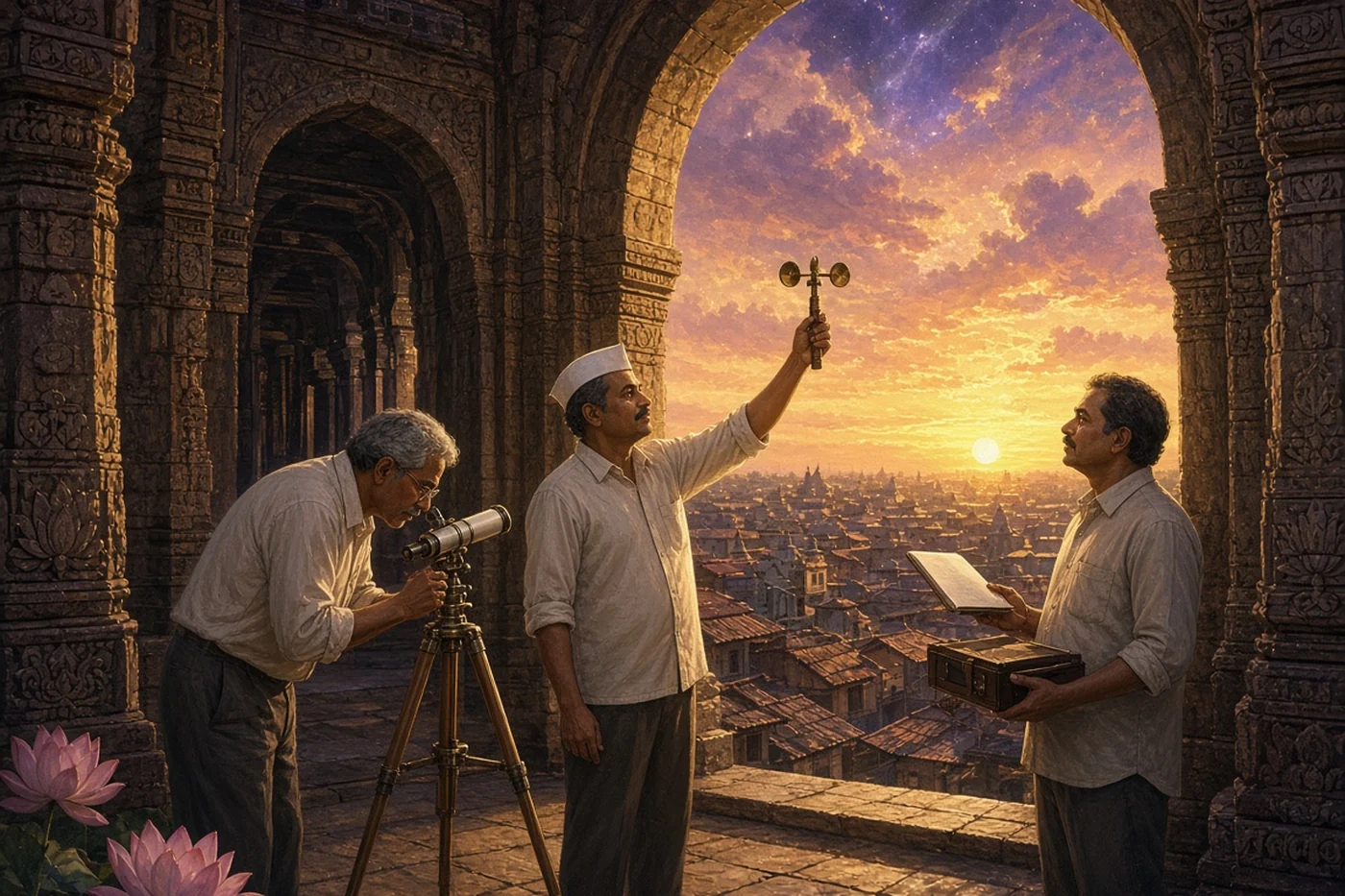
In November 2023 the temple's experts stood at the gate the day before with a telescope, an anemometer and a magnetometer, measuring how far the light would reach; in 2024 the first evening fell on 8 November. In November 2025 the first evening was lost to cloud, and the next day the light came through the gate at five past five, touched the feet at 5.42 and reached the shoulders at 5.47, and was gone.
An archaeoastronomy study from IIT Roorkee, published in January 2026, examines the temple's solstice alignment; the dates lie about six weeks after the winter solstice and six weeks before it, which is where the sun's setting point crosses the line of the gate on its way north and again on its way south. That is what the sky-watchers mean by a visit at the turn of the journey.
What the measurers do not claim is intent. Nobody has found a Chalukya inscription that says the gate was set for the sun. The temple's own history page calls it an alignment the builders knew; the historians call it an alignment, and leave the builders their silence.