As a Tamil house keeps it: Ganga snanam
Tamil Nadu · the dawn of Deepavali · 3 min read
It was still night when Paatti lit the stove. Four o'clock, the lane outside black and quiet, one dog awake somewhere. She set a small brass vessel of sesame oil on the flame, dropped in a few peppercorns, and went to wake the house.
The children came out rubbing their eyes. Their aunt Meena came too, with the husband she had married in the summer. This was their Thalai Deepavali, the first after the wedding, and the first one is kept at the bride's mother's house. On the shelf beside the gods lay everyone's new clothes, folded on a plate since the night before, each with a dab of turmeric on one corner.
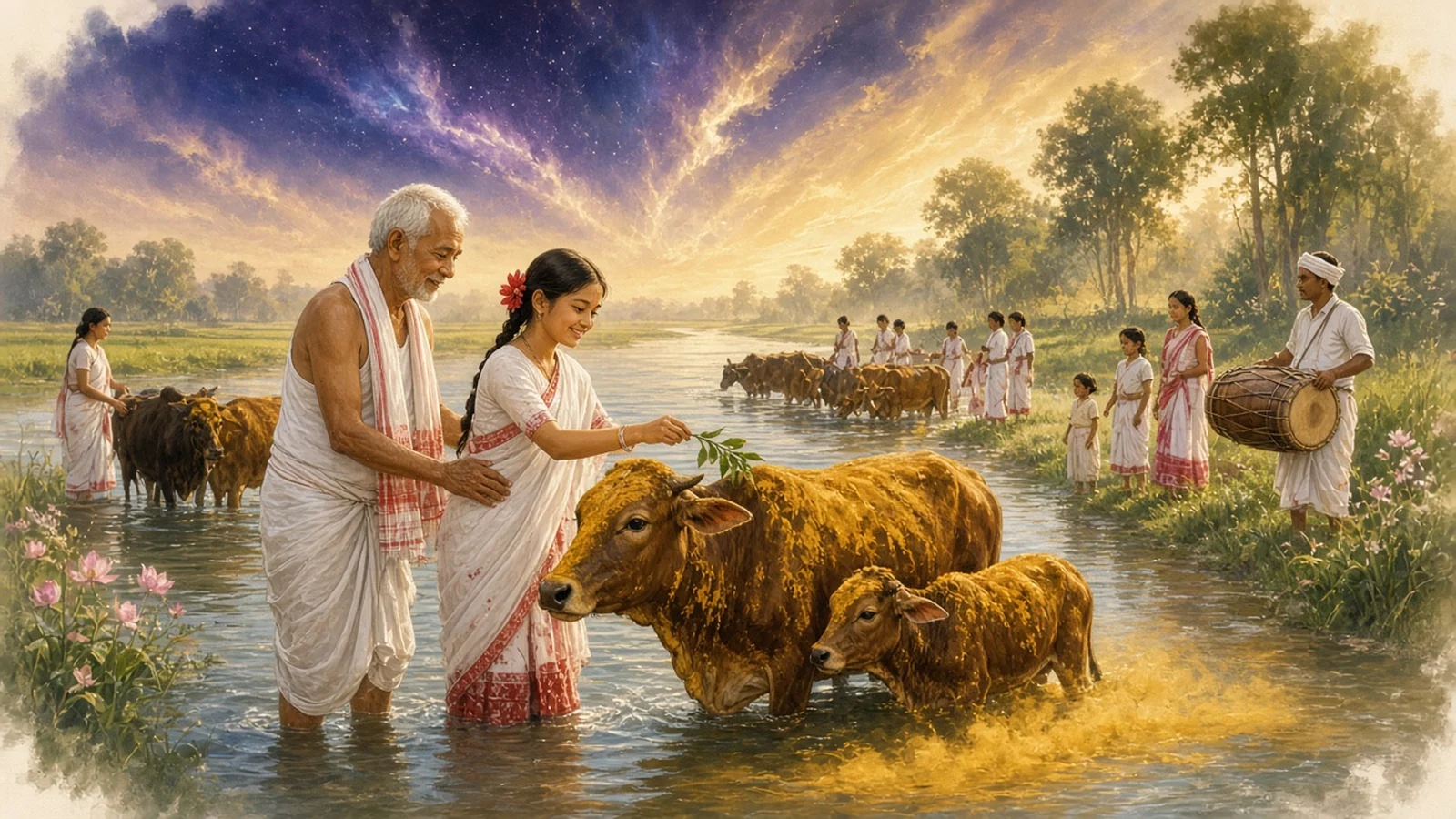
"Sit," said Paatti, and the youngest sat first on the wooden plank. She dipped her fingers in the warm oil and touched them to the crown of his head, then rubbed it in, then did the next child, then Meena and her husband together, saying a blessing over the two of them that nobody else heard.
"Why do we do this in the dark?" the boy asked. "Why not after the sun comes up, like a normal bath?"
"Because he came home in the dark," said Paatti.
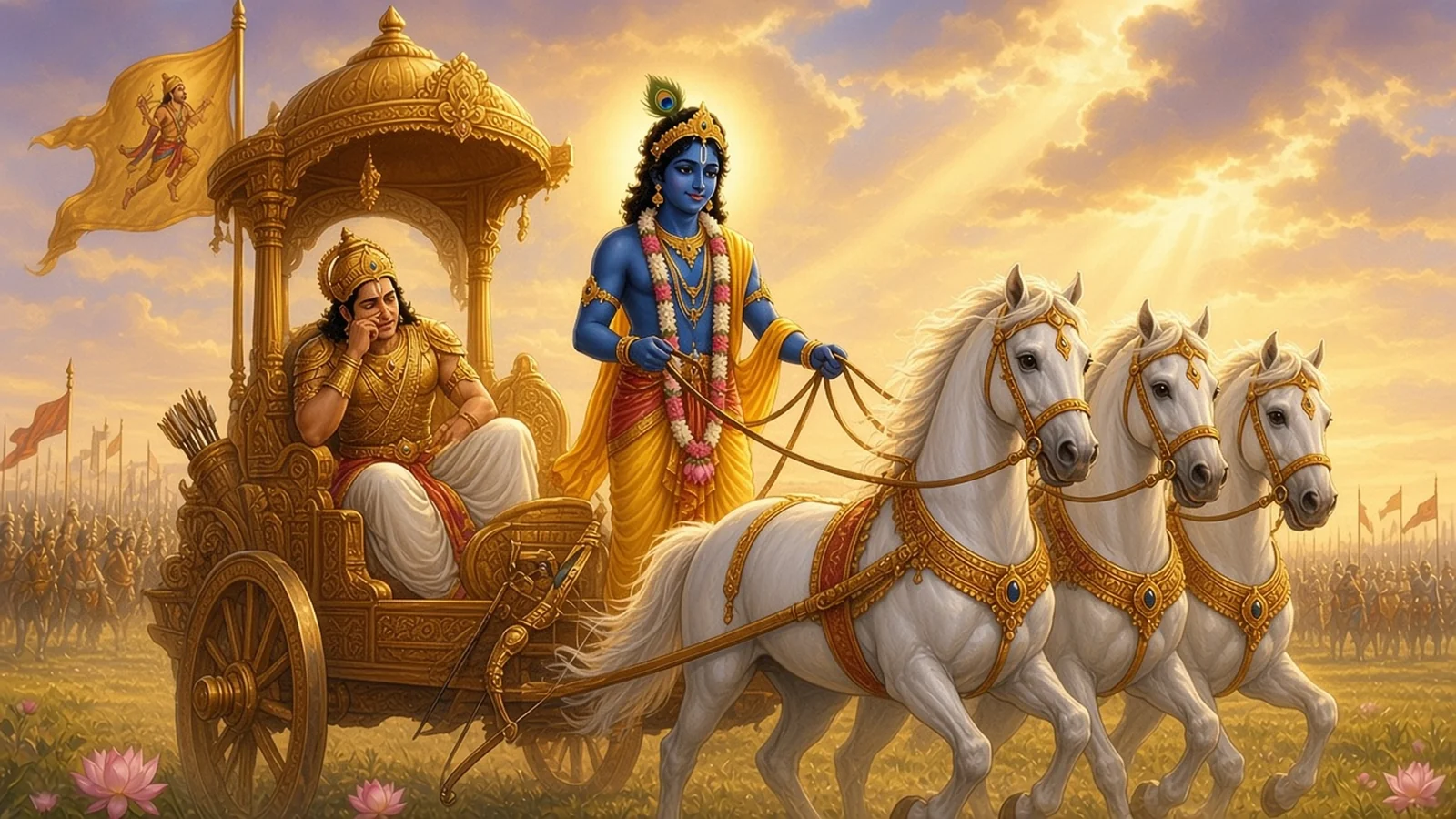
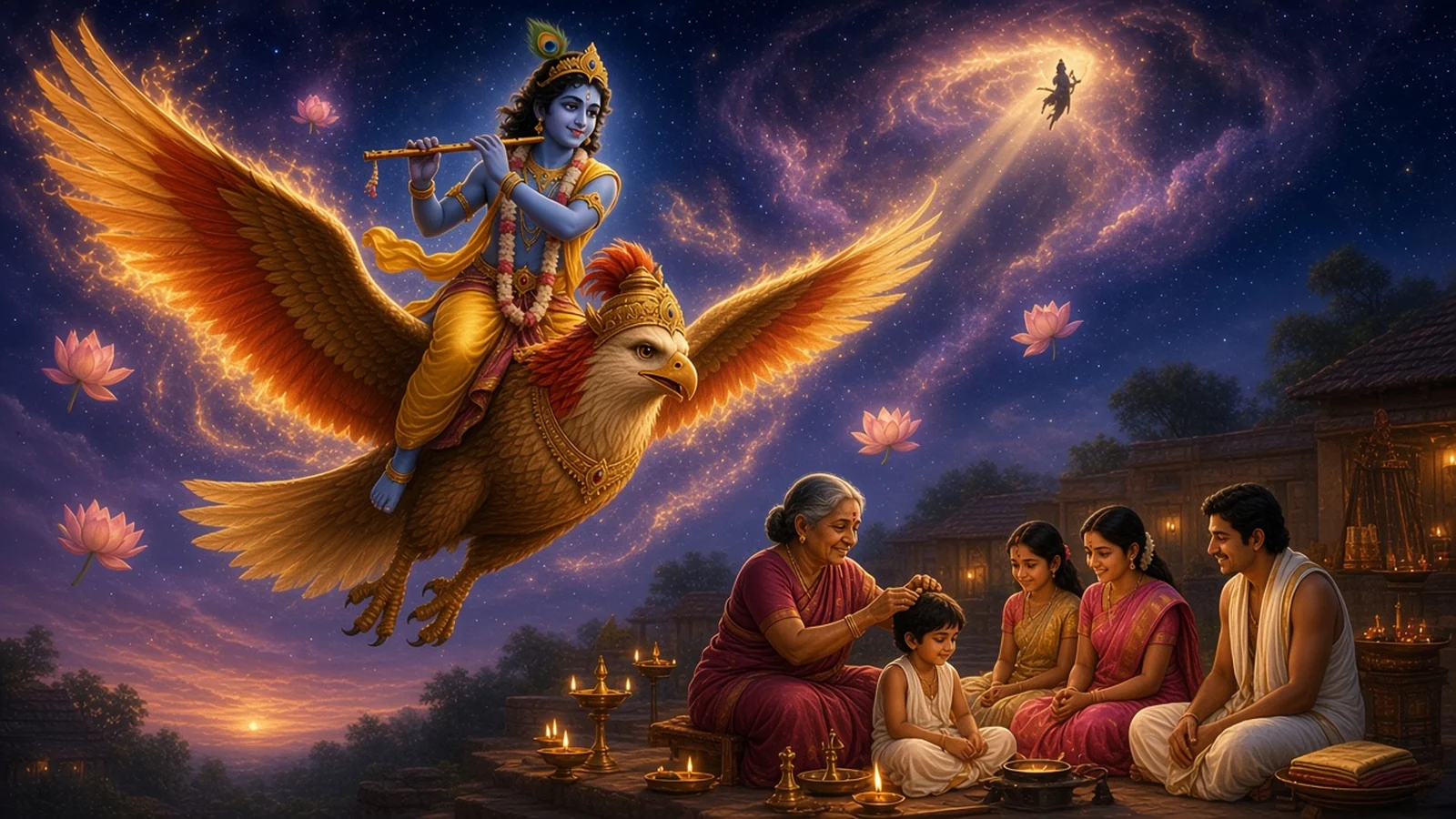
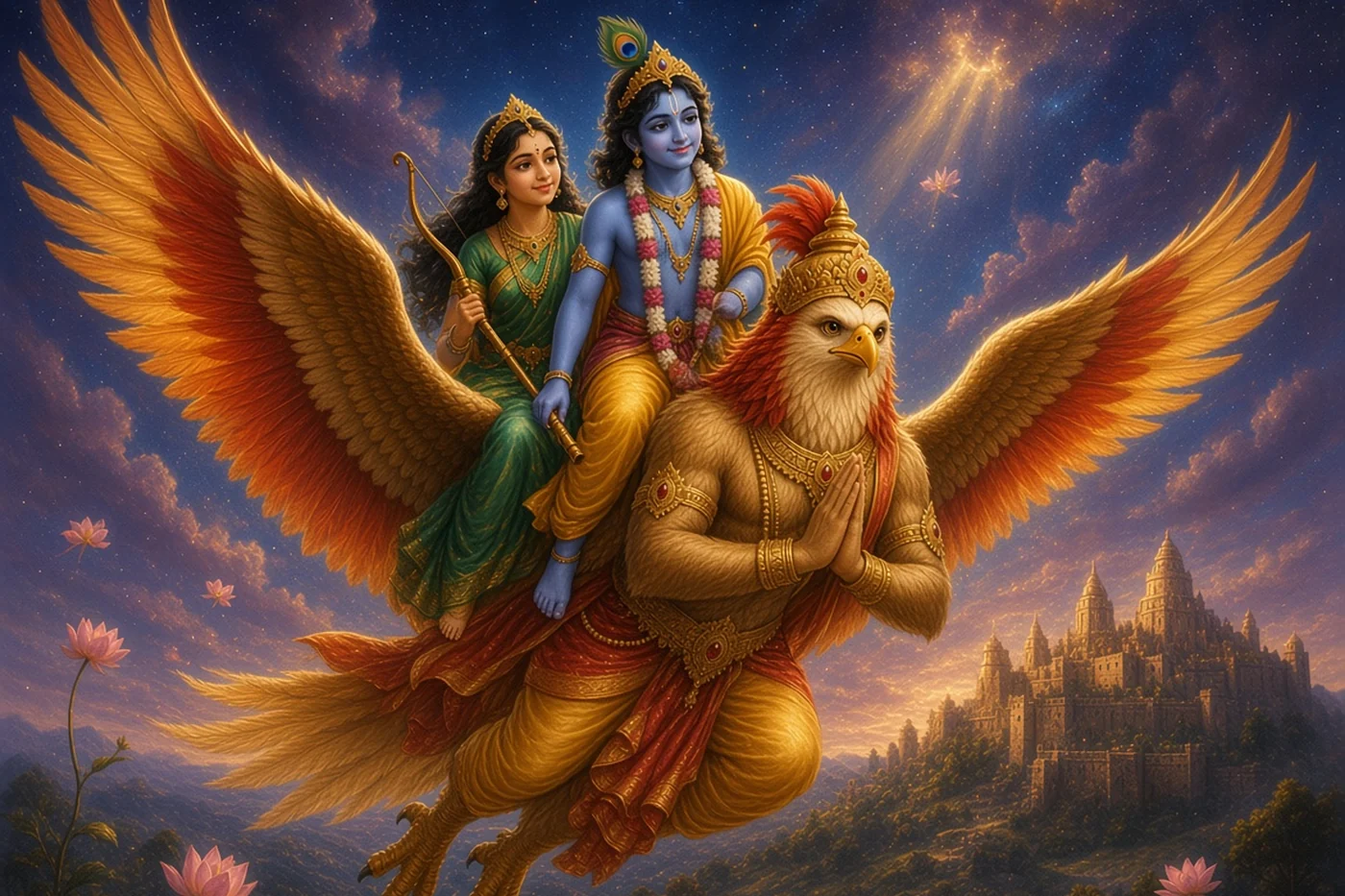
She told it as she worked. Naraka, a son of the Earth, had a city far in the east called Pragjyotisha, and he had grown so strong that he stole from the gods themselves, even the earrings of Aditi, the mother of the gods. Krishna flew there on Garuda with Satyabhama beside him, broke the walls, and the demon did not live to see the morning.
"And then?"
"And then he flew home. He reached Dwaraka while it was still night, with the blood of that fight on him. The women of the house would not let him sit down like that. They warmed oil, like this, and rubbed it into his hair and his arms, and he bathed before the sun was up. And the whole city, when it heard that the demon was dead, bathed with him. That was the first Deepavali. So we bathe before the sun, every year, on the morning he came home."
"Was he hurt?"
"He was tired," Paatti said. "Even gods get tired. Now go, the water is hot."
The bathroom was full of steam. A tin of shikakai powder stood by the bucket. Paatti called through the door, the way her own grandmother had once called to her, "Remember, this morning Lakshmi sits in the oil and Ganga runs in the water. Scrub properly. There is no other chance to bathe in the Ganga this year."
They came out one by one with wet hair and were given, before anything sweet, a spoon of the Deepavali lehiyam: dark and thick, hot with dry ginger and pepper and omam, sweet with jaggery, slippery with ghee. The boy made a face.
"Medicine first," said his aunt, "or there will be no room in you for the murukku."
Then the clothes came off the plate, the turmeric corner was touched to each forehead, and everyone bent and touched Paatti's feet, and she pressed a folded note into every small hand.
The sky had gone grey. Appa went out to the gate with a box of crackers and a stick of incense, and the first one burst over the lane, and from every other gate came an answer. Across the road old Mr Raman stood in his new veshti with his hair still shining.
"Ganga snanam aacha?" he called. Has the Ganga bath happened?
"Aachu!" the boy shouted back. It has.
Inside, Paatti set a lamp before Krishna and, this one morning, did not hurry. Meena's husband stood a little stiffly in his new silk, a son of this house for one day in the year. The murukku and the adhirasam were already on the table, and the day had not yet properly begun.
As Goa tells it: the night of Narkasur
Goa · Panjim, Margao and the village wards · 2 min read
In the ward of Mala, in Panjim, the demon had been growing since Ganesh Chaturthi. The boys of the club had welded his frame in a shed behind the temple, padded it with hay, pasted newspaper over the hay with flour glue, and painted him in the evenings after school: a chest like a cupboard, fangs, a moustache, a crown of gold paper. Standing, he would be taller than the houses.
"Fifteen feet," said Sarvesh, who was in charge of the face. "The Prince of Mala across the road is three storeys. They have a motor that turns his head."
"Ours is uglier," said the smallest boy. "That is what the judges want."
On the evening before the fourteenth the demons came out. Every ward and every town had one, Panjim, Ponda, Mapusa, Vasco, Margao, standing in the squares under floodlights with music thumping from hired speakers. Some went up on flatbed trucks and were driven the forty kilometres between Panjim and Margao to stand before the judges at one competition after another, where the prizes ran to a lakh and more. At Margao a young man in yellow silk and a peacock feather drew a bow at the demon and the crowd roared.
An old man watched the Mala demon go past on its truck. "When I was your age," he told the boys, "Narkasur was made of hay and sat on a bullock cart. We walked him round the ward with a dhol. And we made Krishna too, with the pakhawaj playing for him. Nobody made Krishna three storeys high."
"Why not?"
"Nobody plays with the gods. The demon, you can do what you like with."
Nobody slept. Towards four in the morning the trucks came home, the demon was set down at the square, and the youngest boy was given the match. The firecrackers packed inside him went off in a rolling crackle, the paper caught, the hay roared, and for a few minutes the whole ward stood lit orange, watching the demon's face fall in.
Then they went home to the oil. Mothers had warmed it already. It went on heads and arms, scented, and the hot bath followed. In the yard the women waved the aarti before the men who had been out all night, and each man, before he stepped inside, pressed a small bitter kareet flat under his heel, as Krishna is said to have crushed the demon, and touched a drop of the juice to his tongue to remember how bitter he had been. Then breakfast: fov in five kinds, sweet and sour and spiced, because Krishna, the Goans say, ate beaten rice once he had bathed.
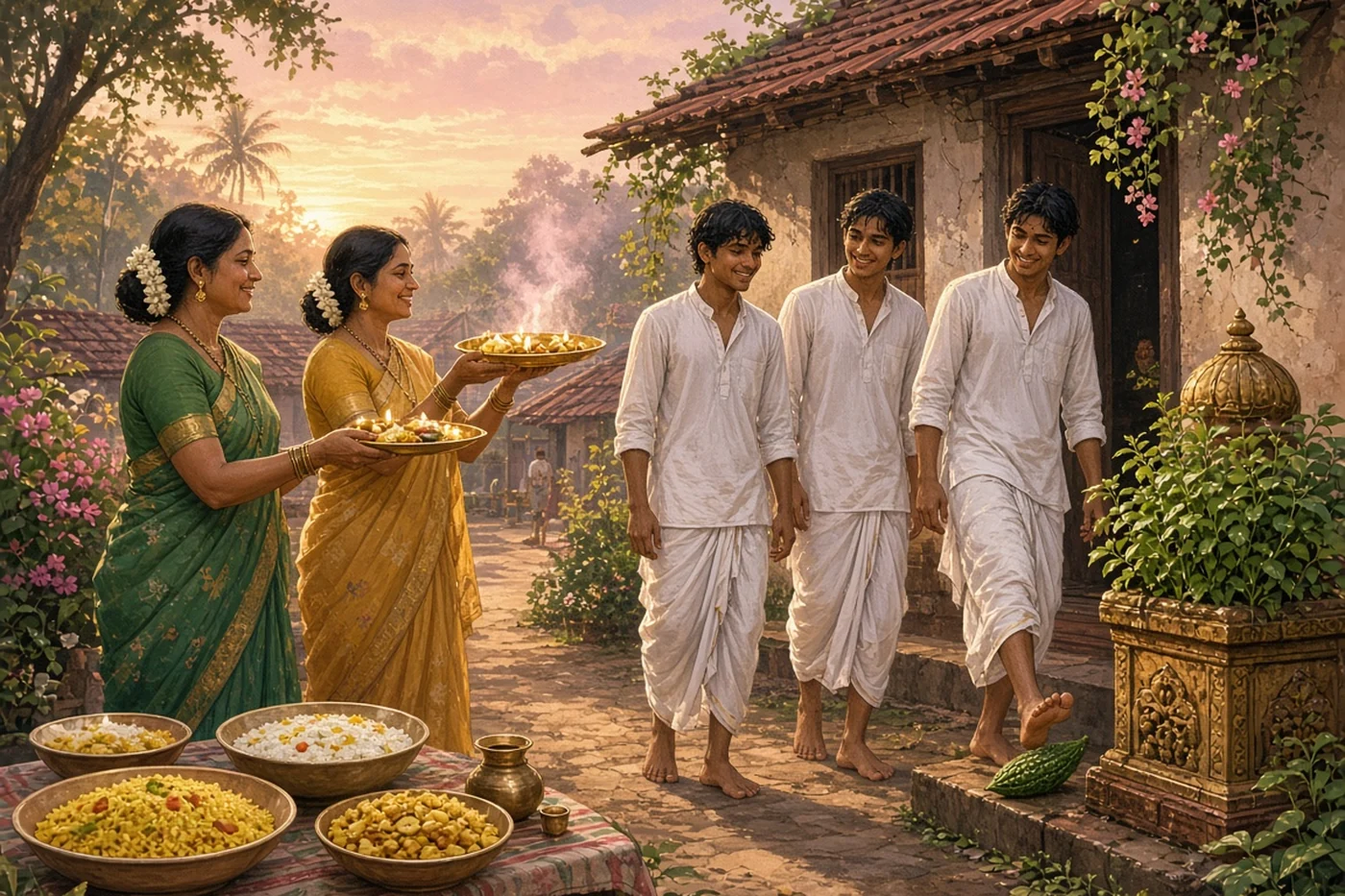
The sun came up on a square full of ash.