Festival · Brahma's own lake in the Rajasthan desert, where herders bring their camels to the dunes and pilgrims bathe for five days to the Kartik full moon
Pushkar Fair
The Pushkar Fair is the great gathering at Pushkar in Ajmer district, Rajasthan, beside the lake that Brahma's lotus made. Herders come first with camels, horses and cattle, and the dunes outside the town become a market and a showground. From Prabodhini Ekadashi to Kartik Purnima pilgrims keep the five-day Panchtirtha bath at the lake's 52 ghats, and the full moon bath is the greatest of the year.
When is Pushkar Fair in 2026? Kartik Purnima, the great bath, is Tuesday 24 November 2026; it runs 17 to 24 November 2026. In 2027: Sunday 14 November 2027. In the bright half of Kartik, from Kartika shukla 8 to the full moon, with the livestock fair in the days before Prabodhini Ekadashi.
Also calledPushkar MelaKartik Purnima at PushkarPushkar Camel FairKartik MelaPushkar ka MelaPanchtirtha snan
In short
What is the Pushkar Fair?
The yearly gathering at Pushkar in Ajmer district, Rajasthan, which is at once a camel and livestock market on the dunes and Brahma's festival at the lake, ending with the bath on Kartik Purnima.
When is the Pushkar Fair in 2026?
Rajasthan Tourism's programme runs from 17 to 24 November 2026, with the main bath on Kartik Purnima, Tuesday 24 November. The district's fair period for the animals is 10 to 26 November, and the five-day bath runs from Prabodhini Ekadashi on 20 November. Rajasthan Tourism's list gives 6 to 14 November in 2027 and 25 October to 2 November in 2028.
What is the Panchtirtha bath?
The five days of bathing in the lake from Prabodhini Ekadashi to Kartik Purnima, the days on which Brahma is said to have held his sacrifice at Pushkar. The full moon bath is called the Mahasnan and counts for most.
Why is there a temple of Brahma at Pushkar?
Because Pushkar is his tirtha. The Padma Purana makes the lake from his lotus and sets his sacrifice here, and in the legend Savitri's curse left Pushkar the one place where he is worshipped.
Next, in 2026Tuesday 24 November 2026
17 to 24 November 2026
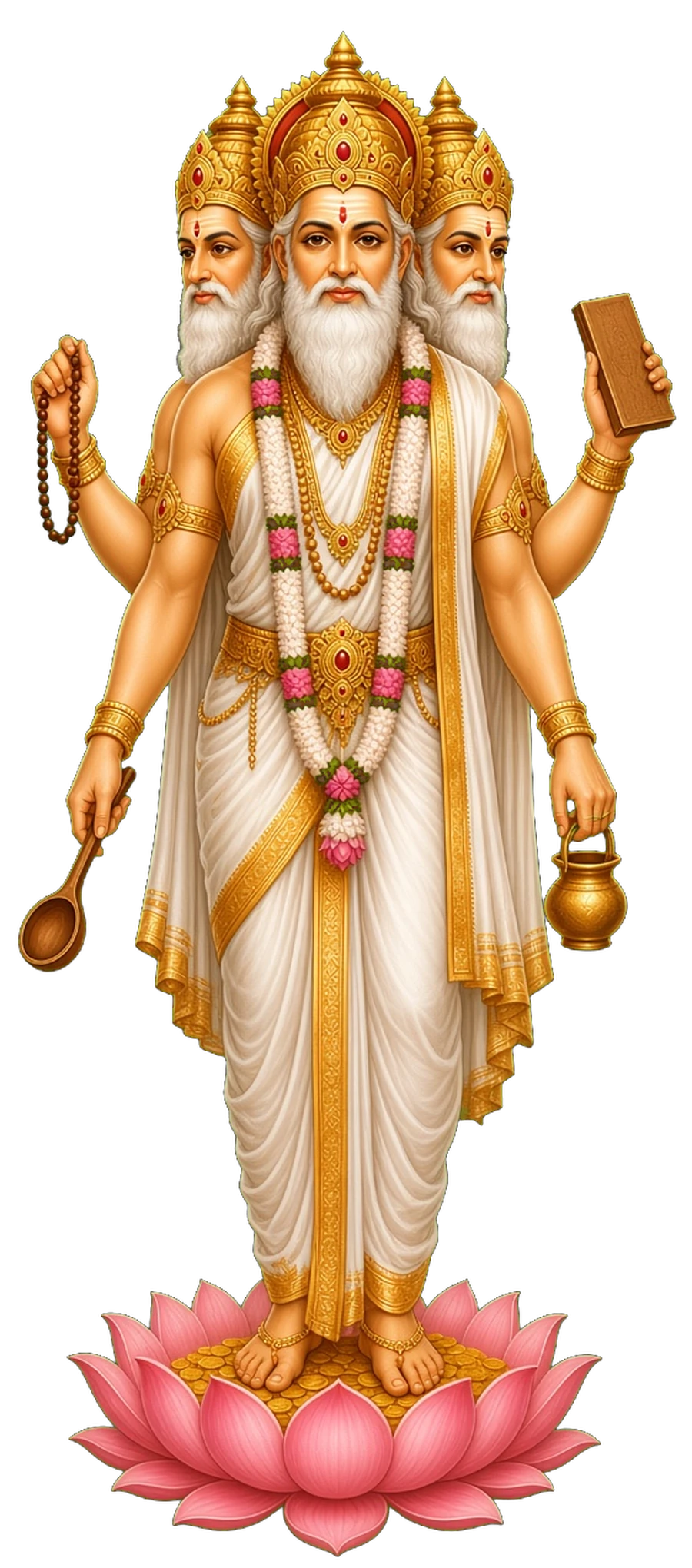
Prime godBrahma, Jagatpita, the father of the world
with 5 more
WhereRajasthan, at Pushkar in Ajmer district, about 10 km north-west of Ajmer across the Nag Pahar; herders from the Marwar and Mewar country and pilgrims from all over India
How longAbout eight days of the Tourism programme, the five-day Panchtirtha bath from Ekadashi to Purnima, and a district fair period of about two and a half weeks for the animals
In the bright half of Kartik, from Kartika shukla 8 to the full moon, with the livestock fair in the days before Prabodhini Ekadashi
Why it is kept
Pushkar is a small town folded into the Aravalli hills around a lake, and for one fortnight of the year it is two places at once. On the sand outside it the herders camp with their camels, and the dunes turn into a market, a showground and a fair. Inside it the pilgrims go down to the water, at the 52 ghats that ring the lake, to bathe in Brahma's own tirtha through the five days before the Kartik full moon.
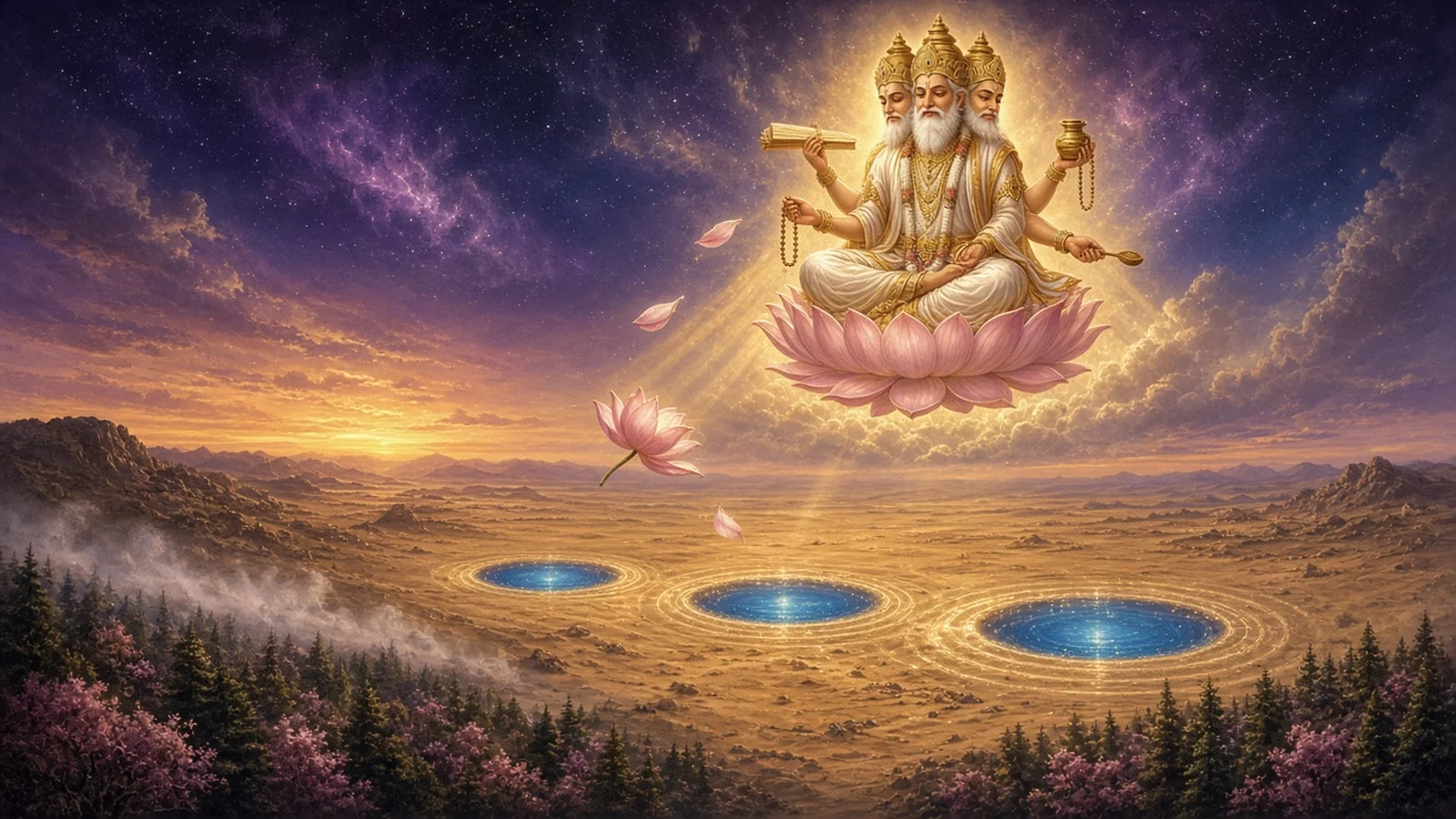
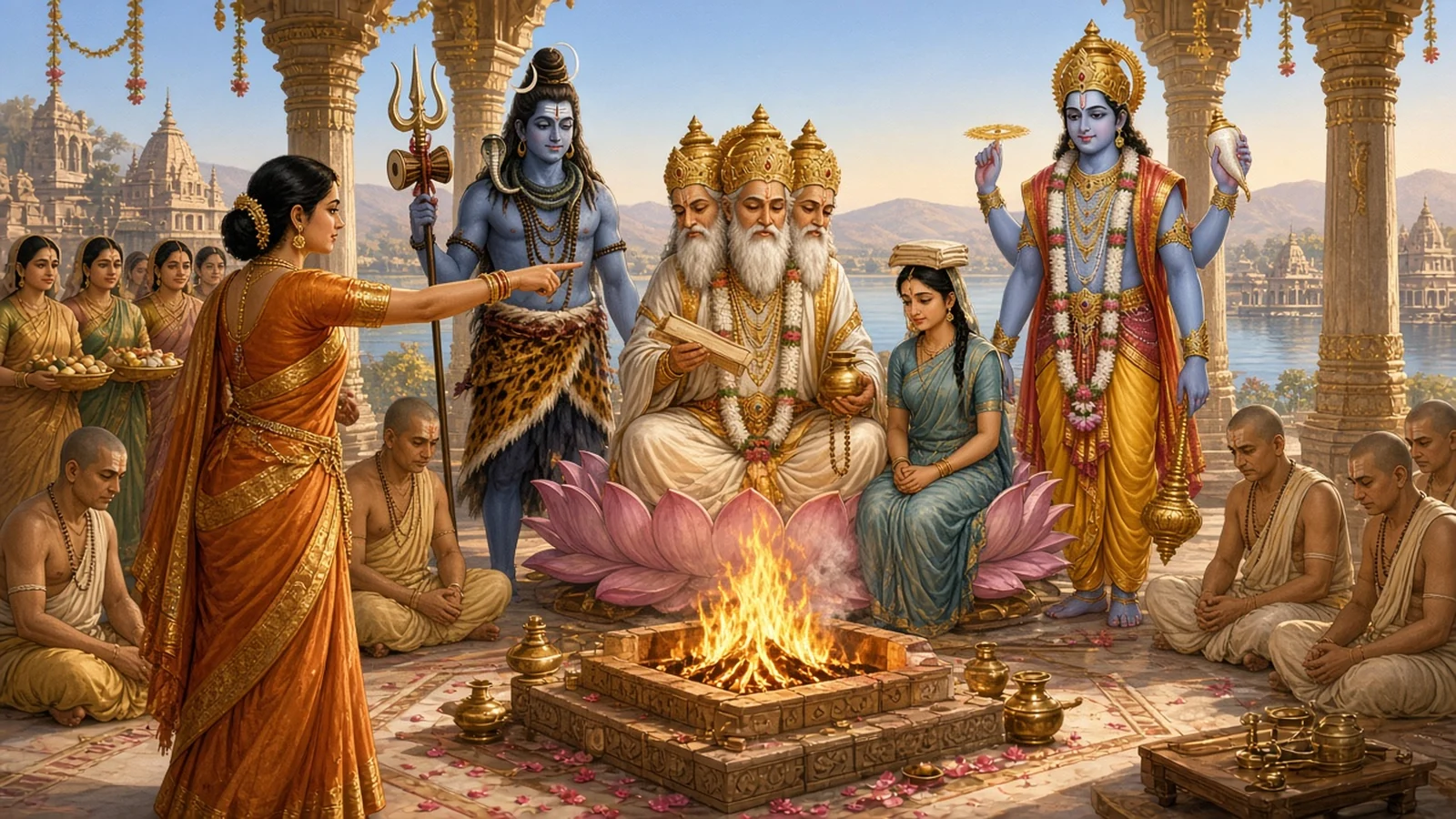
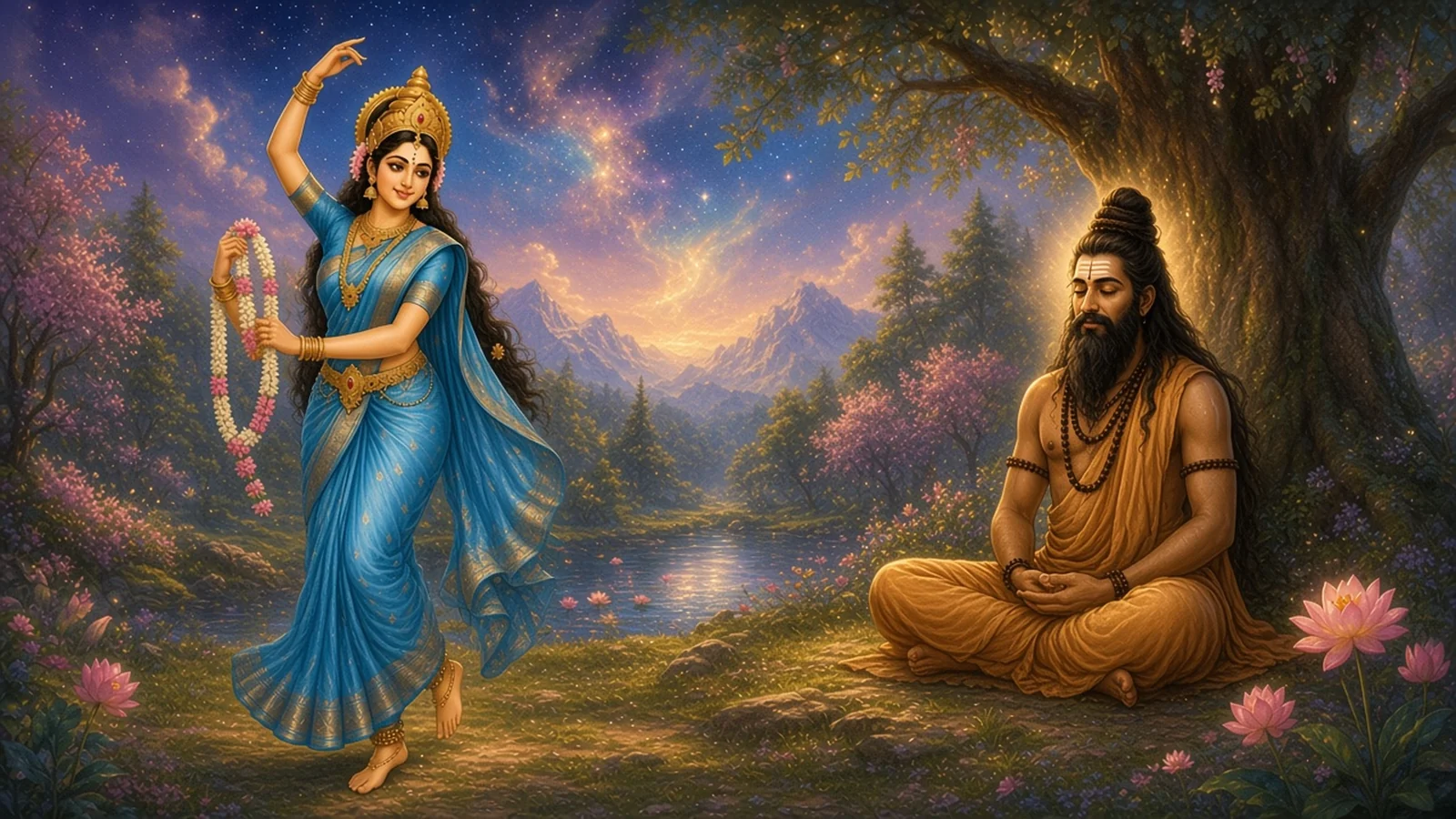
The Padma Purana says the lake was made when Brahma's lotus fell three times and three pools opened, the eldest, the middle and the youngest Pushkar, a story told in The Lotus That Fell at Pushkar. Here he held his great sacrifice, and here Savitri, arriving late to find Gayatri in her place, cursed him, which is why the town keeps a temple to each wife on hills at opposite ends of the lake. That quarrel is told in The Wife Who Came Late.
Brahma drops his lotus over the desert hills, and where its petals fall the lakes of Pushkar open
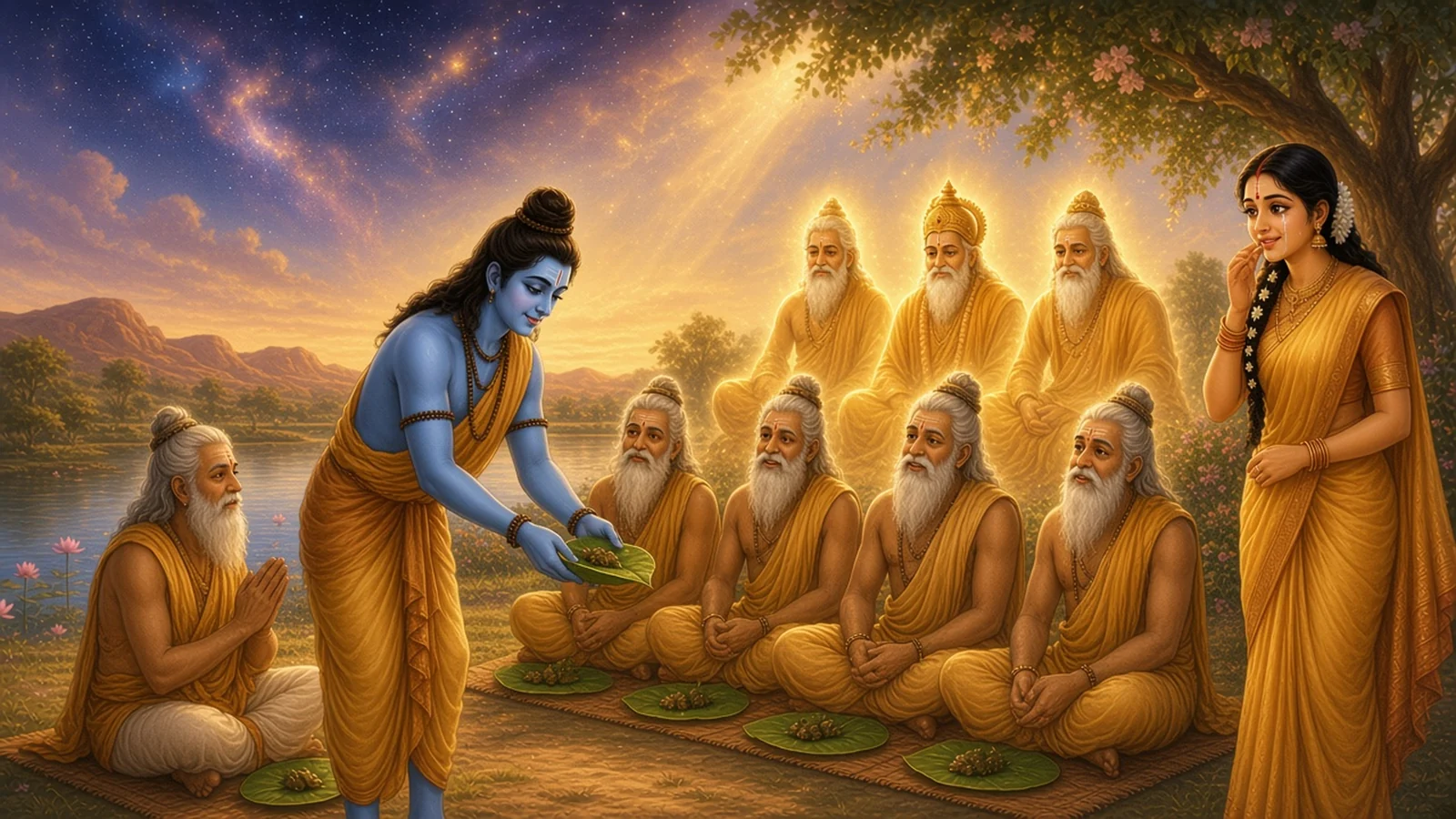
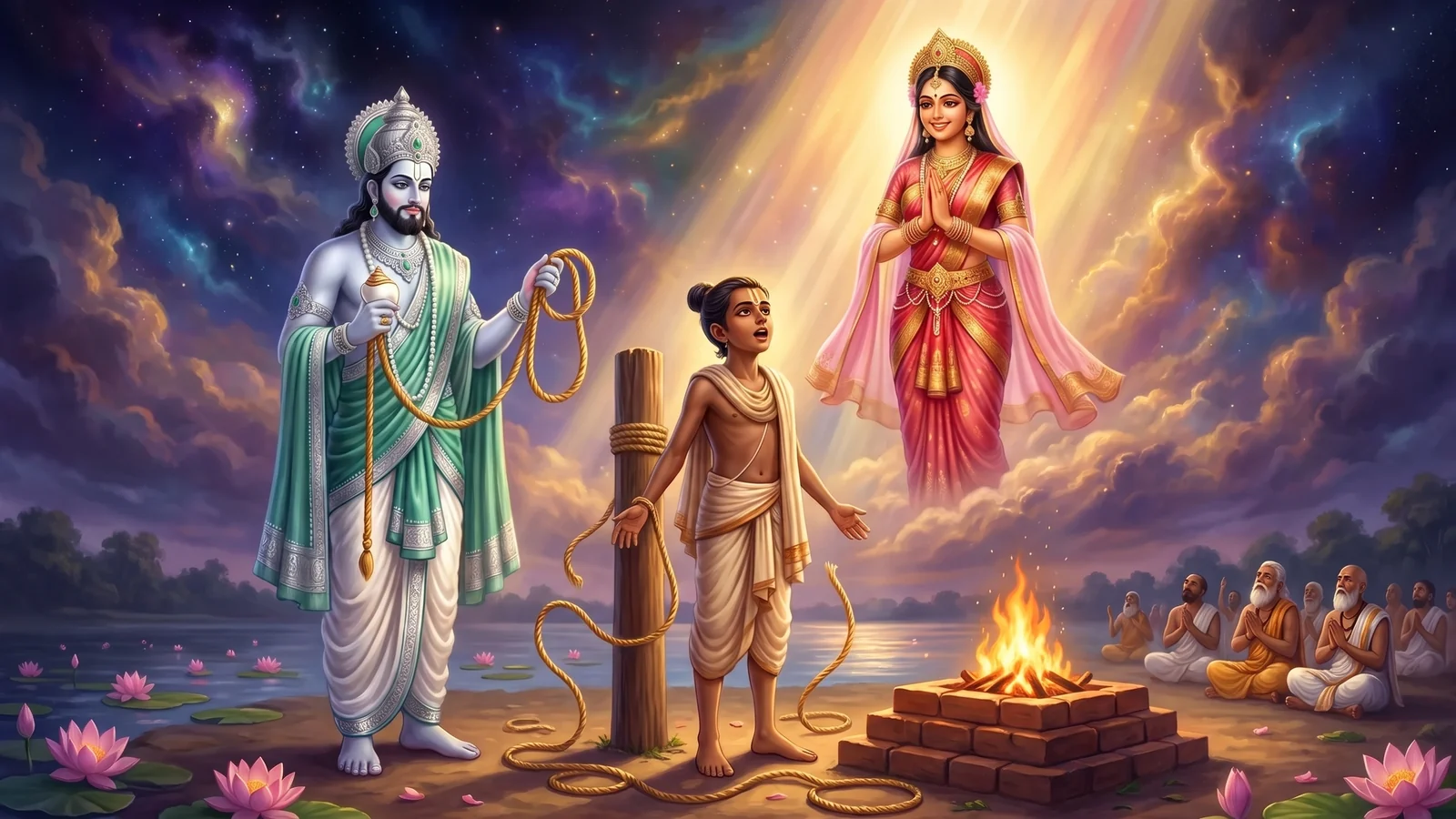
Pushkar counts the five days from Prabodhini Ekadashi to the full moon as the days of that sacrifice, and so the days on which a bath counts most. The town is called Tirtha Raj, the king of tirthas, and pilgrims say a round of the four dhams is not complete until the traveller has bathed here. Rama came, the Purana says, to feed his dead father's guests, told in The Guests Sita Saw at Pushkar.
Rama, Sita and Lakshmana feed the sages by the lake, and the ancestors Sita saw glow behind them
Pushkar is Brahma's tirtha. His lotus made the lake, and the town holds that he performed his great sacrifice here between Kartika shukla Ekadashi and the full moon, which is why those five days are the days to bathe. His temple, the Jagatpita Brahma Mandir, stands above the lake, and the festival is held in his honour.
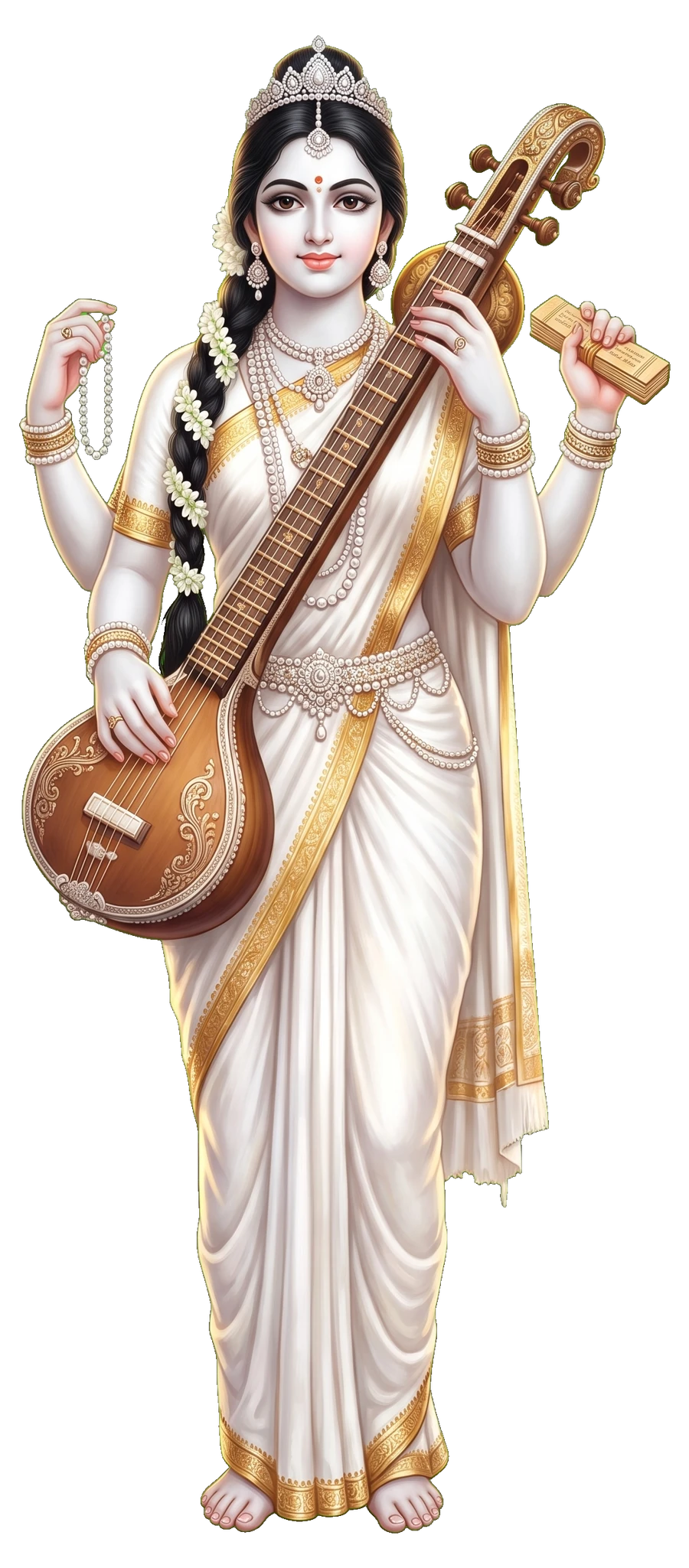
In the sanctum of the Brahma temple Saraswati sits at Brahma's right, and her peacock is carved on the walls. Some tellings of the Pushkar sacrifice name her as the wife who came late.
S
Savitri, on the high hill
Brahma's first wife in the Pushkar legend, who cursed him when another took her place at the sacrifice. Her temple is on Ratnagiri, the highest hill, about an hour's climb behind the Brahma temple, with the stream called Savitri Jharna below it.
G
Gayatri, on the low hill
The wife who sat beside Brahma at the sacrifice. Her image sits at his left in the sanctum, and her own temple is on a lower hill on the eastern side of the lake.
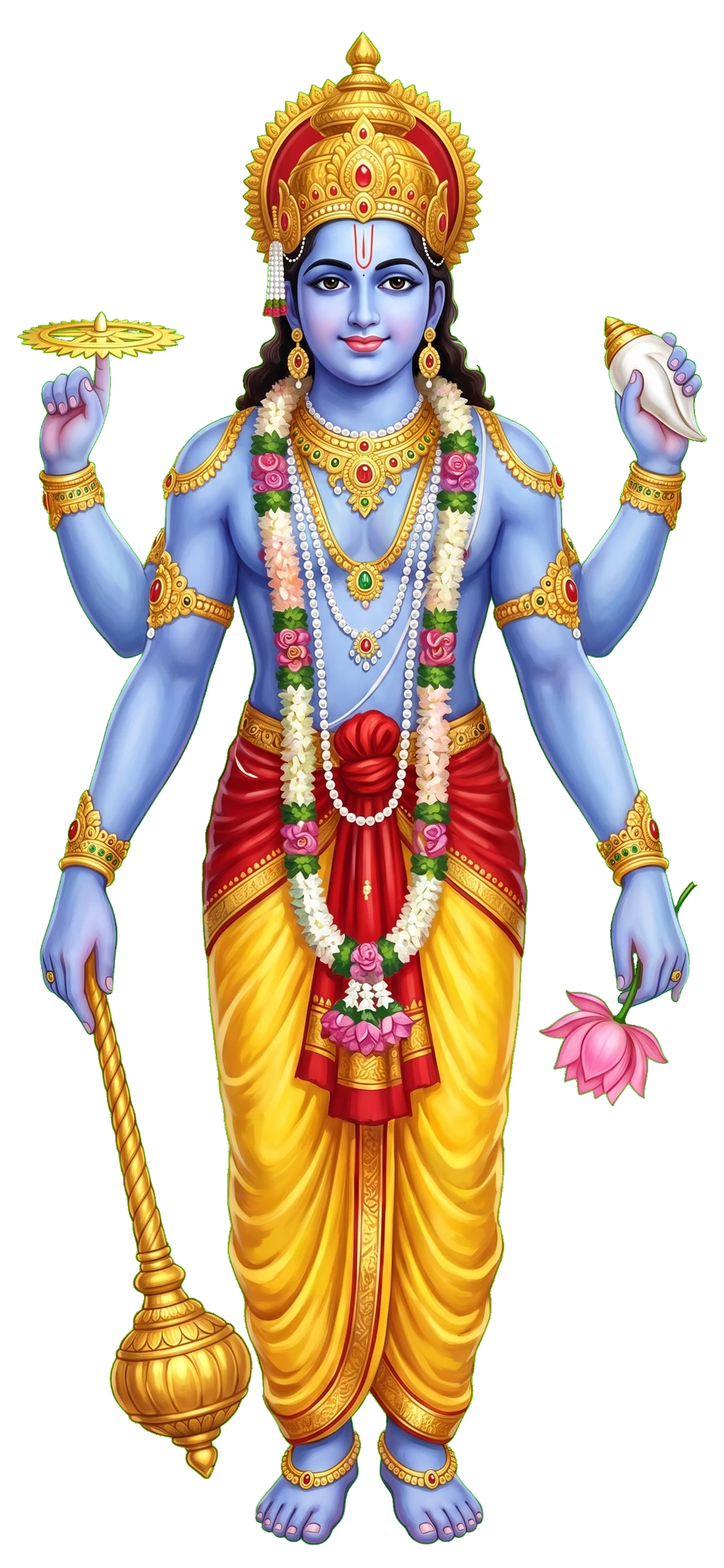
Varaha Ghat is one of the ten ghats declared monuments of national importance, and the Varaha temple, whose image was broken in Jahangir's time, was rebuilt by a later Rajput ruler; one encyclopedia article names Maharaja Bakht Singh of Marwar, another Maharana Pratap. In the Narada Purana's praise of Pushkar the middle lake is Vishnu's.
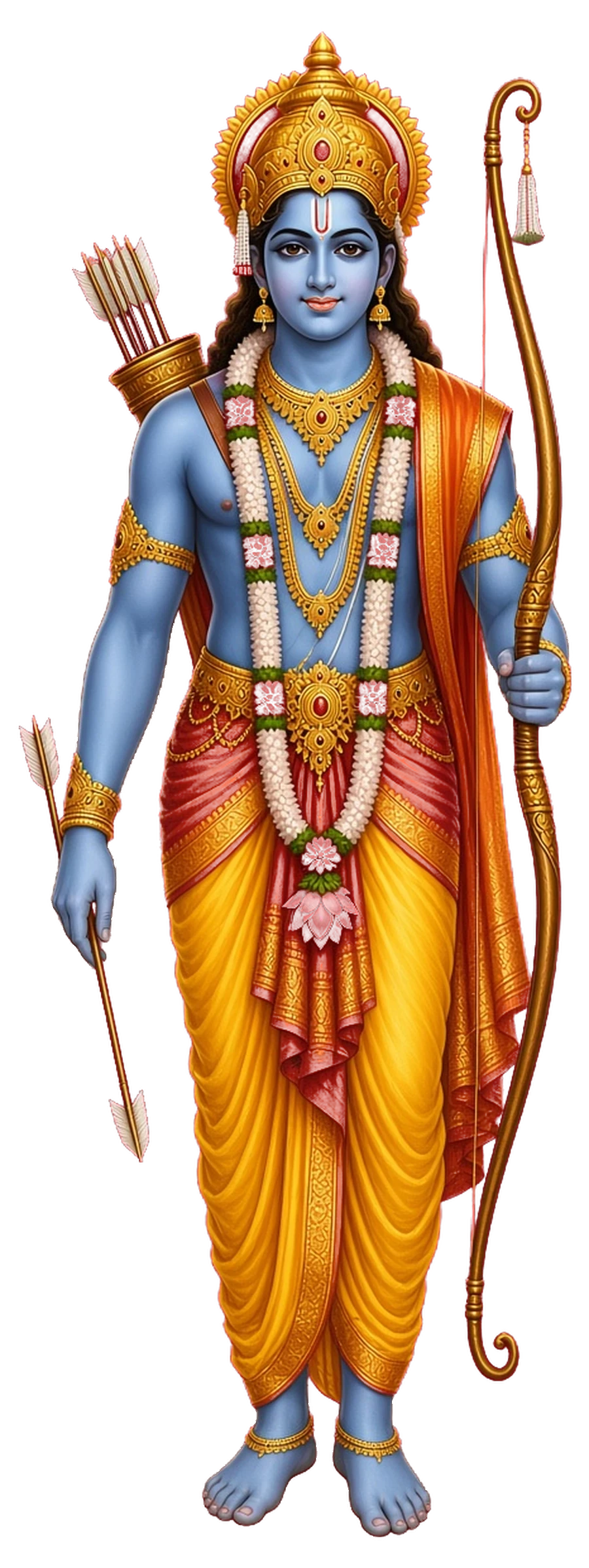
The Padma Purana brings Rama to Pushkar in the exile to hold a shraddha for Dasharatha, and Pushkar's priests show the pool where they say he did it.
From the dunes to the full moon
1
The animal fair on the dunes
The first part of the bright half of Kartik, before Ekadashi · Tuesday 10 November 2026
Pashu Melathe camel fairKartik Mela
The herders arrive first and camp on the new fair ground outside the town with camels, horses and cattle. Ajmer district's programme for 2026 gives a fair period of 10 to 26 November, animals included, and the animal husbandry department has opened its fair office. Animal registration is set for 19 November and the animal competitions are proposed for 20 to 22 November. Raika herders, who keep their she-camels, come to sell young males.
Decorated camels tethered in rows on the dunes, and Raika herders in red turbans at their camp
Kartika shukla 8, the eighth of the bright half · Tuesday 17 November 2026
the flag hoistingthe Tourism programme
Rajasthan Tourism's programme opens on Tuesday 17 November 2026 with a puja, the hoisting of the fair flag and nagara drums at the fair ground, and runs to the full moon. The week brings the matka phod, the longest moustache and the bridal competitions, camel parades and camel beauty contests, puppet shows, races and a match between the Pushkar club and a team of foreign visitors.
The fair opens with a puja, the flag going up and nagara drums as decorated camels parade
The five-day Panchtirtha bath begins. Pilgrims bathe at the ghats each morning from now to the full moon, and many keep the five days as Bhishma Panchak with a fast or a single meal and lamps on the ghats at dusk. In 2026 calendars give Friday 20 November.
Ekadashi at dusk: pilgrims set lamps on the white ghats as the five days of bathing begin
Kartika Purnima, the full moon · Tuesday 24 November 2026
the MahasnanPushkara Snanathe great bath
The great bath. The crowd goes down to the water before sunrise, then climbs to the Brahma temple, and the fair closes the same day. In 2026 the full moon falls on Tuesday 24 November; calendars give Sunday 14 November in 2027 and Thursday 2 November in 2028.
The Mahasnan before sunrise: pilgrims bathe in the lake below the ghats on the Kartik full moon
The town ringed round the lake keeps 52 ghats, among them Varaha, Brahma, Gau, Jaipur and Saptarishi, and some four hundred to five hundred temples, most of them built or rebuilt from the eighteenth century on. It is a vegetarian town. The Brahma temple stands on its high plinth with a red spire and a hamsa over the gate; Savitri looks down from Ratnagiri and Gayatri from the eastern hill.
The fair ground and the dunesThe camps of the herders
The livestock fair spreads over the sand outside the town, with camels, horses and cattle tethered in rows, stalls for bangles and cloth, and the stadium where the competitions are held. Bhopo families who live near Pushkar railway station are invited to perform Pabuji's par.
Marwar, Mewar and the Raika countryWhere the camels come from
Raika and Rebari herders from western and central Rajasthan bring young male camels to Pushkar, as they do to Nagaur and Tilwara. The painted cloths that bhopos read come from the painters of Bhilwara and Shahpura, and a worn one is cooled, ideally, in Pushkar Lake.
Hindu pilgrimsBrahma's five days
For pilgrims the fair is the Panchtirtha bath and a visit to the Brahma temple, where only ascetic priests enter the sanctum and offerings are passed in from the hall. Many bring their dead as well, offering pindas through the Parashar family priests at the ghats and at Gaya Kund.
Raika and Rebari herdersPabuji's people
The camel herders worship Pabuji, the Rathore hero of Kolu, and commission bhopos to read his par through the night. The fair is their market for the year's young male camels.
SikhsGobind Ghat and the gurdwaras
Pushkar has two Sikh shrines, the Guru Nanak Dharamsala in the east of the town, and the shrine of Guru Gobind Singh at Gobind Ghat, where he is remembered to have stayed after leaving Anandpur Sahib. A Brahmin priest's family, descended from the priest he met, keeps an old hand-written Guru Granth Sahib there and a hukumnama on birch bark. In 2026 Kartik Purnima is also Guru Nanak Jayanti.
The state and the visitorsThe fair as a showground
The district administration, Rajasthan Tourism and the animal husbandry department run the fair. For foreign and Indian visitors it is a week of competitions, balloon rides over the dunes and tents by the fair ground.
How it is kept
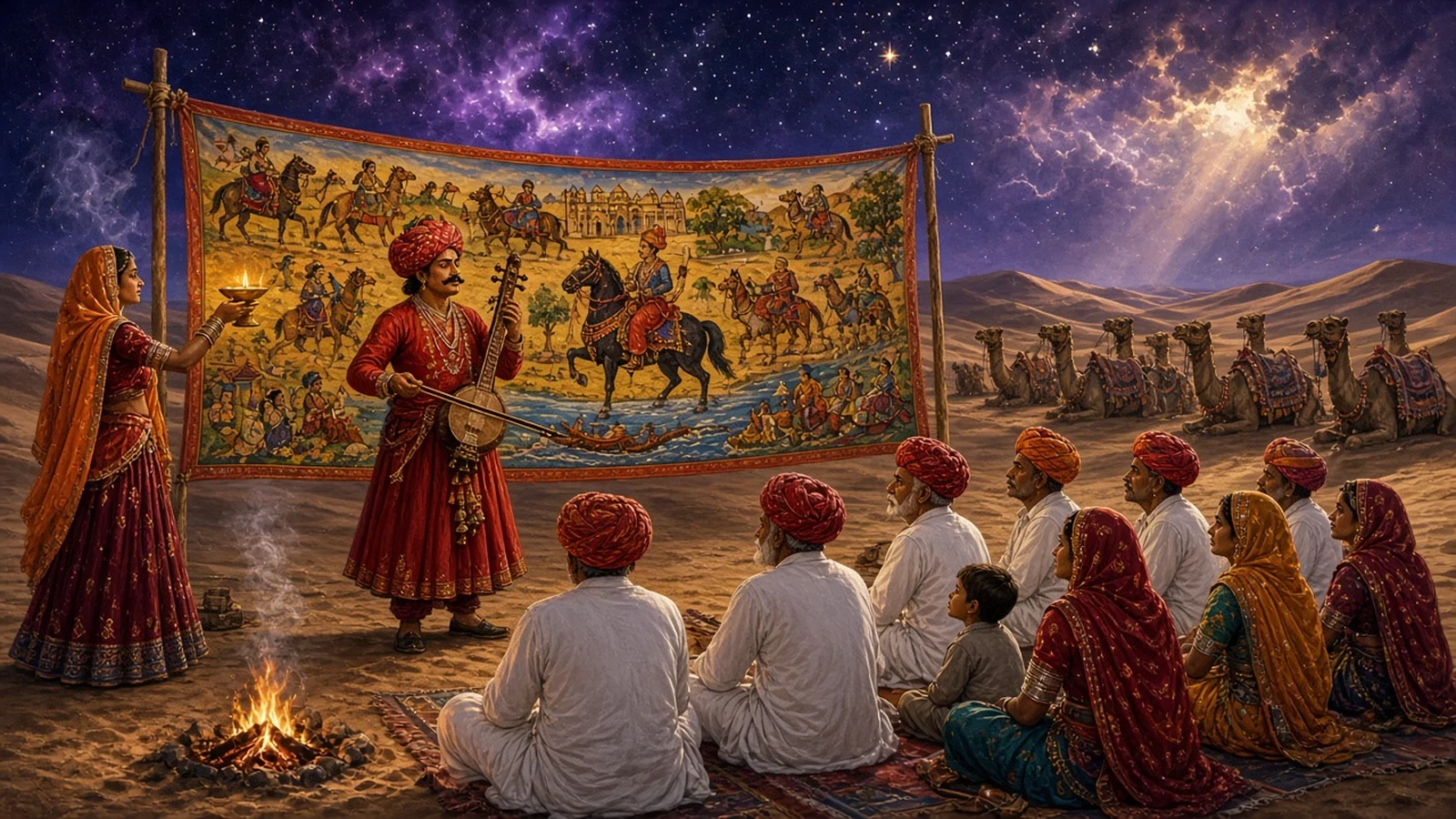
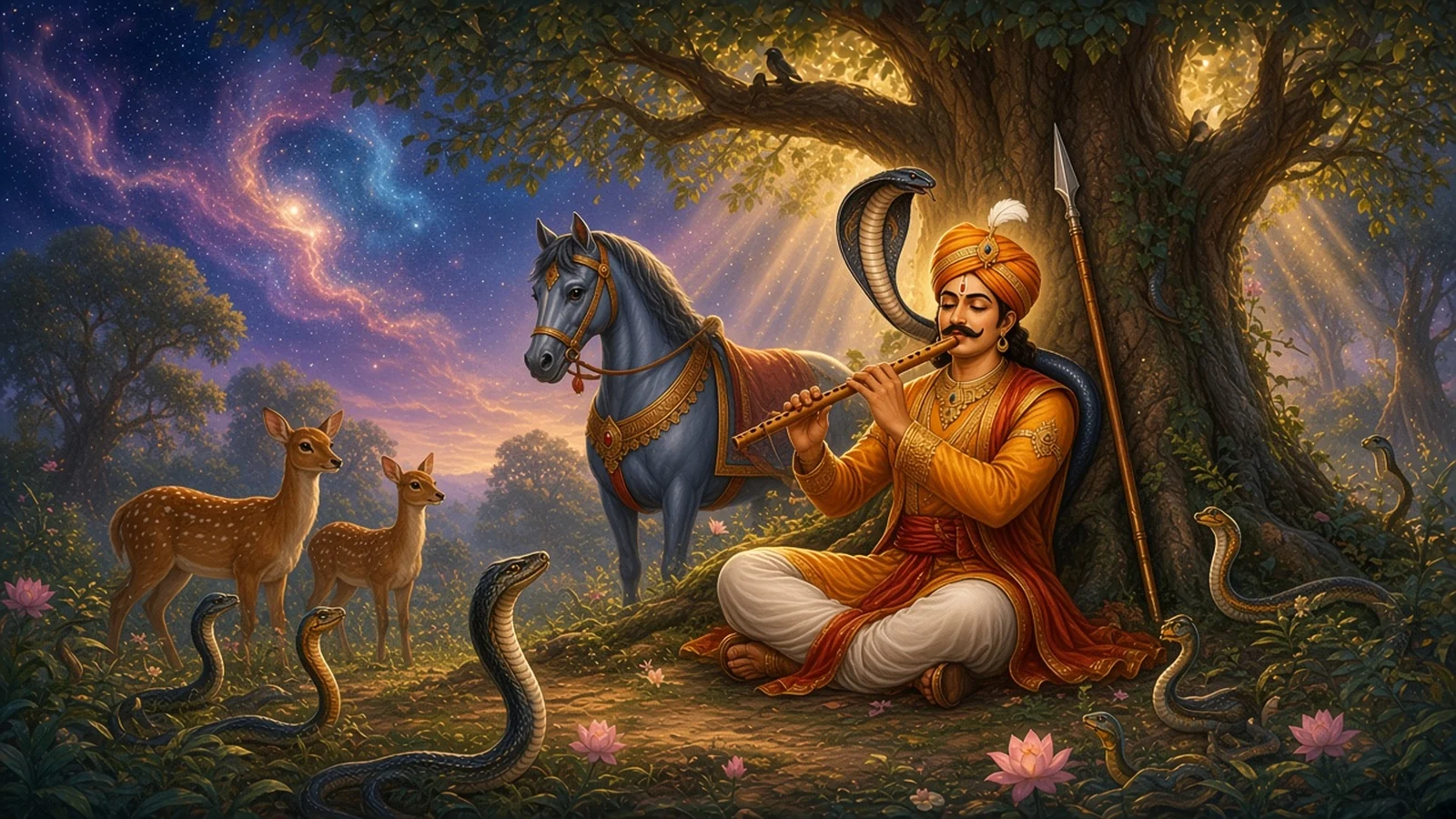
The animal fair comes first. Herders walk their camels in over days and camp on the fair ground, and buyers move along the rows. The Raikas, who by old custom do not sell their she-camels, bring their young males. At night a bhopo may be called to a camp to unroll the painted par of Pabuji and sing the night through, and the story he is asked for most often is told in The Camels Pabuji Brought.
A bhopo sings Pabuji's painted par by lamplight in a herders' camp on the dunes
The Tourism programme opens with a puja, the fair flag and nagara drums, and fills the stadium with competitions: matka phod, the longest moustache, the bridal contest, camel parades and camel beauty contests, races and a match between the Pushkar club and foreign visitors.
From Ekadashi the town turns to the lake. Pilgrims bathe before sunrise and visit the Brahma temple, where householders may not enter the sanctum and a sannyasi priest takes their offering in. Many keep the five days as Bhishma Panchak, eating once a day and setting lamps on the ghats at dusk; some climb to Savitri on Ratnagiri. Families offer pindas for their dead through the Parashar priests, and on the full moon the whole crowd comes down to the water for the Mahasnan.
Pilgrims climb the steps to the Brahma temple with its red spire and the swan over the gate
In the old texts
The Padma Purana's Srishti Khanda is Pushkar's book. It tells of the lotus, the sacrifice and Savitri's curse, and in its thirty-third chapter sends Rama from Atri's hermitage to the middle lake, where Markandeya shows him the well that joins the parted. The Narada Purana's praise of Pushkar, as Drik Panchang describes it, sets the three lakes under Brahma, Vishnu and Rudra, and promises each bather the world of the god whose lake he chose. The Ramayana sets Vishvamitra's penance at Pushkara, the background to Ten Years Like One Day and The Boy Sold for a Hundred Cows.
The fair is younger than the bath. The encyclopedia credits British rule with joining a cattle fair to the pilgrimage, and the Pabuji epic that the herders hear came down with the bhopos; its earliest written version is in Nainsi's chronicle of the seventeenth century.
Where this page comes from. Written by Devalok from the Padma Purana, Srishti Khanda, in the Motilal Banarsidass translation and on Vedapath, the encyclopedia articles on Pushkar, Pushkar Lake, the Pushkar Fair and the Brahma Temple at Pushkar, Rajasthan Tourism's fair page and its list of fair dates for 2024 to 2030, Incredible India, Dainik Bhaskar and Peepals on the 2026 programme, Drik Panchang and Apna Panchang on the five days' bath and the dates, ETV Bharat and NDTV Rajasthan on Gaya Kund, John D. Smith's Epic of Pabuji and his Sahapedia essay, Ilse Köhler-Rollefson on the Raika camel herders, and The Hindu and the Anahad Foundation on the bhopos, as recorded in the Devalok Lore. Our own words throughout.