As the Shiva Purana tells it
Shiva Purana, Rudra Samhita, Yuddha Khanda 19 · 3 min read
Jalandhara, the king born of the ocean, had beaten the gods and taken the three worlds. Indra's white elephant stood in his stables, and the horse that rose from the sea, and the tree of heaven. Brahma's swan chariot waited in his courtyard. Kubera's treasure was in his vaults, and Varuna's noose, and the javelin of Death.
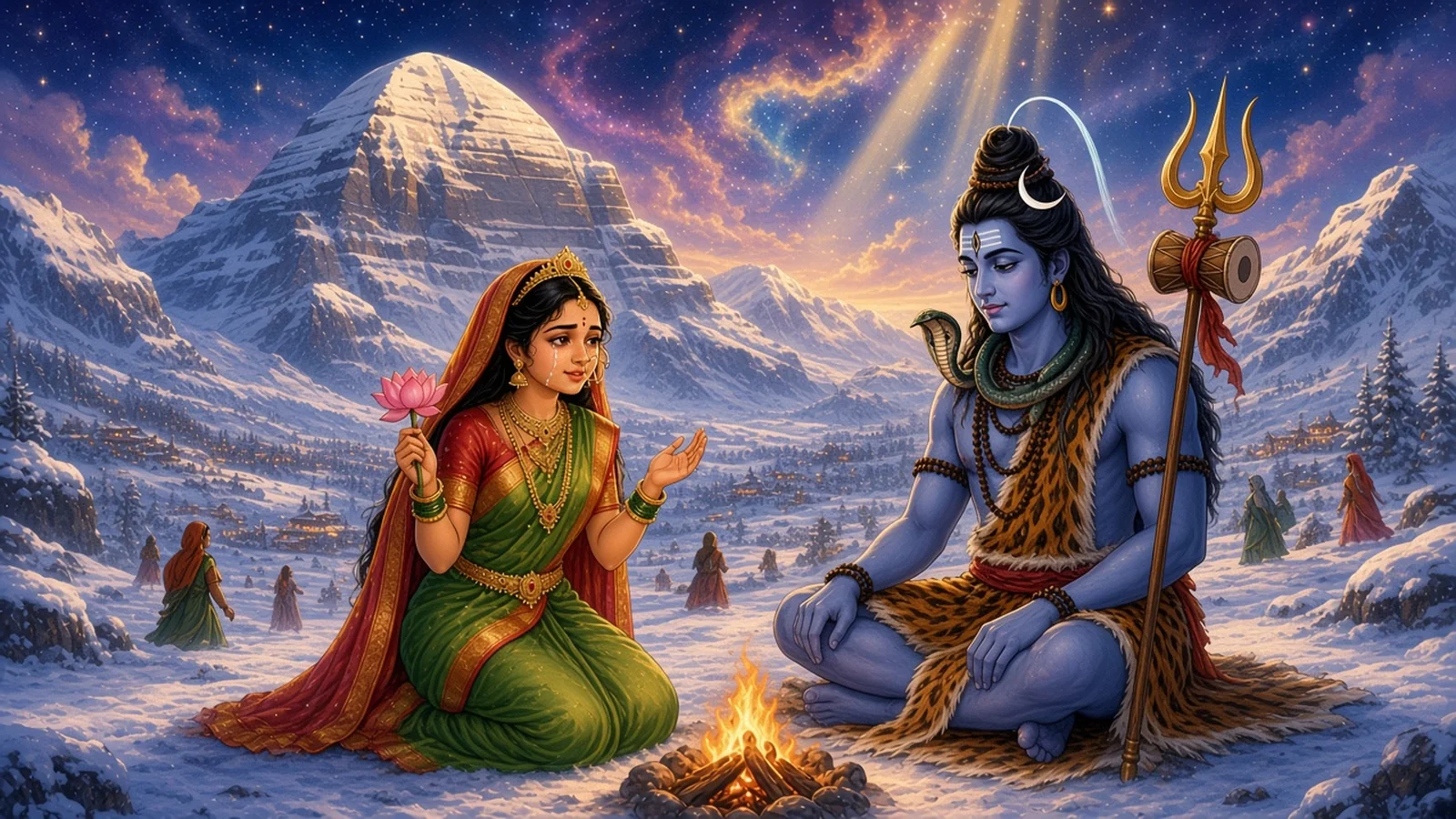
Then Narada came and went, and left behind him talk of a woman more beautiful than any treasure. Jalandhara could think of nothing else. She was Parvati, the wife of Shiva.
He sent for his messenger. The messenger was Rahu, the head that had drunk the nectar and could not die.
"Go to Kailasa," the king said. "There is a yogi there with matted hair, smeared with ash, who lives among ghosts. Speak to him without fear. Tell him that a wife like his is wasted on a beggar. Tell him that everything worth having in the three worlds is mine. Then tell him to send her to me."
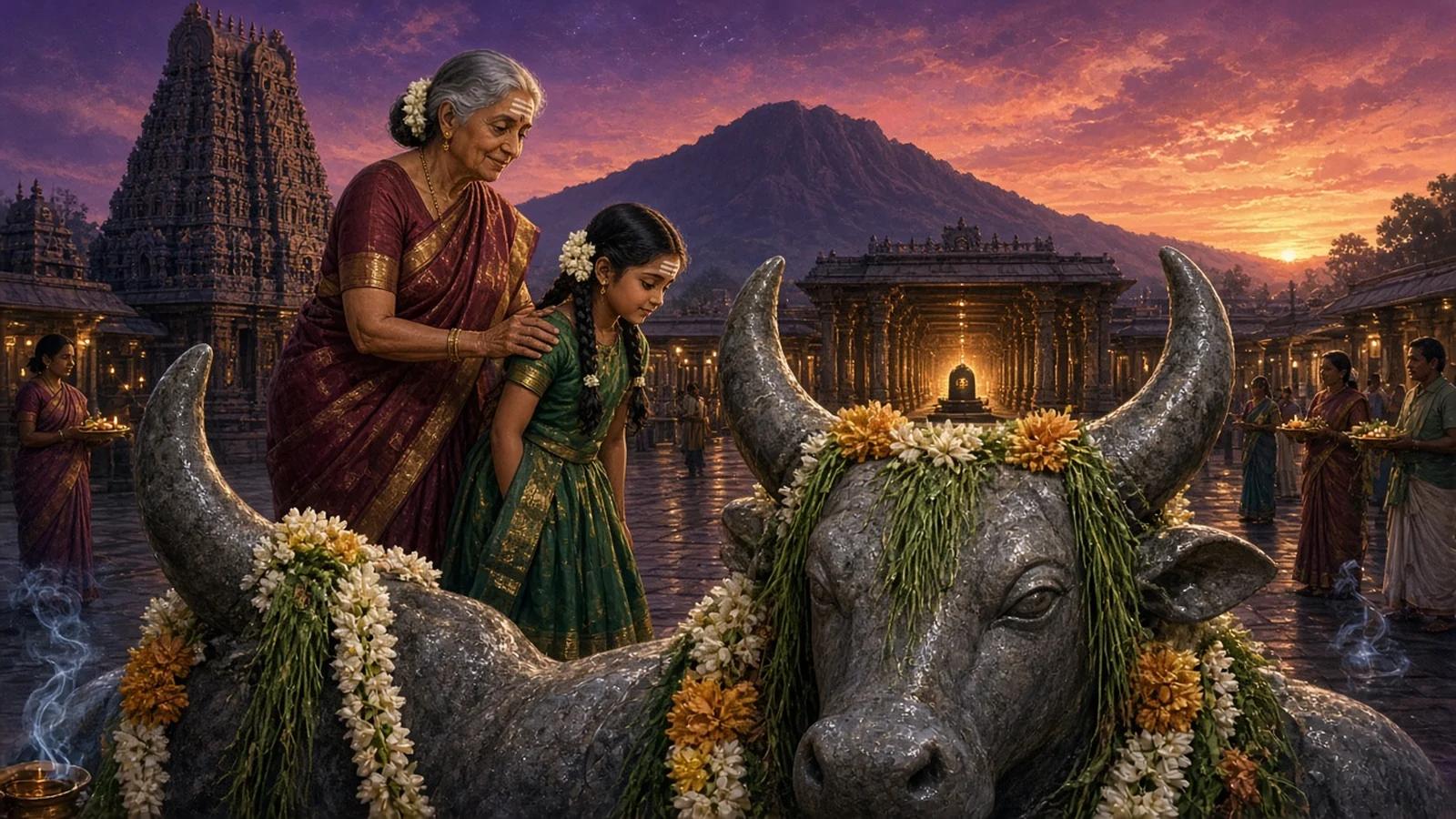
Rahu went to the mountain. Nandi, the bull who keeps Shiva's door, let him in, and Rahu walked into the hall where Shiva sat.
He had come to sneer. But Shiva was shining, ash-white and adorned like a king, and the pride went out of Rahu like air out of a bag. He bowed to the ground.
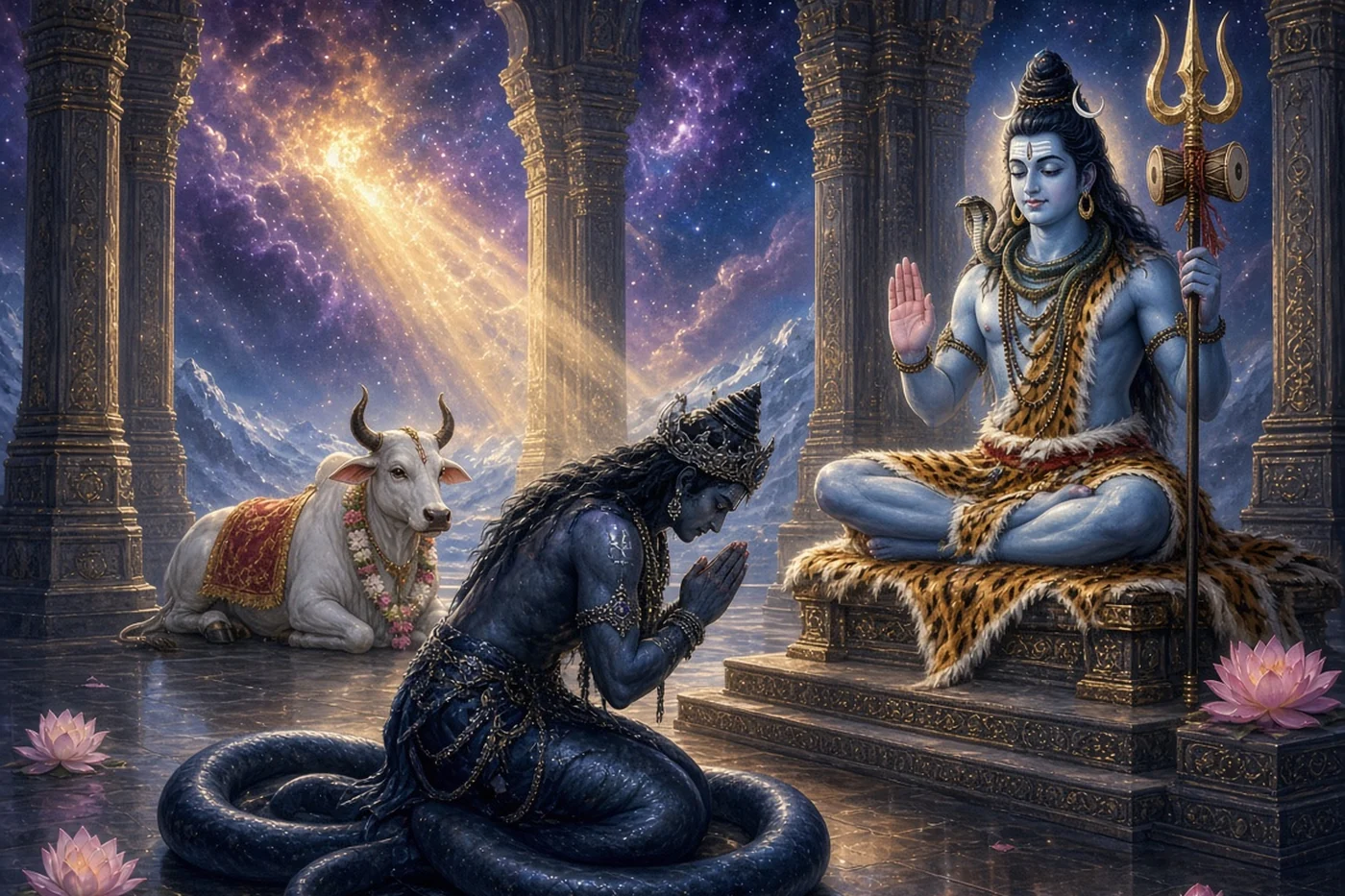
Shiva gestured, and Rahu sat and spoke. He was a messenger, and the message had to be given.
"I come from the lord of the three worlds," he said. "Jalandhara rules the Daityas and the gods alike. What is the daughter of the Himalaya doing with a naked hermit who haunts the burning grounds? She belongs with a king. Give her up. Subjects should keep their king content."
As the last word left him, a sound like thunder broke from between Shiva's eyebrows, and something leapt out.
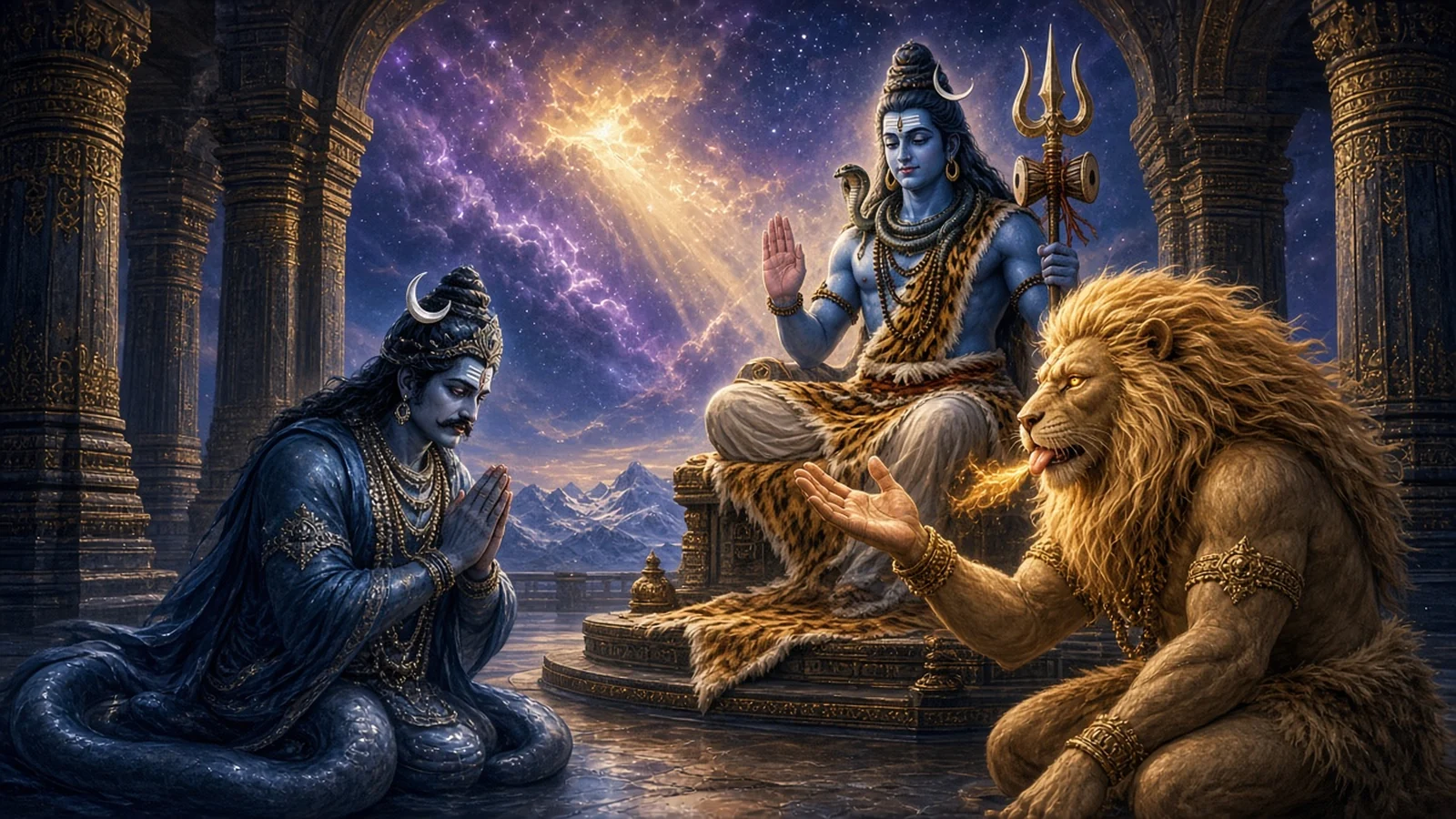
It had the mouth of a lion and a tongue that flickered like flame. Its eyes burned. Its hair stood on end, and its body was dry and rough and enormous, with long arms and thick legs. It looked like the man-lion Vishnu once became, and it was hungry. It went straight for Rahu.
Rahu ran. He did not get far before it caught him.
"Lord, protect me!" he cried to Shiva. "I take refuge in you. Your servant is going to eat me, and I am a brahmin. Save me!"
Shiva is the one who shelters the frightened. "Let him go," he told the creature. "Whoever comes to me for shelter is to be protected, not punished."
At the word brahmin the creature had already loosened its grip, and Rahu was free.
The creature turned to Shiva. "You have taken my food out of my mouth," it said. "I am starving. What am I to eat?"
Shiva looked at it and was glad, for here was one of his own asking him for help.
"Eat your own hands and feet," he said.
The creature did as it was told. It began with its hands and feet and went on, eating itself, until there was nothing left but its face.
Shiva smiled. "You have done exactly what I asked. From today your name is Kirtimukha, the Face of Glory. You will keep my door, you will be a chief among my company, and the wicked will be afraid of you. Whoever worships me must worship you first. Worship that leaves you out does not reach me."
So the face took its place at the entrance of the god, and it is there still.
As the temple doors tell it
Shiva temples across India and beyond · 2 min read
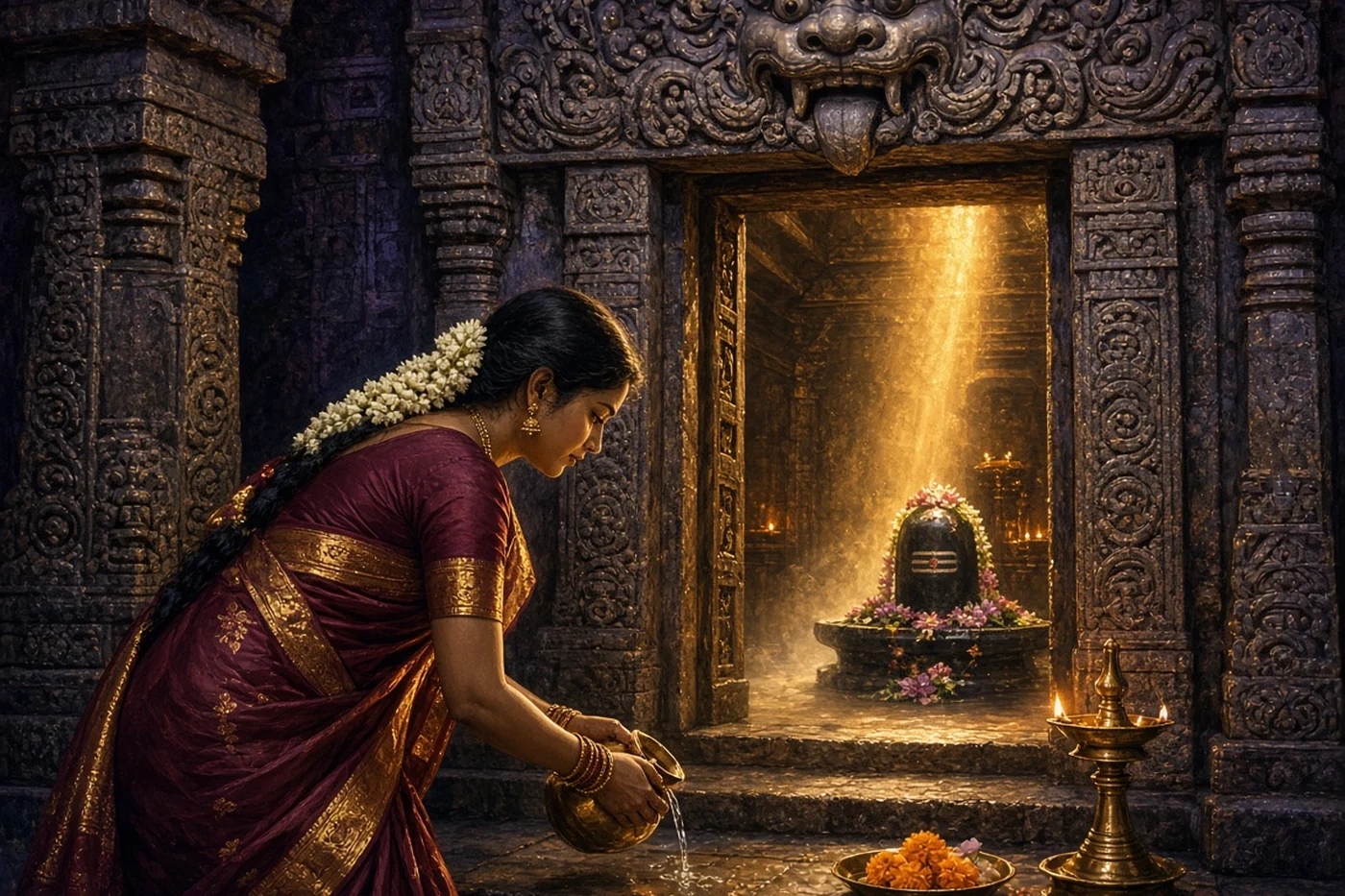
The face itself is easier to find than the book. Walk up to almost any Shiva temple in the south, or in the east, or in Gujarat, and look up over the door of the sanctum. A lion's face looks back, eyes bulging, tongue out, with no body under its jaw.
The people who tell its story to visitors, and the writers who cite the Skanda and Padma Puranas, often set it on a different day. Shiva was about to marry Parvati, they say, when Rahu arrived as Jalandhara's messenger to ask for the bride. Shiva opened his third eye in anger, and the lion-faced creature sprang from it. Shiva stopped it from killing Rahu and ordered it to devour itself, and it obeyed, leaving only the head.
Because Shiva ordered the face to be honoured first, it is placed where every worshipper must pass it. At the threshold of the sanctum devotees sprinkle a little water and take care not to step on it before they go in to see the god.
The Padma Purana, in the summary of a modern Puranic encyclopedia, tells of a stranger creature still: a servant of Shiva born from his matted hair, with three faces, three tails, three legs and seven hands. Shiva first told it to live on corpses. Later, pleased with its courage, he promised that anyone who came to see him without first thinking of it would come to ruin.
The masons gave the face many names. It is Simhamukha, the lion face, and Kala, which is Time, that eats everything. In western India it is Grasa, the devourer, and rows of these faces run along the base of a temple wall. In eastern India the row has another name. There the faces are called after the messenger who nearly became their dinner: Rahumukha, the face of Rahu.
A Lingayat telling gives the face another past altogether. In it the head on the door belonged to Narasimha, cut off when the man-lion grew too proud after killing Hiranyakashipu, who was Rahu's own uncle.