As the Lalitopakhyana tells it
Shripura on Mount Meru · Brahmanda Purana, Lalitopakhyana 17, 19 and 31 · 3 min read
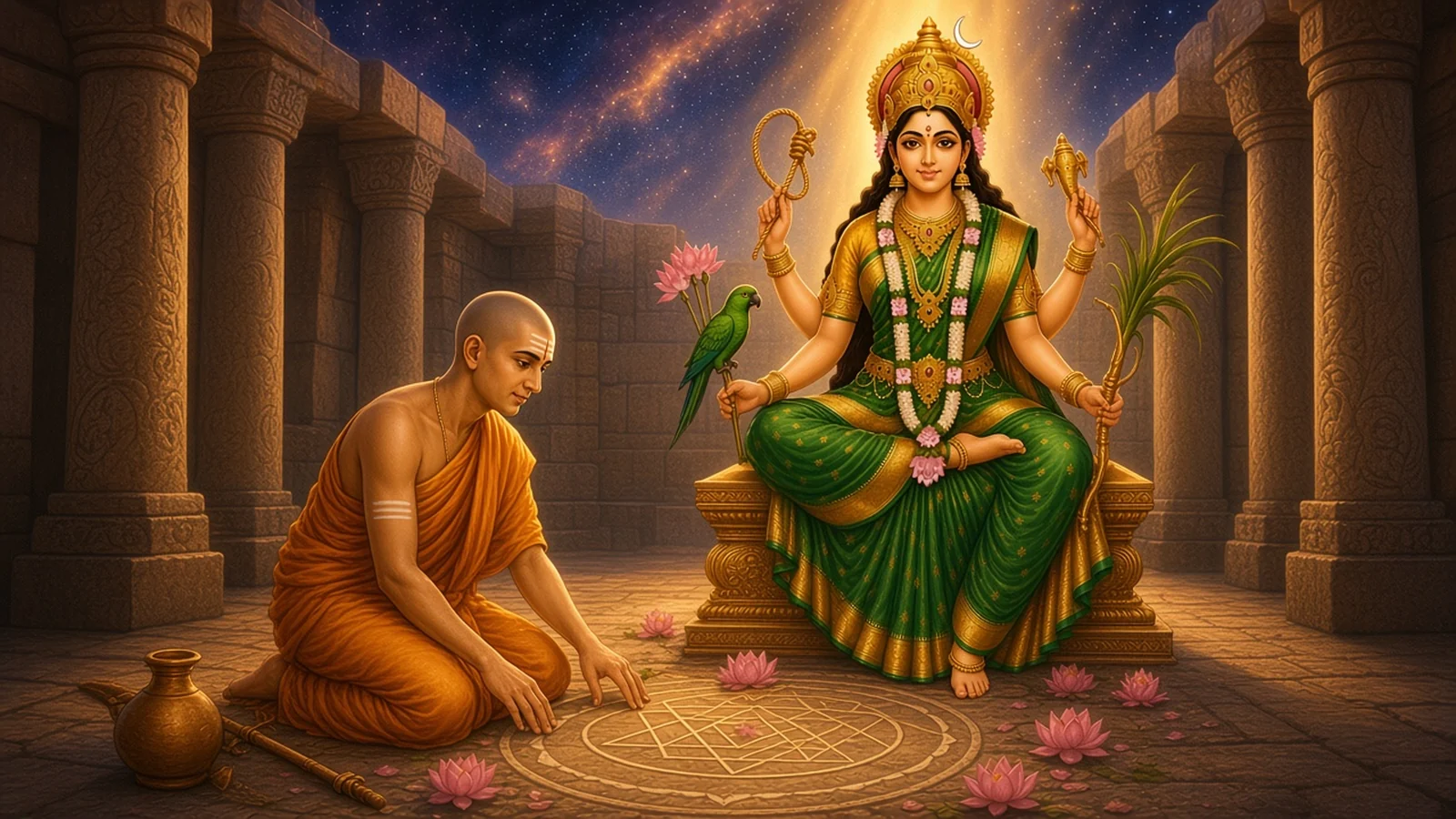
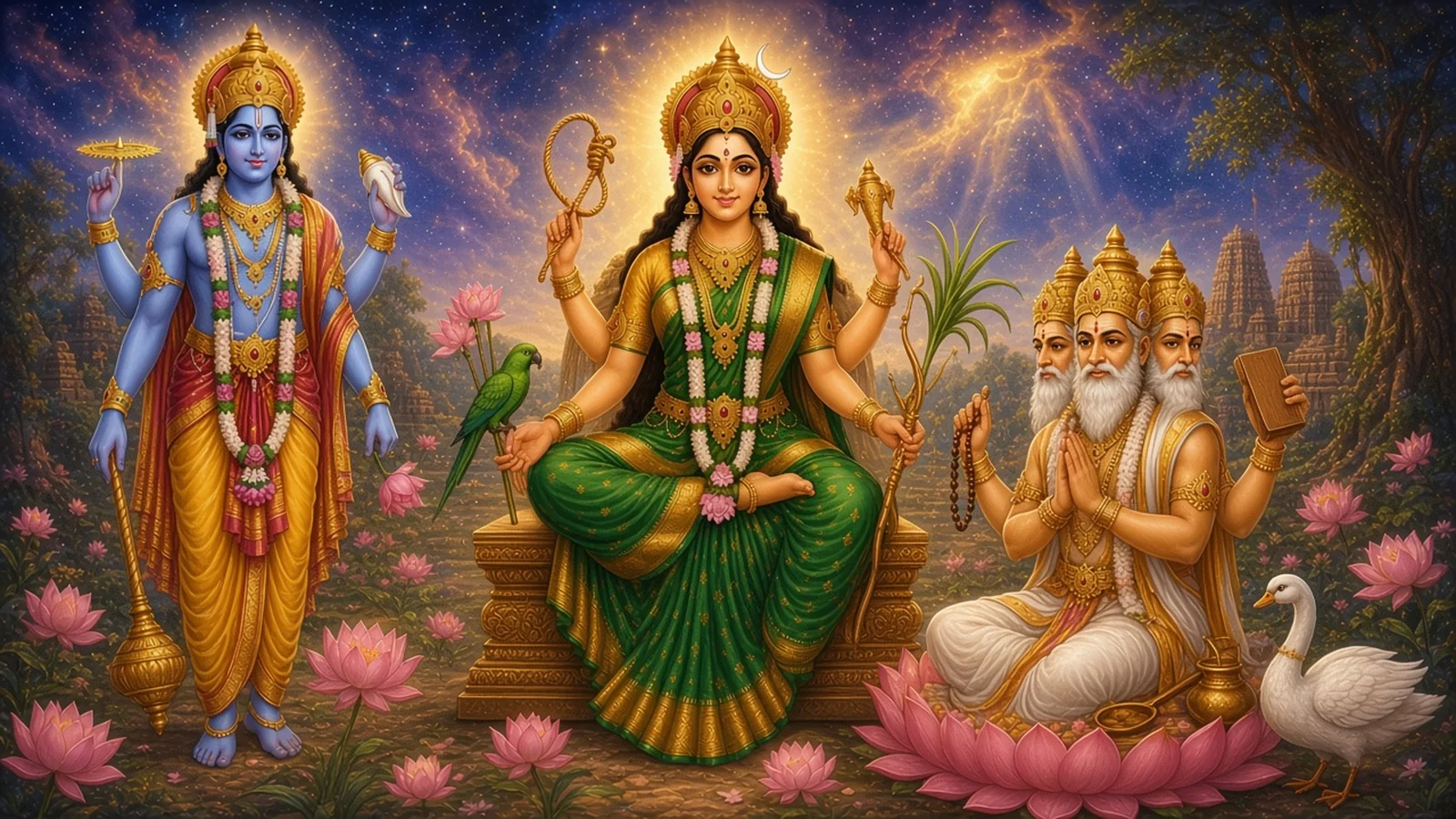
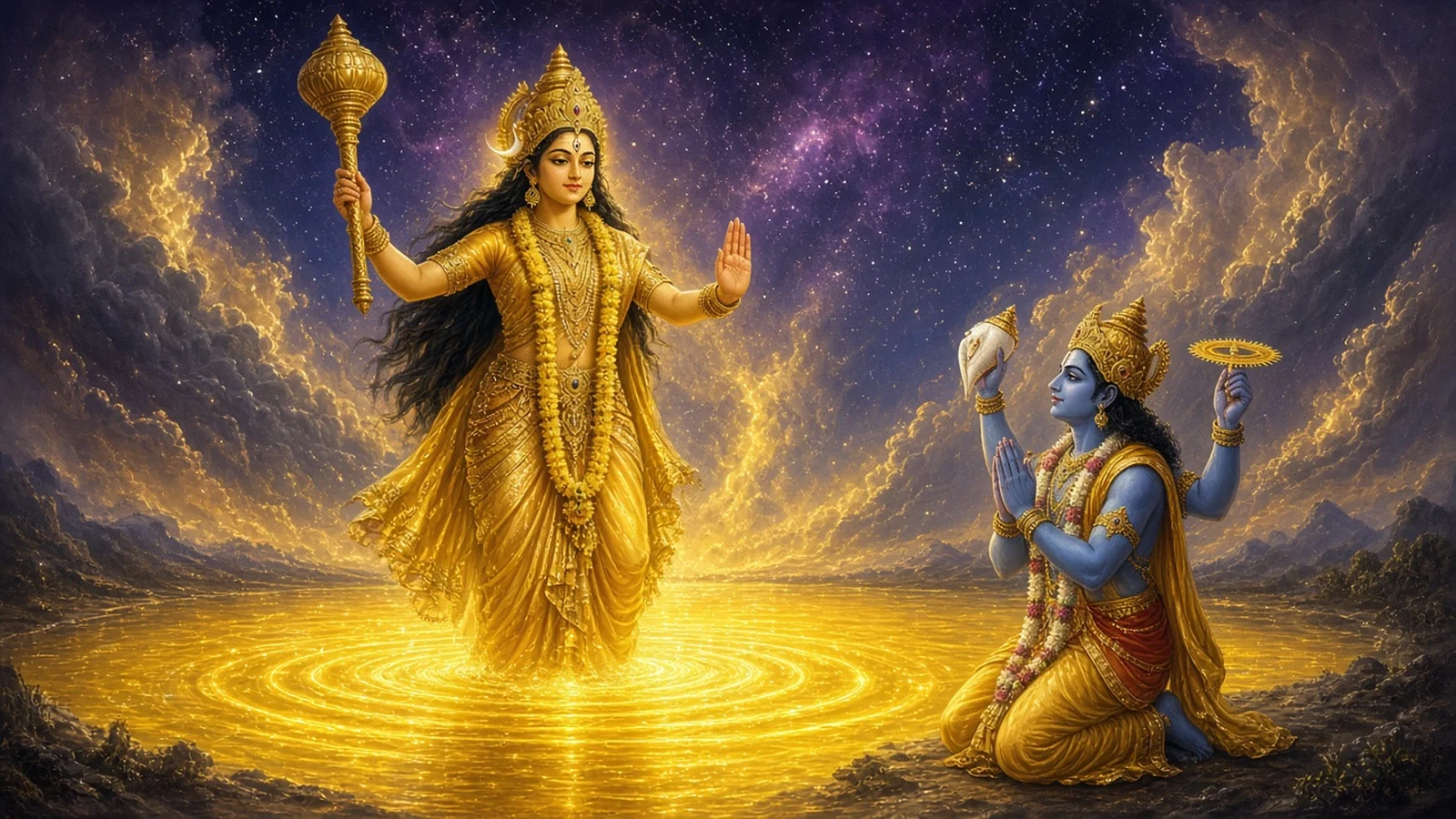
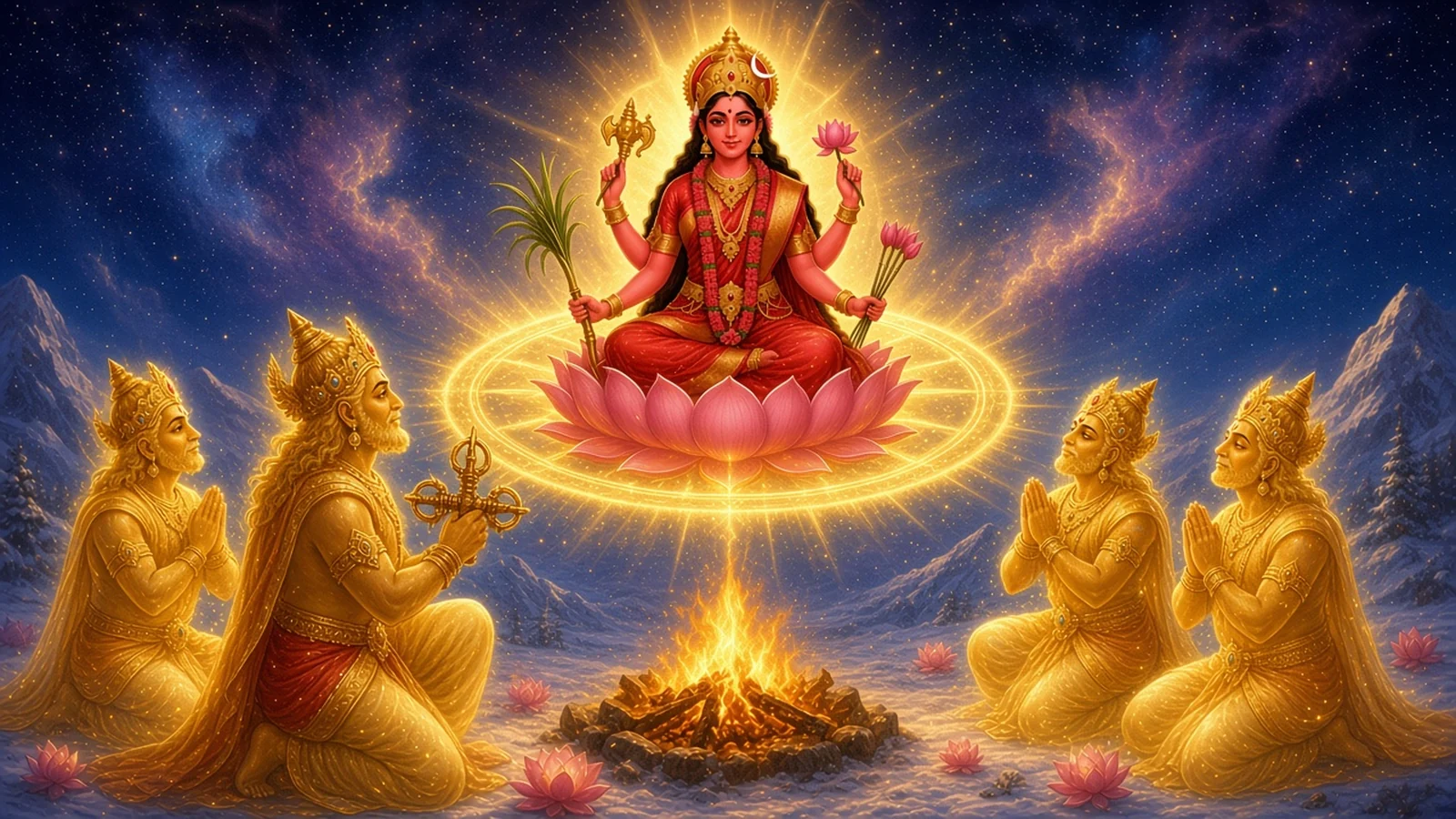
When the war with Bhanda was won, the gods wanted a home worthy of the queen who had won it. Brahma, Vishnu and Shiva called the two great architects, Vishvakarma of the gods and Maya of the demons, and on the middle peak of Meru they built Lalita her city, Shripura, wall inside wall, each of a different metal, with a garden between every two.
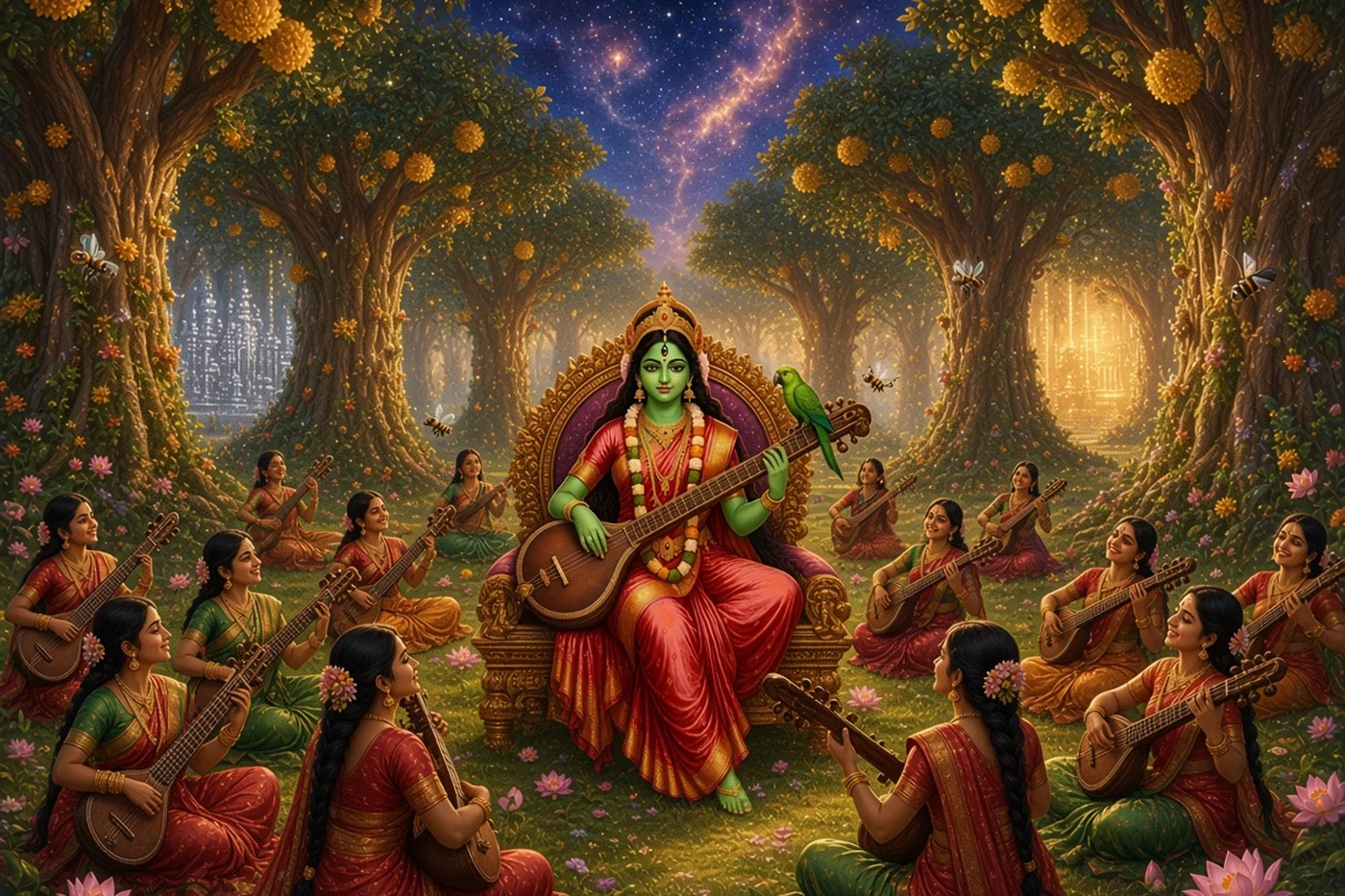
Between the silver wall and the golden one grew a forest of kadamba trees, two yojanas tall and so thick with blossom that bees hummed in every gap. A heady sweet drink called Kadambari dripped from them, and the minister loved it. That grove was the city of Shyama, the dark one, and in it stood the house of Mantrini, Lalita's minister.
Hayagriva, telling all this to the sage Agastya, explained why she had a second house as well. "If she lived only there, many yojanas off," he said, "how could Mantrini wait on the queen every day?" So the architects built her another beside Lalita's own palace of wish-granting jewel.
She was no ordinary attendant. Every petition the gods sent to the queen went through her.
"A request that reaches a queen through her chief minister bears fruit," said Hayagriva. "How else could anyone even come near her?"
In Lalita's empire Mantrini could do a thing, undo it, change it or leave it undone, and the guardians of the directions served her for that reason. Her names said as much. She was Mantrini, the counsellor; Sachiveshi, the lady of ministers; Mudrini, who holds the royal seal. She was also Sangitayogini, the goddess of music, Shukapriya, who loves the parrot, Vinavati, who holds the veena, and Kadambavanavasini, who lives in the kadamba wood.
"In her grove," said Hayagriva, "the daughters of Matanga play and sing to the sweet veena, their eyes rosy with the kadamba's drink."
Agastya stopped him there. "Who is this sage Matanga? And why do his daughters serve the minister for ever?"
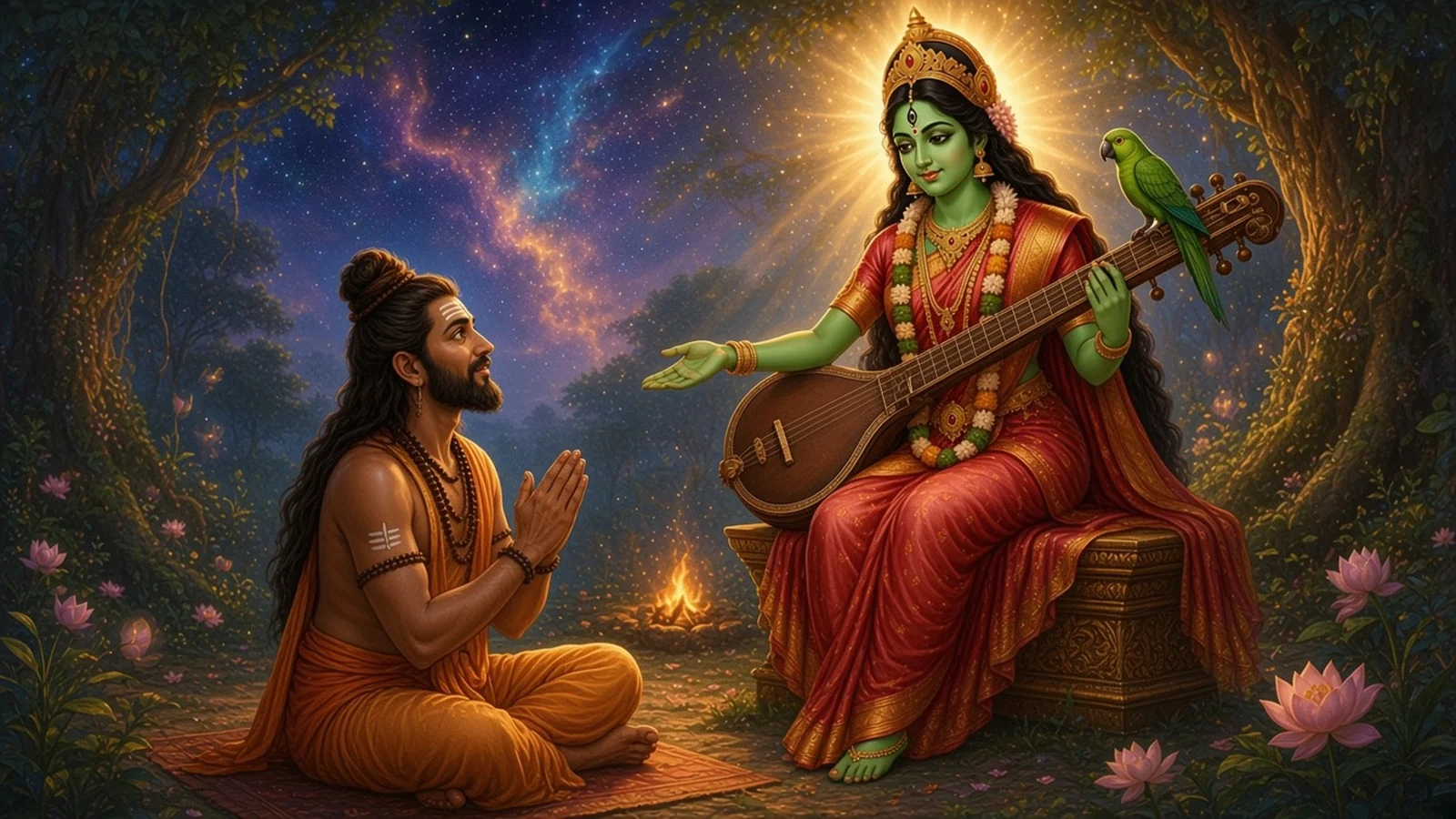
"There was a great ascetic named Matanga," said Hayagriva, "so mighty that his word ran everywhere, and he could have made a world of his own. His son bore the same name, and he set his heart on the minister herself. He served her through long, hard penance, until she came and stood before him."
"Choose a boon," she said.
"Mother," said the younger Matanga, "only by remembering you I have every power there is. Nothing in the three worlds is left for me to win. But you have come, and your coming should not be for nothing, so I will ask one thing.
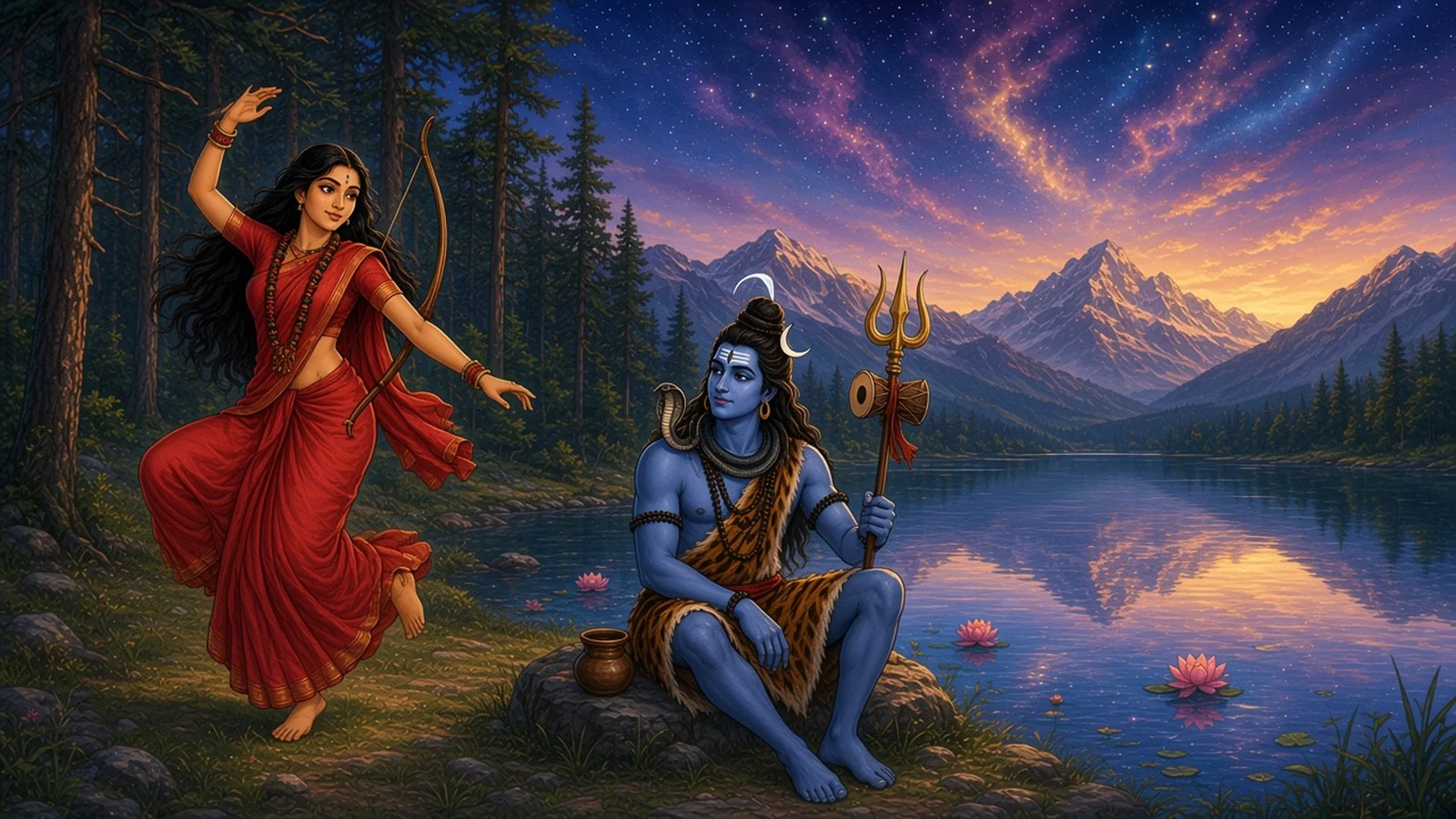
"Himavan and I were friends once. We joked together as friends do, but he grew proud and said things he should not have said. 'I am the father of Gauri,' he boasted. I did not like it. When two friends are equals and one gains something more, the other wants it too. That is why I did all this penance. I want to be a goddess's father. Be my daughter, and you will be known by my name."
"So be it," said the goddess, and she was gone.
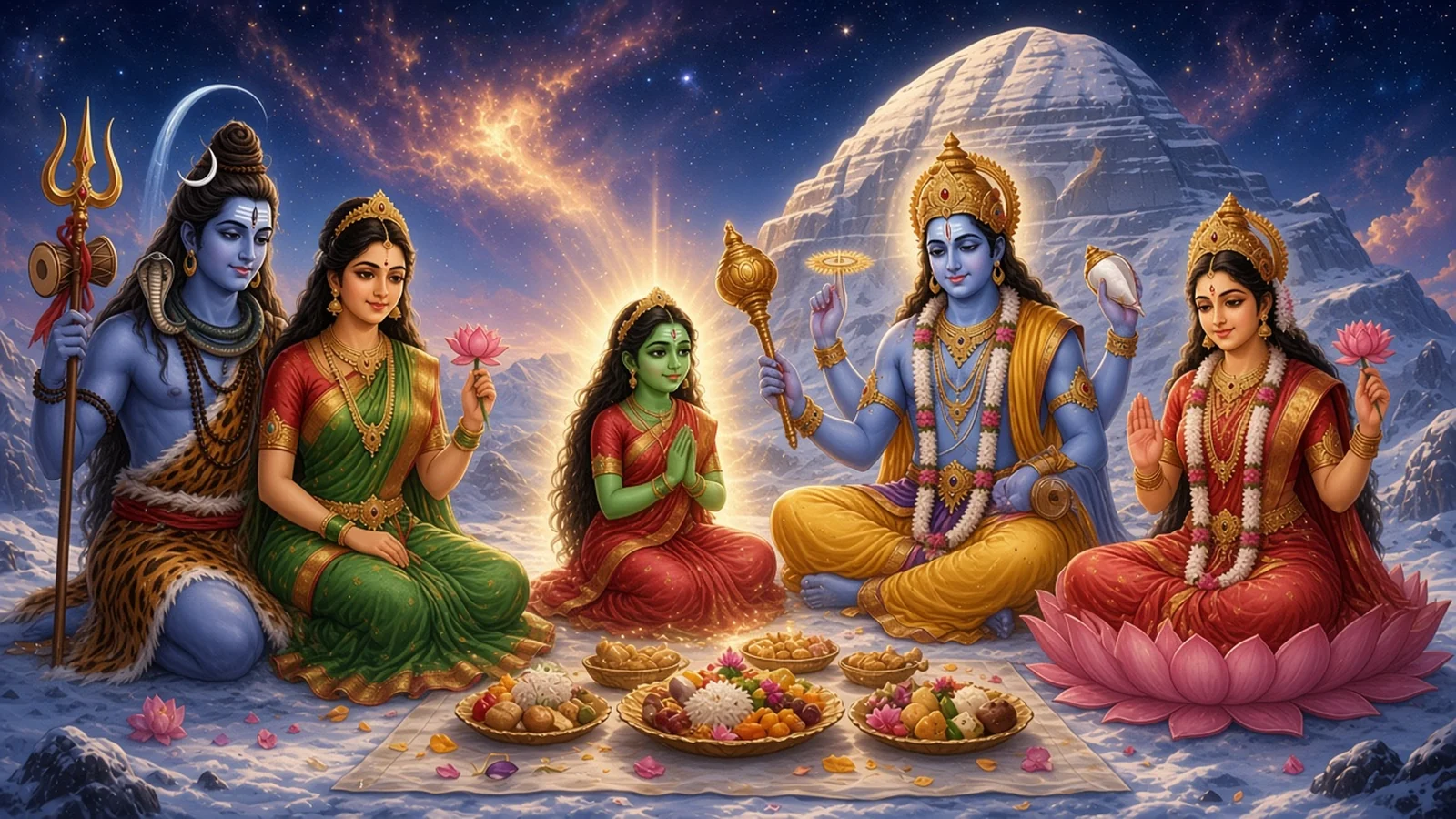
Matanga was content. Then she came to him in a dream and, smiling, gave him a cluster of tamala flowers to wear at his ears. Because of that dream his wife Siddhimati conceived, and she bore a small dark girl. They called her Laghushyama, the little Shyama, because Shyama herself was her cause. Because she was Matanga's child, she was called Matangi.
With her came daughters of Matanga beyond counting, crores upon crores, with Laghushyama, Mahashyama and Matangi at their head, and they all became the minister's own powers. That is why they are found in her kadamba grove to this day, singing to their veenas.
As the Svatantra Tantra tells it
Told in the tantras · as David Kinsley records it, with the Shyamala Dandakam · 1 min read
In the tantra called the Svatantra, as David Kinsley records it from a Bengali study of the goddess traditions, Matanga is nobody's jealous friend, and he asks for no daughter. What he wants is power.
He set out to win the power to bring every creature under his sway, and he gave himself to austerities to get it. He kept at them for thousands of years and did not stop.
At last there was a burst of bright light, and in the light stood Tripura Sundari, the beautiful one of the three cities. Brilliant rays streamed from her eyes, and out of those rays came Kali.
Then Kali changed. Her skin turned green, and she took the form of Raja Matangini, the royal Matangi. With her help Matanga won what he had worked for, the power to rule all living things.
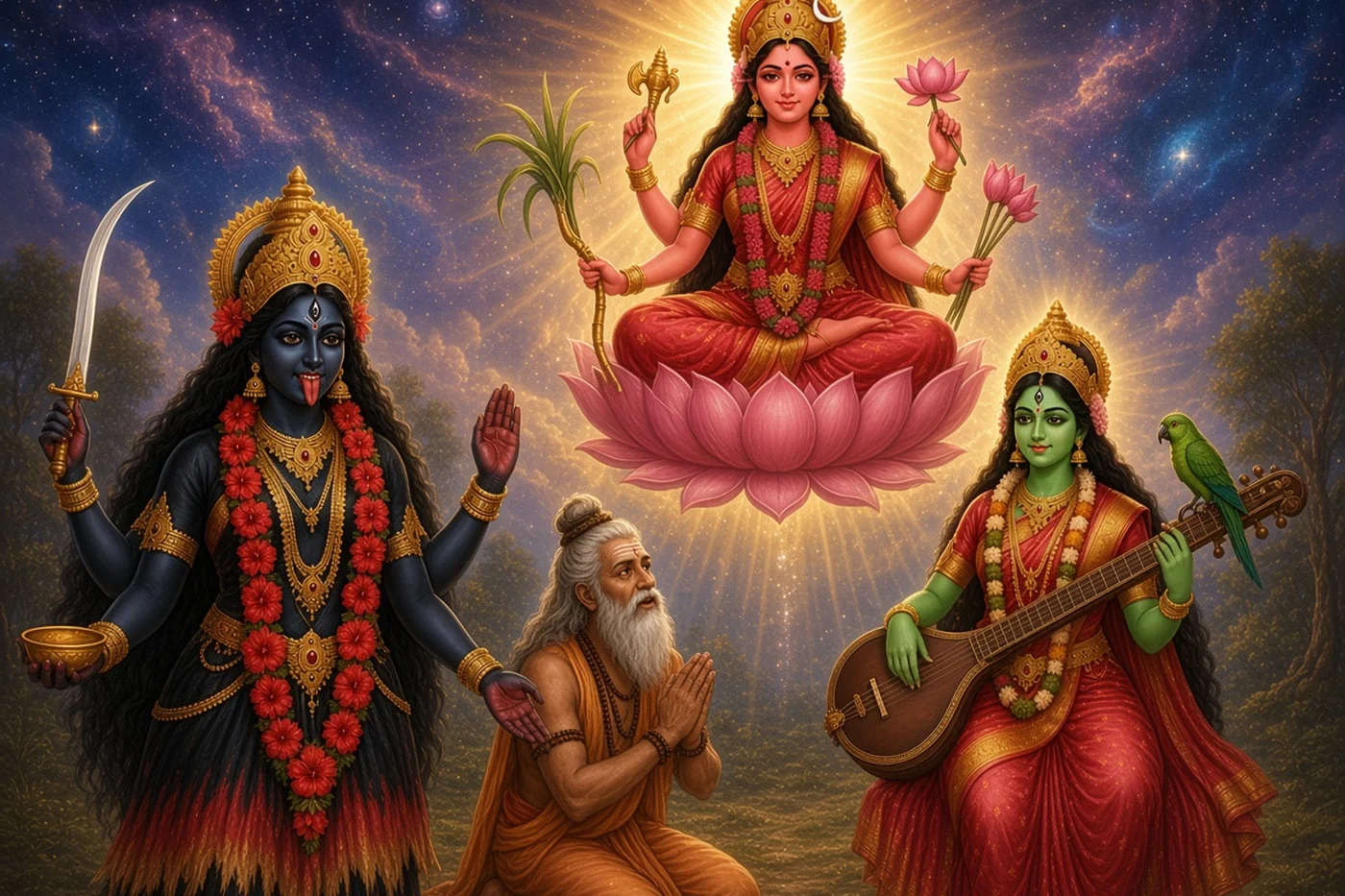
The verses that tell worshippers how to picture her fill in the rest. In the Sharada-tilaka, Raja Matangi listens to the chatter of green parrots and plays the veena. Leaves are painted on her forehead, flowers are twined in her hair, and conch shells hang at her ears. Another verse sets her on an altar, green and smiling, the moon on her brow and a garland of kadamba flowers at her throat, with two parrots beside her, and says that she is the sixty-four arts.
The hymn called the Shyamala Dandakam, which tradition gives to the poet Kalidasa, opens on that same picture. It calls to mind Matanga's daughter, softly playing a veena set with rubies, slow and dreamy, sweet in everything she says, her body glowing like a sapphire. Then it greets her by name: victory to you, child of Matanga, dark as the blue lotus, lover of music, who keeps a parrot for play.