As the Ramayana tells it
Uttara Kanda 87 to 90 · the Bahlika country and a lake below a mountain · 4 min read
Rama told this story to his brothers, to show them what a horse sacrifice can do.
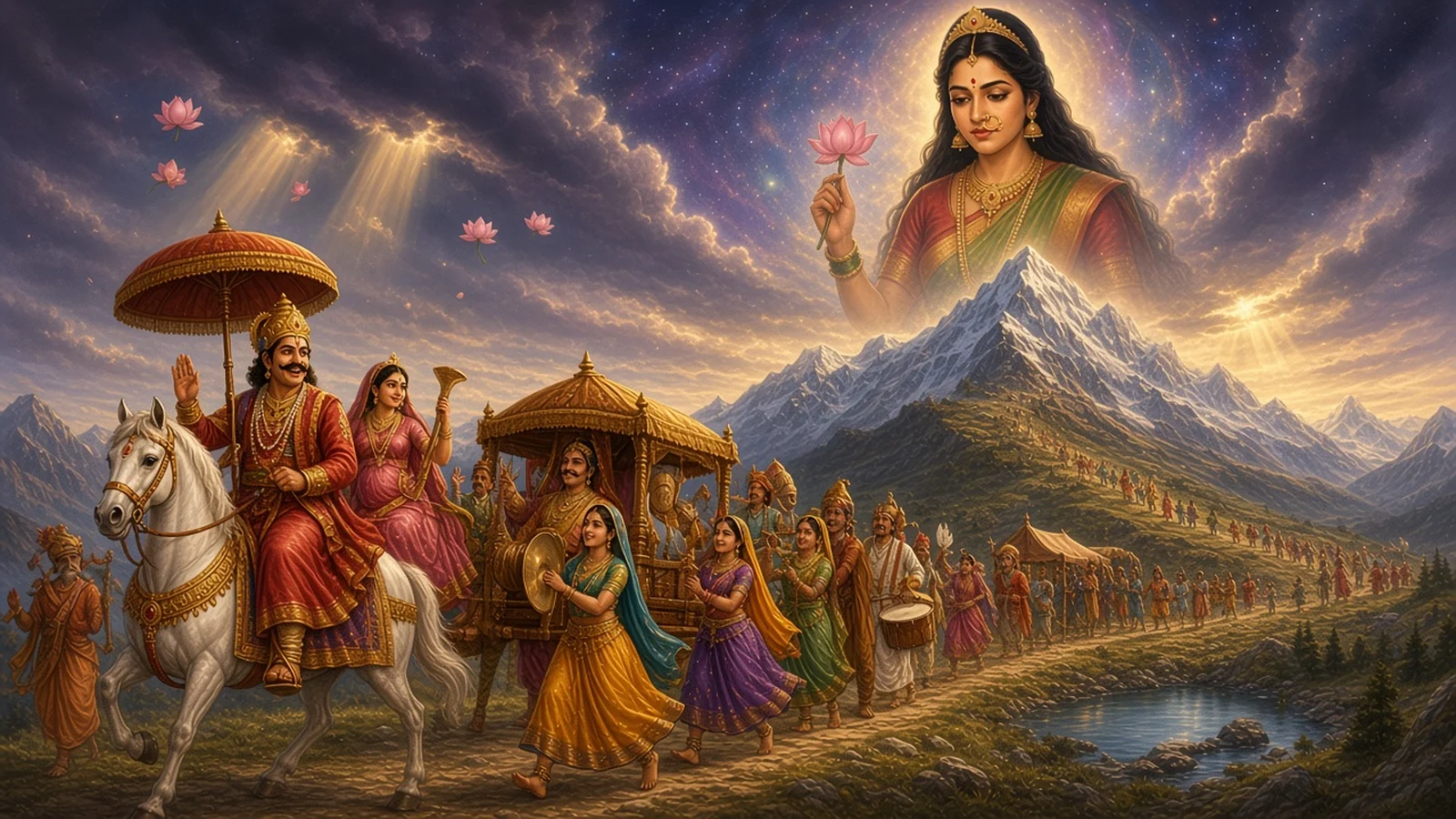
Long ago a king named Ila, son of Kardama, ruled the Bahlika country. He had brought the whole earth under his hand and cared for his people as if they were his own children.
One spring, in the month of Chaitra, he rode out to hunt with his foot soldiers and his horsemen. He killed animals by the hundred and by the thousand and was still not satisfied, and the chase carried him on to the place where Kartikeya was born.
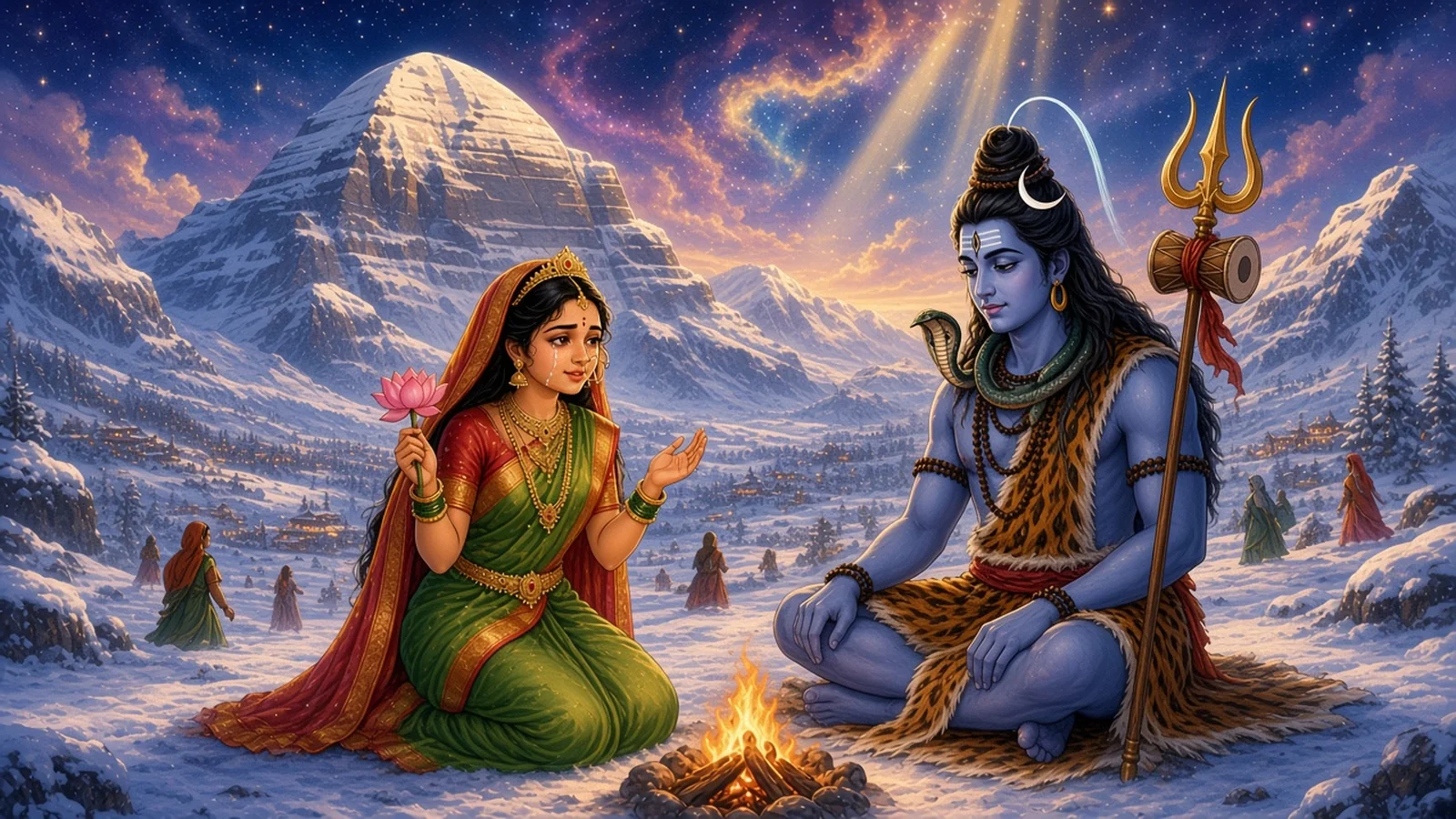
Shiva was there, playing with Uma, the daughter of the mountain king, among the waterfalls. To please her he had taken the shape of a woman, and while he played, everything male in that forest became female: the animals, the birds, even the trees.
Ila rode in and found every creature around him female. Then he looked at himself. He was a woman, and so was every man who rode with him.
"This is the work of Uma's lord," he said, and he was afraid.
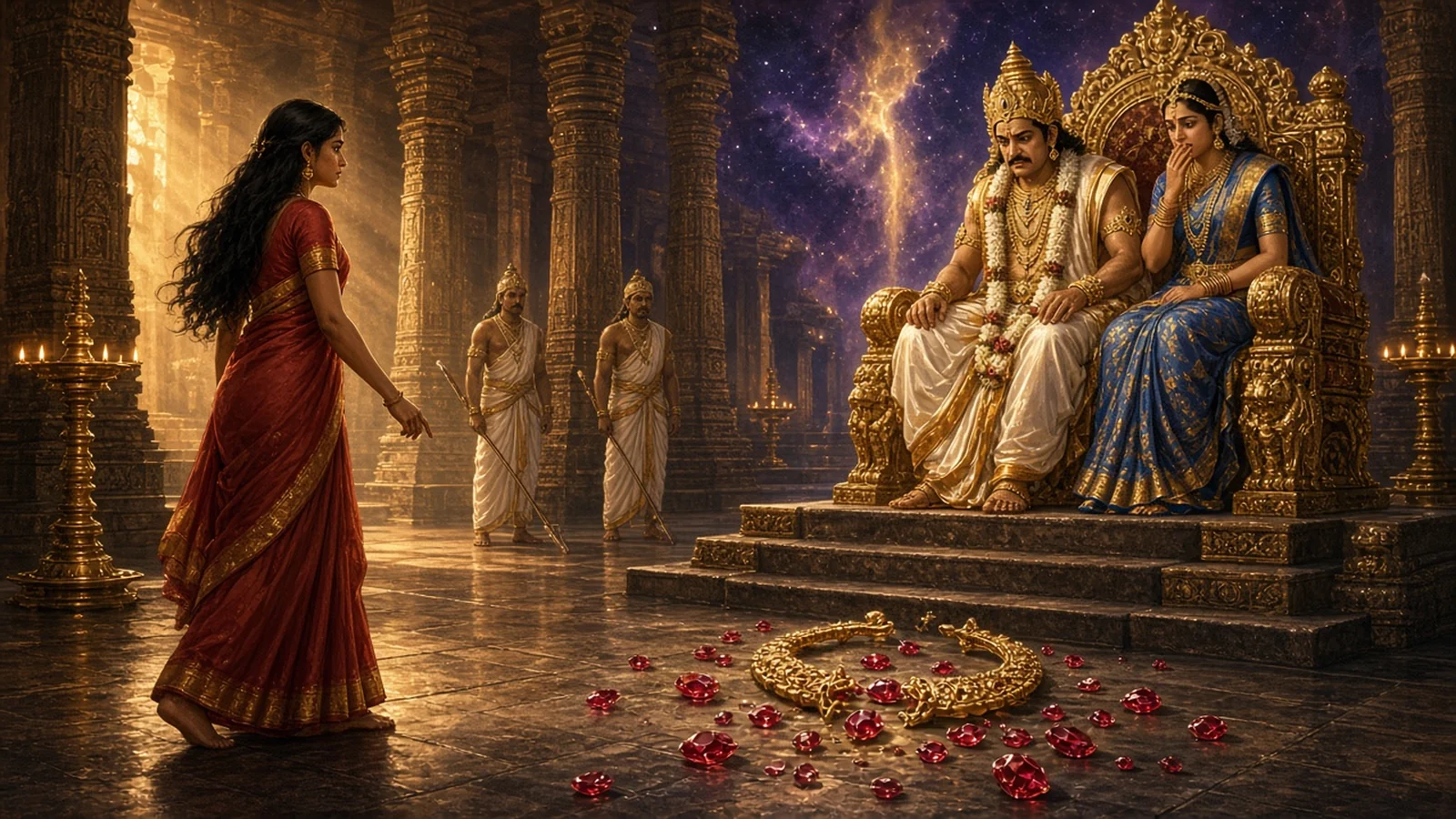
He went with his whole company to Shiva and begged for help. Shiva laughed, and Uma laughed with him.
"Rise, royal sage, son of Kardama," said Shiva. "Ask for anything you like, except your manhood."
That was the one thing Ila wanted. He turned from the god and fell at the goddess's feet.
"Goddess, be gracious to me," he said.
Uma knew his heart. "Shiva will grant half of your wish," she said, "and I will grant the other half. Say how you will have it."
"Then let me be a woman for one month," said Ila, "and a man for the next."
"So be it," said the goddess. "But as a man you will not remember the woman, and as a woman you will not remember the man."
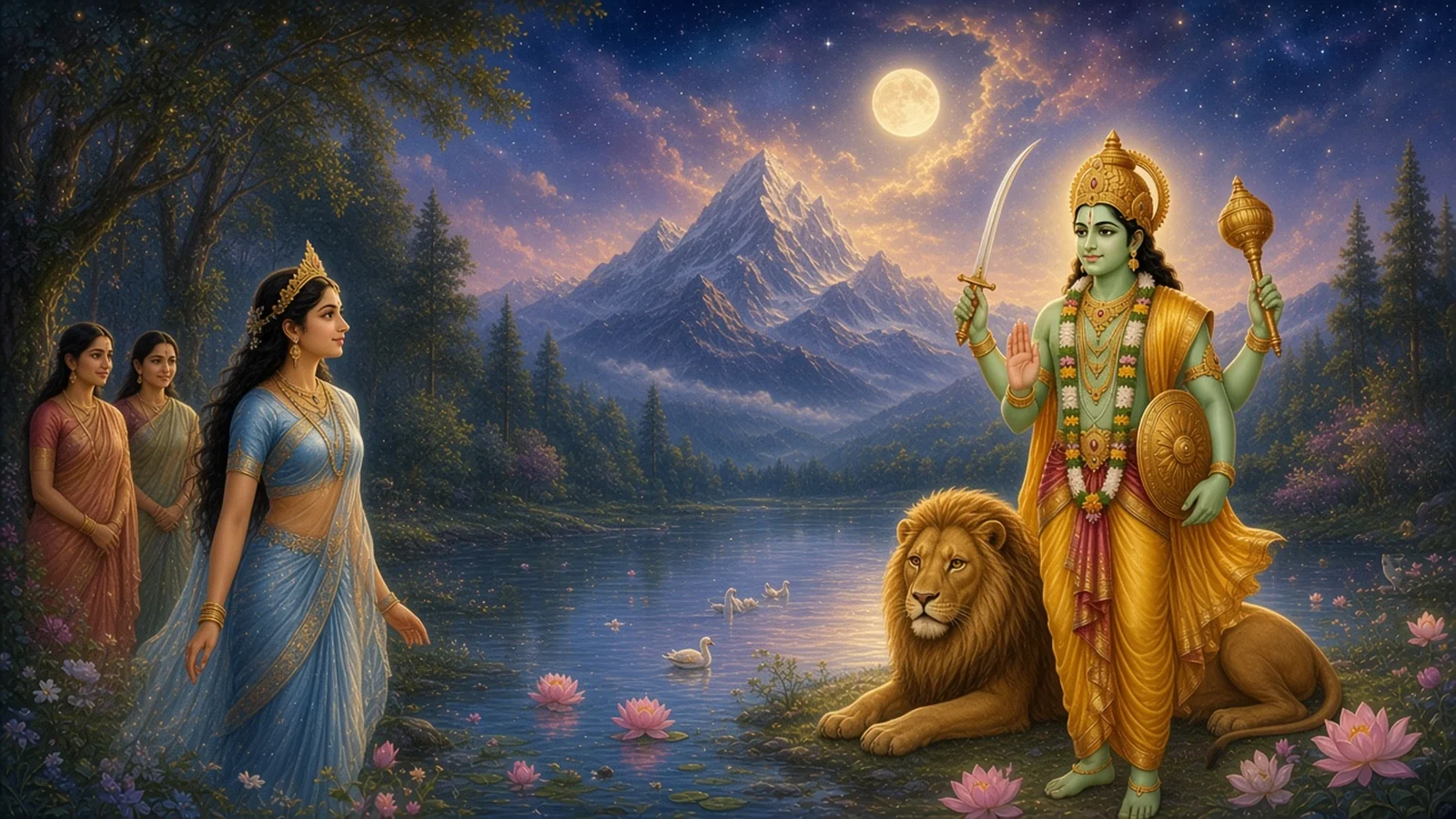
In her first month Ila, the loveliest woman in the three worlds, left her chariots behind and wandered on foot through a deep forest with the women who had been her men. Near a mountain they found a lake full of birds and went down into the water.
In the lake stood Budha, the Moon's son, shining like the moon at its rising. He was keeping a hard penance in the water. But when he saw Ila, he could no longer stand still in it.
When the women came out of the lake he called them to his hermitage.
"Whose is this lady," he asked, "and why has she come here?"
"She is our mistress," they said. "She has no husband. She wanders the woods with us."
Budha looked inward and saw the whole of King Ila's story. Then he turned to the women.
"You will live on this mountain as kimpurusha women," he said. "You will eat roots and leaves and fruit, and kimpurusha men will be your husbands."
And they went to live on the slopes.
Ila stayed with Budha, and a month went by like a moment. Then Ila woke as a man and remembered nothing.
"Where are my people?" he asked.
"A storm of hail came down while you slept," said Budha, "and swept them away. Stay here in peace."
"I cannot," said Ila. "I have a kingdom and a household. My elder son Shashabindu must rule after me."
"Stay a year, son of Kardama, and do not grieve," said Budha. "At the end of it I will grant you a boon."
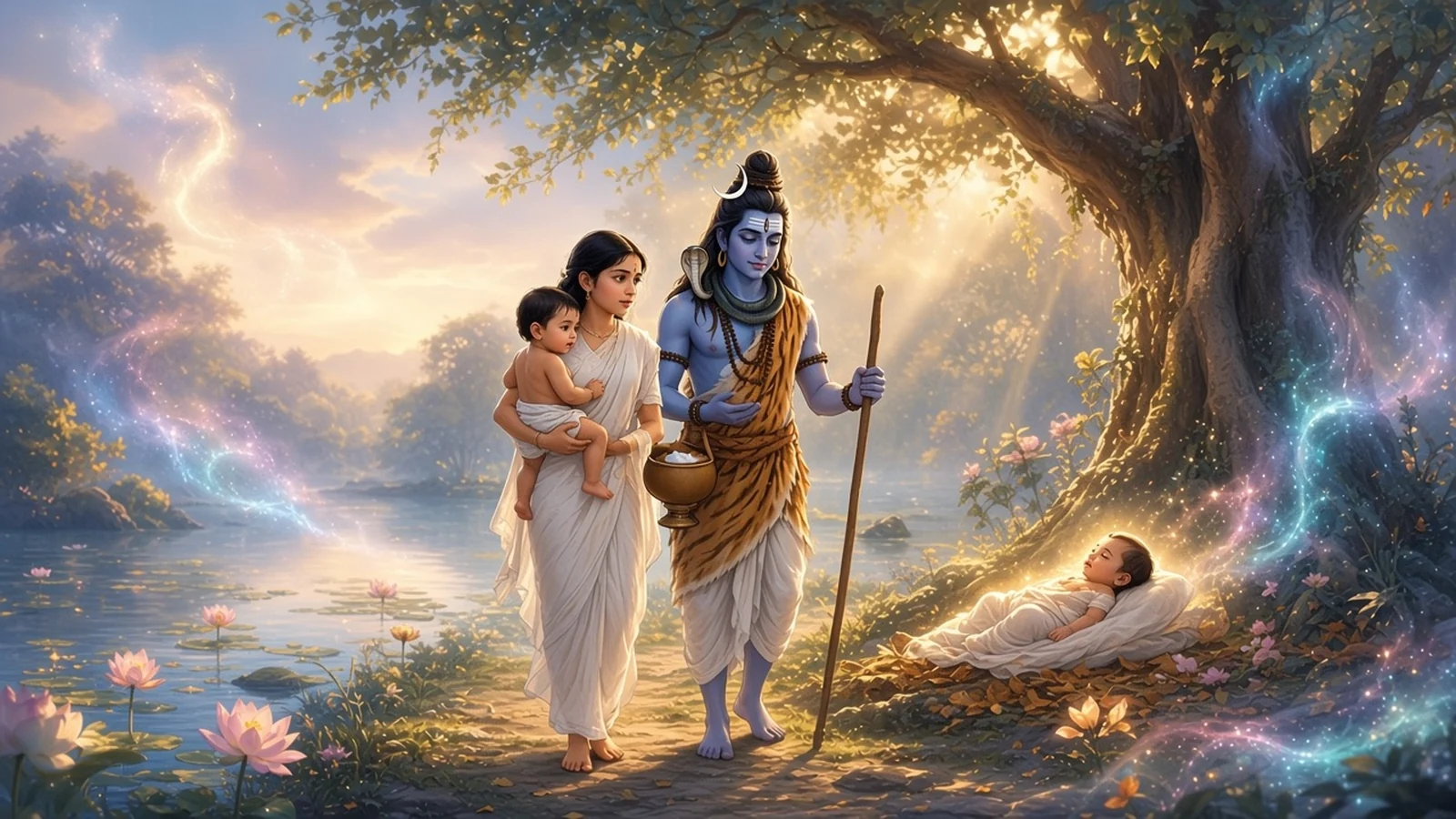
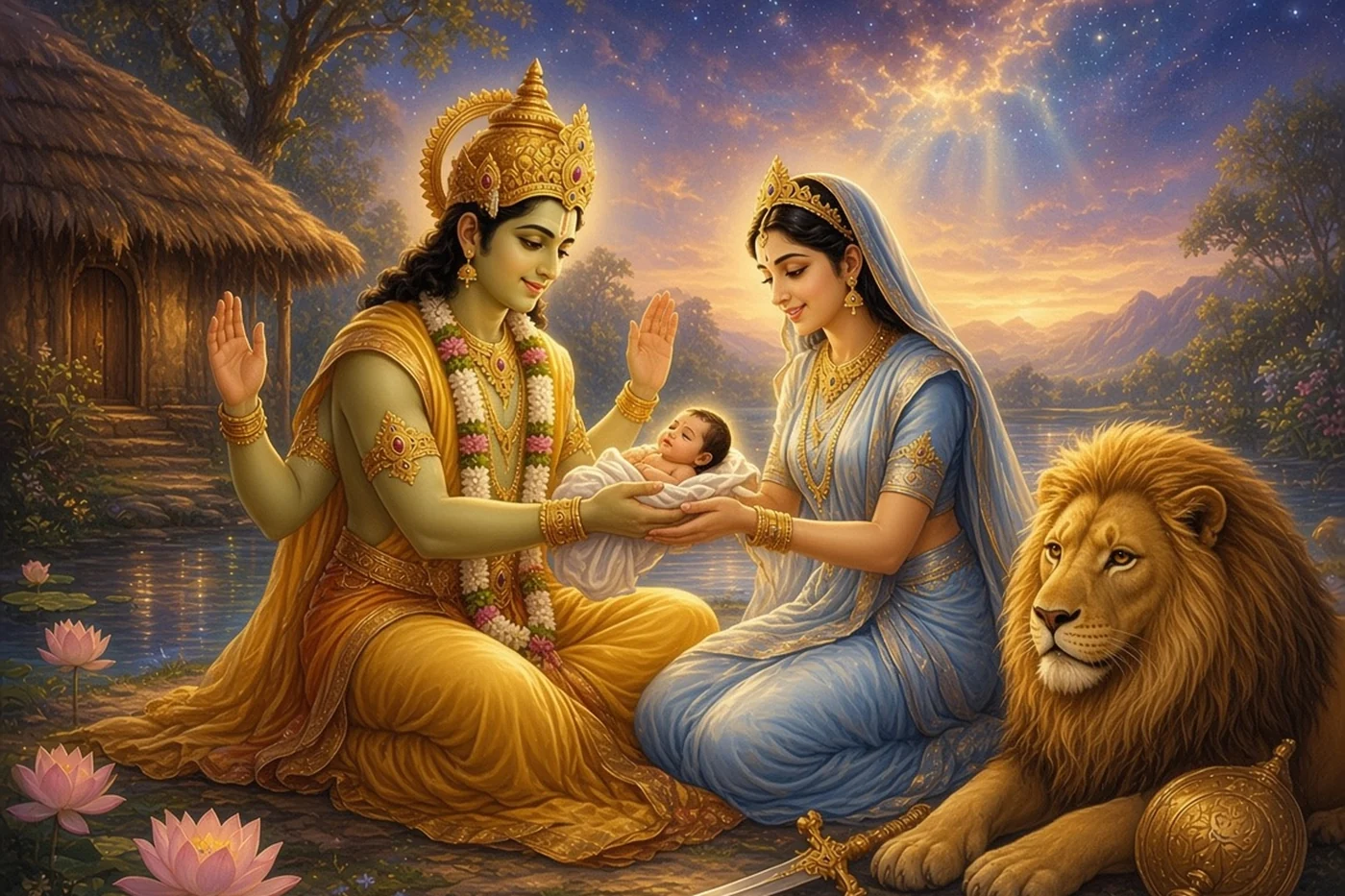
So Ila stayed. In one month she was a woman and lived with Budha; in the next he was a man and kept to his duties. In the ninth month she bore a son, Pururavas, the image of his father, and put the child into Budha's arms.
Then Budha called the great sages together, Samvarta, Chyavana, Durvasa and others, to ask how Ila might be helped. Kardama, Ila's father, came too.
"Only Shiva can undo this," said Kardama, "and no rite is dearer to him than the horse sacrifice."
King Marutta, Samvarta's pupil, performed it beside Budha's hermitage. Shiva was pleased, and he gave Ila back his manhood.
Ila left the Bahlika country to Shashabindu and built a new city, Pratishthana, in the middle land. When he died, Pururavas, Budha's son, ruled there after him.
As the Matsya Purana tells it
chapters 11, 12 and 24 · the Sharavana grove · 2 min read
In the Matsya Purana, Ila is the eldest son of Manu, and he sets out to conquer the world behind a wandering horse. The horse leads him into Sharavana, the grove where Shiva and Parvati take their delight. They have willed that any male who comes within ten yojanas of it will turn female. Ila rides in without knowing, and he becomes a woman, and his horse a mare.
She wanders the grove, wondering who her father is, and her mother and her brother, and who her husband might be.
One evening Budha passes, with a mace, a water pot and a book in his hands and a train of young students behind him, going out for kusha grass and firewood. He takes care not to step inside the grove. He stops behind a tree at a distance and beckons her.
"My dear, this is no hour to be out in the forest," he says when she comes. "Why did you leave me at home and forget the evening fire? The floor is not washed, the flowers are not set out, and it is already dusk."
"Lord, I do not know why I forgot," says Ila. "Something has come over me. I do not know myself, and I do not know you. Tell me where you live."
"Your name is Ila," says Budha. "I am the one they call Budha, the wise, for my learning, and my father is lord of the Brahmanas."
She goes with him to a house of golden pillars set with jewels and lives there a long time, and to her it seems as fine as Indra's.
Meanwhile her brothers, Ikshvaku and the rest, come looking for her. Near the grove they find a mare with a jewelled saddle and know her for Chandraprabha, the king's own charger. The sage Vasishtha tells them what has happened and sends them to worship Shiva. Shiva will not take back what he has willed, but if Ikshvaku performs a horse sacrifice, he says, Ila will be a man one month and a woman the next.
So it is done. In her months as a woman Ila lives in Budha's house and bears him a son, Pururavas, from whom the Moon's line of kings comes, as the Sun's line comes from Ikshvaku. After the boy is born Budha goes up to heaven. As a man, Ila is called Sudyumna, and he has three sons of his own.