As Varanasi tells it: the leper who came first
Varanasi and Chitrakoot · Priyadas's account, and the Sankat Mochan temple · 3 min read
Every morning Tulsidas went down to the river before light, bathed, and carried his pot of water back up through the lanes of Varanasi. Every morning he poured what was left over the roots of the same tree.
He did not know that something lived in the tree until one morning it spoke to him.
"You have given me water for a long time," it said. "I am a preta, a ghost, and I am always thirsty, and nobody gives us anything. Ask me for something."
Tulsidas was not frightened. He had been writing Rama's story for years, in the language the boatmen and the sweet-sellers spoke, and there was only one thing he wanted. "Show me Rama," he said. "With these eyes."
"That is beyond me," said the preta. "But I can tell you where to find someone who can. When you recite your Ramayana in the evening, who comes first and leaves last?"
Tulsidas thought. "An old man. A leper. He sits at the very back by himself, and nobody will sit near him."
"That is Hanuman," said the preta. "He goes to every reading of Rama's story, wherever it is held. He cannot keep away. Catch him."
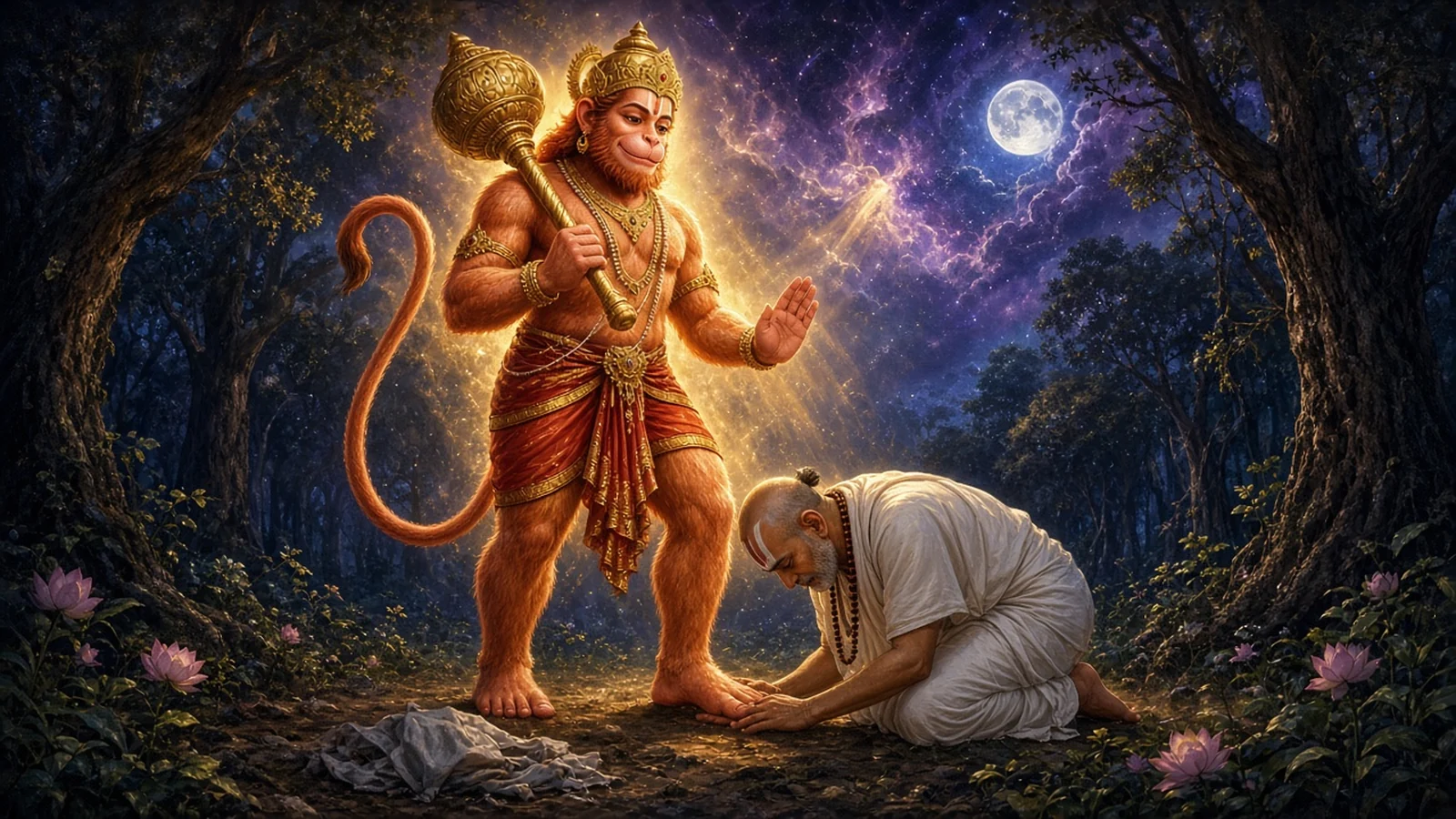
That evening Tulsidas recited as he always did, and he watched the back of the crowd. The old leper was there before anyone, hunched in a torn cloth. When the reading ended he was the last to rise, and he went off slowly into the dark towards the trees south of the city. Tulsidas followed him.
In the woods he ran forward and caught the old man's feet with both hands.
"Let go," said the leper. "I am a sick old man. Who do you think I am?"
"I know who you are," said Tulsidas. "I will not let go."
"You are mistaken. Let go of me."
"Then let me be mistaken on the ground at your feet. I am not getting up."
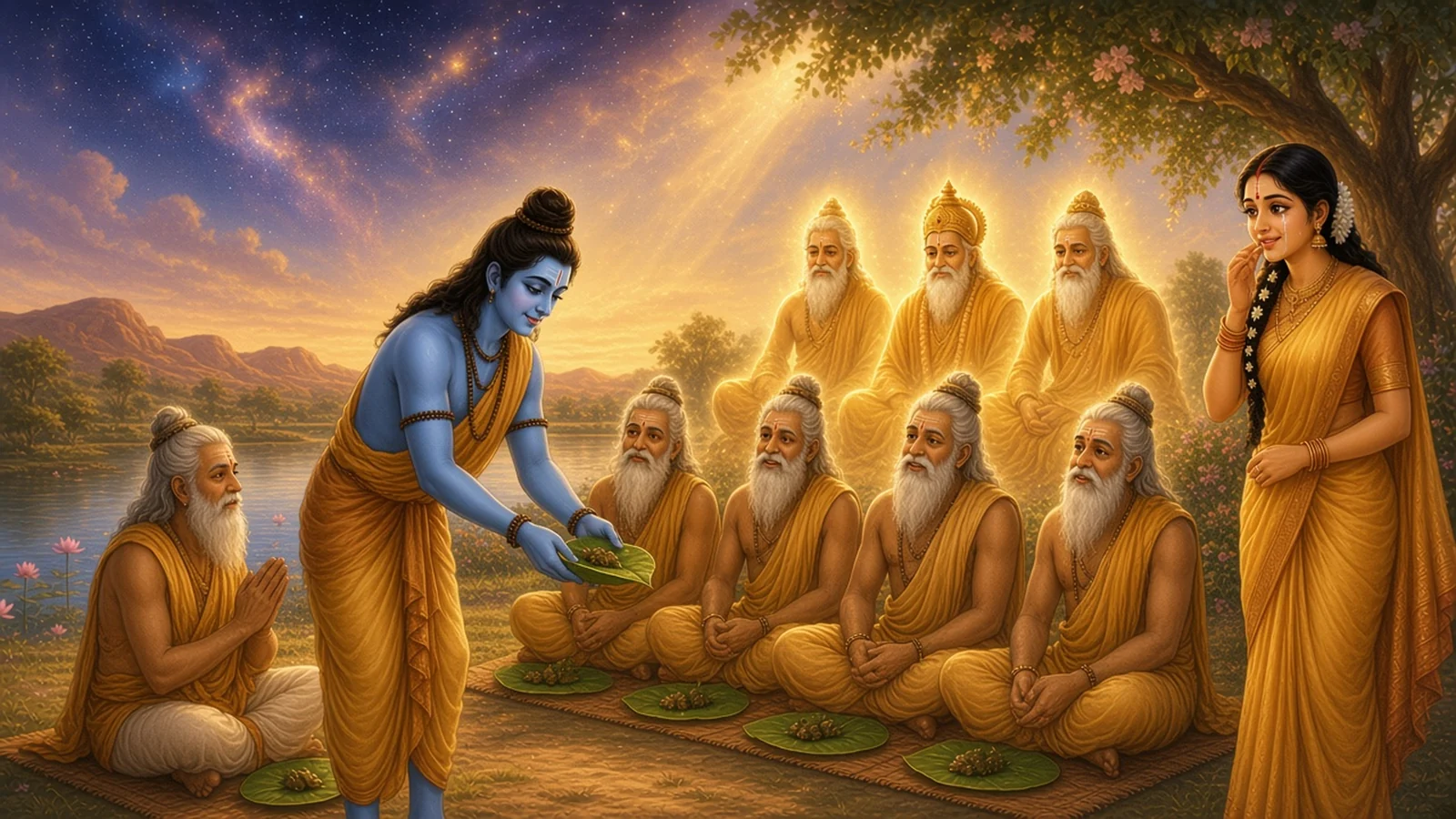
For a while there was only the trees. Then the torn cloth was gone, and the sickness was gone, and the one in front of him was tall and golden and had a monkey's face, and Tulsidas put his forehead on the earth.
"Ask," said Hanuman.
"I want to see Rama."
"Not here. Go to Chitrakoot, where he lived in his exile, and wait on the ghat. He will come."
Tulsidas built a hut at Ramghat on the Mandakini and waited. One day, as he walked round the hill, two young men on horseback rode past him, one dark and one fair, in green, with bows on their shoulders. He stared after them because they were beautiful, and then forgot them. That night Hanuman came to him.
"Did you see them?"
"See whom?"
"Rama and Lakshmana. On horses. This afternoon."
Tulsidas wept all night. Towards morning Hanuman relented. "Tomorrow," he said. "Grind your sandal paste on the ghat, and look at everyone who comes."
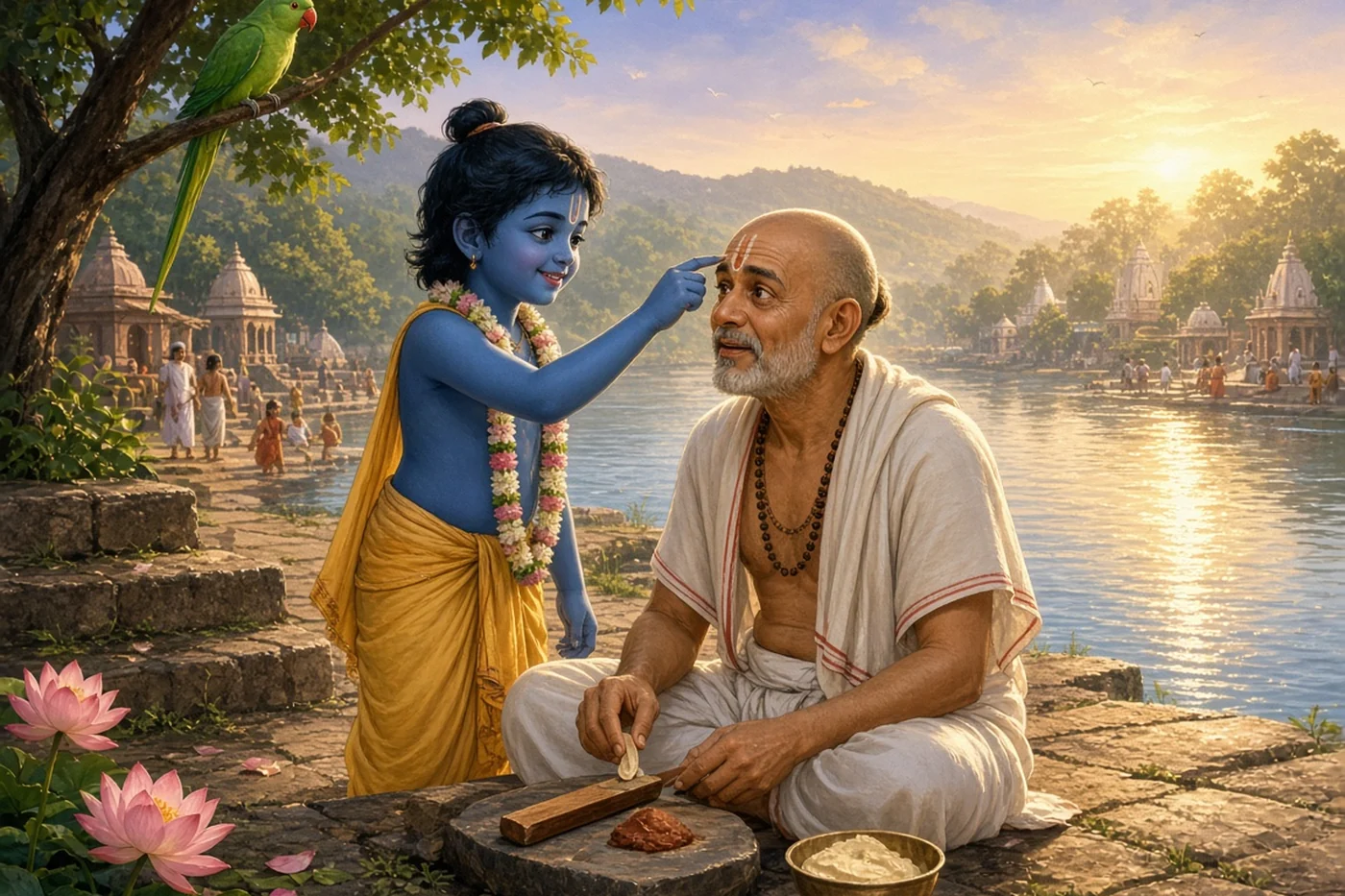
In the morning Tulsidas sat on the ghat with his stone and his sandalwood, putting the tilak on whoever asked. A small dark boy came and stood in front of him and held out his forehead. Tulsidas marked it. The boy did not go. He dipped his own finger in the paste and put a mark on Tulsidas's forehead, and in that moment, from a tree above them, a voice spoke a verse: on the ghat at Chitrakoot, in a crowd of good people, Tulsi grinds the sandal and Raghubir puts on the tilak. Tulsidas looked up into the boy's eyes, and the boy was gone.
He went back to Varanasi and built a shrine to Hanuman in the woods where the leper had turned round. People call it Sankat Mochan, the one who frees from trouble, and the first praise he wrote there was for its founding. The forty verses came out of the same love, the north says: forty short couplets in the Awadhi of his Ramayana, calling Hanuman Rama's messenger, the home of strength beyond measure, and asking him, in the last of them, to live in the poet's heart. On Hanuman Jayanti they are sung at Sankat Mochan all through the night.
As Priyadas tells it: the prison at Fatehpur Sikri
Fatehpur Sikri · the Bhaktirasbodhini of 1712, and the popular telling · 2 min read
The other story of the forty verses has an emperor in it.
Word of Tulsidas reached Akbar's court, the story goes, as word of a man who worked wonders. The emperor sent for him. Tulsidas sent back that he was busy writing and could not come, and was fetched.
At court Akbar asked for a miracle.
"I know nothing of miracles," said Tulsidas. "I know Rama. If anything has been done, he did it."
"Then show me Rama."
"He is not mine to show."
The emperor took that for insolence and had the old poet locked up in the new city he had built on the ridge at Sikri. Tulsidas sat in his cell and did the only thing he knew. He praised Hanuman. The popular telling counts the days: forty days in the prison, and a couplet for each, so that when the fortieth day was done the forty, the Chalisa, was finished.
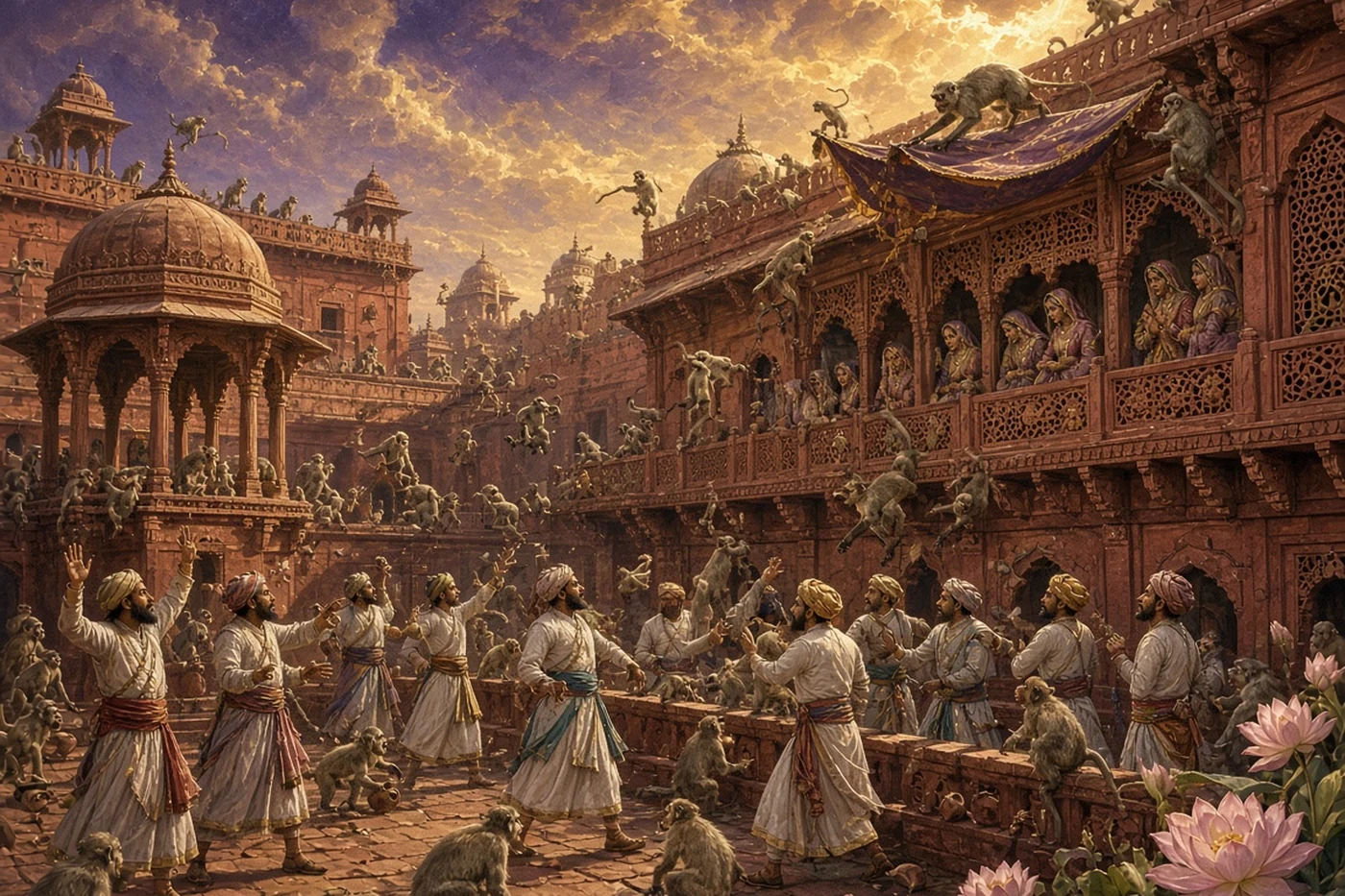
On the fortieth day the monkeys came. Nobody knew from where. They came over the walls of Fatehpur Sikri in their thousands and went through the city like a wind, into the bazaar, into the palaces, into the women's quarters, tearing cloth, upsetting pots, biting whoever raised a hand to them. The guards could not drive them off. The emperor's own household could not sleep.
An old hafiz at the court, the story says, went to Akbar. "This is the Hindu poet's doing. You have jailed a man his god listens to. Let him go."
Akbar had Tulsidas brought up. "Stop them," he said.
"They are not mine," said Tulsidas. "They belong to the one I was singing to. Let me go home, and I will ask him."
He was released, and the monkeys left Sikri as suddenly as they had come. Some tellers add that Akbar apologised, that he gave orders that no one who followed Rama and Hanuman was to be troubled, and that he left Fatehpur Sikri for Delhi soon after. The emperor did leave his new city for good in 1585, and the storytellers have their own explanation for it.