As the Shiva Purana tells it
Rudra Samhita, Sati Khanda 22 · Kailash and the Himalaya · 2 min read
The rains came to Kailash, and Sati did not like them at all.
The clouds came in black and low. Thunder broke over the peaks and the wind drove the rain across the slopes. The birds cried out, and every creature that could find a roof had found one. Sati went to her husband, who had none.
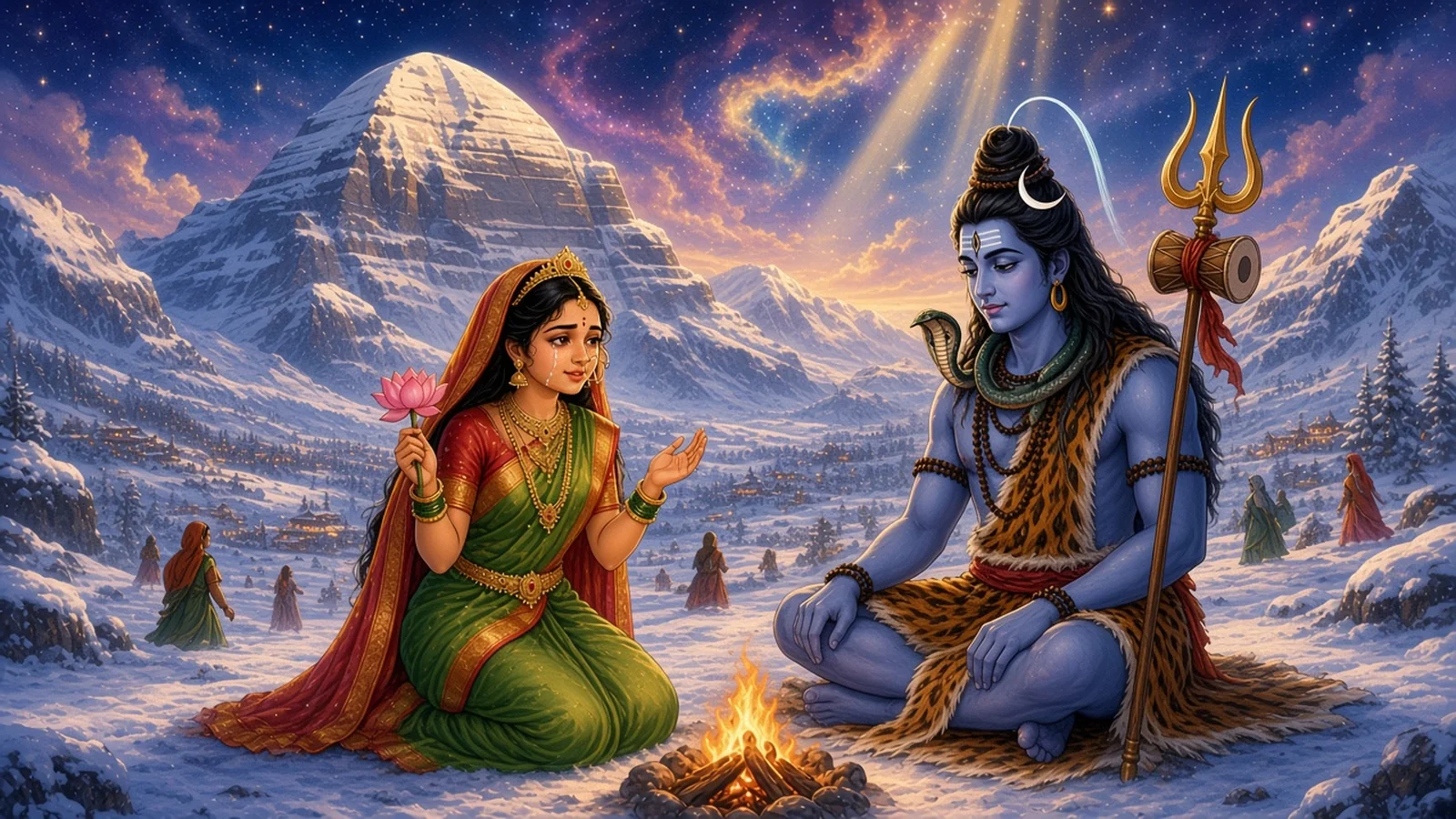
"Lord, listen to me," she said. "The hardest season of all has come, the season of the clouds. The sky roars and the wind is wild, and we have no home. Without a home, how can you be happy? Choose a place, here on Kailash, or in the Himalaya, or down on the earth at Kashi, and make us somewhere fit to live."
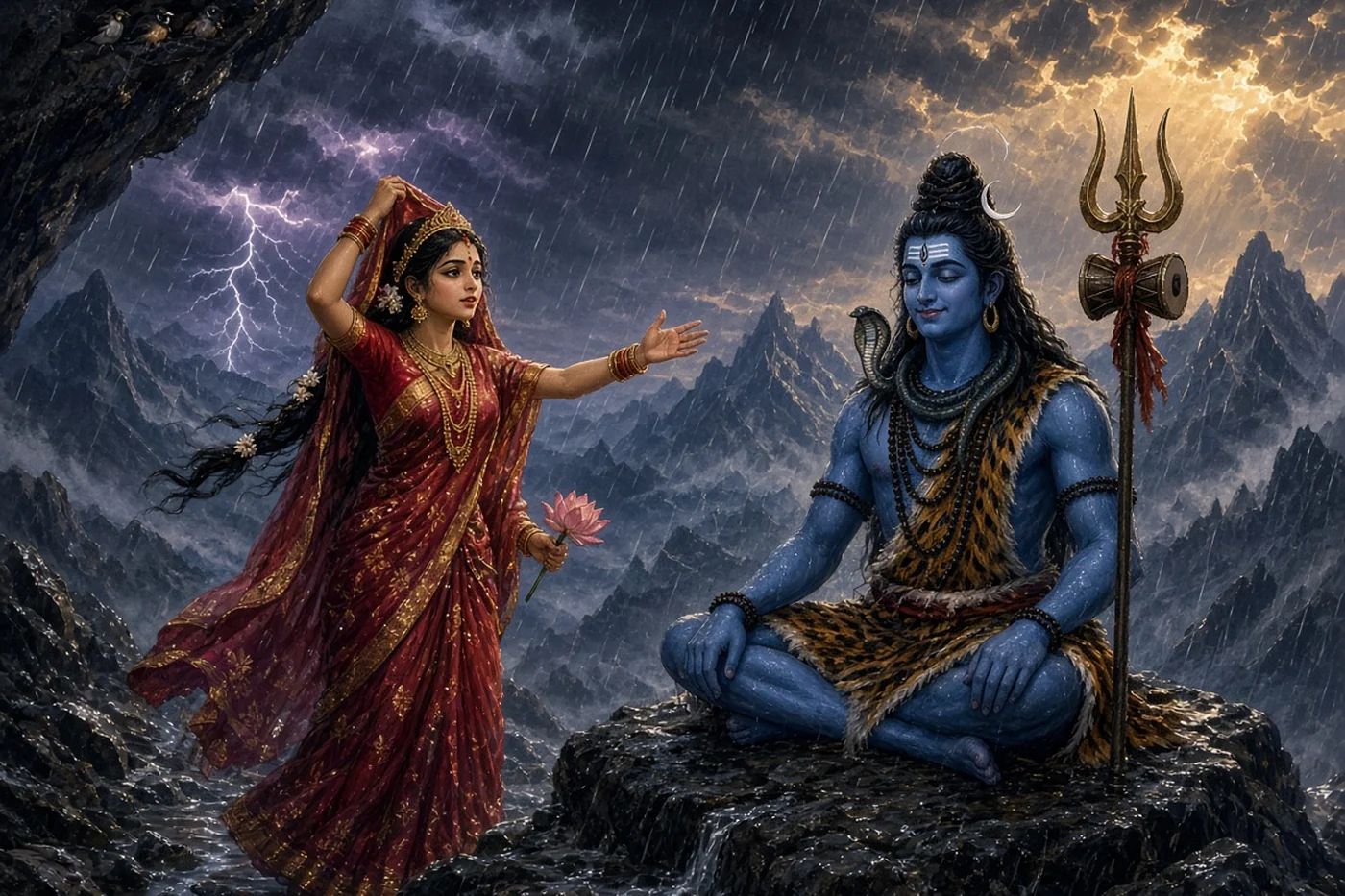
Shiva laughed.
"My beautiful one," he said, "I will make you a home where the clouds cannot follow. Clouds keep low. They gather round the foot of Kailash and the foot of Meru, and they go no higher. Above them the sky is always clear."
"Then where shall we go?" asked Sati.
"You choose," said Shiva. "There is Meru, the golden mountain, where the guardian gods live. There is Kailash, where we are now. And there is the Himalaya."
Then he told her about the Himalaya, and he took his time over it.
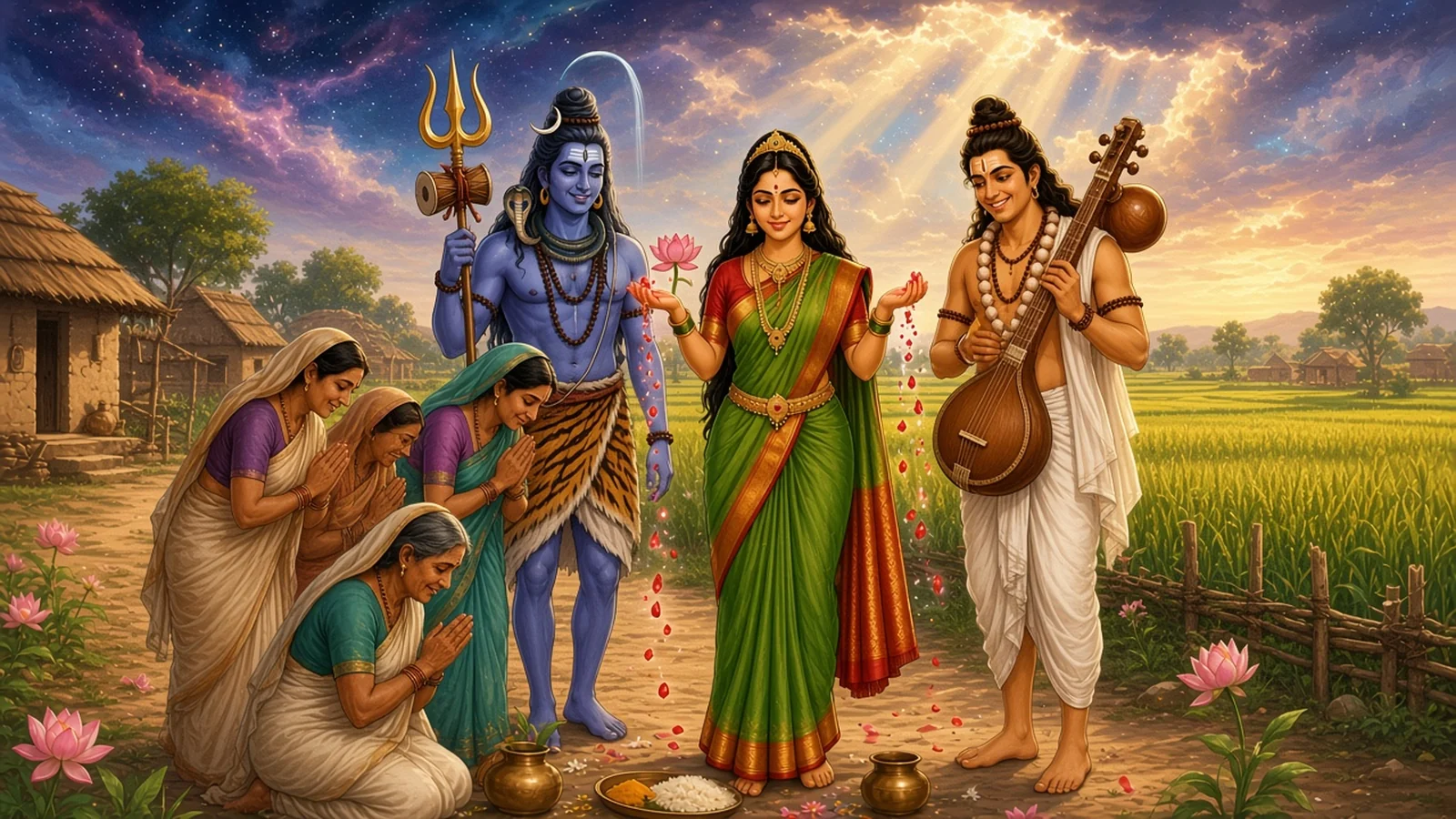
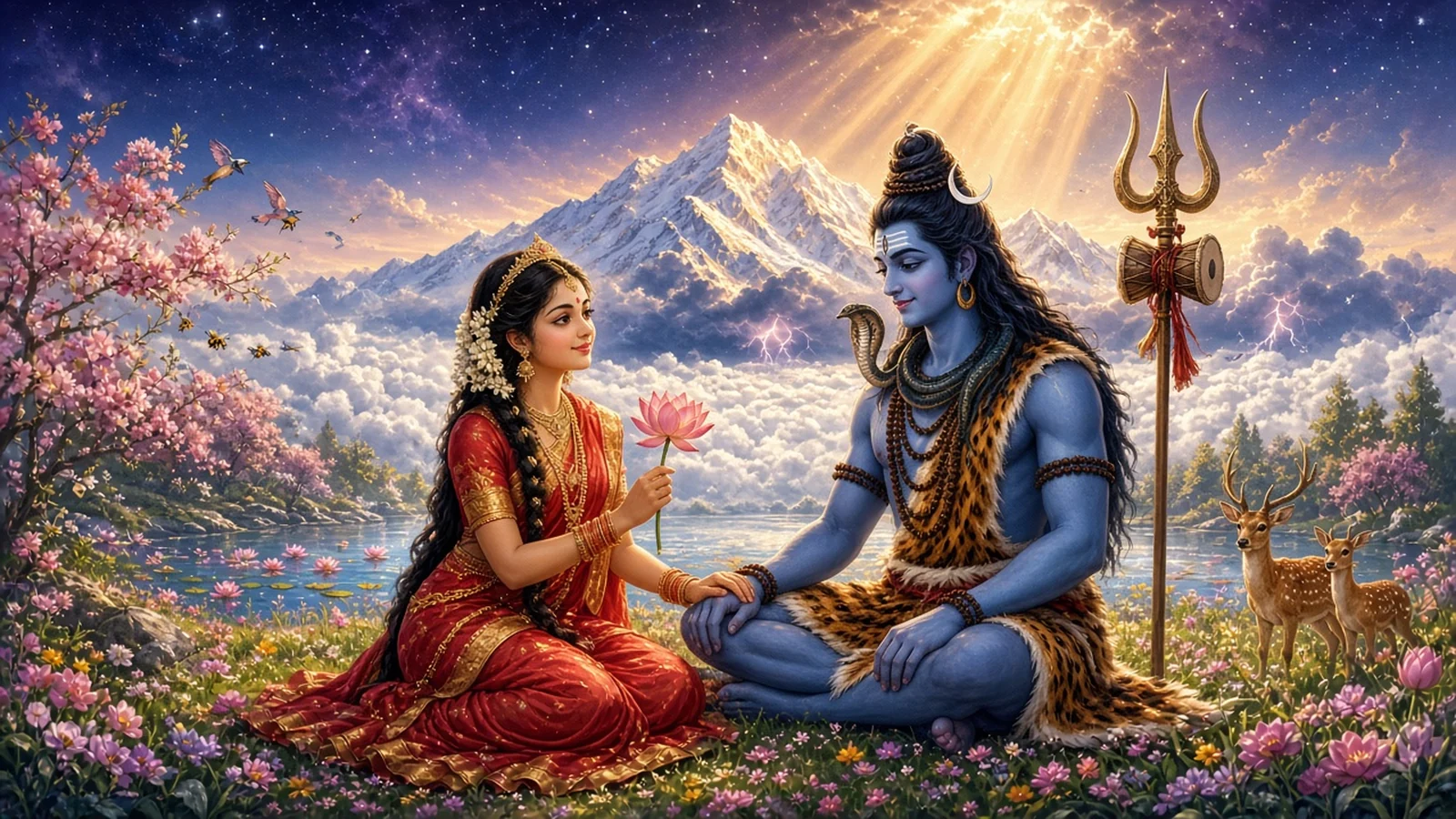
"It is spring there all the year," he said. "Bees hum in the flowers. The deer are not afraid, and the sages sit by lakes full of lotuses. There are trees there that give whatever is asked of them. The women of the Siddhas walk on its slopes, and the daughters of the serpents, and the mountain's own queen Mena with the women of his house."
Sati thought about it, but not for long.
"I want to live in the Himalaya," she said, "with you."
So Shiva took her up to the highest summit, far above the weather.
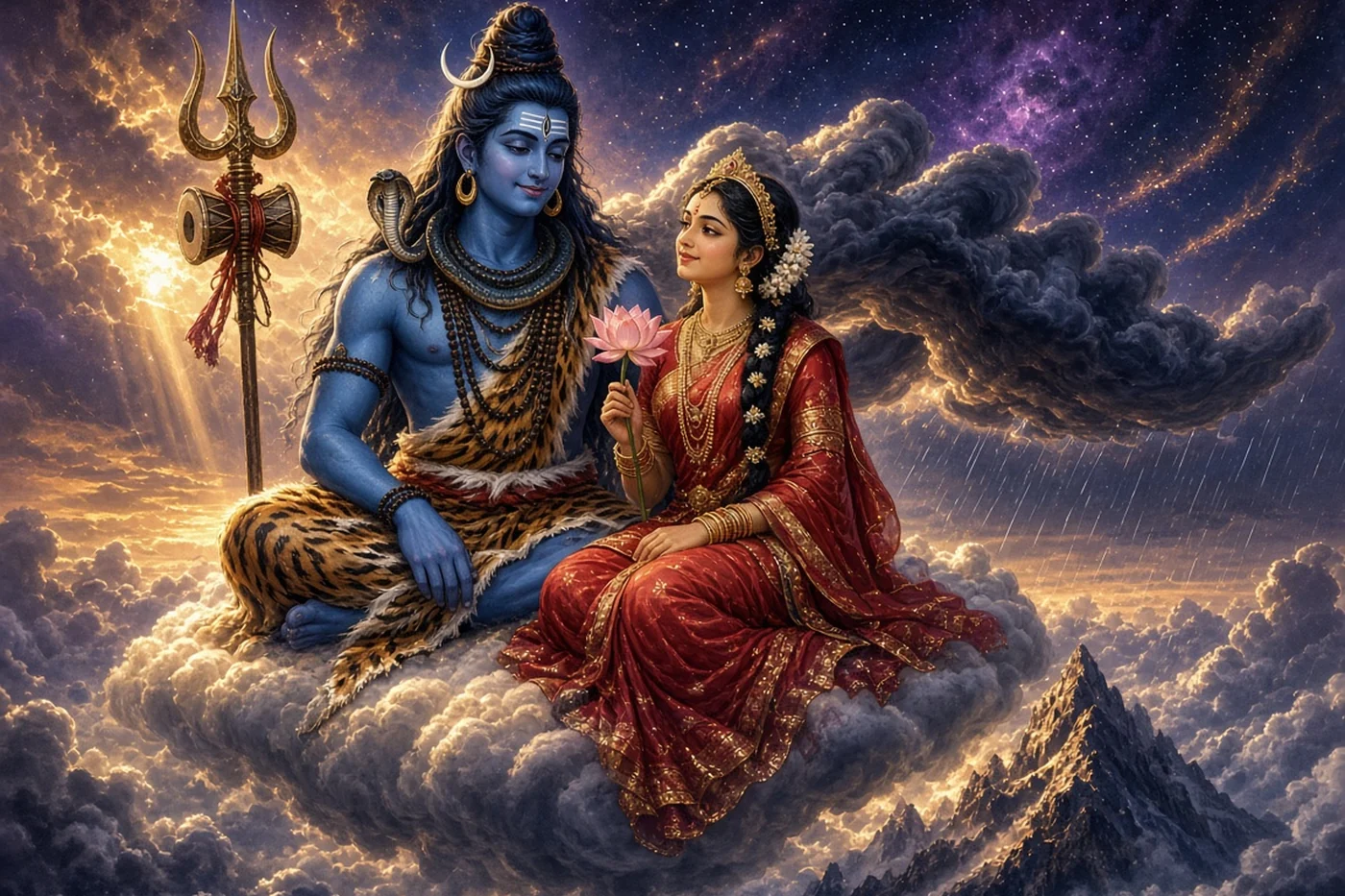
Below them the clouds lay like a floor. The storms that had frightened her broke on the lower slopes and could not climb. Up where they were, the lakes were still and the birds were bright, the flowers were open, and the beings of the mountain went about their business in the sun.
They stayed there ten thousand years, as the gods count years. Sometimes Shiva went off to Meru and to other lands, and always he came back to her. He forgot the sacrifices and the Vedas and his own penance, and wanted nothing but her company. They could not stop looking at each other. The book calls their life together a tree of love, and says they tended it.
It was a long, bright time. It ended, as such times do in the Puranas, with a walk through a forest and a prince who was weeping for his wife.
As the Vamana Purana tells it
Vamana Purana, chapter 1 · Pulastya to Narada · 1 min read
The Vamana Purana opens with the sage Narada asking Pulastya for its stories, and one of the first things he asks is how Sati, Daksha's daughter, came to be the wife of Shankara. Pulastya begins with Sati and Shiva in the same seasons, and his Shiva is poorer.
When the hot weather came, Sati asked him to build her a house. Shiva told her he had none and needed none. He lived in the forest, he said. A tiger skin was his seat and the serpents were his ornaments, and that was all he had ever wanted.
Then the rains came, and she asked again. This time Shiva told her plainly that he had no wealth to build with.
Sati was hurt. She said no more about it, and she bore the wet and the cold as they were. But her husband saw what it cost her. So he went up a mountain beyond the reach of the clouds, out of the rain altogether, and took her with him. There he sat above the thick rain clouds as if they were his throne, with the clouds spread under him like a banner. That is why he is called Jimutaketu, the one whose banner is the rain cloud, and Jimutavahana, the one the clouds carry.
When the rains were over and the autumn had passed, the two of them rested on the peak of Mount Mandara, while far below Vishnu woke from his long sleep. And Daksha began to plan a great sacrifice.