As a hill household keeps it: the ten days to the tika
Nepal, the western hills · 4 min read
On the first morning of Dashain, Bikash's grandfather came up from the river with a basket of wet sand on his back and carried it straight into the puja room. Nobody was allowed in there for the next ten days except the family, and the shutters stayed closed.
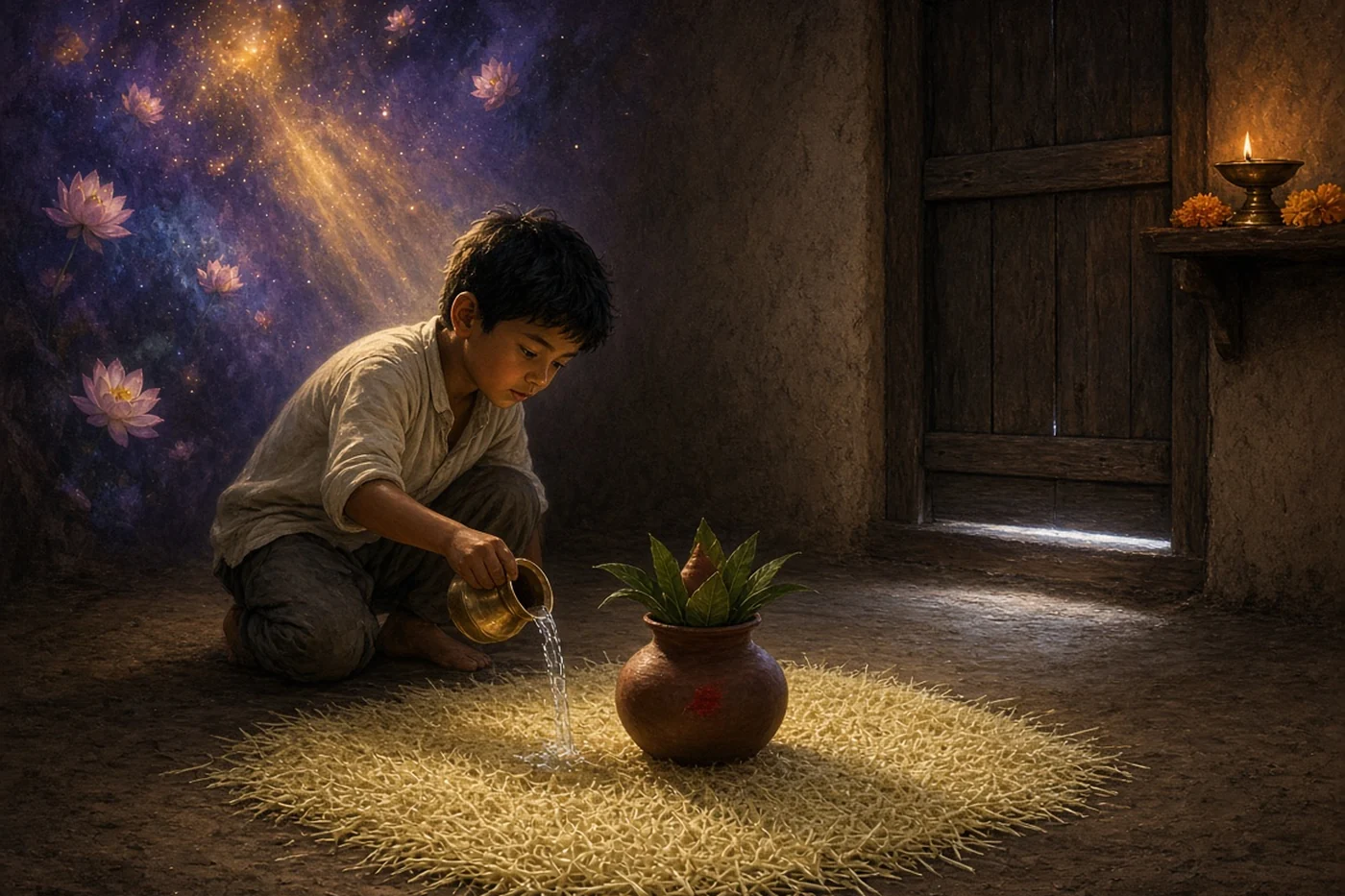
He spread the sand into a low square on the floor, set a pot of water in the middle of it with mango leaves at the mouth, and waited for the hour the almanac had given. When it came, he scattered the seeds over the sand, barley mostly, with a little maize and wheat mixed in.
"Now the goddess is in the pot," said Bikash's grandmother. "For nine nights this is her room. Do not let the sun in."
"Why not?"
"Because what grows in the dark grows yellow. In the sun it would come up green like the grass in the field, and that is not jamara."
So every morning and every evening it was Bikash's job to go in quietly, sprinkle water over the sand from a brass jug, and come out again. On the third morning there was a faint fuzz over the seeds. By the sixth the shoots stood as high as his thumb, pale as candle wax.
Outside, Dashain was in the air before it was in the calendar. The village had put up its bamboo swing, the linge ping, a week before the sowing, tall bamboo poles lashed together at the top and a rope seat hanging down, and the children took turns all day, swinging out over the terraces until their stomachs dropped. The sky was full of kites. When one string cut another, the boys on the roofs shouted "Changa chet!" and ran to see where the loser would come down.
Bikash's mother took him to the bazaar for new clothes, and his father came back from the next village leading a black goat on a rope. Bikash fed it leaves for a week and tried not to name it.
On the seventh day the radio in the tea shop was turned up. The Phulpati had reached Kathmandu from Gorkha, the announcer said, the bundle of sacred leaves and flowers for the goddess, and the army had fired its salute at Tundikhel. The old men nodded as if a relative had arrived safely.
The eighth night was Kalaratri, the black night. On the ninth the goat was offered at the shrine below the village, and the meat came back to the house as the goddess's prasad, a little first on leaf plates for the gods of the house, the rest for everyone.
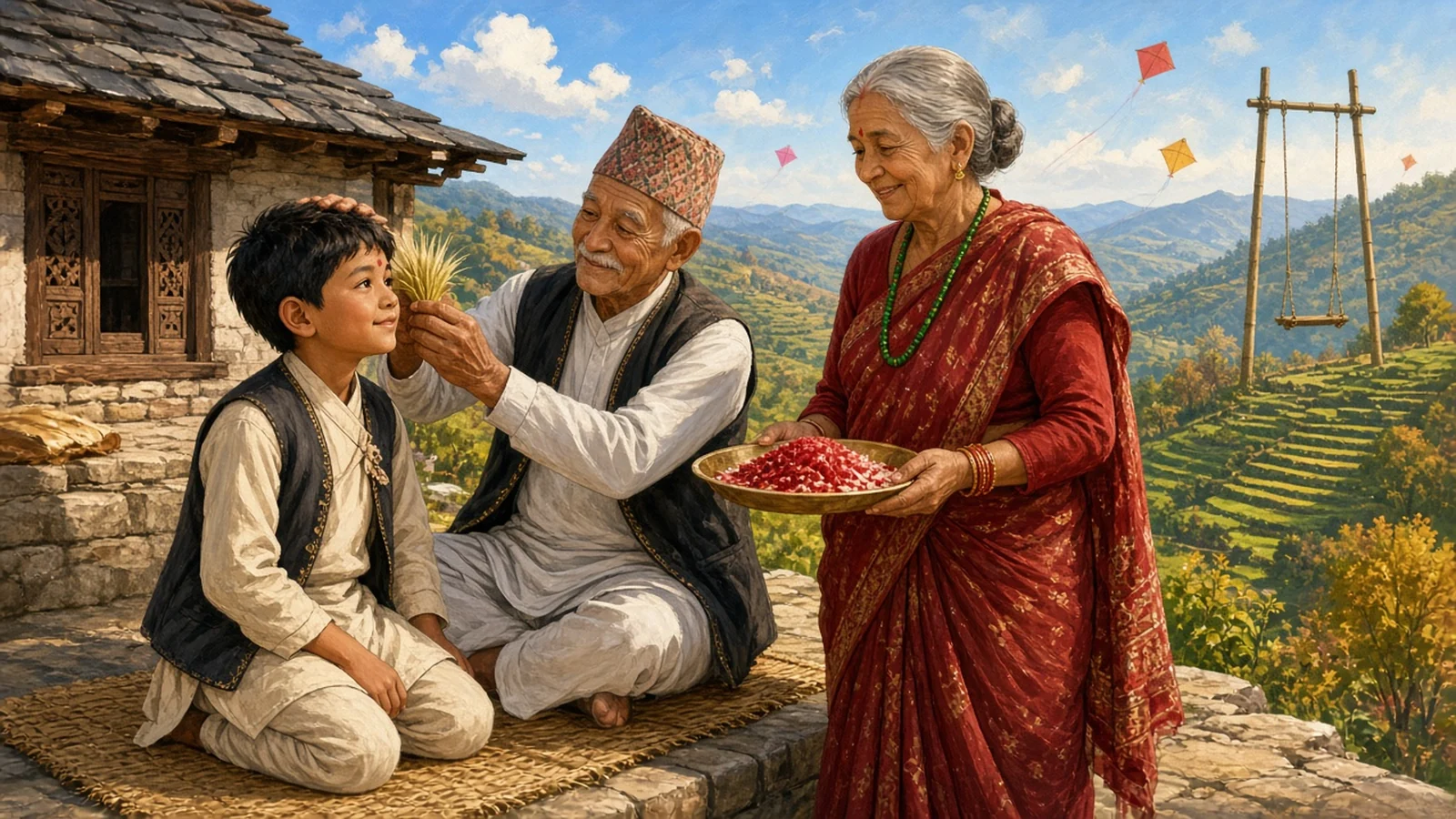
On the tenth morning, Vijaya Dashami, the whole family washed and dressed in the new clothes and sat waiting for the hour. Bikash's grandmother brought the tika from the puja room: rice soaked in curd and stained red with vermilion. His grandfather pulled up a bundle of the jamara, roots and all.
"Why today?" Bikash asked.
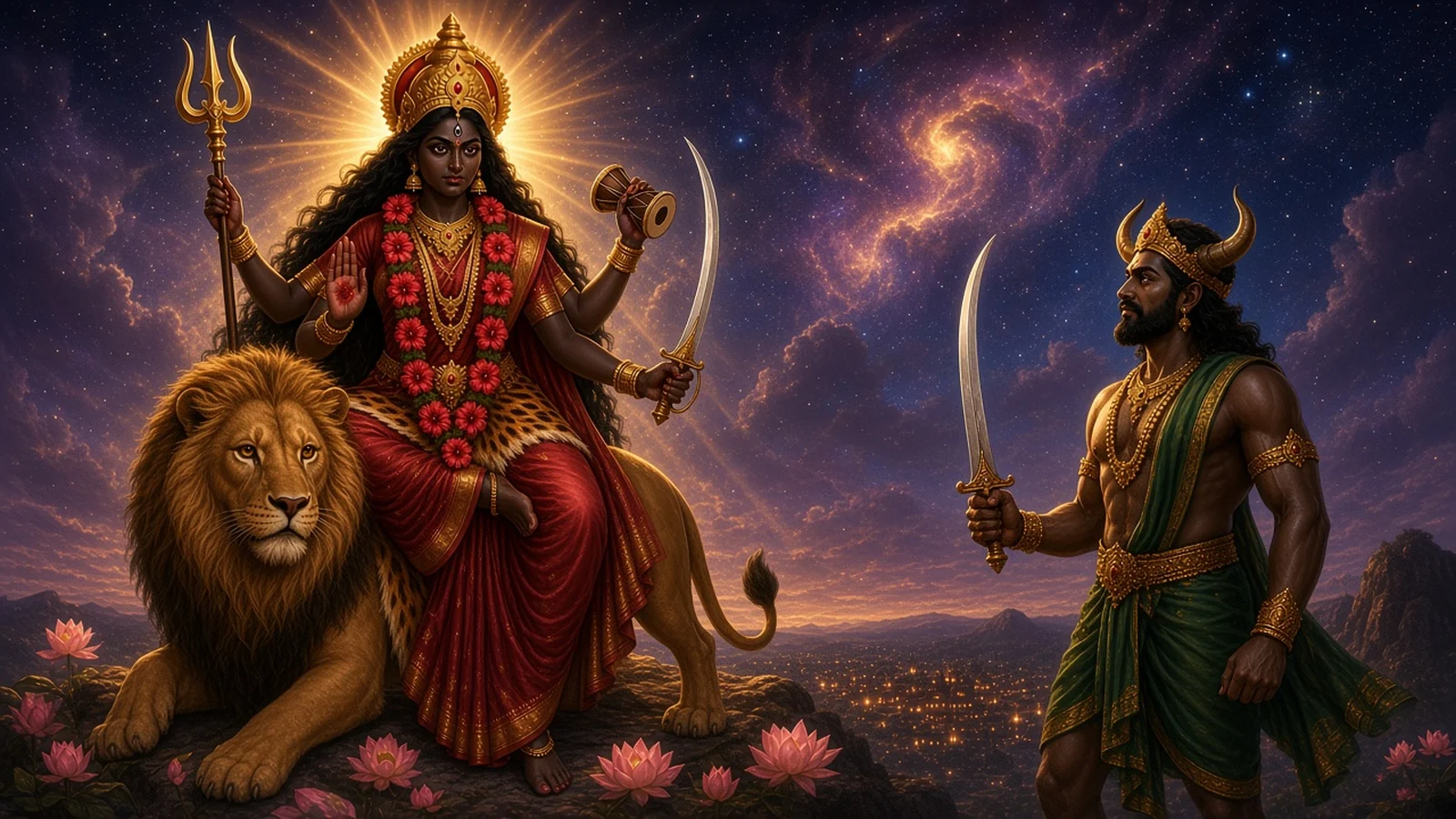
"Because today she won," said his grandfather. "The goddess fought the buffalo demon for nine days and on the tenth she killed him. The tika and the jamara are what she gives us for it."
Bikash knelt. His grandfather pressed the red rice onto his forehead, lifted the pale shoots and tucked them behind his ear, and murmured the old Sanskrit verse that wishes a boy the long life of Drona's son and the strength, truth and wisdom of the heroes after him. Then he said it again in plain Nepali.
"Grow tall. Study hard. Be a learned man."
There was an envelope with a crisp note in it. And there was the line every grandfather says.
"This year's tika is next year's invitation."
For the next five days Bikash's forehead was never clean. They walked to his mother's brother's house over the ridge, to the great-aunt by the school, to the old priest at the bottom of the hill, and every elder pressed on more red rice and more barley. On the full moon, the last day anyone could give it, the grown-ups sat up late over cards for Lakshmi, and Bikash fell asleep with the jamara still behind his ear.
As Kathmandu keeps it: the state's Dashain
Kathmandu, Hanuman Dhoka and Tundikhel · 2 min read
The state keeps the same ten days on a larger floor. On Ghatasthapana the jamara is sown in the Dashain Ghar of the old palace at Hanuman Dhoka, at the minute the calendar committee has fixed, just as it is in every house.
The Phulpati is gathered on the sixth day in the forests round Gorkha, the hill town the Shah kings came from: flowers, leaves and plants that the Kathmandu Post calls the navapatrika, banana stalks, pomegranate, rice and wood apple among them. Part is offered at the Kalika temple in Gorkha's palace. Local elders say Drabya Shah, the dynasty's founder, began that offering, and that once Prithvi Narayan Shah had taken the valley the rest was sent on to his new palace. For generations it was carried on foot, a walk of three days; now a priest takes it by road.
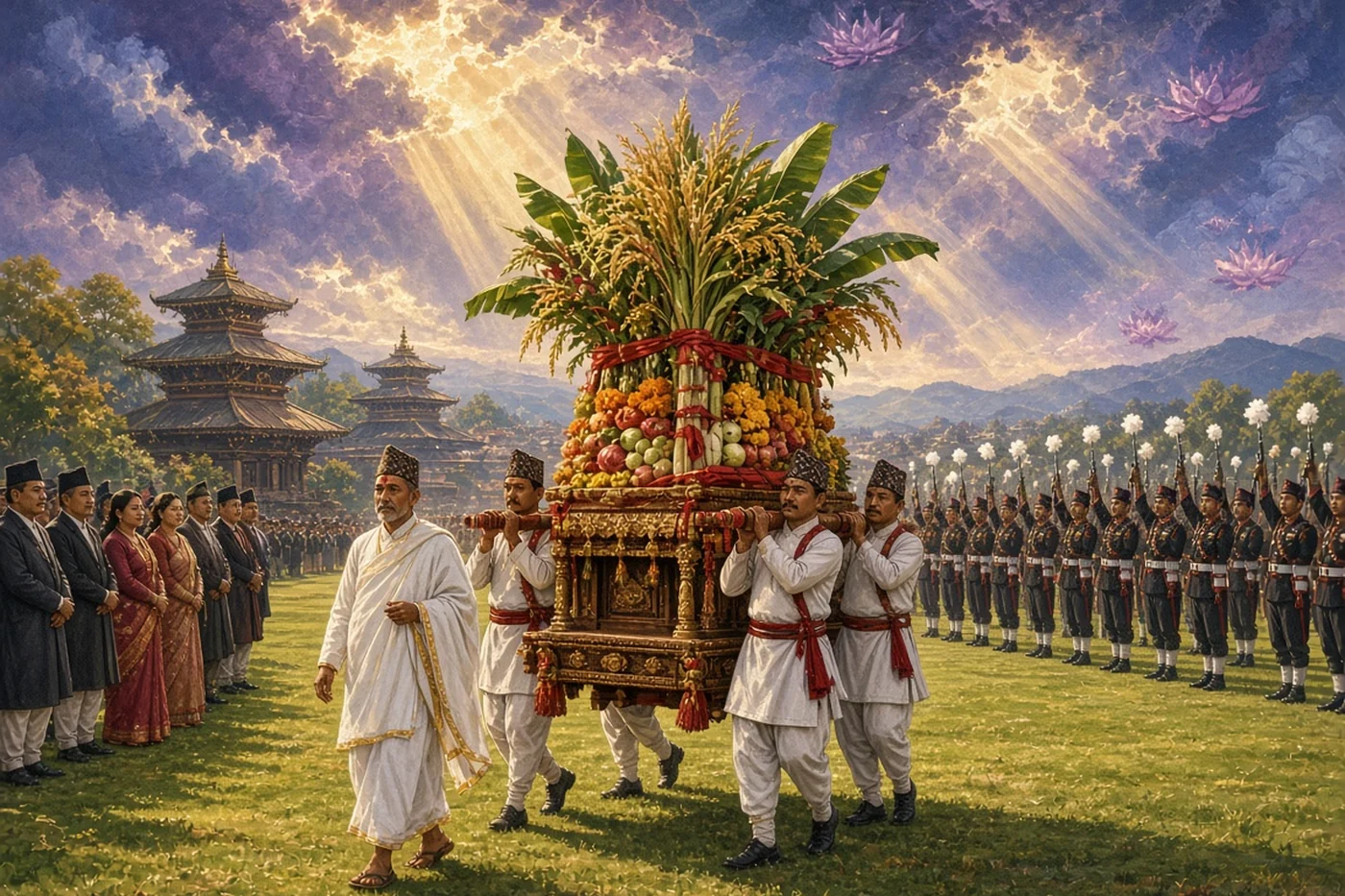
On the seventh day it reaches Tundikhel, the parade ground in the middle of Kathmandu. Ministers, diplomats and officers wait in rows with the head of state, the army fires its rifles in a rolling volley and then a twenty-one gun salute, and the Phulpati goes on to the Dashain Ghar. Only after it arrives do the palace prayers begin. Since Nepal became a republic in 2008 the bundle goes to the president's residence too, where it once went to the king's.
On the eighth night, Kalaratri, buffaloes and goats are offered through the dark in the old palace courtyards. On the ninth the army makes its own offerings in the Kot courtyard at Hanuman Dhoka, guns firing again, while across the square the queue for the Taleju temple, which opens its front door to the public on this one day of the year, has been forming since three in the morning.
On the tenth Taleju's image, carried out into the palace courtyard on the seventh, goes back into her temple, and the tika begins. The president gives it at Sheetal Niwas, first to the heads of the government, the courts and the parliament, then in the afternoon to whoever has come to stand in line for it: the same red rice and yellow barley, from the head of state where once it came from the king.