As the Thursday night is kept
Medaram · Chilakalagutta to the gadde · 4 min read
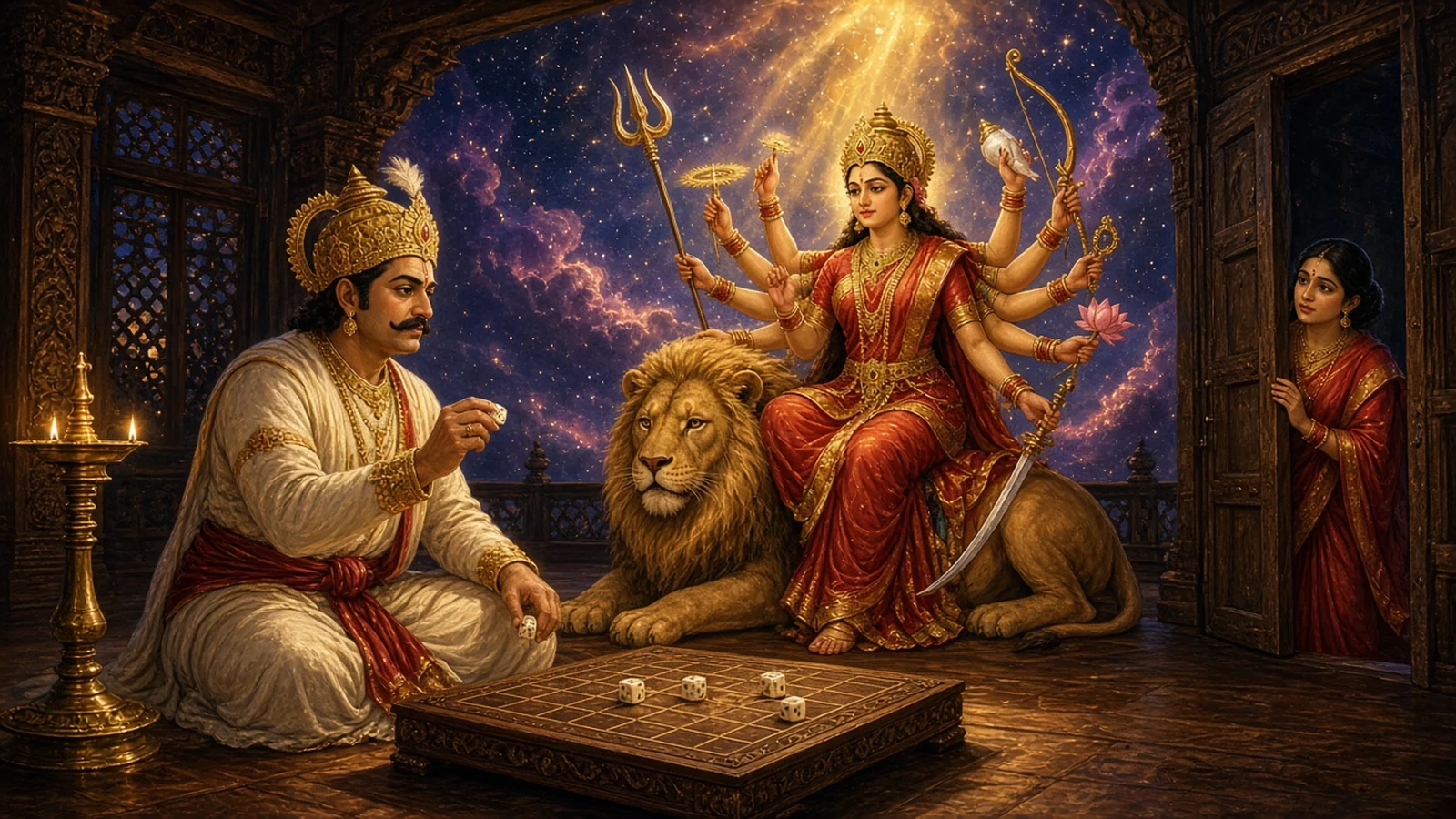
The Wednesday had gone the way it always goes. At Kannepalli, four kilometres down the road, the Kaka pujaris had prayed over Saralamma for two hours, and at seven in the evening they had carried her out of her small temple in a bamboo basket, over the backs of men and women lying face down in the dust for their vows, across the red water of the Jampanna Vagu, and set her on her gadde at Medaram a little after midnight, with Pagididda Raju from Punugondla and Govinda Raju from Kondai beside her. Now it was Thursday, and the whole fair was waiting for the mother.
In the pujari's house at Medaram the old man was tying his cloth. His son stood at the door.
"They are saying a crore today," said the son. "The roads are full back to Tadvai. The buses cannot turn."
"They said that last time."
"The collector's people have been twice. They want to know when."
The old man finished the knot. "Tell them what my father told their fathers. When she comes."
They went out into the dusk together. The chief pujari of the Sammakka line, Kokkera Krishnayya, was waiting with the others, and the women of the Sadeboina house who keep the ground, and the police who would walk with them as far as they were allowed. Ahead of them the hill stood black against the last of the light: Chilakalagutta, where the box was found, where the box is kept.
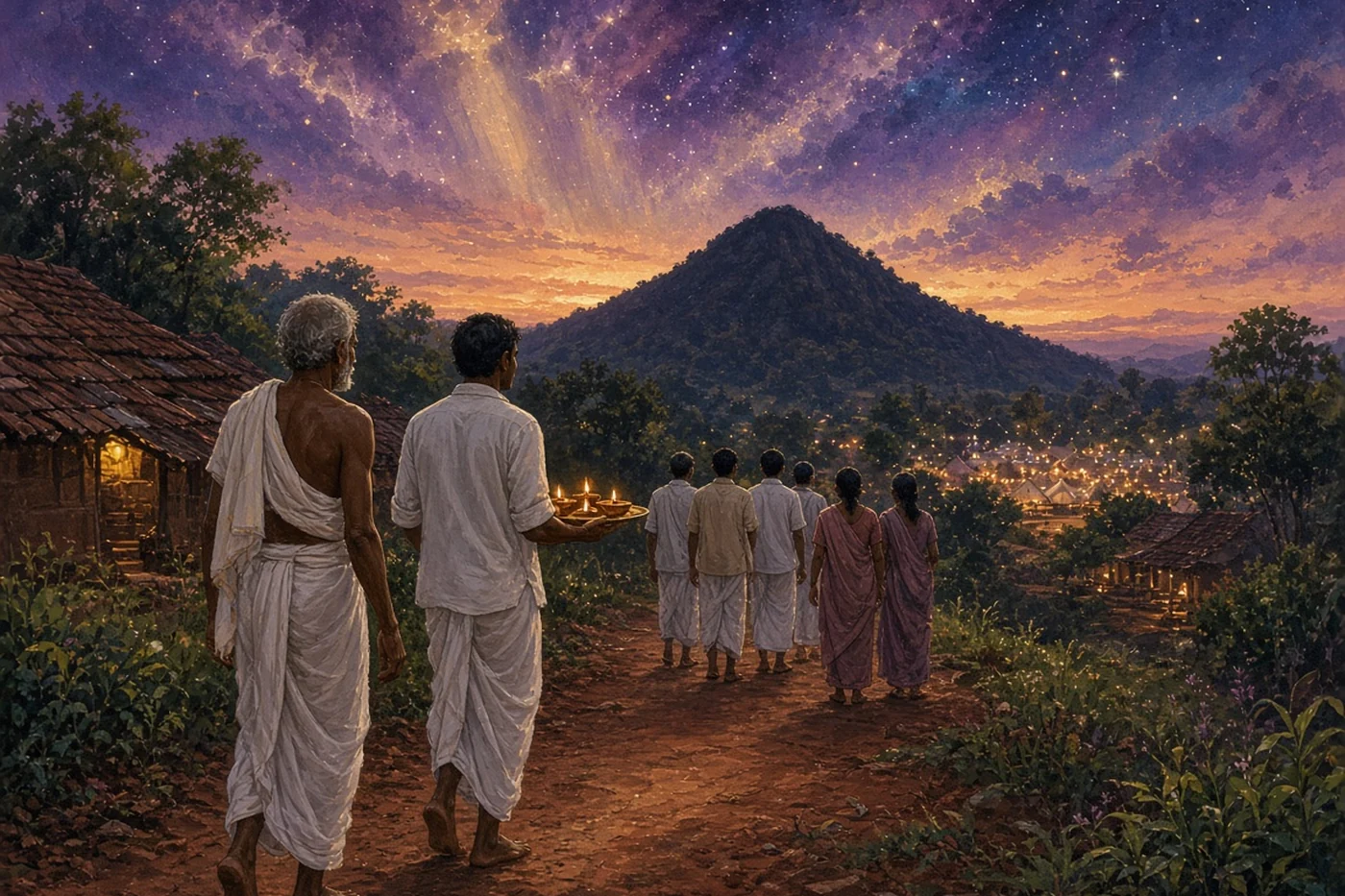
Nobody who is not a Koya pujari goes up Chilakalagutta that night, and nobody who goes up says afterwards what is done there. The reporters write that pujas were performed with lamps. The pujaris say that is enough to write. The son had been up twice as a boy, carrying things and asking no questions, and tonight he carried the lamps and asked none either.
Down in the fair, lakhs of people stood up. Nobody told them to. There was a loudspeaker, but nobody needed it. Across the whole of Medaram, in the queues and the tents and the bus lines and the bed of the stream, people got to their feet and faced the hill and waited, and the only sound was the drums.
Then from the foot of the hill came three shots, one, two, three, the Superintendent of Police firing his gun into the sky, and the fair roared.
"She is coming," said the son, and found that he was shaking.
"She is coming," said his father. "Carry straight. Do not look at them. Look at the road."
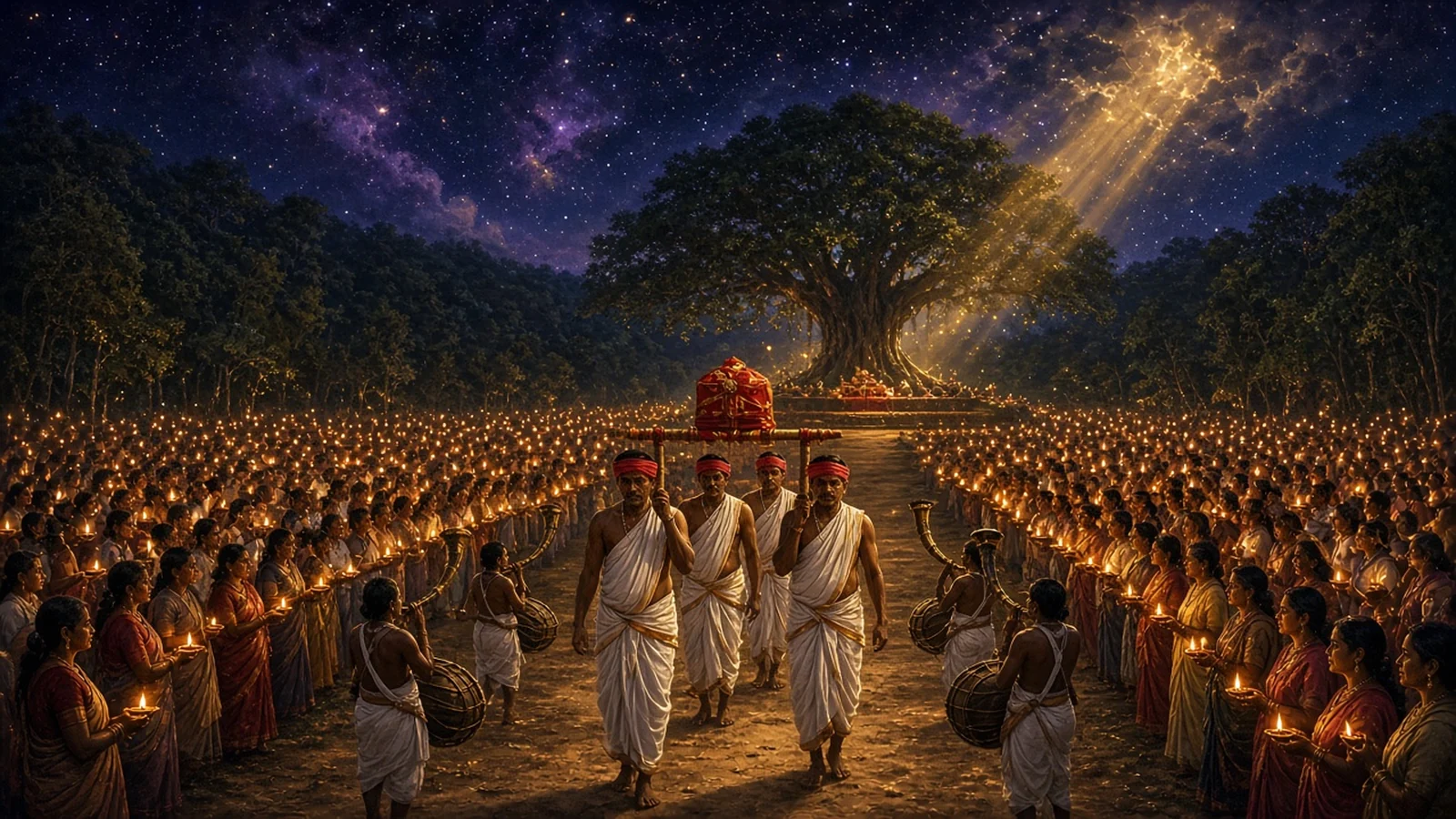
The vermilion came down the hill in the dark, wrapped in red cloth with the bamboo, in the hands of the Koyas and nobody else, and the road from the hill to the gadde was a river of lamps held up on both sides. Women fell into trance as she passed and were held by their families. The Sivasattulu danced ahead of her. Men blew horns. Somebody began a song in Koya that the son had heard his grandfather sing and had thought was lost, and others took it up. At the gate of the gaddes the ministers stepped back, the police saluted a box, and the pujaris set Sammakka down on her raised earth under the tree, beside her daughter, late in the night.
"Now," said the old man, "they can offer."
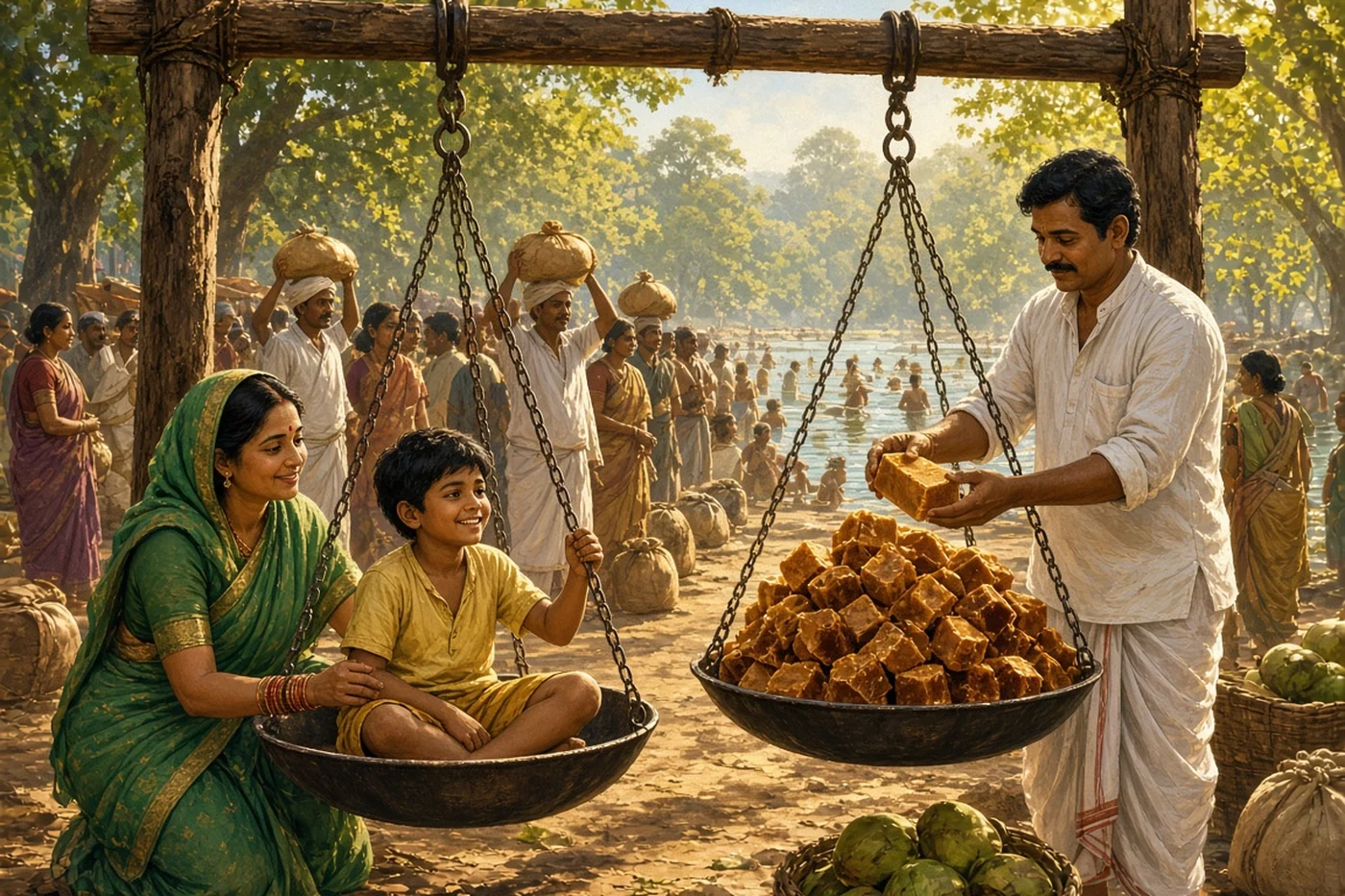
They offered. All Friday the jaggery came to the gaddes in sacks and in blocks on women's heads, and on the great scales men and boys and one foreign diplomat sat in one pan while bangaram was heaped in the other until it balanced, and the sweet gold was flung over the railings with the coconuts until the pujaris put on their helmets. The red water of the Jampanna Vagu was full of bathers from bank to bank. Goats and cockerels went to the vow. Heads were shaved. The pujaris handed out the only prasad Medaram has ever given, a piece of jaggery.
On Saturday evening the fair fell quiet. The pujaris lifted the two bundles of red cloth and carried them away, Saralamma to Kannepalli and Sammakka back up the hill, and the Koyas say that when the last of the crowd has gone, a tiger walks across the empty ground.
As the pilgrims keep it
Medaram · the Friday, the state's city, and the small jatara of the off years · 2 min read
For most of the crore who come, the jatara is not the hill. It is the road, the river and the scales.
It begins weeks before, in a kitchen in Hyderabad or Warangal or a village across the Chhattisgarh line, when somebody says the words that nobody argues with: "We promised Sammakka." A child who got well, an exam that was passed, a debt that was cleared, a daughter married. The promise is bangaram, gold, and gold at Medaram is jaggery, and the promise is often one's own weight of it.
The state builds the road. In January 2026 it ran four thousand buses from fifty-one towns, with women riding free, and twenty-eight special trains to Warangal and Kazipet, and a helicopter from Hanamkonda for those who could pay. It posted thirteen thousand police and forty thousand workers from twenty-one departments across forty-two sectors of forest, put two hundred swimmers on the stream, thirty health camps on the ground and fifty-seven hundred toilets round the edges, and spent about two hundred and fifty crore rupees doing it. The village of Medaram has sixteen hundred people. For four days it holds a crowd counted in crores.
The pilgrim walks the last part. First to the Jampanna Vagu, to go down into the red water, or under the showers fed from it, and come up clean. Then to the scales, where the family sits in the pan and the sacks go into the other. Then, with the sacks on their heads, into a line that moves a step a minute to the railings round the gaddes, where everything goes over: the jaggery, the coconuts, a saree for the mother and a blouse piece for the daughter, turmeric, vermilion, bangles. A piece of jaggery comes back over the railing as prasad. A goat or a cockerel goes to the vow, a head is shaved, and the family sleeps in a tent and cooks its own rice.
In 2024 the minister counted one crore forty-five lakh of them over the four days, and five thousand and ninety lost in the crowd, of whom all but thirty were found.
In the year between, when the great jatara does not come, Medaram keeps a small one, and the pujaris fix it. On a Sunday in September 2026 the president of the priests' association, Siddaboyin Jaggarao, stood outside the shrine and gave the press the dates: Saralamma on the seventeenth of February, Sammakka on the eighteenth, the vows on the nineteenth, and on the twentieth the mothers go back to the forest. The state, meanwhile, had begun asking Delhi to call the whole thing a national festival.