As the Garga Samhita tells it
Vrindavana Khanda, chapter 2 · Sannanda tells Nanda · 4 min read
The elders of Vraja were sitting together one evening, and Nanda turned to the oldest of them.
"Sannanda, you have heard everything and you remember everything. Tell us one more thing. How did the hill come here? Govardhan was not always standing over our pastures."
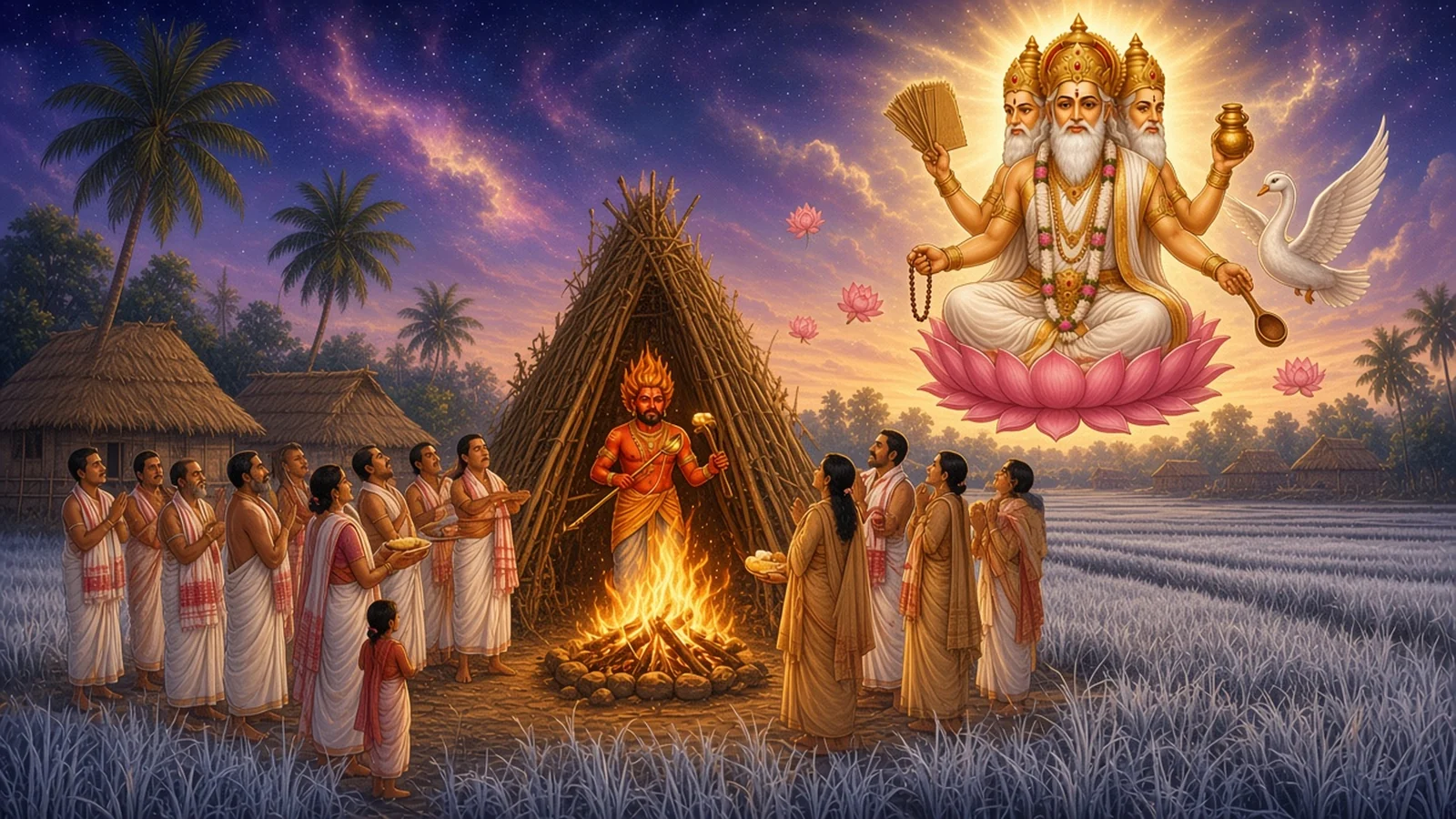
Sannanda began at the beginning, which was not on earth at all.
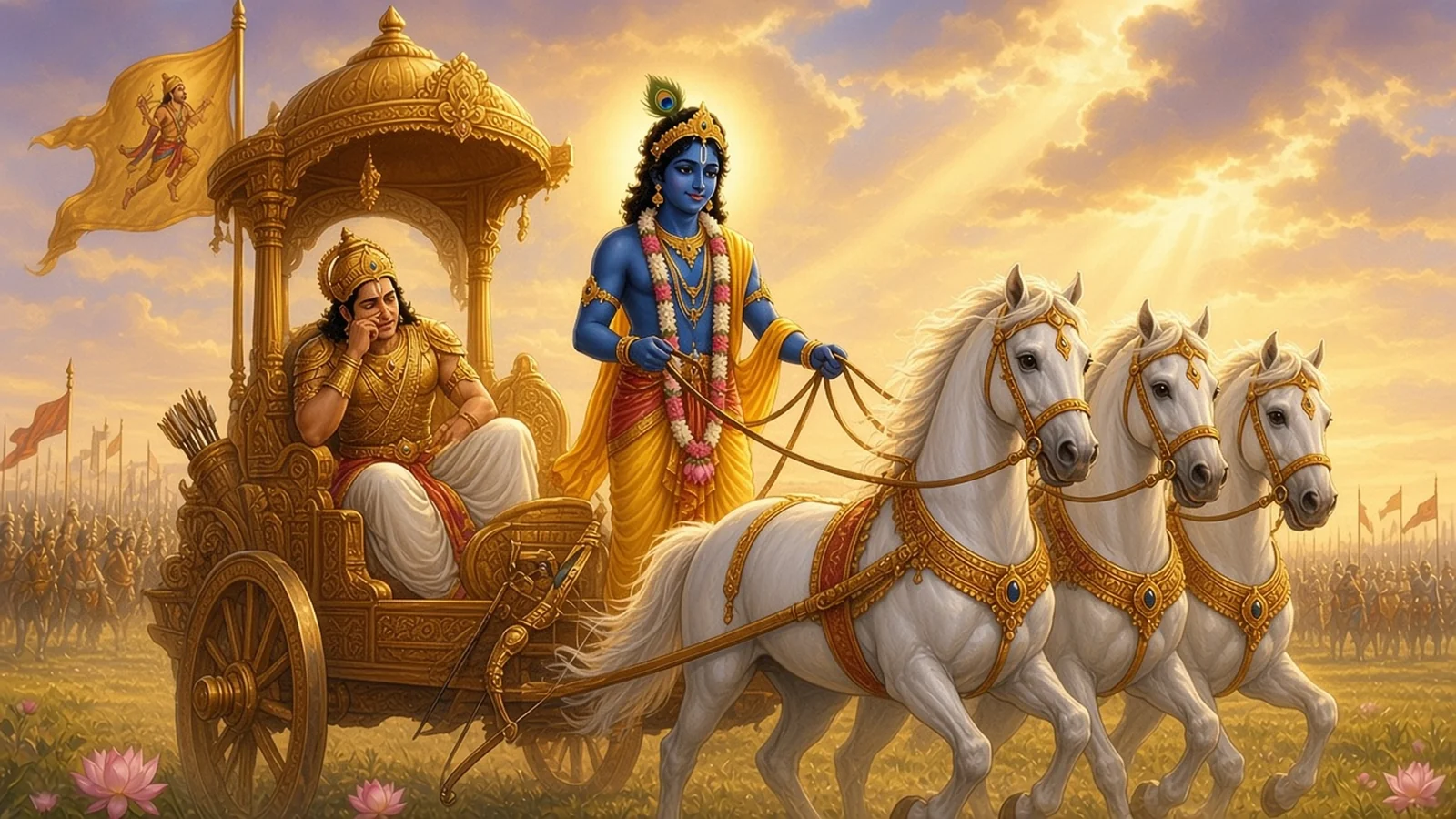
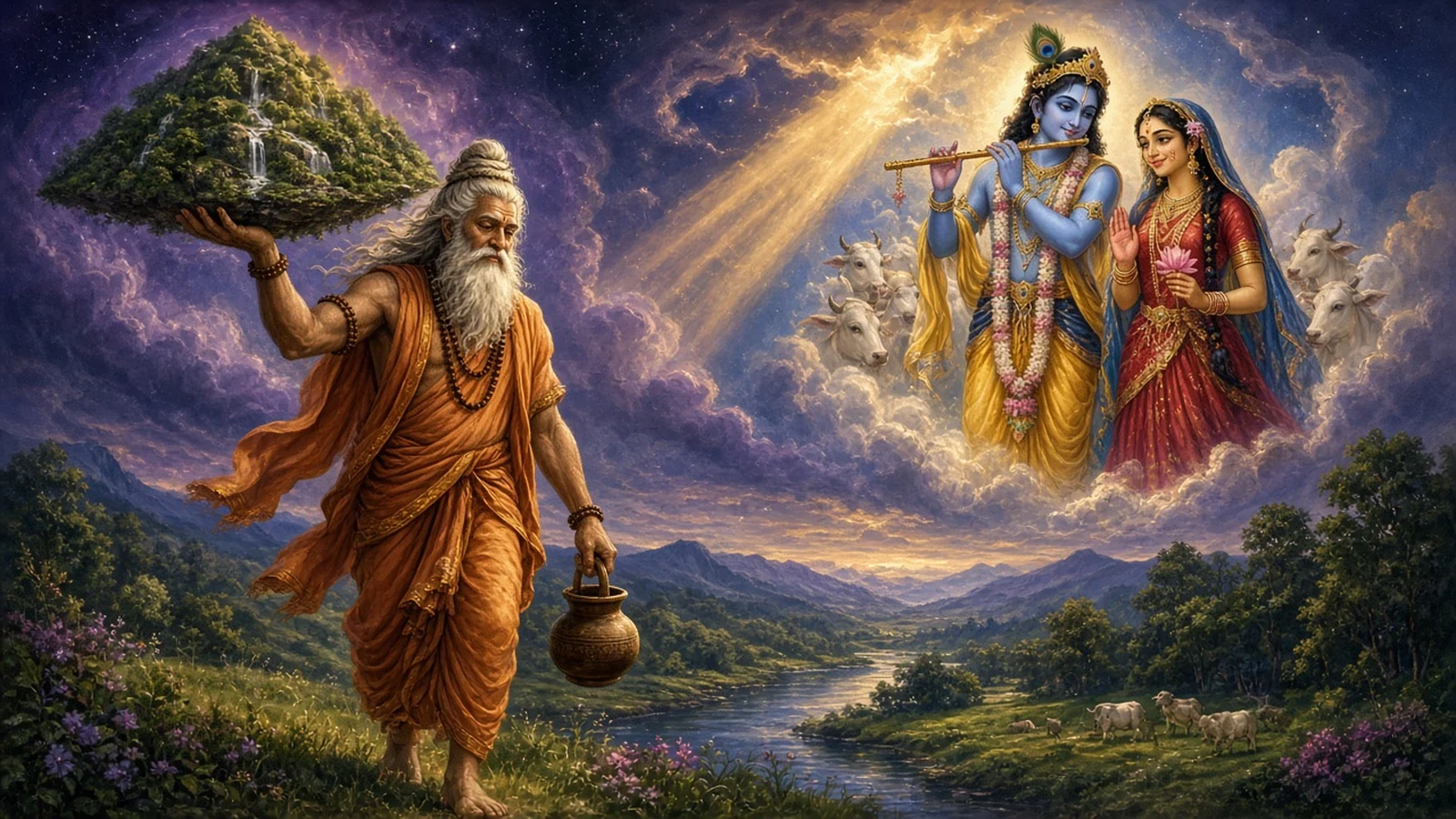
In Goloka, he said, before Krishna came down to lighten the world, he told Radha that he was going. She answered him plainly. "Where there is no Vrindavan, no Yamuna and no Govardhan, I cannot be content. I will not go to such a place." So Hari sent a portion of his own abode ahead of him, and sent the hill and the river down with it.
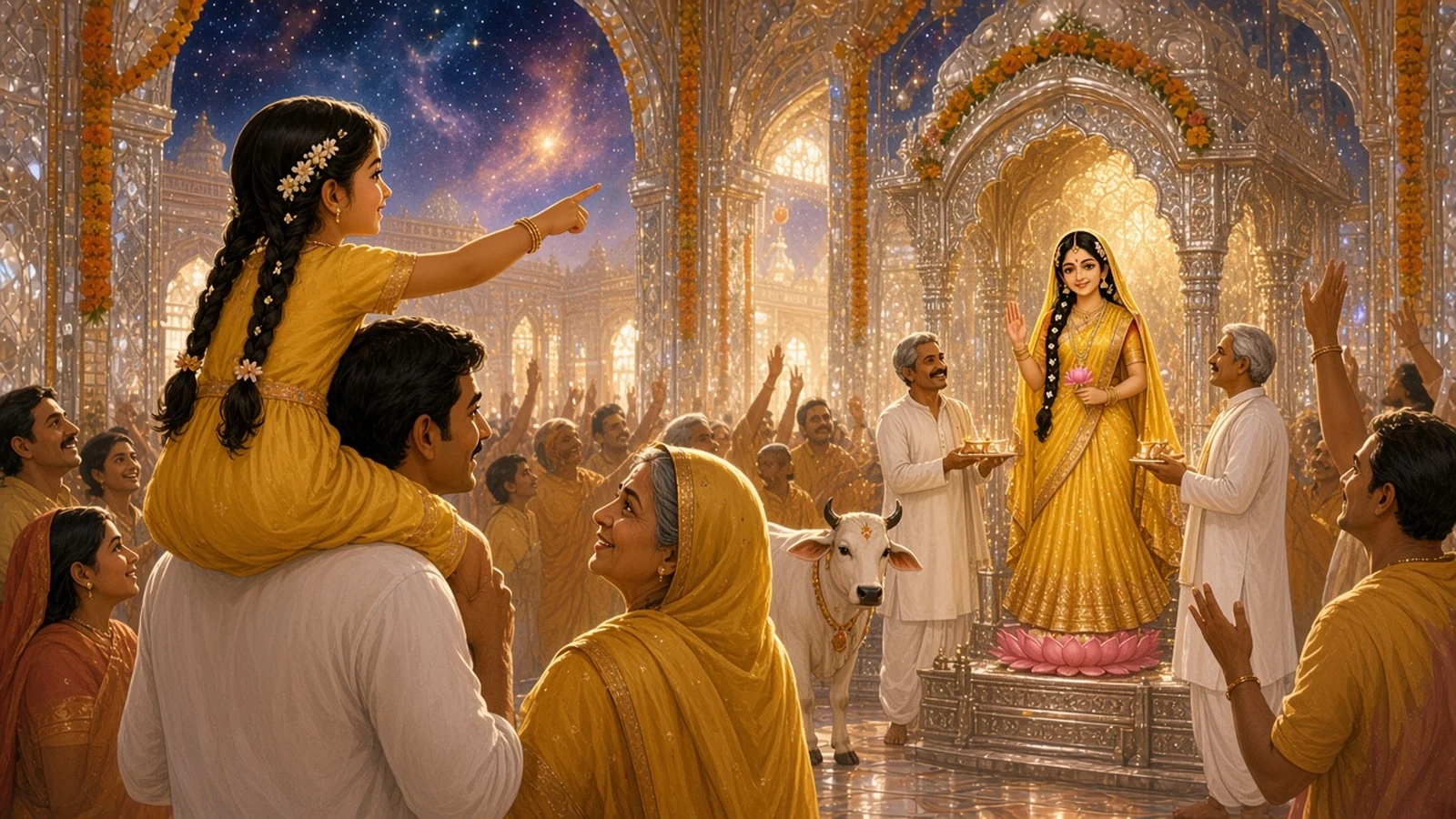
But the hill did not land in Braj. It was born far to the west, beyond the edge of Bharata, in the island called Shalmali, to the wife of the mountain Drona. The great mountains of the world came to see the child, bowed to him and walked round him. "You are Govardhan," they said. "You belong to the land of Vrindavan, and you are the king of all of us." That is why the hill is called Giriraj, the king of mountains.
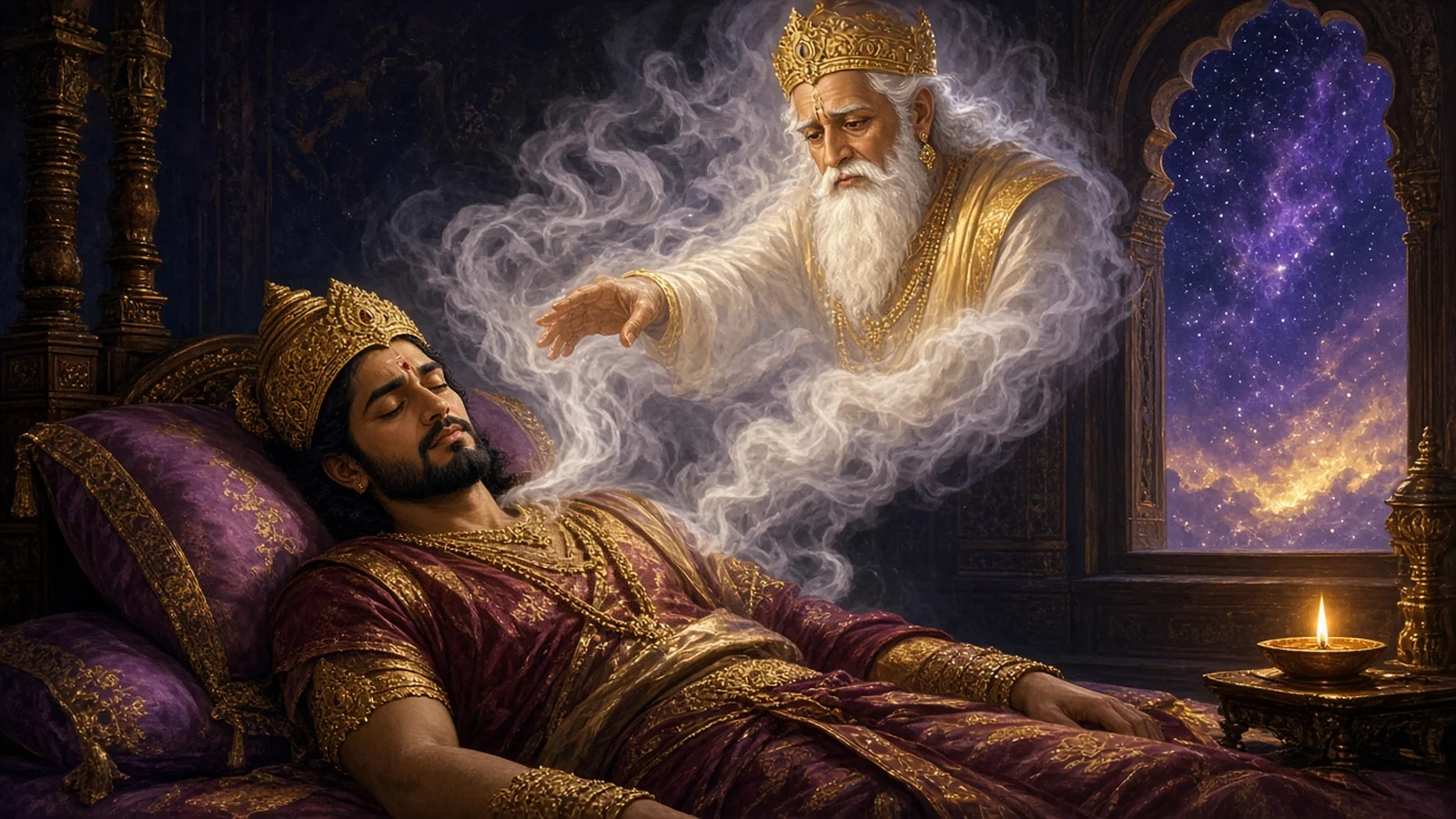
The sage Pulastya, going round the holy places, came to Drona's country and saw the young hill, its vines and streams and caves, and could not look away. He went to the father.
"Mountain, I live at Kashi, where Vishveshvara lives, where even a sinner who dies is set free. There is no hill there for a man to sit on and pray. Give me your son."
Drona wept. He loved the boy, and he was afraid of a sage's anger, and he did not say no.
Govardhan spoke for himself. "Sage, how will you carry me? I am eight yojanas long, five wide and two high."
"Sit in my hand, my son. I will carry you to Kashi on my palm."
"Then hear my condition. Wherever you put me down, there I stay. That is my promise, and I ask one from you."
"I promise. I will not set you down anywhere between this island and Kashi."
So the hill bowed to his father with tears in his eyes and climbed onto the sage's hand, and Pulastya walked east.
They came to a bend of a river where the forest grew thick and the grass was good for cattle, and something in the hill woke up. He remembered. This was the land. Here Krishna would come down from Goloka with Radha, play as a child among cowherd boys, and as a young man stop the girls on this very path and demand a toll of their curd.
"I will not leave this riverbank," the hill said to himself. "Whatever it costs."
He made himself heavy. The weight pressed into the sage's palm until Pulastya was dizzy with it and could not remember what he had promised. To ease his arm he set the hill down in the middle of Vraja, went to the water, bathed, and came back refreshed.
"Stand up," he said. "We have a long way to go."
The hill did not move the width of a finger.
Pulastya gathered his powers and took hold of the mountain. Nothing. He put his arms round it and spoke gently. "Come, my son. Why have you grown so heavy? I know you are angry with me. Tell me why, and let us go."
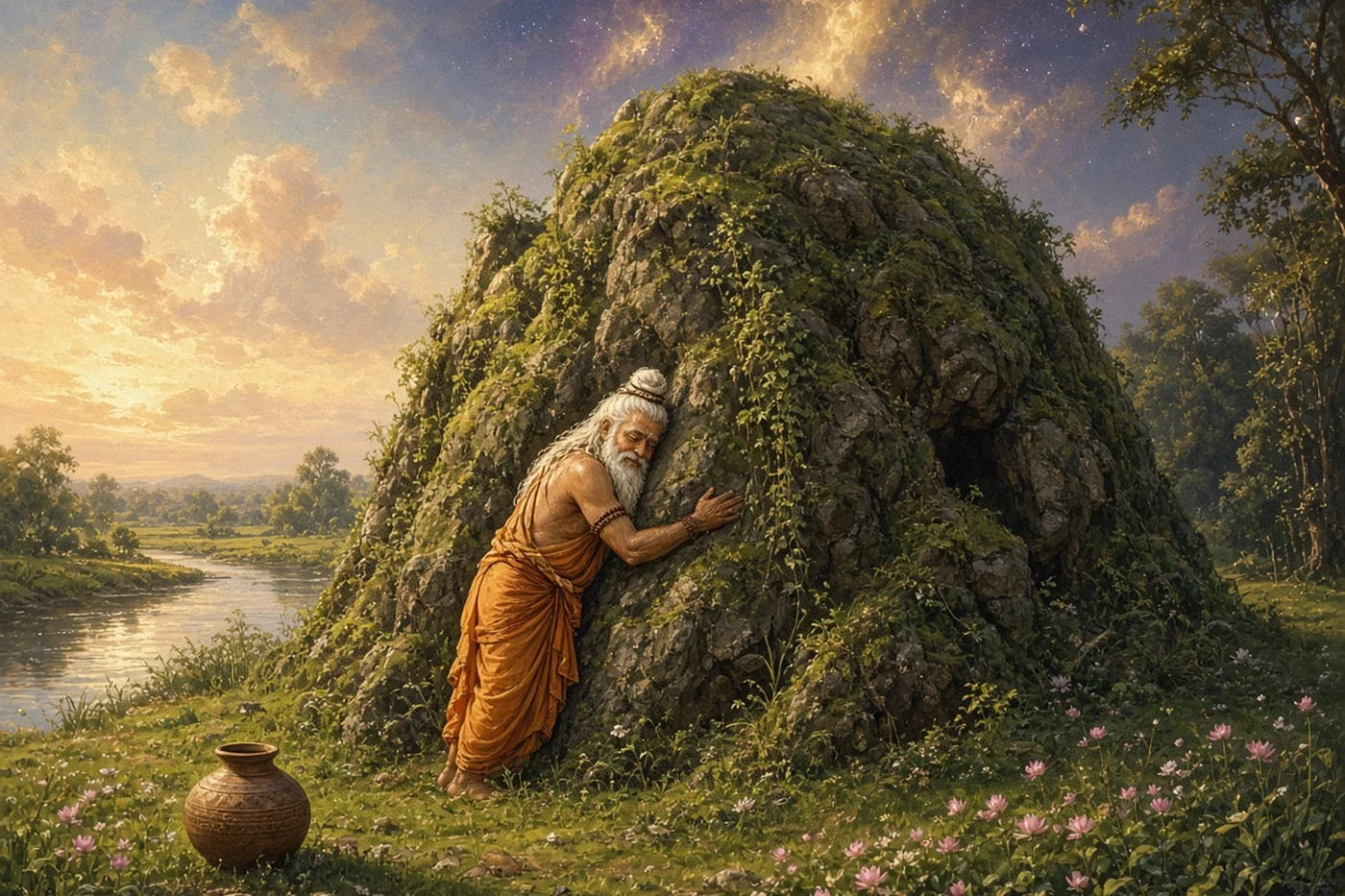
"The fault is not mine, sage," said Govardhan. "You set me here. I told you where I was put down I would stay, and I keep my word."
Then the greatest of sages gave up, and his lips trembled with rage.
"Arrogant mountain. You would not do the one thing I asked. Then every day, for as long as you stand here, you will grow smaller by a sesame seed."
He went on to Kashi alone. And since that day, said Sannanda, the hill has been shrinking, a seed a day, so slowly that no one can see it go. Yet as long as the Ganga still flows and Govardhan still stands, the dark age will not have the whole of its power.
As Braj walks it: the hill that is Krishna's body
Braj · the Govardhan parikrama, and the Gaudiya reading · 3 min read
The hill today is a low ridge of brown rock about eight kilometres long, nowhere much higher than a hundred feet. Braj says this is the curse at work. Nobody climbs it. Pilgrims walk round it instead.
The walk begins at Manasi Ganga, the lake at Govardhan town where Braj says the Ganga rose out of the ground one Kartika new moon because Krishna thought of her, and at the Danghati temple beside it, where the boy once stopped the milkmaids and took his toll. From there the path goes south, barefoot, about twenty-one kilometres in all, past Govinda Kund at Aanyor, past Punchari at the far end, which Braj calls the hill's tail, because the whole ridge is a peacock lying down with Radha Kund and Shyam Kund for its eyes, and on to Jatipura, where the hill shows its face.
The face is a rock with a crack across it. Every morning the cloth is taken off and the pilgrims pour milk over the bare stone from pots and buckets until the ground runs white, and then it is dressed again in Krishna's clothes. It is called the Mukharavind, the lotus face, and the Bhogsila, the rock that is fed. On the day after Diwali the fifty-six dishes are set in front of it.
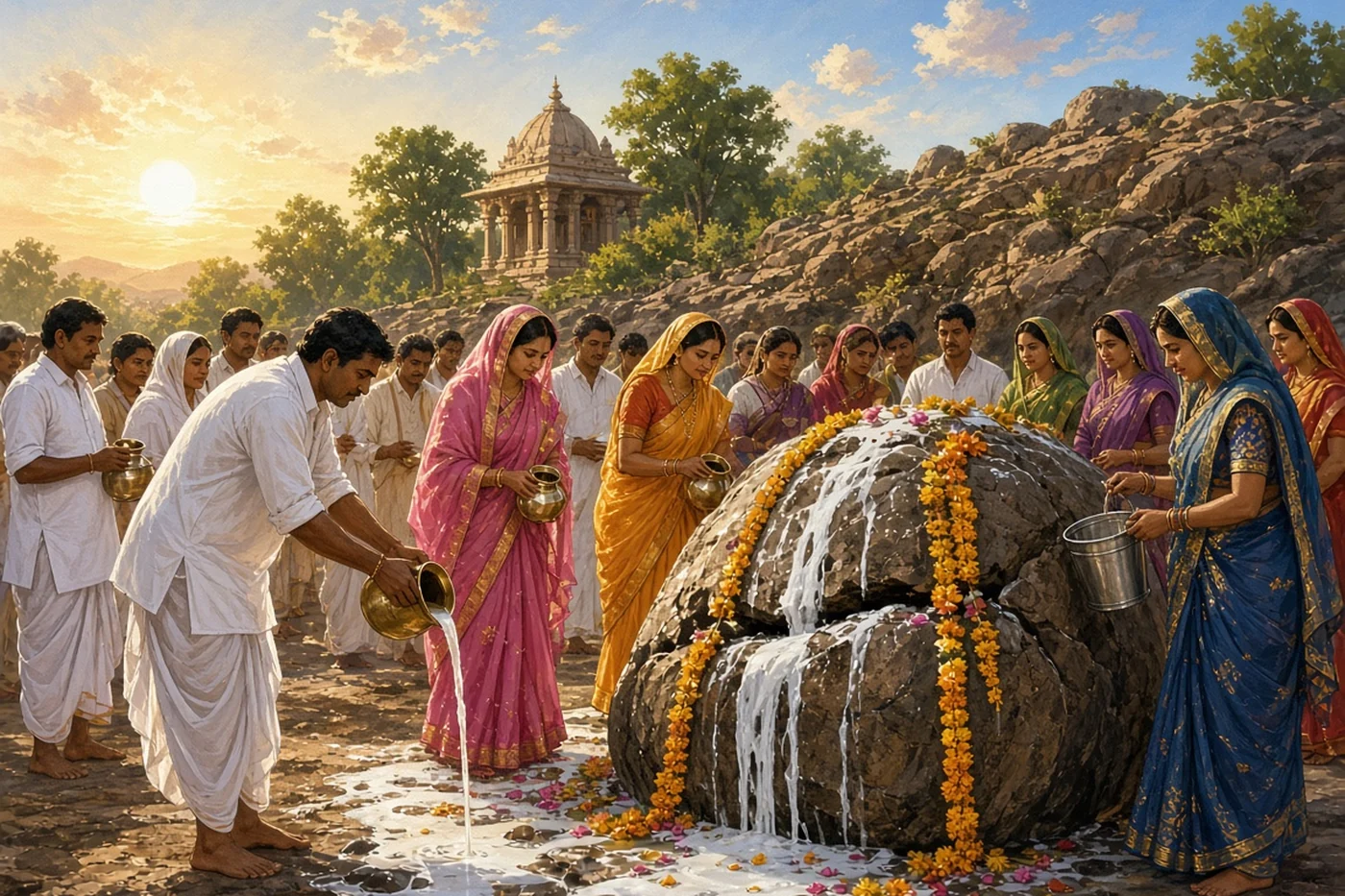
Most people finish in five or six hours. Some go round lying full length on the path, a body's length at a time, and that takes weeks.
The Gaudiyas have a reason for all of it. In 1515 Chaitanya came to Braj, and when he first saw the hill he fell flat on the ground and took a stone of it in his arms. He bathed in Manasi Ganga and walked round the hill singing the milkmaids' verse from the Bhagavata: of all Hari's servants this hill is the best, for it gives him and his brother and their cows water and grass, caves, roots and fruit, and is happy because their feet have touched it.
He wanted to see the image of Gopala in the temple on the top. He would not go up.
"I shall never climb Govardhan," he said. "Then how am I to see Gopala?"
So Gopala came down. Fearing an attack, the villagers carried the image to a village at the foot of the hill, and Chaitanya saw him there for three days. His followers took the lesson. The hill is the god's own body and the god's best servant at once, and a stone from it is worshipped as the god himself. Sanatana Goswami, Chaitanya's disciple, worshipped such a stone, and when he died on the full moon of Ashadha his people shaved their heads and walked round the hill in grief. The Mudiya Puno fair still does it every year, and more than a crore of pilgrims pour milk on the rock and walk the twenty-one kilometres.
The Pushtimarg, whose god Shrinathji came out of this hill, keeps a stone of it in a niche at Nathdwara, five hundred kilometres away, and builds the hill in cow dung in front of it once a year.