As devotees tell it
North India · the Saturday tellings · 2 min read
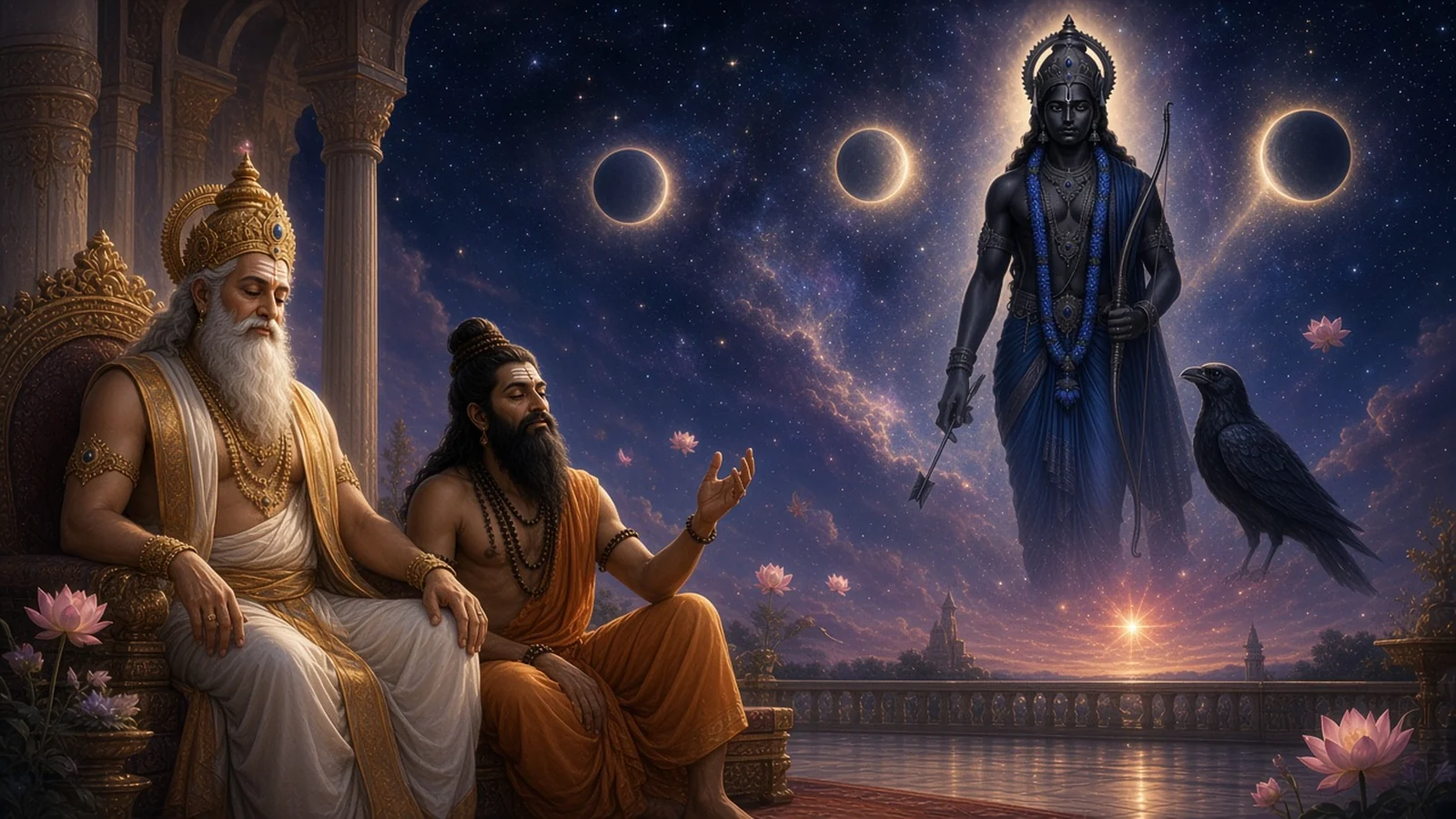
Ravana had beaten the gods, and the nine planets were his prisoners. He kept them lying face down before his throne and rested his feet on their backs.
Ravana read the stars as well as any astrologer. When his queen was about to give birth to their first son, the boy who would be Indrajit, he ordered the planets into the one pattern that would make the child unbeatable, and they had to stay there.
The gods were frightened. They came to the planets in secret. "Move," they begged. "If he is born under these stars, no one will ever defeat him."
"We cannot move," said the planets. "His feet are on us."
Only Shani had an answer. "Let me look at his face," he said. "Just once. I will do the rest."
So the gods sent Narada. The sage came into Ravana's hall full of praise. "Great king, you have beaten everyone," he said. "But a conqueror should stand on his enemies' chests, not their backs. Then they have to look up at him."
Ravana liked that. He had the planets turned over and set his feet on their chests. And Shani, lying on his back, looked up into Ravana's face.
From that moment things began to go wrong for Ravana. When he understood why, he had Shani shut in a cell with no window and no door, so that no one would ever meet that look again.
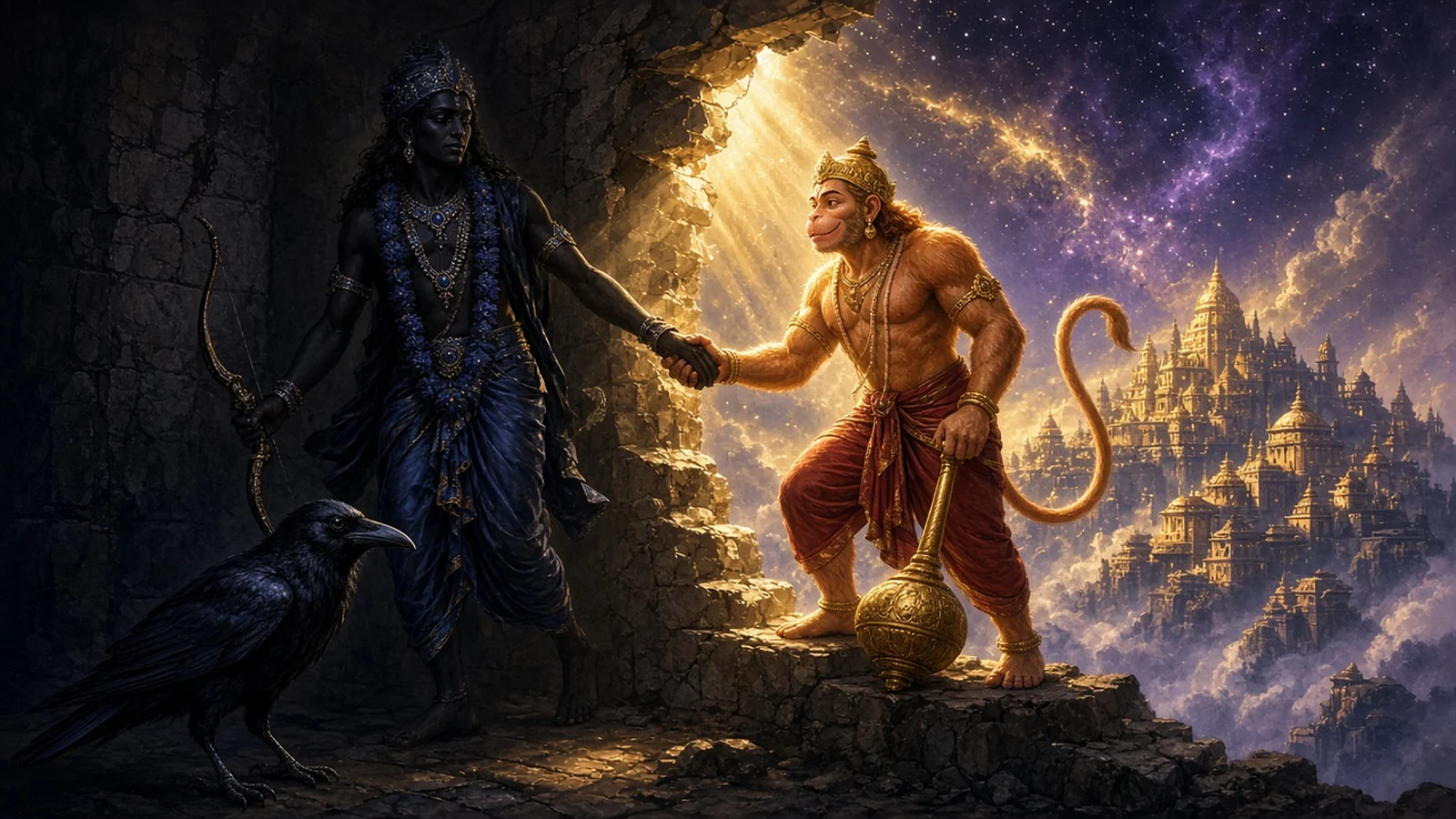
Years went by. Then Hanuman came to Lanka on Rama's errand, looking for Sita, and somewhere in the dark he heard someone crying. He found the cell, broke it open and brought Shani out.
Shani blinked at his rescuer. "I have seen your face," he said, "so now I must come into your life. I will sit on your head, and you will lose your home and your family."
Hanuman laughed. "I have no home and no family. I live at Rama's feet. Sit wherever you like."
So Shani sat on his head, and Hanuman went back to his work. He was fighting Ravana's demons, tearing up trees, hurling boulders, smashing rocks with his own head, and every blow fell on Shani.
"Enough!" cried Shani. "Let me down! Nothing I do can touch you."
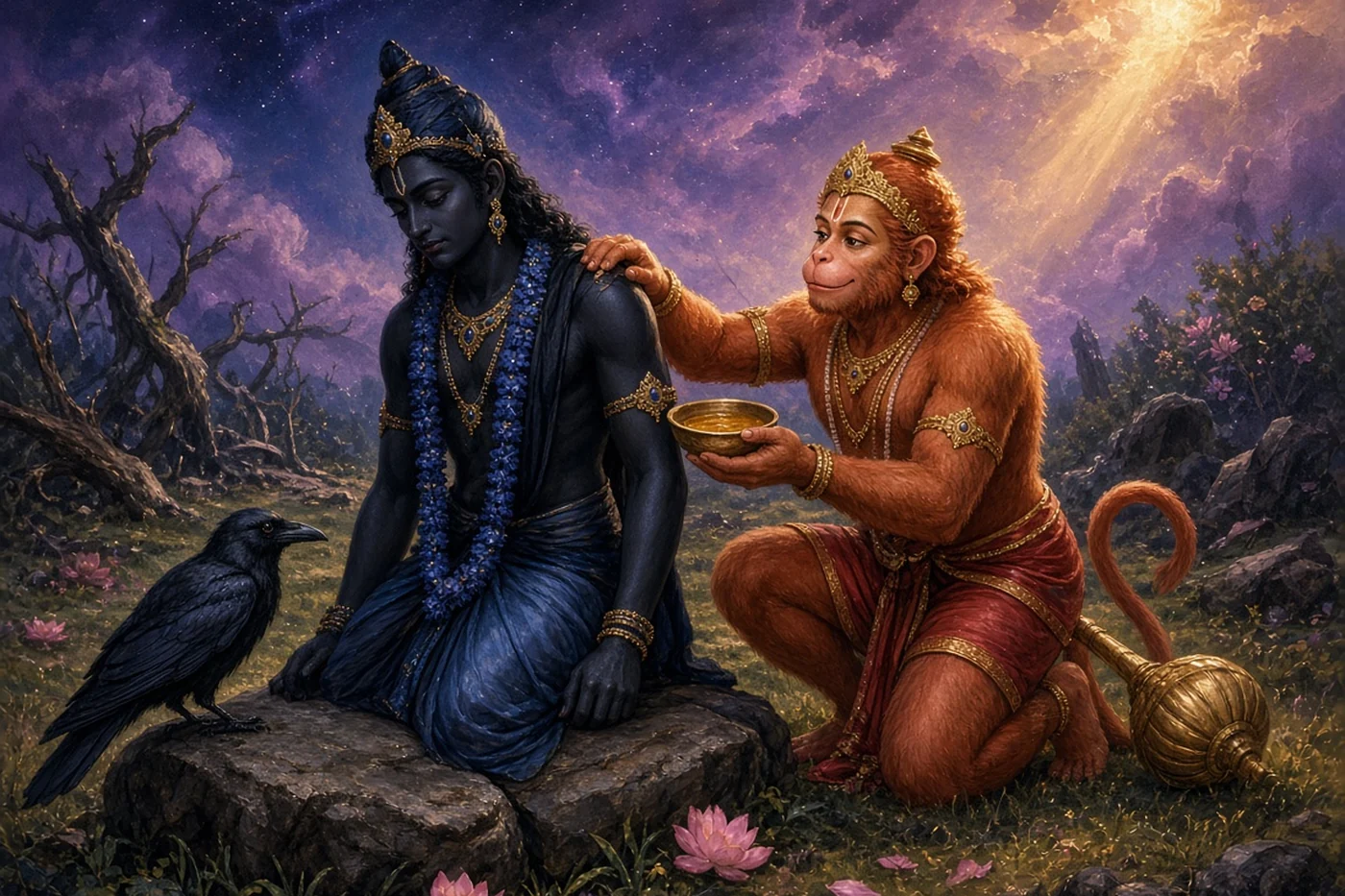
Hanuman set him down. Shani was bruised all over, and one telling says Hanuman rubbed mustard oil into his bruises to ease the pain.
"You freed me," said Shani. "Ask for anything."
"Then leave my devotees alone," said Hanuman. "Whoever prays to me, never trouble him."
Shani promised. That, devotees say, is why people who fear Shani pray to Hanuman on Saturdays, and why mustard oil is offered to them both.
As Shani Parvat tells it
Central India · the Shanichara temple near Morena · 1 min read
On a hill near the village of Aiti, in the Morena district of Madhya Pradesh not far from Gwalior, stands a temple of Shani, and a stone inscription there tells how he came to it.
Hanuman had come to Lanka and set it alight, but the fire would not catch. Something was holding it back. Hanuman searched, and found the reason: Shani lay bound beneath Ravana's feet. Another account of the temple says Ravana kept him chained upside down with his face to the wall, so that his look could fall on no one.
Hanuman broke the chains. But Shani had been a prisoner so long that he could hardly stand, let alone walk the long road home across the sea.
"Throw me," he said. "Throw me toward Bharat."
So Hanuman lifted him and flung him over the water, and Shani came down on this hill. Here he sat in penance until his strength returned, and the hill has been called Shani Parvat, Shani's mountain, ever since. Close by, a shrine of Hanuman lying down keeps him company.
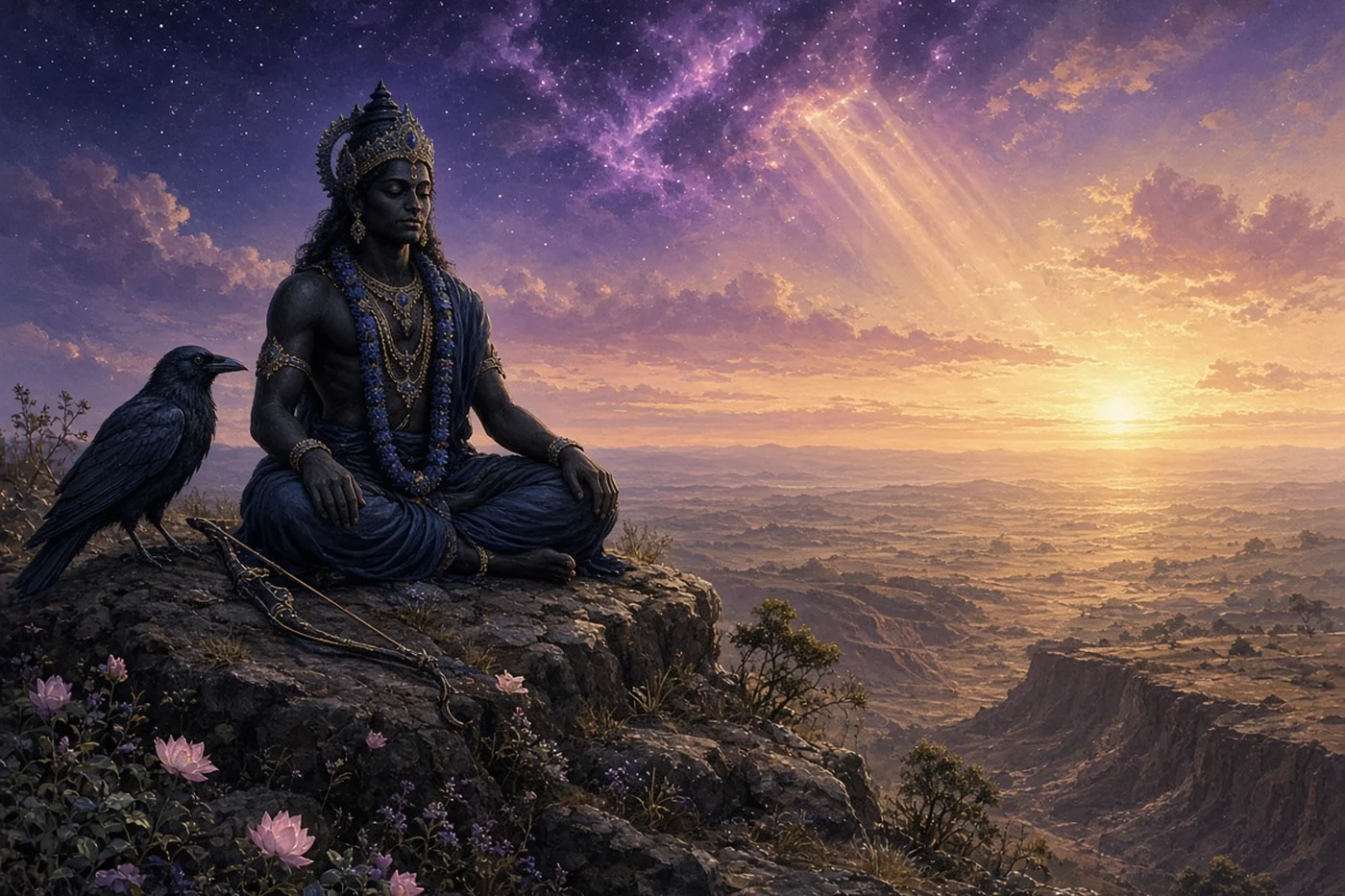
People still come to the hill in his trouble. They walk the long path round it, fourteen kilometres, to ease the seven and a half years. On Shani Amavasya, a new moon that falls on a Saturday, more than a lakh of them come, and many leave behind their shoes and the clothes they came in, as if the trouble could be left on the hill along with them. The temple even says that the black stone of Shingnapur in Maharashtra was taken from this hill.