As the Bhagavata tells it
Bhagavata Purana 8.19, 8.20 and 8.23 · on the Narmada · 3 min read
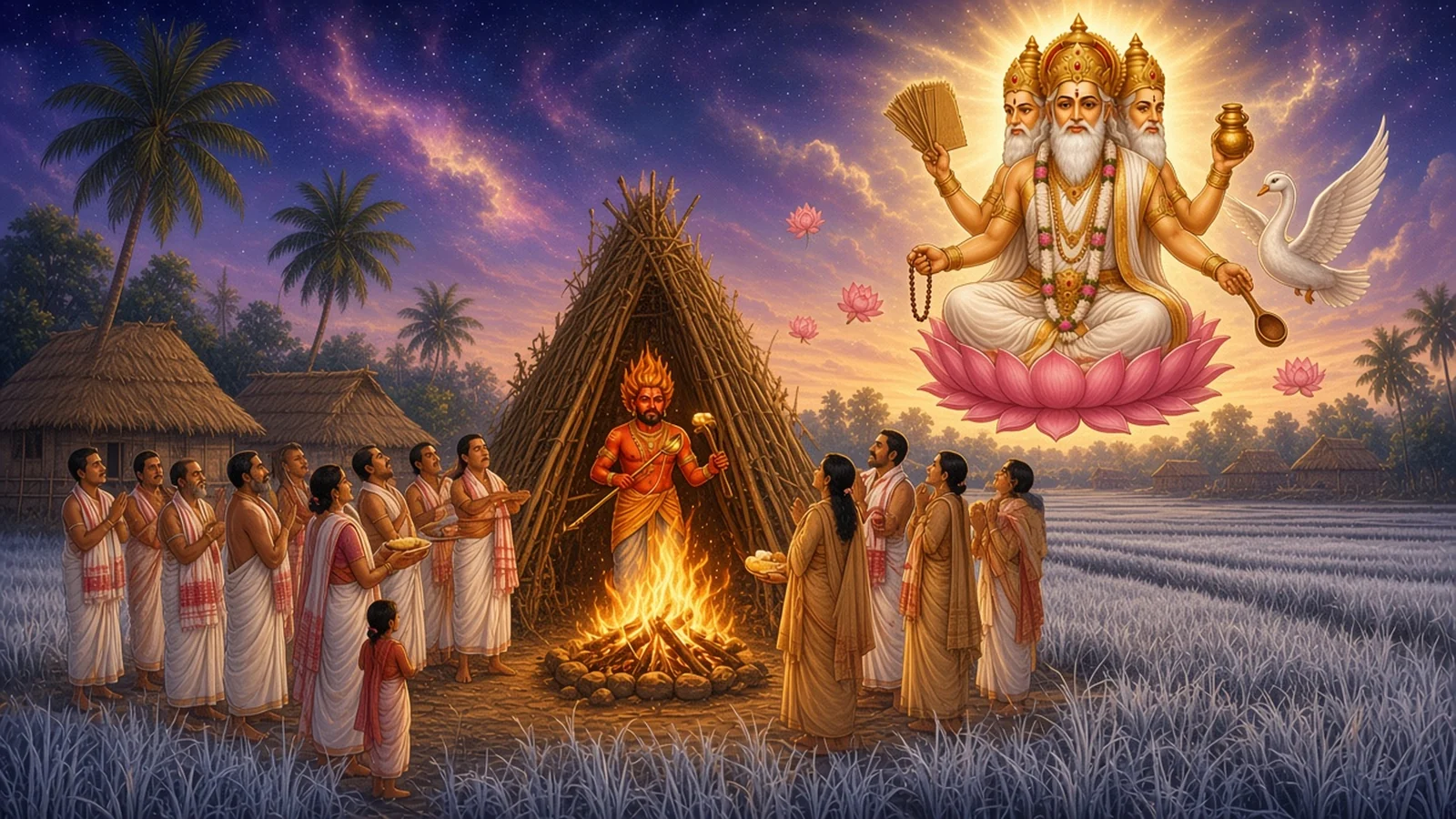
King Bali of the Asuras was holding a great sacrifice on the bank of the Narmada. His priests were the Bhrigus, and at their head sat Shukra, the teacher whose rites had made Bali so strong that Indra had left heaven without a fight.
A small brahmin student walked into the hall, and the king asked him what he wanted. "Three steps of ground," said the boy, "measured by my own feet." Bali laughed at so small a wish and reached for the water to seal the gift.
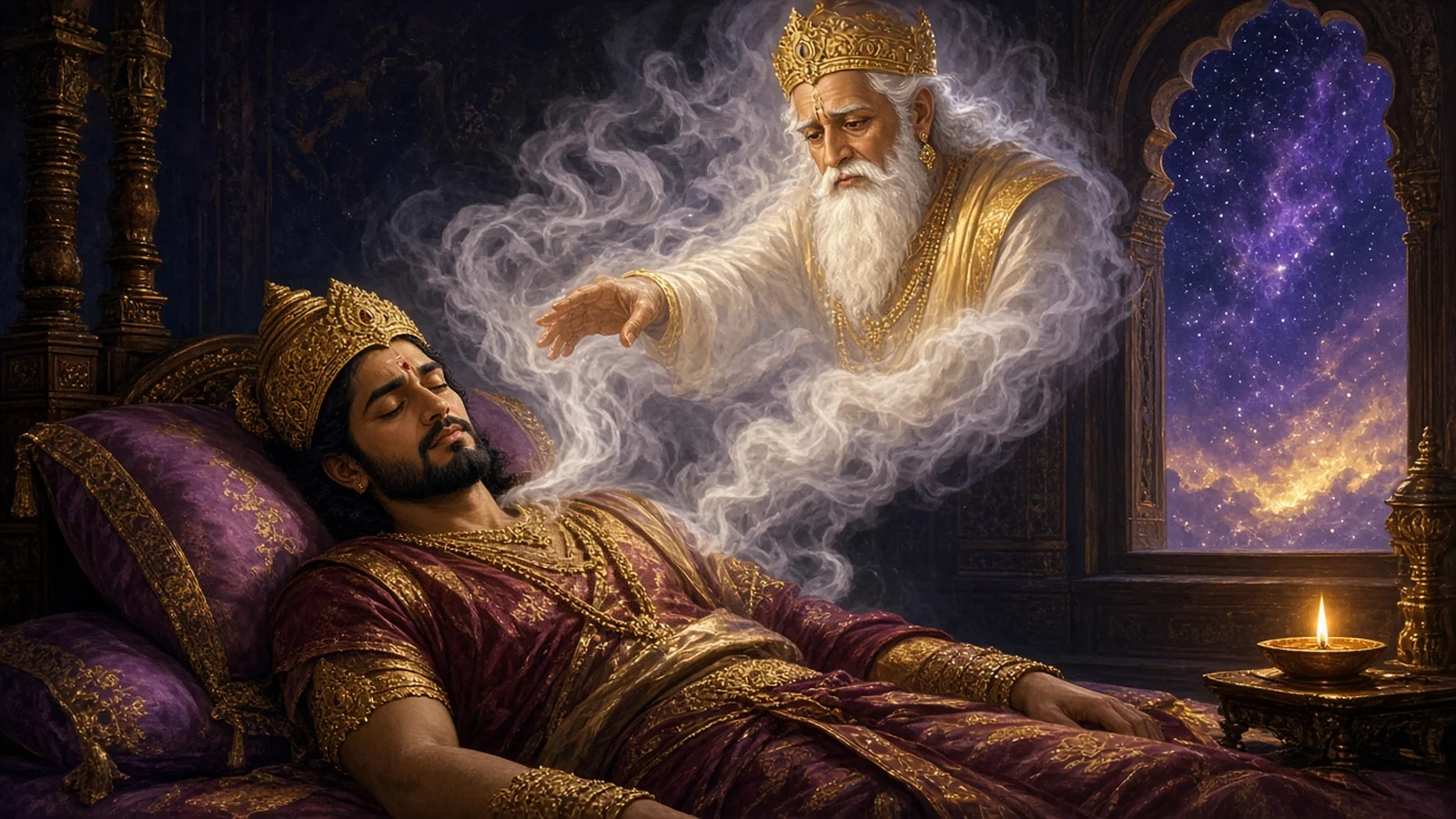
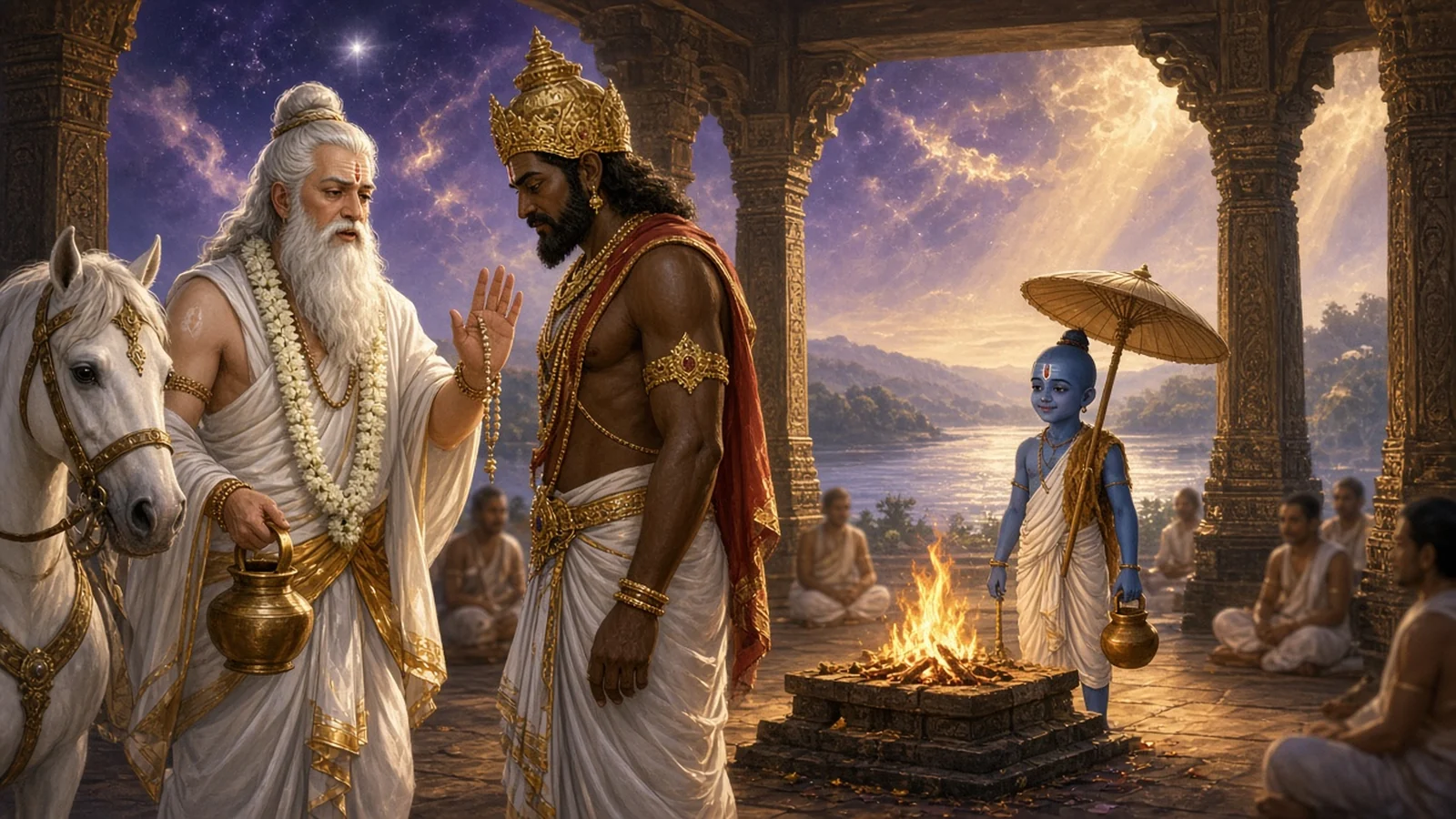
Shukra understood at once, and drew the king aside.
"Do you know who this is? This is Vishnu himself, the son of Kashyapa and Aditi, come to do the gods' work. With one step he will take the earth. With the second he will take the sky, and his body will fill everything between. Where will you find room for the third? You will have promised what you cannot give, and a man who breaks his promise goes to hell."
Bali said nothing.
"Listen to me," said Shukra. "The wise do not praise a gift that leaves the giver nothing to live on. Divide your wealth in five: for dharma, for your good name, for its own increase, for your pleasures and for your family. That way a man is happy here and hereafter."
"But I have given my word," said Bali.
"The Veda calls a promise true when it begins with yes. Your body is a tree that bears every fruit of your life, and if you cut it down for the sake of one word it dries where it falls. Saying yes gives everything away. Saying no keeps you safe. A false word is no sin when it wins a woman over, in a joke, at a wedding, to earn a living, when life is in danger, to protect cows and brahmins, or to save a friend from an enemy. This is such a time."
Bali was silent for a long while. Then he answered.
"What you say about a householder's duty is true. But I am Prahlada's grandson. Earth herself says she can carry any weight except a liar. Dadhichi and Shibi gave up their lives for others, and wealth leaves us at death in any case. If this is Vishnu, he has come to bless me or to punish me. Either way he will have what I promised."
Then, the Bhagavata says, the Lord himself moved Shukra to curse his pupil.
"You think yourself wise and you know nothing," said the teacher. "You have disobeyed me. Very soon you will lose everything you own."
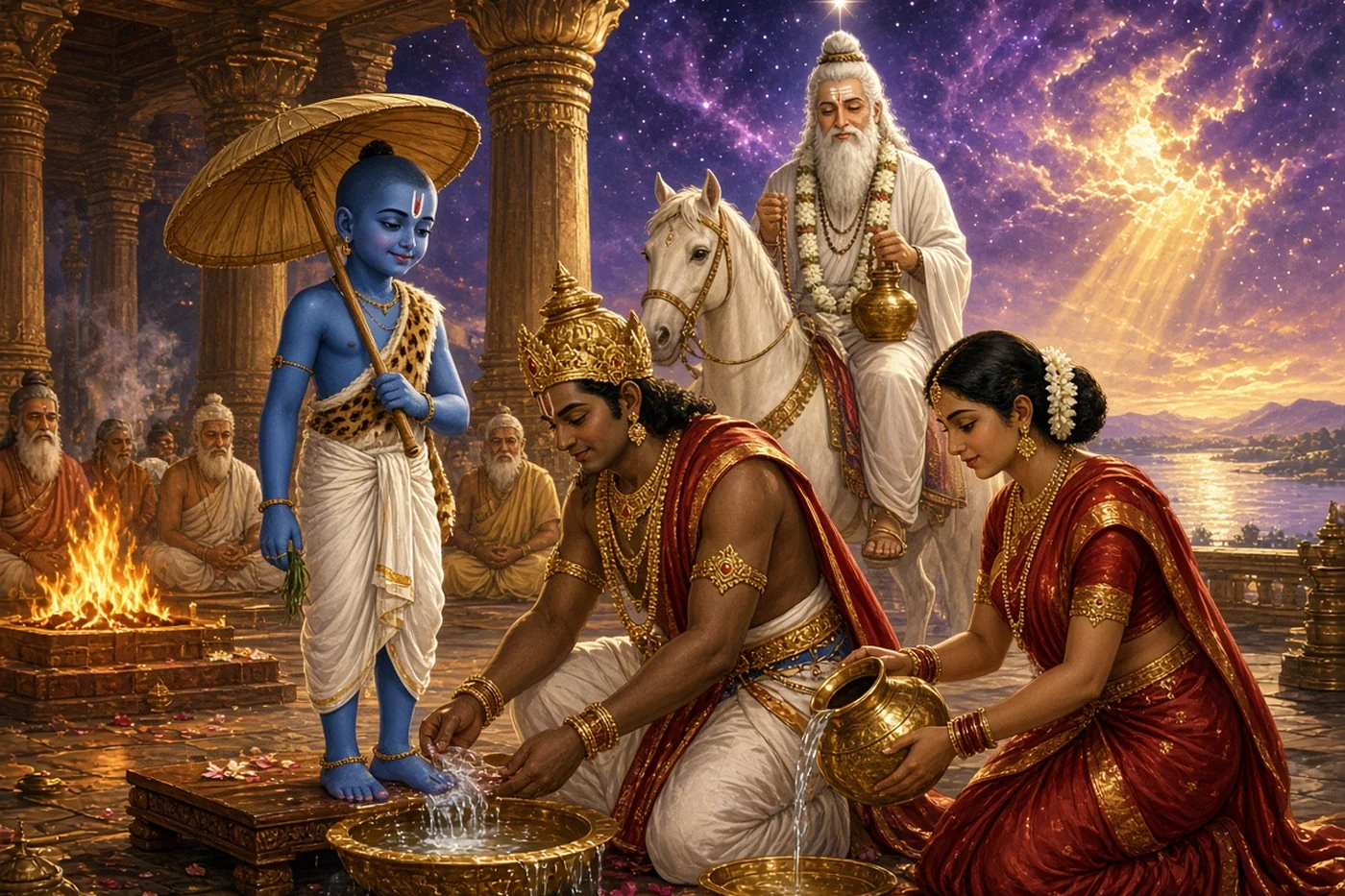
Bali poured the water all the same. His queen Vindhyavali brought the golden pot, and he washed the boy's feet and sprinkled the water on his own head.
The dwarf grew. He took the earth and the sky in two strides, and Bali bowed his head for the third. The king went down with his people to Sutala, the world below, and Vishnu promised to stand guard at his door.
When it was over, Vishnu turned to Shukra, who still sat among the priests.
"Tell me what went wrong in your pupil's sacrifice," he said. "Let it be put right here, before the brahmins."
"How can a sacrifice be faulty when the one it is offered to is pleased?" said Shukra. "The words of a mantra slip, a rule is broken, the time or the place or the offering is wrong. Your name makes all of it whole. But you have asked, and to obey is the first of duties."
So the teacher who had tried to stop the gift sat down with the best of the brahmins and made Bali's sacrifice complete.
As the Tamil hymn tells it: the grass on his finger
Tamil Nadu · Periyalvar Tirumozhi 1.8.7, with its commentary · 1 min read
Periyalvar, one of the Tamil poet saints of Vishnu, sang a decad of verses in a mother's voice, calling the child Krishna, with the discus in one hand and the conch in the other, to come and hug her. In the seventh he remembers the dwarf who went to Mahabali's sacrifice. Shukra said the gift should not be given, the hymn says, and the dwarf put out Shukra's eye with the sacred grass he wore.
That is all the verse holds. The teachers of the Sri Vaishnava tradition, who explained the hymns line by line, told the scene behind it.
Bali lifted the vessel to pour water into the boy's cupped hands and seal the gift. Shukra could not stop his pupil with words, so he made himself as small as a beetle and crept into the spout. The king tipped the vessel. Nothing came out.
The dwarf knew what was in there. On his finger he wore a ring of twisted sacred grass, the pavitram that a priest wears at a rite. He drew it off and pushed its point into the spout, gently, as if to clear a blockage. The grass found the beetle's eye. Shukra tumbled out, blind in that eye, and the water ran free into the boy's hands.
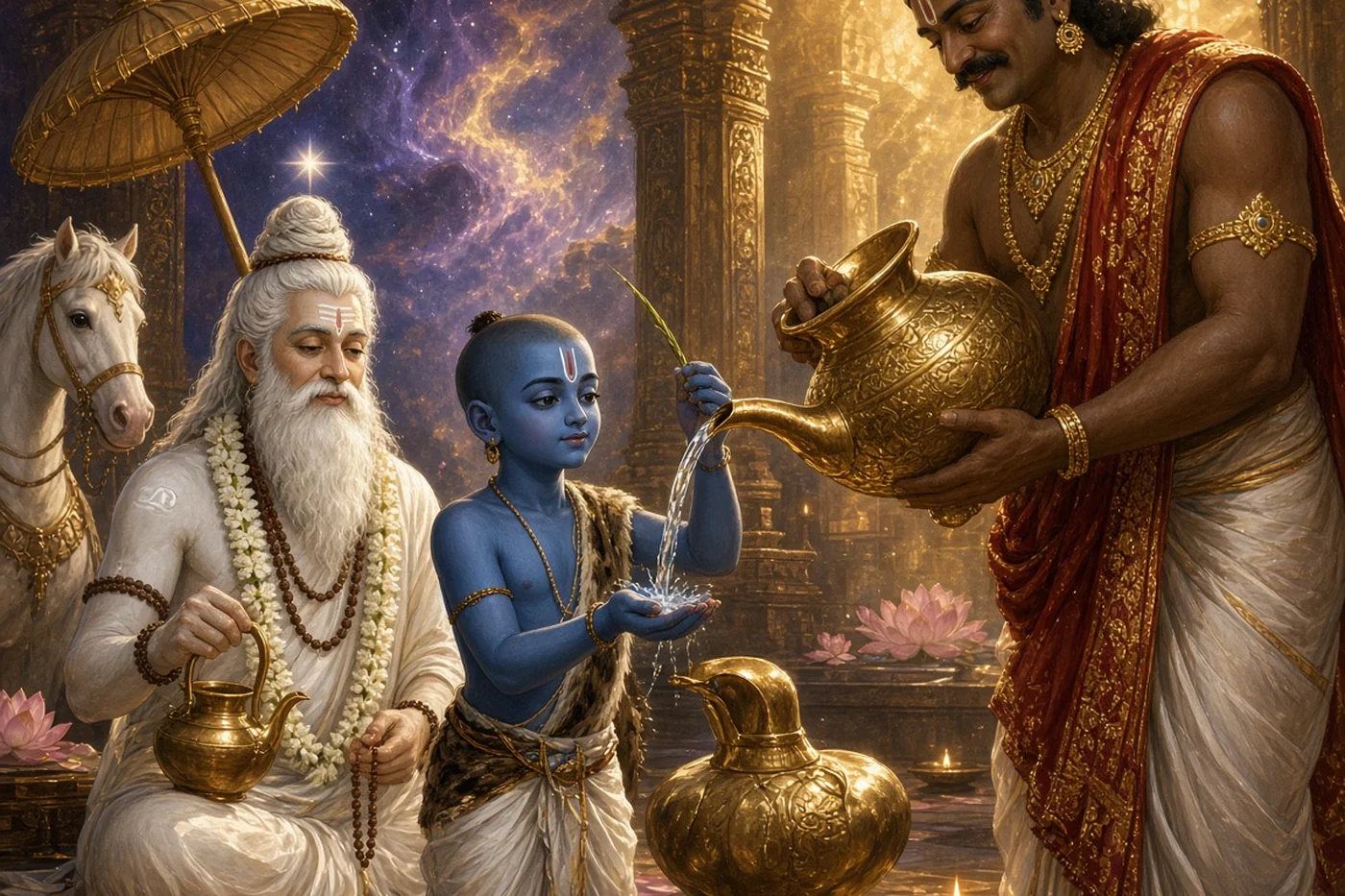
The commentary adds two things. The grass, it says, was no grass at all: Vishnu's own discus had taken its shape. And it records a question one teacher put to another. Was it fair for the Lord to punish both the king and his priest? The answer given was that the Lord meets trickery with trickery, and does it for the sake of those who love him.
So the gift was made, and Shukra kept one eye for the rest of his days.