As Thirunageswaram tells it
Tamil Nadu · Thirunageswaram, near Kumbakonam · 3 min read
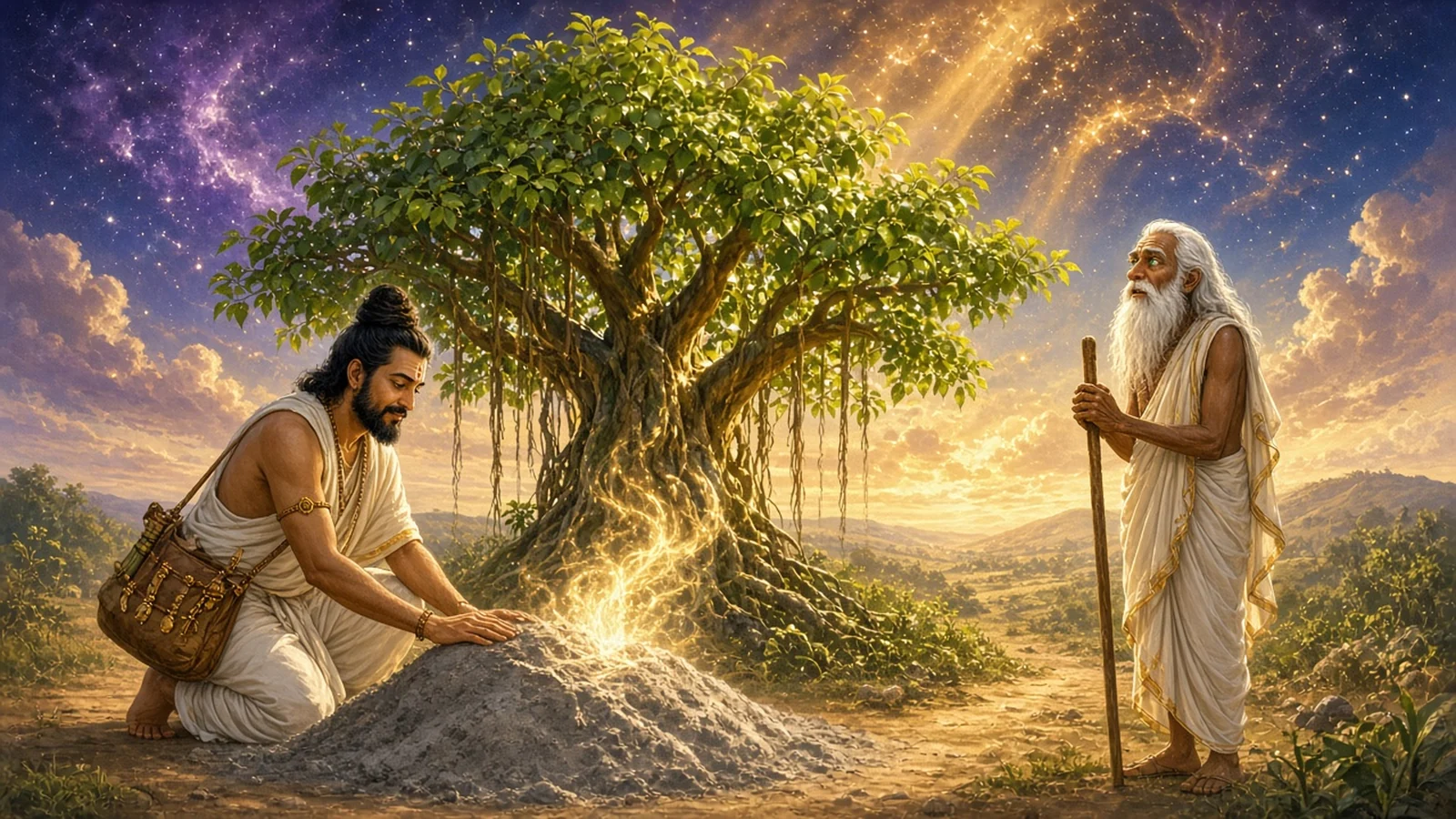
Long ago, on the south bank of the Kaveri, there was a forest of champaka trees, so thick with their pale flowers that the air was sweet for miles. A sage named Suseela lived there with his son, Sukarma.
One day the boy went among the trees and a serpent bit him. It was no ordinary snake. It was Takshaka, one of the great kings of the serpents.
The sage came running. He looked at his son, and then at the serpent, and his anger rose.
"You struck my child," he said. "For that you will lose what you are. You will be born a man."
Takshaka was afraid. He went to the sage Kashyapa, the father of all the serpents, and asked him what could be done.
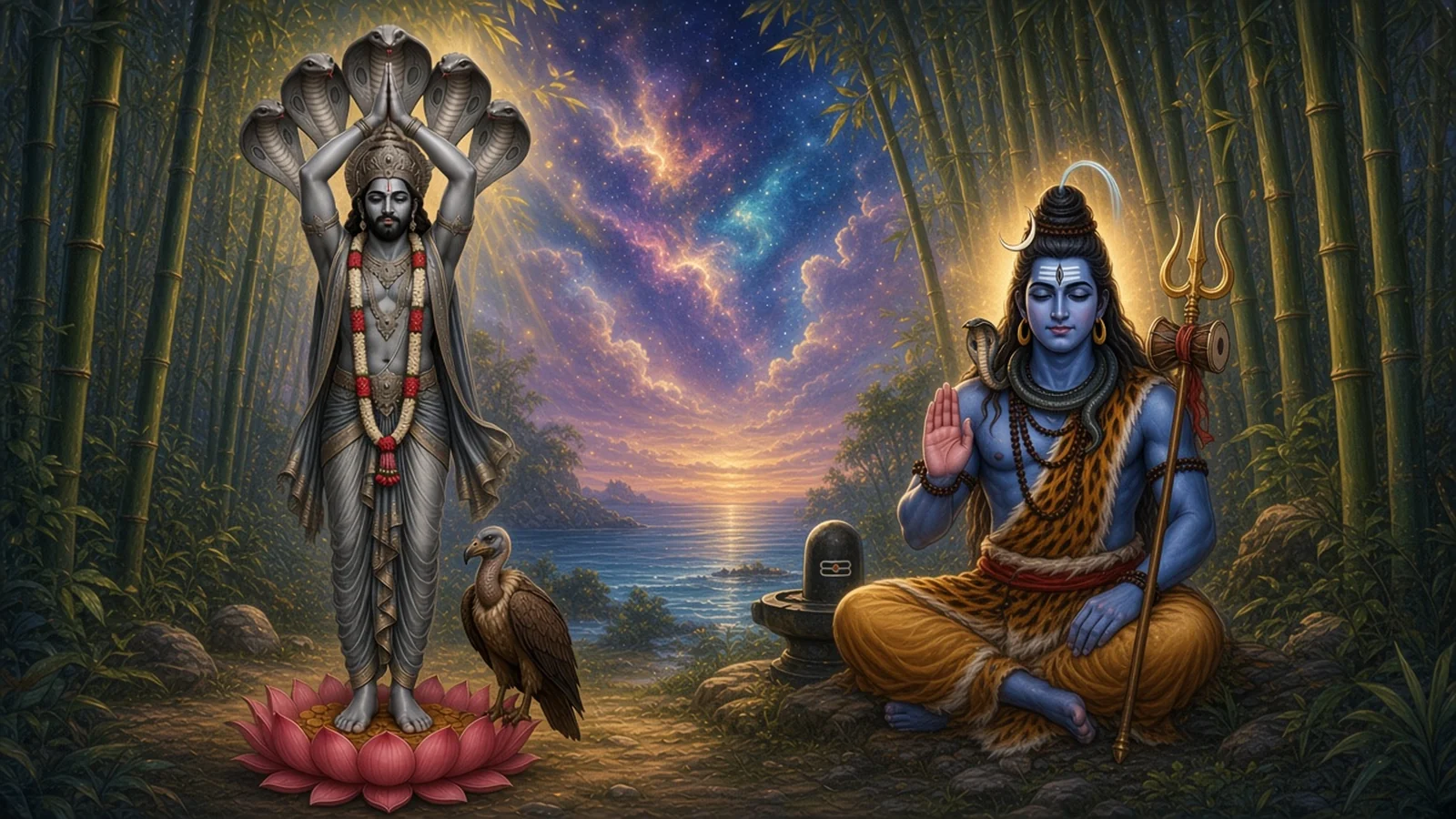
"Stay in the forest where you did the harm," Kashyapa told him. "Set up a linga there and worship Shiva. Only he can lift a curse like this."
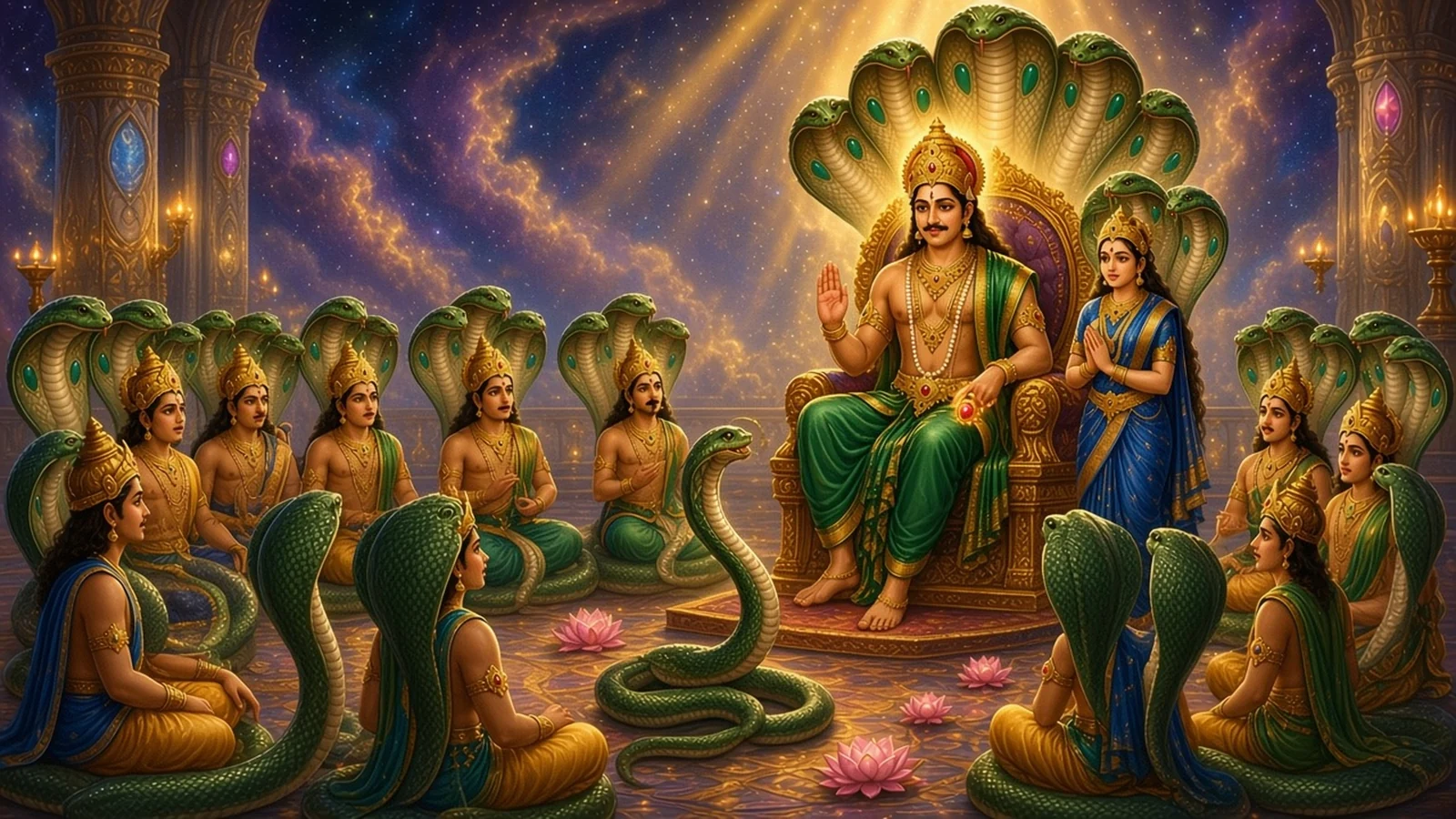
So Takshaka stayed. He set up a linga under the champaka trees and worshipped it for a long time. At last Shiva was pleased, and the curse fell away from him. The serpents remember that forest as their own. The great serpent Adishesha, who carries the world, saw Shiva there too, and so the god of the place is called Naganathar, the lord of the serpents.
The news travelled, and Rahu heard it.
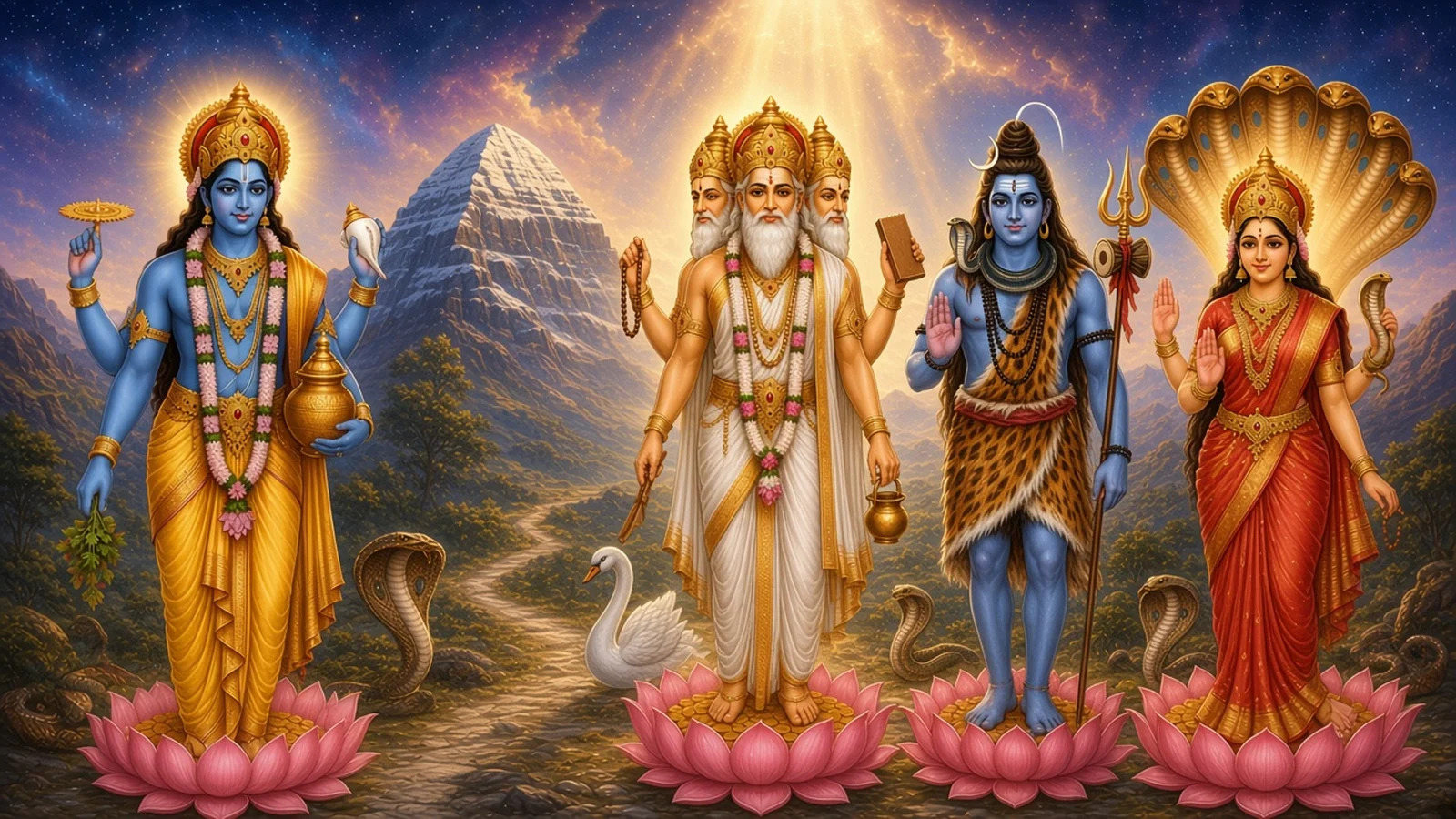
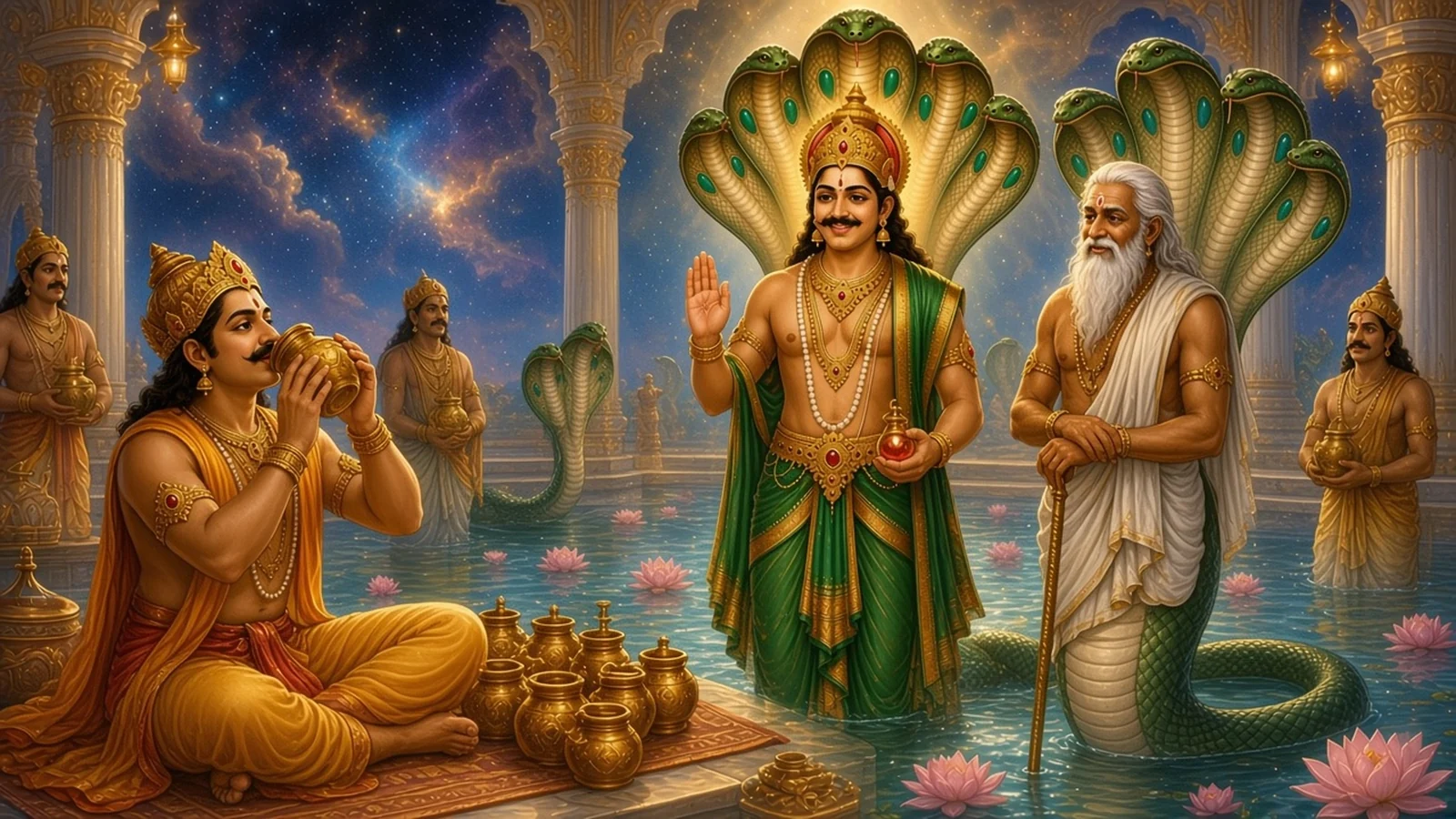
Rahu was the head that had tasted the nectar at the churning of the ocean, and the site tells that day in Mohini and the Pot of Nectar. The temple tells it in its own way. Mohini struck the head off, it says, and the demon was sorry, and prayed to Shiva. Shiva gave the head and the body each the body of a serpent and set them among the planets as Rahu and Ketu.
So Rahu was a serpent too, and serpents have enemies everywhere.
"A sage's curse could not hold Takshaka in that forest," Rahu said. "The lord who lives there forgave him. Where else in the world would a serpent be as safe?"
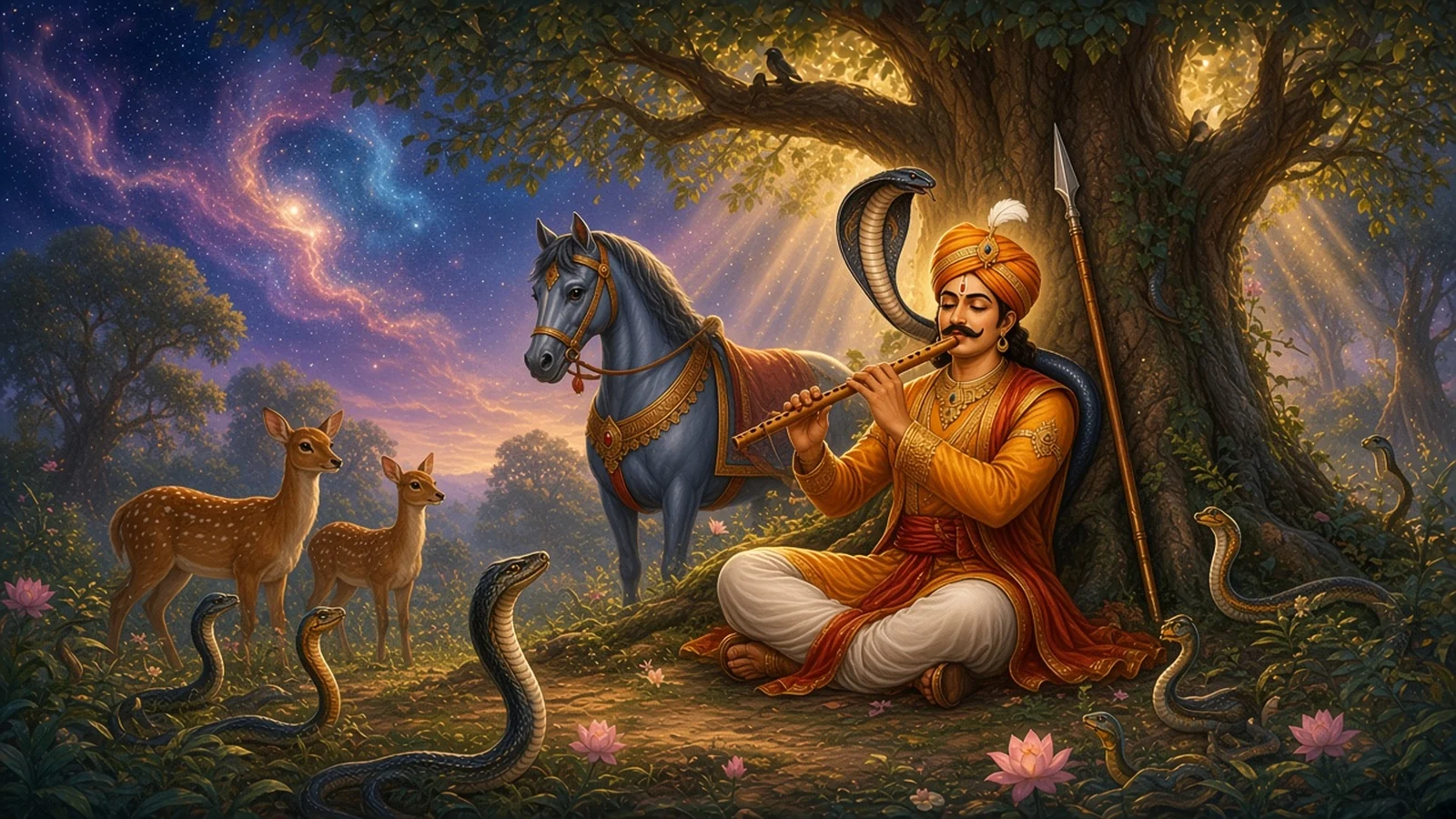
He did not come alone. He brought his two wives with him, and the three of them settled in the forest for good. The temple says that here he is gentle. He clears the obstacles from the lives of those who come to him, instead of putting obstacles there.
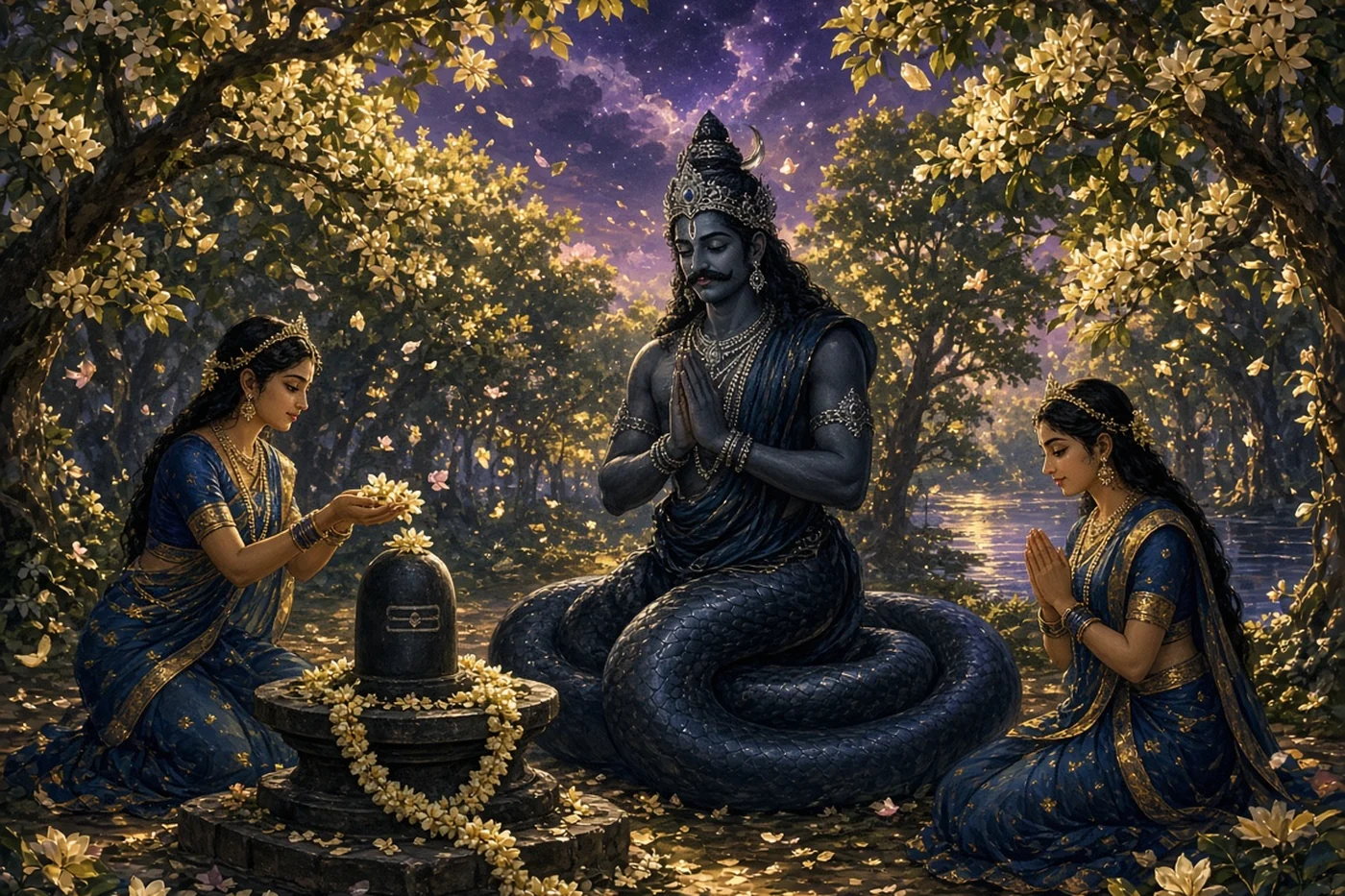
The temple remembers one more thing. On a night of Shivaratri, it says, Rahu prayed to Naganathar there and was relieved of what he had suffered. That is why Shivaratri is kept in his honour, as well as the day every eighteen months when he moves from one sign of the zodiac to the next.
The forest is gone. In its place stands a great stone temple with four towers, built in the time of the Chola kings, and the hymns of the Tevaram poets Sambandar and Appar are sung in it.
Rahu has his own shrine there, in the second enclosure, with his wives on either side of him. He does not look the way he looks in most temples, a head on a serpent's body. Here he has a human face and a human form, and he is dressed in blue.
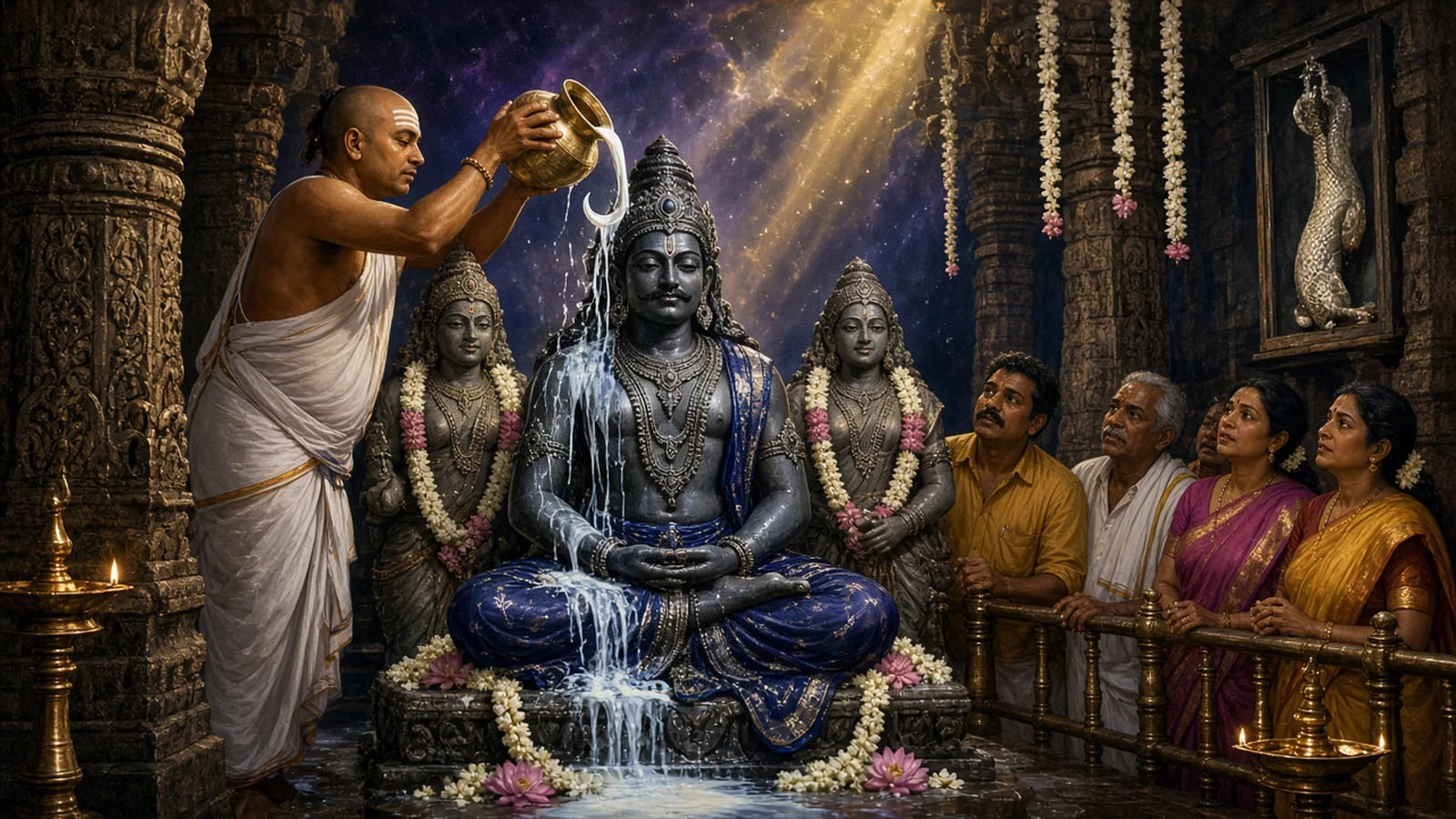
Every day, in the hour and a half that belongs to him, Rahu Kalam, the priests pour milk over his head. Devotees stand close to watch. The milk is white in the pot. As it runs down over his body, they say, it turns blue, and it is white again by the time it reaches the floor.
In 1986, the temple adds, a snake came and left its shed skin hanging round Rahu like a garland. The skin is still kept there, in a glass case.
As Srikalahasti keeps it: the temple that stays open
Andhra Pradesh · Srikalahasti, near Tirupati · 2 min read
At most temples in India the doors close when an eclipse begins. They open again only when the shadow has passed.
Srikalahasti, on the Swarnamukhi river not far from Tirupati, does the opposite. On the morning of the solar eclipse of 26 December 2019, when temple after temple shut its doors, crowds poured into this one, and they had come for Rahu.
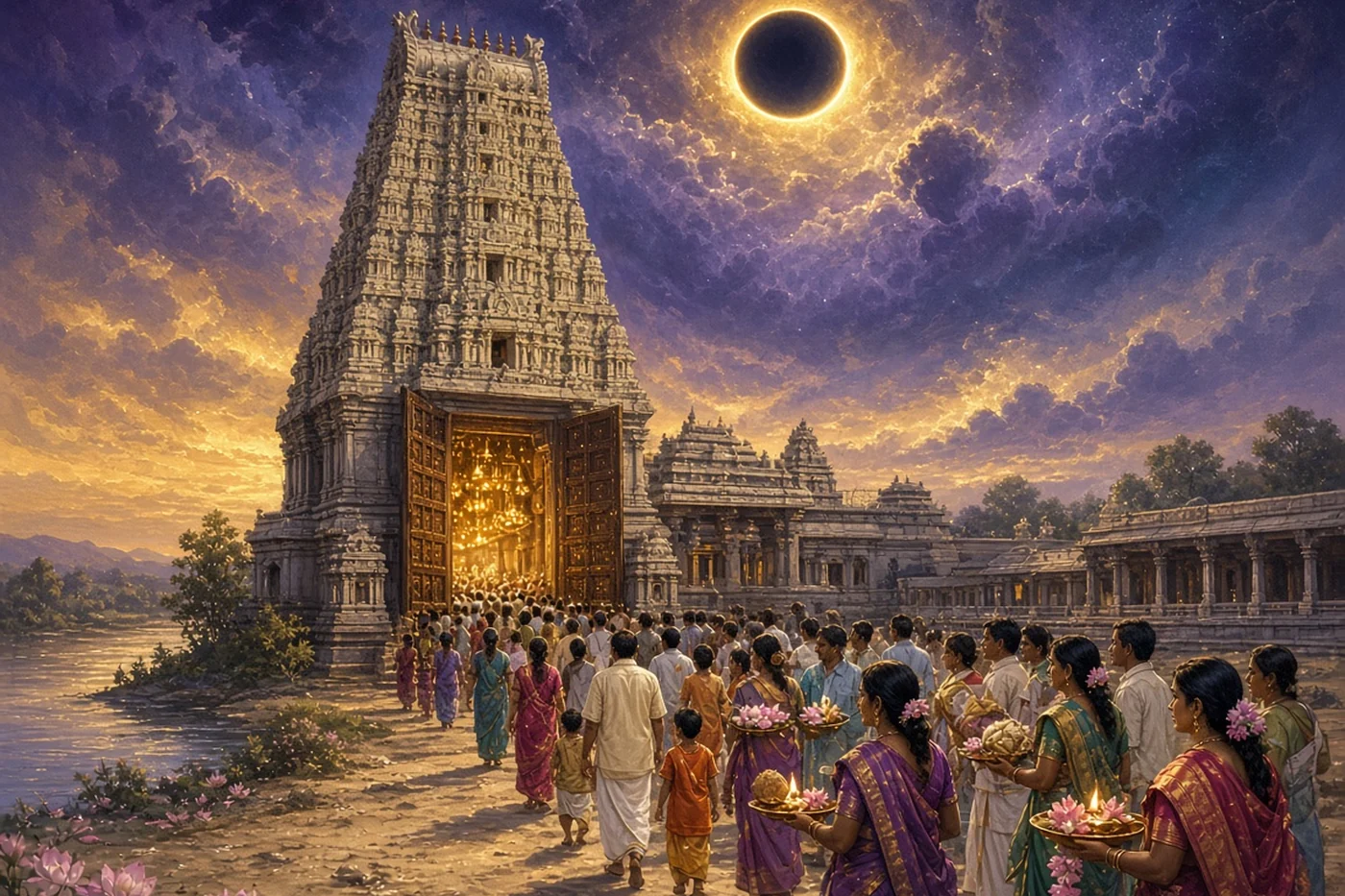
This is the temple of Shiva as the wind, where the spider, the snake and the elephant worshipped, and where the hunter Kannappa gave his eyes. It is also held to be the place of Rahu and Ketu, the two shadow planets that swallow the Sun and the Moon. That is why it keeps its doors open in an eclipse. Rahu and Ketu are worshipped here at the very hour they are believed to be at work.
People say a second reason too. The god of Srikalahasti, they say, wears an armour in which all twenty-seven stars and all the signs of the zodiac are set, and so nothing in the sky has power over him.
On ordinary days the temple is just as full. Devotees whose charts show Rahu and Ketu standing against them come for the Rahu-Ketu puja, hoping to be freed from delays in marriage, in children, in work. The tickets go within hours of the doors opening at dawn. When the puja is over, many leave small silver serpents in the offering boxes. The temple sends them to the mint to be melted down, and that melting, a temple officer has said, is the last stage, when the devotee's faults are purged.
A historian of the region has said that the temple's fame as Rahu and Ketu's place is young, a thing of the 1980s and 1990s. The crowds on the morning of an eclipse do not seem to mind how old it is.